Our outcry is working! Great Barrier Train Wreck ~~ David Sievers – Avaaz.org


Our outcry is working! The Minister has delayed the dredging decision and announced a public consultation. Let’s ramp up the pressure until they kill the project for good — join now and share this with everyone!
Dear Avaazers,


The Great Barrier Reef is at risk of being dredged to make way for a mega coal project. But if one key investor walks away, the deal would be sunk and the World Heritage Site protected. We can convince them to pull out, or get PM Rudd to stop the plan, but we have to act now — sign this urgent petition to help save the Great Barrier Reef:

Sign now!

It would be hard to make this stuff up. Australia’s legendarily irresponsible mining industry has a new plan: while the planet faces catastrophic climate change, build the world’s largest coal mining complex, and then build a shipping lane to that port straight through the greatest ecological treasure we have – the Great Barrier Reef!
This is a terrible idea with devastating consequences, and the investor group Aurizon that’s backing it know it. They’re getting cold feet, and we might be able to push them over the edge, and kill the project. One of the main potential funders has even donated to climate activism!
If one million of us express our head-shaking disbelief at this crazy project in the next few days, we can help get Aurizon to pull funding and maybe even persuade the Australian PM to step in. This is what Avaaz is for, let’s raise a voice for common sense:
http://www.avaaz.org/en/australian_coal_disaster_global_rb/?biEWLbb&v=28206
The Great Barrier Reef — the largest living organism on Earth and home to a quarter of all the species that live in the world’s oceans — has slowly been dying for years.  It’s lost half its coral in the past three decades and that rate is only accelerating. Climate change is one cause, but so is Australia’s booming mining industry. The German magazine Der Spiegel reported that “if current trends continue, the unthinkable could happen: the Great Barrier Reef could die.”
And yet, the mining industry plans to build massive new ports at a complex called Abbot Point in Northeast Australia (right by the reef) to make it easier to get the coal it’s mining out to the world. Not only would that mean doubling the number of ships that pass by the reef each year and ripping up to 3 million cubic meters of material from the fragile seabed, but if all the coal from the proposed mines this would enable is burned, it would be three times Australia’s current climate pollution — hurtling us faster towards the point of no return.
The investors are meeting now to decide what to do and the Australian Environment Minister will choose whether to approve the project in the next two weeks.
Our voices can signal to all of them to block this disaster, especially to Australian Prime Minister Kevin Rudd if he hopes to maintain his global reputation in the lead-up to his re-election bid.
They’re all deciding what to do now. Sign this urgent petition and share it with everyone you know to stop the Great Barrier train wreck:
http://www.avaaz.org/en/australian_coal_disaster_global_rb/?biEWLbb&v=28206
The Avaaz community has been fighting to save the unparalleled beauty of the reef for years. Last year, Avaaz members threatened a public US Bank when they were set to invest in reef destruction. And hundreds of thousands of Avaaz members sent messages to the Australian Environment Minister to help win the largest marine reserve in the world. Let’s do it again and put the reef out of reach of these profiteering plunderers.
With hope and determination,
David, Alex, Emily, Lisa, Oli, Marie, Ricken, Alice and the whole Avaaz team
PS – Many Avaaz campaigns are started by members of our community. It’s easy to get started – click to start yours now and win on any issue – local, national or global: http://www.avaaz.org/en/petition/start_a_petition/?bgMYedb&v=23917
MORE INFORMATION:
Great Barrier Reef Under Threat (TIME) http://www.avaaz.org/time_great_barrier_reef_article
‘Death By a Thousand Cuts’: Coal Boom Could Destroy Great Barrier Reef (Spiegel) http://www.spiegel.de/international/world/australia-debates-how-to-protect-the-great-barrier-reef-a-900911.html
GVK’s Australia coal project ‘a quagmire, not an investment’ says report (The Times of India) http://timesofindia.indiatimes.com/business/india-business/GVKs-Australia-coal-project-a-quagmire-not-an-investment-says-report/articleshow/20651363.cms
Report- Stranded: Alpha Coal Project in Australia’s Galilee Basin (IEEFA) http://www.ieefa.org/report-stranded-alpha-coal-project-in-australias-galilee-basin/
GVK rejects claim Alpha is ‘stranded’ (The Age) http://www.theage.com.au/business/carbon-economy/gvk-rejects-claim-alpha-is-stranded-20130619-2oj96.html
Abbott Point Coal Mine Map (Greenpeace) http://www.greenpeace.org/australia/en/what-we-do/climate/resources/reports/Cooking-the-climate-Wrecking-the-reef/

Ecuadorians Outraged with President’s Decision to Allow Drilling in Yasuní


Ecuadorians Outraged with President's Decision to Allow Drilling in Yasuní

In response to President Rafael Correa‘s decision to terminate the historic Yasuní-ITT initiative, an innovative plan to preserve the world’s most biodiverse rainforest in the Yasuní National Park, hundreds of Ecuadorians have taken to the streets to protest and are preparing a national referendum to reverse this decision.

The ground-breaking initiative launched in 2007 would keep some 920 million barrels of oil underneath the park permanently in the ground in exchange for financial contributions from the international community. The plan would also keep an estimated 410 million tons of CO2 – the major greenhouse gas driving climate change – from reaching the atmosphere.

But Correa, citing the proposal’s lack of contributions, signed a decree to liquidate the UNDP trust fund, and declared drilling in the national interest, a designation that sets in motion final approval from Congress to pursue drilling.

However, recent polls show that 90% of Ecuadorians support the Yasuní-ITT initiative, and at protests across the country they have begun to gather signatures for a national referendum that could reverse the president’s decision to allow drilling in this part of the park.

The park is a UNESCO Biosphere Reserve and contains what are thought to be the greatest number of tree and insect species anywhere on the planet. In just 2.5 acres of the park, there are as many tree species as in all of the U.S. and Canada combined. The area is also home to the Waorani indigenous people, and two nomadic Waorani clans – the Tagaeri and Taromenane – who live in voluntary isolation. Attempts to drill the ITT fields would put their lives and livelihoods at risk.Amazon Watch


Stay tuned for more information and ways to get involved! In the meantime, check out:

Viva Yasuní!

Kevin Koenig
Kevin Koenig
Ecuador Program Coordinator

Isolated Mashco-Piro Indians appear in Peru


FILE - This Nov. 2011 file photo, shows members of the Mashco-Piro tribe, photographed at an undisclosed location near the Manu National Park in southeastern Peru. More than 100 Mashco-Piro appeared across a river from the remote community of Monte Salvado in Madre de Dios state, says Klaus Quicque the president of the regional FENAMAD indigenous federation on Monday, Aug. 19, 2013. The Maschco-Piro first appeared in May 2011 after more than two decades in voluntary isolation. (AP Photo/Diego Cortijo, Survival International, File)

for more click on photo above

FRANK BAJAK

AP

FILE – This Nov. 2011 file photo, shows members of the Mashco-Piro tribe,

photographed at an undisclosed area …

In another case of big corporations … Pushing Provoking the Mashco-Piro Indians  ~~ illegal logging drugs smugglers Oil Gas which also impacts the Amazon … and needs to stop.

LIMA, Peru (AP) — Members of an Indian tribe that has long lived in voluntary isolation in Peru‘s southeastern Amazon attempted to make contact with outsiders for a second time since 2011, leading to a tense standoff at a river hamlet.Authorities are unsure what provoked the three-day encounter but say the Mashco-Piro may be upset by illegal logging in their territory as well as drug smugglers who pass through.

Oil and gas exploration also affects the region.

The more than 100 members of Mashco-Piro clan appeared across the Las Piedras river from the remote community of Monte Salvado in the Tambopata region of Madre de Dios state from June 24-26, said Klaus Quicque, president of the regional FENAMAD indigenous federation.

They asked for bananas, rope and machetes from the local Yine people but were dissuaded from crossing the river by FENAMAD rangers posted at the settlement, said Quicque, who directed them to a banana patch on their side of the river.

The incident on the Las Piedras is chronicled in video shot by one of the rangers and obtained Monday by The Associated Press.

“You can see in the images there was a lot of threatening — the intention of crossing. They practically reached mid-river,” Quicque said by phone from Puerto Maldonado, the regional capital.

The video shows Mashco-Piro of all ages and sexes, including men with lances, bows and arrows. In one image shot during a moment of tension, a man flexes his bow, ready to shoot.

Quicque said the estimated 110-150 people living in Monte Salvado “feared for their lives.” He credited the ranger, Rommel Ponciano, for keeping a cool head.

He said 23 Mashco-Piro appeared on the first day, 110 on the second and 25 on the third. The clan left and hasn’t returned.

“They spoke a variant of Yine,” Quicque said, but Ponciano understood only about two-thirds of the words.

The Mashco-Piro live by their own social code, which includes kidnapping other tribes’ women and children, according to Carlos Soria, a Lima professor and former head of Peru’s park protection agency.

Peruvian law prohibits physical contact with the estimated 15 “uncontacted” tribes in Peru that together are estimated to number between 12,000 and 15,000 people living in jungles east of the Andes. The main reason is their safety: Their immune systems are highly vulnerable to germs other humans carry.

Anthropologist Beatriz Huertas, who works with Peru’s agency for indigenous affairs, says the Mashco-Piro are becoming increasingly less isolated. The tribe is believed to number in the hundreds in several different clans.

It is not unusual for them to appear where they did during a season of sparse rainfall when rivers are low, and they tend to be itinerant, she said.

“What’s strange is that they came so close to the population of Monte Salvado. It could be they are upset by problems of others taking advantage of resources in their territories and for that reason were demanding objects and food of the population,” Huertas said.

Naturalists in the area and national park officials say the tribe’s traditional hunting grounds have been affected by a rise in low-flying air traffic related to natural gas and oil exploration in the region.

Quicque said the Mashco-Piro were victimized by “genocide” in the mid-1980s from the incursion of loggers, and subsequently engaged in battles with mahogany-seekers.

Members of the group reappeared in May 2011 on the banks of a different river after more than two decades in voluntary isolation.

After those sightings, and after tourists left clothing for the Mashco-Piro, authorities barred all boats from going ashore in the area.

Mashco-Piro were blamed later in 2011 for the wounding of one forest ranger and the killing of a Matsiguenka Indian who had long maintained a relationship with them and provided them with machetes and cooking pots.

Burning Down the House


Will GOP Obstructionism Hand the House to Democrats?

The Progress Report

As we’ve been discussing, the Republican Party is in the midst of a meltdown over Obamacare. The party is united in its irrational opposition to the law’s offer of health security to millions of Americans; however, the GOP is nevertheless engaged in an all-out civil war over whether or not to shut down the government in a last ditch effort to try and derail the law.

(Ironically, even Republicans admit that shutting down the government won’t actually stop Obamacare from moving forward.)

Dozens and dozens of Congressional Republicans have signed onto letters advocating a government shutdown over Obamacare.

Yesterday, Heritage Action began a national pro-government shutdown tour that NPR reports even Republicans think means “political suicide” for the party. The former Tea Party Senator Jim DeMint (R-SC), now the president of the Heritage Foundation, told a town hall audience that any Republicans who are afraid of shutting down the government ought to be “replaced.”

DeMint may get his wish, sort of. Center for American Progress Senior Fellow Ruy Teixeira, an expert in political demography, explains how the GOP’s “coordinated campaign to alienate anyone interested in functional governance” could hand Democrats control of the House of Representatives in 2014.

Teixeira’s analysis is a bit of a longread for this space, but it’s worth it:

Why are Republicans so freaked out?

At this point, they have a good chance — perhaps around 50-50 — of picking up enough seats to take the Senate, while Democrats’ chances of picking up the 17 seats they need to regain control of the House look considerably smaller than that. And yet, as one Politico story put it, “it is almost impossible to find an establishment Republican in town who’s not downright morose about the 2013 that has been and is about to be.”

Politico suggests the reason for the glumness is fear about the political fallout from the GOP’s unyielding, nihilistic approach to governance on issues like Obamacare and the debt ceiling. That problem may be far worse than they imagine. A close scrutiny of the data reveals several demographic weak points that the current wave of Republican crazy could activate, leading to the outcome they dread the most: Democratic control of both houses of Congress.

Start with minorities. It’s not well-known, but Republicans in 2010 benefited not only from relatively low minority turnout (standard for an off-year election) but also from relatively low minority support for Democratic candidates. Emphasis here is on the relative: minority support for House Democrats in 2010 was 73-25 — high, but below the 77-22 margin that minorities averaged in the three off-year elections that preceded 2010. If minorities snap back to 77-22 Democratic support as a consequence of Republican misbehavior, and the expected 2 percentage point increase in the share of minority voters from population trends emerges, then the Republican 6.8 percentage point margin in 2010 will be immediately sliced in half. And if the minority vote goes even stronger for the Democrats, reaching 2012 levels, that would eliminate about three-quarters of the Republicans’ 2010 advantage all on its own.

Another demographic problem for the GOP comes from a more surprising quarter: seniors. As Erica Seifert of Democracy Corps noted in a recent memo:

There’s something going on with seniors: It is now strikingly clear that they have turned sharply against the GOP. This is apparent in seniors’ party affiliation and vote intention, in their views on the Republican Party and its leaders, and in their surprising positions on jobs, health care, retirement security, investment economics, and the other big issues that will likely define the 2014 midterm elections.

We first noticed a shift among seniors early in the summer of 2011, as Paul Ryan’s plan to privatize Medicare became widely known (and despised) among those at or nearing retirement. Since then, the Republican Party has come to be defined by much more than its desire to dismantle Medicare. To voters from the center right to the far left, the GOP is now defined by resistance, intolerance, intransigence, and economics that would make even the Robber Barons blush. We have seen other voters pull back from the GOP, but among no group has this shift been as sharp as it is among senior citizens.

It is therefore quite plausible that the GOP will benefit far less from senior support in 2014 than in 2010. If the senior share of voters returns to normal levels (19 percent) and the Republican margin among this group drops to its post-2000 average (6 points, about where it is right now in the Democracy Corps polls) that would take care of the rest of the GOP margin from 2010, getting the Democrats slightly past the break-even point in the popular vote.

Of course, given the well-known GOP advantage in translating seats to votes, Democrats probably need to do substantially better than breaking even to attain a majority in the House. That won’t be easy, but there are certainly potential avenues to shift the 2014 House vote even farther in Democrats’ direction. There is the youth vote, for example, which was relatively poor for the Democrats in 2010 (55-42) and could certainly improve, as well as possibly turn out in larger numbers. The latter could also be true of the minority vote, whose projected 2 point increase in voter share, is due solely to population increase. If relative minority turnout is better in 2014 than 2010, then there will be an even larger increase in minority vote share over 2010, pushing the Democrats’ margin farther toward what they need to take the House.

Make no mistake about it: the Democrats face an uphill climb. But the possibilities outlined above inch closer to reality every day the GOP continues its coordinated campaign to alienate anyone interested in functional governance.

BOTTOM LINE: If Republicans shut down the government over Obamacare or their demands for more damaging austerity, they might get to personally experience repeal and replace after all.

Official Google


Learn about the atomic bombings of Hiroshima and Nagasaki on the Google Cultural Institute

Posted: 19 Aug 2013 08:53 AM PDT

This August marks the 68th anniversary of the atomic bombings of Hiroshima and Nagasaki at the end of World War II. Working together with the Hiroshima Peace Memorial Museum and the Nagasaki Atomic Bomb Museum, we’ve launched seven new online exhibits on the Google Cultural Institute that help tell the story of the two cities and their tragic fate.
Explore four collections from the Hiroshima Peace Memorial Museum that illustrate the bombing from different perspectives: a pocketwatch stopped at the exact time of the detonation, diaries of young women cut off abruptly on August 6, and panoramic photos of the hauntingly barren city center days after. While most of the materials document the harrowing devastation of the bomb and its aftermath, the gallery “Recalling the Lost Neighborhoods” helps archive the old Hiroshima that vanished off the map.

Pocketwatch showing 8:15, the time of the atomic bomb drop (from the Hiroshima Peace Memorial Museum)

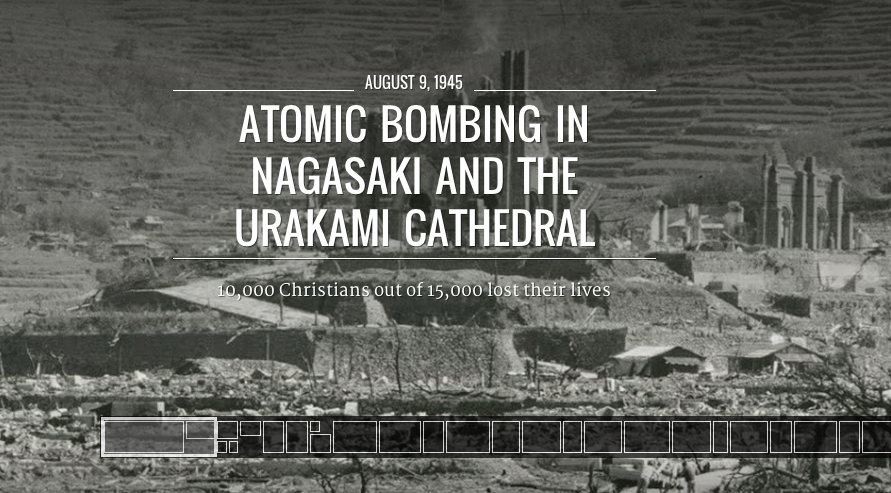
The Nagasaki Atomic Bomb Museum meanwhile curated photos, videos, and drawings in three exhibitions. One collection focuses on the famed Urakami Cathedral—the largest cathedral in East Asia where 15,000 Japanese Catholics once worshipped. The church completely collapsed after the bombing, but thanks to a post-war reconstruction effort, the Urakami Cathedral now stands triumphant as a symbol of the city’s rebirth.

Urakami Cathedral exhibition (from the Nagasaki Atomic Bomb Museum)

Speaking at an unveiling ceremony for the exhibits in Hiroshima today, Hiroshima Mayor Kazumi Matsui said, “Through the Google Cultural Institute exhibitions, we hope that people around the world would learn about the terrible experiences of the Hibakusha, or A-bomb survivors, and wish for peace.”
The Cultural Institute was created to help preserve the world’s history and heritage. Given the average age of the Hibakusha is now past 78, we’re honored that our digital exhibit can help keep the memories from both cities alive for the future.
Posted by Toru Kawamura, New Business Development Senior Manager, Google Japan