Tag Archives: health care

Discrimination Beyond Marriage


By

Despite Victory At The Supreme Court, Discrimination Remains Beyond Marriage

It has been less than two weeks since the Supreme Court handed down its landmark decision in Obergefell v. Hodges, granting same-sex couples the freedom to marry nationwide. But despite our progress on marriage equality, LGBT discrimination persists. In 28 states, same-sex couples can now be legally married one day, and then legally fired from their jobs, evicted from their homes, denied credit, or refused services or goods simply because of their sexual orientation. Similarly 31 states lack explicit protections from discrimination based on gender identity in employment, housing, credit and public accommodations. Check out this infographic below for more details. To find out more about the need for nationwide, explicit protections from discrimination for LGBT Americans, check out the infographic below and this report from the Center for American Progress.

BOTTOM LINE: The Court’s decision was a huge step forward for LGBT rights, but the fight is not over. All Americans deserve the opportunity to live free from fear of discrimination.

Things You May Not Know about the Declaration of Independence


1. The Declaration of Independence wasn’t signed on July 4, 1776.
On July 1, 1776, the Second Continental Congress met in Philadelphia, and on the following day 12 of the 13 colonies voted in favor of Richard Henry Lee’s motion for independence. The delegates then spent the next two days debating and revising the language of a statement drafted by Thomas Jefferson.

On July 4, Congress officially adopted the Declaration of Independence, and as a result the date is celebrated as Independence Day. Nearly a month would go by, however, before the actual signing of the document took place.

First, New York’s delegates didn’t officially give their support until July 9 because their home assembly hadn’t yet authorized them to vote in favor of independence. Next, it took two weeks for the Declaration to be “engrossed”—written on parchment in a clear hand.

Most of the delegates signed on August 2, but several—Elbridge Gerry, Oliver Wolcott, Lewis Morris, Thomas McKean and Matthew Thornton—signed on a later date. (Two others, John Dickinson and Robert R. Livingston, never signed at all.) The signed parchment copy now resides at the National Archives in the Rotunda for the Charters of Freedom, alongside the Constitution and the Bill of Rights.

2. More than one copy exists.
After the adoption of the Declaration of Independence, the “Committee of Five”—Thomas Jefferson, John Adams, Benjamin Franklin, Roger Sherman and Robert R. Livingston—was charged with overseeing the reproduction of the approved text. This was completed at the shop of Philadelphia printer John Dunlap. On July 5, Dunlap’s copies were dispatched across the 13 colonies to newspapers, local officials and the commanders of the Continental troops. These rare documents, known as “Dunlap broadsides,” predate the engrossed version signed by the delegates. Of the hundreds thought to have been printed on the night of July 4, only 26 copies survive. Most are held in museum and library collections, but three are privately owned.

3. When news of the Declaration of Independence reached New York City, it started a riot.
By July 9, 1776, a copy of the Declaration of Independence had reached New York City. With hundreds of British naval ships occupying New York Harbor, revolutionary spirit and military tensions were running high. George Washington, commander of the Continental forces in New York, read the document aloud in front of City Hall. A raucous crowd cheered the inspiring words, and later that day tore down a nearby statue of George III. The statue was subsequently melted down and shaped into more than 42,000 musket balls for the fledgling American army.

4. Eight of the 56 signers of the Declaration of Independence were born in Britain.
While the majority of the members of the Second Continental Congress were native-born Americans, eight of the men voting for independence from Britain were born there. Gwinnett Button and Robert Morris were born in England, Francis Lewis was born in Wales, James Wilson and John Witherspoon were born in Scotland, George Taylor and Matthew Thornton were born in Ireland and James Smith hailed from Northern Ireland.

5. One signer later recanted.
Richard Stockton, a lawyer from Princeton, New Jersey, became the only signer of the Declaration of Independence to recant his support of the revolution. On November 30, 1776, the hapless delegate was captured by the British and thrown in jail. After months of harsh treatment and meager rations, Stockton repudiated his signature on the Declaration of Independence and swore his allegiance to King George III. A broken man when he regained his freedom, he took a new oath of loyalty to the state of New Jersey in December 1777.

6. There was a 44-year age difference between the youngest and oldest signers.
The oldest signer was Benjamin Franklin, 70 years old when he scrawled his name on the parchment. The youngest was Edward Rutledge, a lawyer from South Carolina who was only 26 at the time. Rutledge narrowly beat out fellow South Carolinian Thomas Lynch Jr., just four months his senior, for the title.

7. Two additional copies have been found in the last 25 years.
In 1989, a Philadelphia man found an original Dunlap Broadside hidden in the back of a picture frame he bought at a flea market for $4. One of the few surviving copies from the official first printing of the Declaration, it was in excellent condition and sold for $8.1 million in 2000. A 26th known Dunlap broadside emerged at the British National Archives in 2009, hidden for centuries in a box of papers captured from American colonists during the Revolutionary War. One of three Dunlap broadsides at the National Archives, the copy remains there to this day.

8. The Declaration of Independence spent World War II in Fort Knox.
On December 23, 1941, just over two weeks after the Japanese attack on Pearl Harbor, the signed Declaration, together with the Constitution, was removed from public display and prepared for evacuation out of Washington, D.C. Under the supervision of armed guards, the founding document was packed in a specially designed container, latched with padlocks, sealed with lead and placed in a larger box. All told, 150 pounds of protective gear surrounded the parchment. On December 26 and 27, accompanied by Secret Service agents, it traveled by train to Louisville, Kentucky, where a cavalry troop of the 13th Armored Division escorted it to Fort Knox. The Declaration was returned to Washington, D.C., in 1944.

9. There is something written on the back of the Declaration of Independence.
In the movie “National Treasure,” Nicholas Cage’s character claims that the back of the Declaration contains a treasure map with encrypted instructions from the founding fathers, written in invisible ink. Unfortunately, this is not the case. There is, however, a simpler message, written upside-down across the bottom of the signed document: “Original Declaration of Independence dated 4th July 1776.” No one knows who exactly wrote this or when, but during the Revolutionary War years the parchment was frequently rolled up for transport. It’s thought that the text was added as a label.

Make Food Safety Part of Your Father’s Day


FoodSafety.gov
Infographic

Still looking for a Father’s Day gift? Consider getting a food thermometer, perfect for safe grilling during the warm months.

When using a food thermometer, remember these three easy steps to cook like a PRO:

1. Place the thermometer

2. Read the temperature

3. Off the Grill!

Read more about how to cook like a PRO.

=======================================================================================

Brown V Board of Education ~~ Equality & Opportunity


Brown v. Board of Education (1954)
PBS.orgImage result for brown v board of education


Brown v. Board of Education (1954), now acknowledged as one of the greatest Supreme Court decisions of the 20th century, unanimously held that the racial segregation of children in public schools violated the Equal Protection Clause of the Fourteenth Amendment. Although the decision did not succeed in fully desegregating public education in the United States, it put the Constitution on the side of racial equality and galvanized the nascent civil rights movement into a full revolution.Image result for brown v board of education

In 1954, large portions of the United States had racially segregated schools, made legal by Plessy v. Ferguson (1896), which held that segregated public facilities were constitutional so long as the black and white facilities were equal to each other. However, by the mid-twentieth century, civil rights groups set up legal and political, challenges to racial segregation. In the early 1950s, NAACP lawyers brought class action lawsuits on behalf of black schoolchildren and their families in Kansas, South Carolina, Virginia, and Delaware, seeking court orders to compel school districts to let black students attend white public schools.Image result for brown v board of education

One of these class actions, Brown v. Board of Education was filed against the Topeka, Kansas school board by representative-plaintiff Oliver Brown, parent of one of the children denied access to Topeka’s white schools. Brown claimed that Topeka’s racial segregation violated the Constitution’s Equal Protection Clause because the city’s black and white schools were not equal to each other and never could be. The federal district court dismissed his claim, ruling that the segregated public schools were “substantially” equal enough to be constitutional under the Plessy doctrine. Brown appealed to the Supreme Court, which consolidated and then reviewed all the school segregation actions together. Thurgood Marshall, who would in 1967 be appointed the first black justice of the Court, was chief counsel for the plaintiffsImage result for brown v board of education.

Thanks to the astute leadership of Chief Justice Earl Warren, the Court spoke in a unanimous decision written by Warren himself. The decision held that racial segregation of children in public schools violated the Equal Protection Clause of the Fourteenth Amendment, which states that “no state shall make or enforce any law which shall … deny to any person within its jurisdiction the equal protection of the laws.” The Court noted that Congress, when drafting the Fourteenth Amendment in the 1860s, did not expressly intend to require integration of public schools. On the other hand, that Amendment did not prohibit integration. In any case, the Court asserted that the Fourteenth Amendment guarantees equal education today. Public education in the 20th century, said the Court, had become an essential component of a citizen’s public life, forming the basis of democratic citizenship, normal socialization, and professional training. In this context, any child denied a good education would be unlikely to succeed in life. Where a state, therefore, has undertaken to provide universal education, such education becomes a right that must be afforded equally to both blacks and whites.

Were the black and white schools “substantially” equal to each other, as the lower courts had found? After reviewing psychological studies showing black girls in segregated schools had low racial self-esteem, the Court concluded that separating children on the basis of race creates dangerous inferiority complexes that may adversely affect black children’s ability to learn. The Court concluded that, even if the tangible facilities were equal between the black and white schools, racial segregation in schools is “inherently unequal” and is thus always unconstitutional. At least in the context of public schools, Plessy v. Ferguson was overruled. In the Brown II case a decided year later, the Court ordered the states to integrate their schools “with all deliberate speed.”

Opposition to Brown I and II reached an apex in Cooper v. Aaron (1958), when the Court ruled that states were constitutionally required to implement the Supreme Court’s integration orders. Widespread racial integration of the South was achieved by the late 1960s and 1970s. In the meantime, the equal protection ruling in Brown spilled over into other areas of the law and into the political arena as well. Scholars now point out that Brown v. Board was not the beginning of the modern civil rights movement, but there is no doubt that it constituted a watershed moment in the struggle for racial equality in America.

History of Brown v. Board of Education

UScourts.gov

The Plessy Decision ~~ Separate but Equal?

Although the Declaration of Independence stated that “All men are created equal,” due to the institution of slavery, this statement was not to be grounded in law in the United States until after the Civil War (and, arguably, not completely fulfilled for many years thereafter). In 1865, the Thirteenth Amendment was ratified and finally put an end to slavery. Moreover, the Fourteenth Amendment (1868) strengthened the legal rights of newly freed slaves by stating, among other things, that no state shall deprive anyone of either “due process of law” or of the “equal protection of the law.” Finally, the Fifteenth Amendment (1870) further strengthened the legal rights of newly freed slaves by prohibiting states from denying anyone the right to vote due to race.

Despite these Amendments, African Americans were often treated differently than whites in many parts of the country, especially in the South. In fact, many state legislatures enacted laws that led to the legally mandated segregation of the races. In other words, the laws of many states decreed that blacks and whites could not use the same public facilities, ride the same buses, attend the same schools, etc. These laws came to be known as Jim Crow laws. Although  many people felt that these laws were unjust, it was not until the 1890s that they were directly challenged in court. In 1892, an African-American man named Homer Plessy refused to give up his seat to a white man on a train in New Orleans, as he was required to do by Louisiana state law. For this action he was arrested. Plessy, contending that the Louisiana law separating blacks from whites on trains violated the “equal protection clause” of the Fourteenth Amendment to the U.S. Constitution, decided to fight his arrest in court. By 1896, his case had made it all the way to the United States Supreme Court. By a vote of 8-1, the Supreme Court ruled against Plessy. In the case of Plessy v. Ferguson, Justice Henry Billings Brown, writing the majority opinion, stated that:

“The object of the [Fourteenth] amendment was undoubtedly to enforce the equality of the two races before the law, but in the nature of things it could not have been intended to abolish distinctions based upon color, or to endorse social, as distinguished from political, equality. . . If one race be inferior to the other socially, the Constitution of the United States cannot put them upon the same plane.”

The lone dissenter, Justice John Marshal Harlan, interpreting the Fourteenth Amendment another way, stated, “Our Constitution is color-blind, and neither knows nor tolerates classes among citizens.” Justice Harlan’s dissent would become a rallying cry for those in later generations that wished to declare segregation unconstitutional.

Sadly, as a result of the Plessy decision, in the early twentieth century the Supreme Court continued to uphold the legality of Jim Crow laws and other forms of racial discrimination. In the case of Cumming v. Richmond (Ga.) County Board of Education (1899), for instance, the Court refused to issue an injunction preventing a school board from spending tax money on a white high school when the same school board voted to close down a black high school for financial reasons. Moreover, in Gong Lum v. Rice (1927), the Court upheld a school’s decision to bar a person of Chinese descent from a “white” school.

The Road to Brown

(Note: Some of the case information is from Patterson, James T. Brown v. Board of Education: A Civil Rights Milestone and Its Troubled Legacy. Oxford University Press; New York, 2001.)

Early Cases

Despite the Supreme Court’s ruling in Plessy and similar cases, many people continued to press for the abolition of Jim Crow and other racially discriminatory laws. One particular organization that fought for racial equality was the National Association for the Advancement of Colored People (NAACP) founded in 1909. For about the first 20 years of its existence, it tried to persuade Congress and other legislative bodies to enact laws that would protect African Americans from lynchings and other racist actions. Beginning in the 1930s, though, the NAACP’s Legal Defense and Education Fund began to turn to the courts to try to make progress in overcoming legally sanctioned discrimination. From 1935 to 1938, the legal arm of the NAACP was headed by Charles Hamilton Houston. Houston, together with Thurgood Marshall, devised a strategy to attack Jim Crow laws by striking at them where they were perhaps weakest—in the field of education. Although Marshall played a crucial role in all of the cases listed below, Houston was the head of the NAACP Legal Defense and Education Fund while Murray v. Maryland and Missouri ex rel Gaines v. Canada were decided. After Houston returned to private practice in 1938, Marshall became head of the Fund and used it to argue the cases of Sweat v. Painter and McLaurin v. Oklahoma Board of Regents of Higher Education.

Murray v. Maryland (1936)

Disappointed that the University of Maryland School of Law was rejecting black applicants solely because of their race, beginning in 1933 Thurgood Marshall (who was himself rejected from this law school because of its racial acceptance policies) decided to challenge this practice in the Maryland court system. Before a Baltimore City Court in 1935, Marshall argued that Donald Gaines Murray was just as qualified as white applicants to attend the University of Maryland’s School of Law and that it was solely due to his race that he was rejected. Furthermore, he argued that since the “black” law schools which Murray would otherwise have to attend were nowhere near the same academic caliber as the University’s law school, the University was violating the principle of “separate but equal.” Moreover, Marshall argued that the disparities between the “white” and “black” law schools were so great that the only remedy would be to allow students like Murray to attend the University’s law school. The Baltimore City Court agreed and the University then appealed to the Maryland Court of Appeals. In 1936, the Court of Appeals also ruled in favor of Murray and ordered the law school to admit him. Two years later, Murray graduated.

Missouri ex rel Gaines v. Canada (1938)

Beginning in 1936, the NAACP Legal Defense and Education Fund decided to take on the case of Lloyd Gaines, a graduate student of Lincoln University (an all-black college) who applied to the University of Missouri Law School but was denied because of his race. The State of Missouri gave Gaines the option of either attending an all-black law school that it would build (Missouri did not have any all-black law schools at this time) or having Missouri help to pay for him to attend a law school in a neighboring state. Gaines rejected both of these options, and, employing the services of Thurgood Marshall and the NAACP Legal Defense and Education Fund, he decided to sue the state in order to attend the University of Missouri’s law school. By 1938, his case reached the U.S. Supreme Court, and, in December of that year, the Court sided with him. The six-member majority stated that since a “black” law school did not currently exist in the State of Missouri, the “equal protection clause” required the state to provide, within its boundaries, a legal education for Gaines. In other words, since the state provided legal education for white students, it could not send black students, like Gaines, to school in another state.

Sweat v. Painter (1950)

Encouraged by their victory in Gaines’ case, the NAACP continued to attack legally sanctioned racial discrimination in higher education. In 1946, an African American man named Heman Sweat applied to the University of Texas’ “white” law school. Hoping that it would not have to admit Sweat to the “white” law school if a “black” school already existed, elsewhere on the University’s campus, the state hastily set up an underfunded “black” law school. At this point, Sweat employed the services of Thurgood Marshall and the NAACP Legal Defense and Education Fund and sued to be admitted to the University’s “white” law school. He argued that the education that he was receiving in the “black” law school was not of the same academic caliber as the education that he would be receiving if he attended the “white” law school. When the case reached the U.S. Supreme Court in 1950, the Court unanimously agreed with him, citing as its reason the blatant inequalities between the University’s law school (the school for whites) and the hastily erected school for blacks. In other words, the “black” law school was “separate,” but not “equal.” Like the Murray case, the Court found the only appropriate remedy for this situation was to admit Sweat to the University’s law school.

McLaurin v. Oklahoma Board of Regents of Higher Education (1950)

In 1949, the University of Oklahoma admitted George McLaurin, an African American, to its doctoral program. However, it required him to sit apart from the rest of his class, eat at a separate time and table from white students, etc. McLaurin, stating that these actions were both unusual and resulting in adverse effects on his academic pursuits, sued to put an end to these practices. McLaurin employed Thurgood Marshall and the NAACP Legal Defense and Education Fund to argue his case, a case which eventually went to the U.S. Supreme Court. In an opinion delivered on the same day as the decision in Sweat, the Court stated that the University’s actions concerning McLaurin were adversely affecting his ability to learn and ordered that they cease immediately.

Brown v. Board of Education (1954, 1955)

The case that came to be known as Brown v. Board of Education was actually the name given to five separate cases that were heard by the U.S. Supreme Court concerning the issue of segregation in public schools. These cases were Brown v. Board of Education of Topeka, Briggs v. Elliot, Davis v. Board of Education of Prince Edward County (VA.), Boiling v. Sharpe, and Gebhart v. Ethel. While the facts of each case are different, the main issue in each was the constitutionality of state-sponsored segregation in public schools. Once again, Thurgood Marshall and the NAACP Legal Defense and Education Fund handled these cases.

Although it acknowledged some of the plaintiffs’/plaintiffs claims, a three-judge panel at the U.S. District Court that heard the cases ruled in favor of the school boards. The plaintiffs then appealed to the U.S. Supreme Court.

When the cases came before the Supreme Court in 1952, the Court consolidated all five cases under the name of Brown v. Board of Education. Marshall personally argued the case before the Court. Although he raised a variety of legal issues on appeal, the most common one was that separate school systems for blacks and whites were inherently unequal, and thus violate the “equal protection clause” of the Fourteenth Amendment to the U.S. Constitution. Furthermore, relying on sociological tests, such as the one performed by social scientist Kenneth Clark, and other data, he also argued that segregated school systems had a tendency to make black children feel inferior to white children, and thus such a system should not be legally permissible.

Meeting to decide the case, the Justices of the Supreme Court realized that they were deeply divided over the issues raised. While most wanted to reverse Plessy and declare segregation in public schools to be unconstitutional, they had various reasons for doing so. Unable to come to a solution by June 1953 (the end of the Court’s 1952-1953 term), the Court decided to rehear the case in December 1953. During the intervening months, however, Chief Justice Fred Vinson died and was replaced by Gov. Earl Warren of California. After the case was reheard in 1953, Chief Justice Warren was able to do something that his predecessor had not—i.e. bring all of the Justices to agree to support a unanimous decision declaring segregation in public schools unconstitutional. On May 14, 1954, he delivered the opinion of the Court, stating that “We conclude that in the field of public education the doctrine of ‘separate but equal’ has no place. Separate educational facilities are inherently unequal. . .”

Expecting opposition to its ruling, especially in the southern states, the Supreme Court did not immediately try to give direction for the implementation of its ruling. Rather, it asked the attorney generals of all states with laws permitting segregation in their public schools to submit plans for how to proceed with desegregation. After still more hearings before the Court concerning the matter of desegregation, on May 31, 1955, the Justices handed down a plan for how it was to proceed; desegregation was to proceed with “all deliberate speed.” Although it would be many years before all segregated school systems were to be desegregated, Brown and Brown II (as the Courts plan for how to desegregate schools came to be called) were responsible for getting the process underway.

resource:  PBS.org UScourts.gov   Dec 9, 1952 – May 17, 1954

60 plus years and the struggle for Equity and Opportunity continues! In this 21st Century we still have folks pushing separate  – Nativegrl77

Cinco de mayo ~~ May 5, 1862 Battle of Puebla


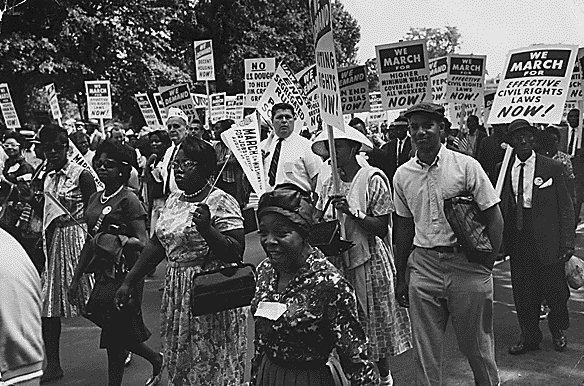
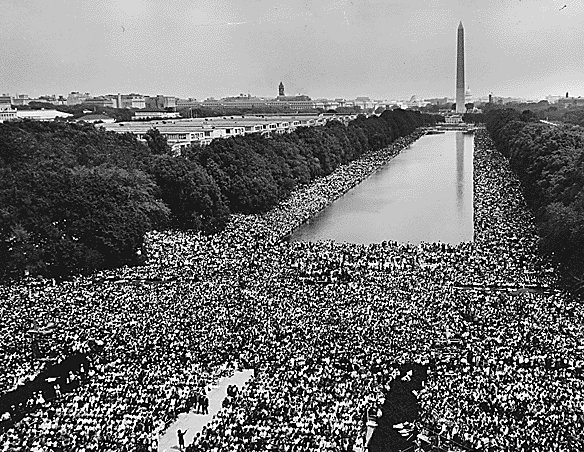
So, today is Cinco de Mayo; the history behind why Americans celebrate May 5th had me thinking about how a small group of people definitely living in a different era took a stand and while there are many stories of how people in our past stood up; such as John Lewis, MLK,Dorothy Height  and others , who most often marched  … Peacefully — maybe we in the 21st Century should gain strength from these stories of how these great people stood up f  themselves, had the courage to challenge laws rules and legislation that clearly perpetuated discriminatory behavior …

We the People of the 21st Century need to stand up stand tall and stand together against the people that seemingly want to take the rights away from a select few… Gotta say just considering a move toward or anything that is even remotely close to stripping our citizens rights away makes me scratch my head …whatever happened to being innocent until proven guilty? maybe not in this era of trump

As we all hear politicians hawk their claim to fame or what they will do for you. The media is going through their poll numbers spreading their collective rhetoric. I don’t know about you, but polls mean nothing when my vote hasn’t be included though the fact is … most democrats do show up to national elections more often and to be sure the day that Barack Obama became President was the day that MIDTERMS became just  as important and as the midterm races begin, hopefully a shift in reality will be to a hard left.  Americans need to be reminded that midterms matter so vote for a member  for Congress that will have courage to put Politics aside and do the work of the People to correct the years of questionable behavior on both sides of the aisle … If you want to live in a 21st Century America as most of us do, that means telling the 1%  your trickle down solution for the middle and lower class stopped working a long time ago. While republicans say cutting slashing and eliminating social programs is good because it will make folks more self-sufficient ask yourself how many of your members of Congress or their family needed help is on Medicare/caid Social Security or has had to deal with that donut hole that actually hurt our Seniors. Republicans in Congress are in it to win off the backs and at a cost to you your family least we talk about civil human  reproductive rights and our earth!

speaking of which …

Our environment has been put on the back burner since the trump admin came to power and now it is in serious jeopardy. The Obama Administration had environmental challenges and this admin needs to demand in-depth evaluations on the way BP ,Massey mining were handled while getting ready for more natural ones. The BP oil spill was a warning to Oil Corporations, who side stepped protocol and safety practices.  In the of case BP it was obvious … at least to most, that in the event of a spill  … a safety procedure should be deployed immediately, not made and put in place after the fact. We owe our children and the next generation a chance to breathe, live/have infrastructure for 21st Century living.

Americans want and need Congress to have the courage to regulate big Corporations! We need a complete overhaul on how oil drilling and transportation is handled in the future…

The Battle of Puebla took place on May 5th, 1862, near the city of Puebla during the French intervention in Mexico. The battle ended in a victory for the Mexican Army over the occupying French forces.

4,000 Mexican soldiers smashed the French and traitor Mexican army of 8,000 at Puebla, Mexico, 100 miles east of Mexico City on the morning of May 5 1862.  For more info:  history.com