Tag Archives: Recycling

5 things You Should Always Recycle


www.Recyclebank.com

Chances are you’re already recycling the cans, bottles, and paper that gets picked up at the curb, but what about all that other stuff that’s lurking in your drawers or closets – like outdated gadgets and dead batteries – that you’re not sure how to recycle? The following household items are especially important to donate or recycle because they contain materials that can contaminate the environment if they wind up in landfills or that can easily be reclaimed for use in new products. Here are some convenient ways to keep them out of the trash:

According to the EPA, recycling just one computer CPU and one monitor is equivalent to preventing 1.35 metric tons of carbon dioxide emissions from being released and recycling one television prevents four to eight pounds of lead from being added to the waste stream.

(1) Electronics: All Office Depot, Staples, and Best Buy stores accept larger electronics like desktop computers for recycling for a small fee (usually $10) and smaller ones like cell phones and PDAs for free. Goodwill stores accept used computer equipment (some locations also accept televisions) for free.

And you can earn RecycleBank Points by recycling MP3 players/iPods, laptops, and cell phones through our partners at Collective Good, FlipSwap, and Gazelle.

Why: You’ll keep toxic materials like lead, mercury, cadmium, arsenic, and brominated flame retardants out of landfills. And useful materials will be recovered, saving energy and resources.

(2) Rechargeable batteries: From cordless phones and power tools, digital cameras, and other gizmos – these can be recycled for free at 30,000 drop-off points nationwide, including retailers such as Home Depot, Lowe’s, RadioShack, Sears, and Target. Enter your zip code at Call2Recycle to find one near you.

Unfortunately, it’s more difficult to find places to recycle alkaline (or single-use) batteries. Try Earth911 to find drop off locations or order a box (for $34.50, including prepaid shipping) from Battery Solutions and send them up to 12 pounds of alkaline and/or rechargeable batteries for recycling.

Why: Like many electronics, batteries contain heavy metals and other chemicals best kept out of the waste stream. Plus, recyclers reclaim metals from them that are used to make, for example, new batteries and steel.

(3) Compact Fluorescent Light Bulbs use 75 percent less energy than incandescent bulbs, but they contain a small amount of mercury and shouldn’t be thrown in the trash. Take them to any Ikea or Home Depot store for recycling or go to Lamp Recycle to find other drop off locations near you.

Why: CFLs in landfills can break and release mercury, a neurotoxin, into the environment.Plasticbagsrecycle
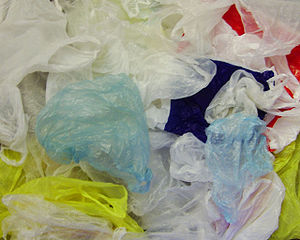
(4)Plastic Bags: Even if you’ve switched to reusable bags for your shopping, you probably have a bunch of these stored in your home. Luckily, lots of retailers like Wal-Mart, Safeway, Albertsons, Wegmans, Krogers, and Giant now have bins where you can recycle plastic grocery bags (and newspaper, drycleaning, bread, and sealable food storage bags). To find a drop off location near you, go to Plastic Bag Recycling or Earth911.

Why: They’re made from petroleum, a non-renewable resource, and when thrown away they take a very long time to decompose. Recyclers will turn them into new products like plastic lumber.

(5) Anything you don’t need that could be of great value to others — for instance, you can donate your used prescription glasses to the nonprofit OneSight at any LensCrafters, Pearle Vision, Sunglass Hut, Target Optical, or Sears Optical location (or go to One Sight for more locations near you). You can also donate unused, unexpired medications including antibiotics, pain relievers, and others by mailing them to the Health Equity Project. The glasses and medications will be distributed to people in need in developing countries.

Keep in mind that you should always recycle hazardous substances like paint, pesticides, propane gas tanks, and motor oil at your town’s household hazardous waste collection events or permanent collection center.

Go to Earth911or call 1-800-CLEANUP to find collection sites and events.

Did you know… reports in 2013 were alarming what are they now?


Plasticbagsrecycle

Did you know … reports in 2013 state the following

7.3 Pounds of plastic… Mostly pvc is in artificial trees

20,  Is the number of years … We must reuse artificial trees before it lowers the carbon footprint, equal to a real tree

There are 4000 Recycle centers nationwideplease find out where you can dispose of your Xmas tree this year for compost, woodchips for gardens and or  hiking trails.

600,00 Homes …Could be powered by energy used from Xmas tree lights every year, go to holidayleds.com and find out how to recycle your incandescent lights.

A 20% reduction in meat consumption would have the same impact as switching from a standard sedan to an ultra-efficient fuel car.

5000 gallons of water … Is the amount it would take to produce 1lb of wheat.

20%  of the worlds’ population…  Could be fed with the grain and soybeans used to feed US cattle.

4.5% … Is the number of greenhouse gases produced worldwide by animal farming than by transportation.

1500 miles … Is the average amount it takes to get food on our tables, the road trip takes tons of energy, the gas used to commute pollutes, buy, use and support your local farmer’s markets and community gardens

660 gallons… Is about how much water it takes to grow cotton for one T-shirt.if the shirt is coloured, a lrg amt of dye rinses off into factory wastewater,ends up in rivers and some dyes have carcinogens.

just more good info from LYBL and Eatingwell.com

More States and Countries are choosing to Ban and or Reduce access to Plastic Bags


beaseedforchangestickersGREEN a repost … and more posts to follow on what is As the years go by Washington state is slowing banning plastic bags ..

happening now 2017 …  Tacoma, WA plastic ordinance starts 7/12/2017  and 2012 seems like eons ago

I have to include an 2015 update to what seemingly was a ban in 2012, was in reality. a choice to pay .5 – .10cents for plastic bags if you want them? The good news is that the transition to an actual ban on plastic as a choice is happening in some parts of Washington state! YAY I have been shaking my head for the last 2yrs when more often than not the checker goes into auto-reaction mode and grabs the plastic if the consumer didn’t bring their own. I am not sure what I expected, but having forgotten my own bags on several occasions the response or offer for a reusable bag was seldom or none and makes me wonder just how much of an impact is being made since the statistics are probably tainted with how many plastic bags are given out each day versus paper or offering a reusable bag. Now, in this year of 2015, no plastic bags are available at more grocery stores and if you don’t have your reusable some of the clerks actually say paper or you can buy one of ours …. finally.

In March of 2012, I heard that Alameda County California voted to implement their “ban” on single use bags not regulate them sometime around January 2013. It just so happens that at or around the same time things were being finalized in different parts of our beautiful state of Washington. Though it has been a long struggle for Washington State to move towards an ordinance that would “ban” bags at retail outlets due to big MONEY in the plastics industry. However, in late December, word was that the City Councils Zero Waste Initiative to “ban” plastic bags in limited and in graduated way realized after four years. In 2008, the Council banned Styrofoam and though they tried to regulate plastic bags they got serious push back from the industry, which spent about $1.4 million, collected signatures with rumors of leaving out some info … then had the ordinance repealed. It was nice to read about Council Bill 117345, a bill to protect Puget Sound, our marine wildlife and our Environment in general joining about twelve states and up to twenty nations. The Seattle City Council voted 9-0 to implement the ban on plastic carry out bags.

After years of pulling out my small recycled bags for the checker to shove my groceries into, Washington State is joining the global movement to protect marine wildlife; the ordinance will take effect on July 1, 2012. It may be a cliché, but this ordinance is a change we can all believe in. I have to say, at first; in my experiences; checkers seemed a little annoyed at having to fight with the reusable bags. The word from most Checkers back in the day was, that plastic is just easier. Yes, the first reusable bags were too small, the dye ran the material was unforgiving, but as folks found better ways to make them; the cost came down and more people bought them including me.

Now, the bags not only cost a little bit more, they are bigger more stylish, last forever are definitely more flexible, and a highly recommended investment. The move to switch from plastic to” bring your own bag” will be difficult for some at first; I intend to carry a few extra to give away or sell; on my website because documented studies show that birds, sea turtles and other wildlife eat plastic bags and some are made with toxic chemicals that could be harmful. The time for a behavior change is now. We all know change is tough, but here we are in the 21st Century and that floating garbage circle, called the ” Great Pacific Garbage Patch discovered in the 90′s by Charles Moore, is only getting bigger. There will always be push back from the plastics industry, their supporters as well as environmental activists who all feel the government does not go far enough and they may be right, but we have to start somewhere.

It baffles me at how complicated people have made the effort to clean up our environment; we all know the need to reduce TRASH as a whole and it starts at home, although Seattle is the 15th largest metropolitan area in the nation, only 13 percent of plastic bags are recycled or re-used.

We owe it to our next generation…

Grocery stores, as well as food service outlets owe it to consumers and the environment.

It took quite sometime and we’ve come a long way from fighting the plastic industry to now finding that Indeed some Grocers feel the same way by eliminating plastic bags period ~ 2015

stay tuned in … who are the enforcers?

repost from 2013

Can That Be Recycled?


Pop Quiz:
Can That Be Recycled?
The Bathroom Edition

How much do you know about recycling in the bathroom? Photo: Johnson & Johnson
To test your recycling knowledge, Earth911 put together a pop quiz about recycling items in a place you may never have considered: the bathroom. See if you’re fit for a (toilet) throne, or whether your ideas about recyclables need to be flushed down the drain.
READ MORE »

VIDEO: We Are Not ‘Garbage’ … Axel Caballero from Cuéntame


Few industries have a greater impact on neighborhoods, residents, workers’ rights and environment than the waste and recycling industry. Their drive for profit has left a trail of abuse, neglect and indifference and in some instances – death. Enough is enough, the community is standing up and saying: We are not garbage!
Watch this moving and powerful video and send a message to public officials that they must act now!
One of the worst offending companies is American Reclamation. A company that represents precisely what is wrong with this industry across the country – with dozens of health and safety violations that have resulted in official investigations. Even so, these companies are on the brink of securing major city contracts.
We must show that we stand behind our recyclers. They are listening right now. So leave or send your comment and we will deliver it to the appropriate official!
Together we can change the course.

Yours, Axel Caballero and the Cuéntame team.