
USDA~ FSN ~ FDA ~ MAY 2026 -Recalls – Food Safety Alerts – Previous Month & last day of prior month update


** Insulet stated that Pods from certain lots may have a small tear in the internal tubing that delivers insulin. If this happens, insulin may leak inside the Pod instead of being fully infused in the body as intended, potentially leading to under-delivery of insulin. Customers in the U.S. with adverse reactions, quality problems, or questions about this issue should contact Insulet at 1-800-641-2049 or visit https://www.omnipod.com/current-poddersExternal Link Disclaimer to reach a live agent chat.

** Ghirardelli Chocolate Company of San Leandro, California is voluntarily recalling certain powdered beverage mixes because they have the potential to be contaminated with Salmonella. This action follows a California Dairies, Inc. milk powder recall due to a concern of potential Salmonella contamination, which was supplied to a third-party manufacturer and used as an ingredient in powdered beverage mixes. The affected beverage mixes are packaged in large formats intended for food service and institutional customers, but some powdered beverage mixes may also have been available for purchase by consumers through e-commerce platforms. No illnesses have been reported to date. Consumers who purchased one of the recalled powdered beverage mixes listed above may contact Ghirardelli Chocolate Company directly at 1-844-776-0419 for questions or more information 7 days a week, 24 hours a day. The list is long; go to fda.gov for all the LOT NUMBERS

**

1954 Supreme Court rules in Hernandez v. Texas, broadening civil rights laws


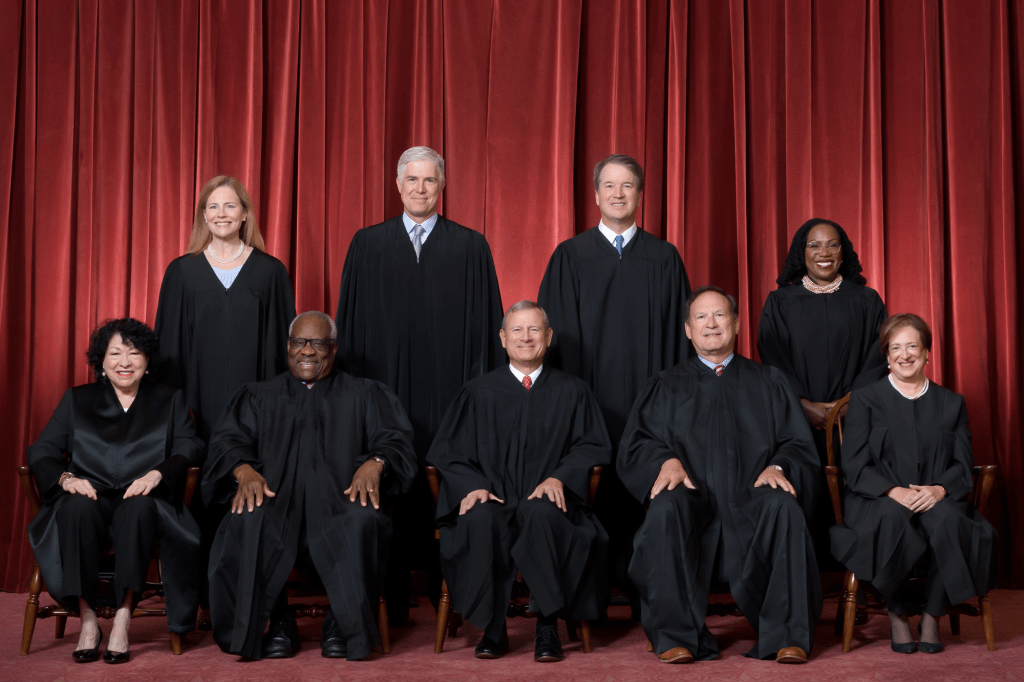
In 1954, the Supreme Court issued a momentous ruling that clarified how the American legal system handled charges of discrimination. In Hernandez v. Texas, the Supreme Court unanimously ruled that the Fourteenth Amendment applied to all racial and ethnic groups facing discrimination, effectively broadening civil rights laws to include Hispanics and all other non-whites.

The defendant, Peter Hernandez, was a Mexican American agricultural laborer, part of the influx of such workers that had come to Texas during and after World War II. Hernandez was convicted of killing a man in cold blood in Jackson County, Texas, but his legal team, which was drawn mostly from one of the oldest Latino civil rights groups in the nation, the League of United Latin American Citizens, appealed. They pored through the records of jury selections in Jackson County, an area with a substantial Hispanic population, and found that not one of the roughly 6,000 jurors selected over the previous 25 years had a Hispanic last name. Citing the Fourteenth Amendment, which had been passed in 1868 and guaranteed equal protection under the law to all African Americans, Hernandez’s lawyers claimed he had been deprived of equal protection because discrimination prevented him from being tried by a jury of his peers.

Source: history.com for the complete

The 1971 May Day Protests were a series of large-scale civil disobedience actions in Washington, D.C., in protest against the Vietnam War. These began on Monday morning, May 3rd, and ended on May 5th. More than 12,000 people were arrested, the largest mass arrest in U.S. history. Members of the Nixon administration would come to view the events as damaging, because the government’s response was perceived as violating citizens’ civil rights


See the source image

The 1971 May Day Protests were a series of large-scale civil disobedience actions in Washington, D.C., in protest against the Vietnam War.

These began on Monday morning, May 3rd, and ended on May 5th. More than 12,000 people were arrested, the largest mass arrest in U.S. history.

Members of the Nixon administration would come to view the events as damaging, because the government’s response was perceived as violating citizens’ civil rights.

wiki

1992 – Rioting began after a jury decision to acquit four Los Angeles policemen in the Rodney King beating trial. 54 people were killed in 3 days after 5 days of rioting


Los Angeles Riots, 1992 (16472503344).jpg

The 1992 Los Angeles riots, sometimes called the 1992 Los Angeles uprising, were a series of riots and civil disturbances that occurred in Los Angeles County in April and May 1992. 

Unrest began in South Central Los Angeles on April 29, after a trial jury acquitted four officers of the Los Angeles Police Department (LAPD) for usage of excessive force in the arrest and beating of Rodney King, which had been videotaped and widely viewed in TV broadcasts. The rioting took place in several areas in the Los Angeles metropolitan area, as thousands of people rioted over six days after the verdict’s announcement.

Widespread looting, assault, and arson occurred during the riots, which local police forces had difficulty controlling due to lack of personnel and resources. The situation in the Los Angeles area was only resolved after the California National Guard, the United States military, and several federal law enforcement agencies were deployed to assist in ending the violence and unrest.

By the time the riots ended, 63 people had been killed, 2,383 had been injured, more than 12,000 had been arrested, and estimates of property damage were over $1 billion, much of which disproportionately affected Koreatown, where the bulk of rioting occurred. LAPD Chief of Police Daryl Gates, who had already announced his resignation by the time of the riots, was attributed with much of the blame for failure to de-escalate the situation and overall mismanagement.

wiki