Technicians maintain server racks beneath an extensive network of overhead cables in a modern data center.
Every time you check your Gmail, search on Google for a nearby restaurant, or watch a YouTube video, a server whirs to life in one of our data centers.
Data centers are the engines of the Internet, bringing the power of the web to millions of people around the world. And as millions more people come online, our data centers are growing, too. We’ve recently expanded our data centers in Iowa, Georgia, Singapore and Belgium.
And today we’re announcing a new data center in Alabama—our 14th site globally.
This time, we’re doing something we’ve never done before: we’ll be building on the grounds of the Widows Creek coal power plant in Jackson County, which has been scheduled for shutdown. Data centers need a lot of infrastructure to run 24/7, and there’s a lot of potential in redeveloping large industrial sites like former coal power plants. Decades of investment shouldn’t go to waste just because a site has closed; we can repurpose existing electric and other infrastructure to make sure our data centers are reliably serving our users around the world.
At Widows Creek, we can use the plants’ many electric transmission lines to bring in lots of renewable energy to power our new data center. Thanks to an arrangement with Tennessee Valley Authority, our electric utility, we’ll be able to scout new renewable energy projects and work with TVA to bring the power onto their electrical grid. Ultimately, this contributes to our goal of being powered by 100% renewable energy.
Of course, the cleanest energy is the energy you don’t use. Our Alabama data center will incorporate our state-of-the-art energy efficiency technologies. We’ve built our own super-efficient servers, invented more efficient ways to cool our data centers, and even used advanced machine learning to squeeze more out of every watt of power we consume. Compared to five years ago, we now get 3.5 times the computing power out of the same amount of energy.
Since the 1960s, Widows Creek has generated power for the region—now the site will be used to power Internet services and bring information to people around the world. We expect to begin construction early next year and look forward to bringing a Google data center to Alabama.
Source: Posted by Patrick Gammons, Senior Manager, Data Center Energy and Location Strategy
The SOS was right in front of our… my face. Yes, I felt the urgency to post this article, giving us info about what they are doing, as well as the other side telling voters the reality of how the data centers will impact the lives of Americans, and not necessarily in a good way. talk’bout naivete. sigh
Now, the struggle for land, energy, water, and utilities will be seen in real time, and there may be an increase in costs for constituents! Will the negative impact on communities in America affect those who agreed to have a data center in their city? I added the image of a data center
President Franklin D. Roosevelt signs into law the Social Security Act on August 14, 1935. Press photographers snapped pictures as FDR, flanked by ranking members of Congress, signed into law the historic act, which guaranteed an income for the unemployed and retirees. FDR commended Congress for what he considered to be a “patriotic” act.
Roosevelt had taken the helm of the country in 1932 in the midst of the Great Depression, the nation’s worst economic crisis. The Social Security Act (SSA) was in keeping with his other “New Deal” programs, including the establishment of the Works Progress Administration and the Civilian Conservation Corps, which attempted to hoist America out of the Great Depression by putting Americans back to work.
In his public statement that day, FDR expressed concern for “young people [who] have come to wonder what would be their lot when they came to old age” as well as those who had employment but no job security. Although he acknowledged that “we can never insure one hundred percent of the population against one hundred percent of the hazards and vicissitudes of life,” he hoped the act would prevent senior citizens from ending up impoverished.
“You just slammed my head to the ground. Do you not even care about that?”
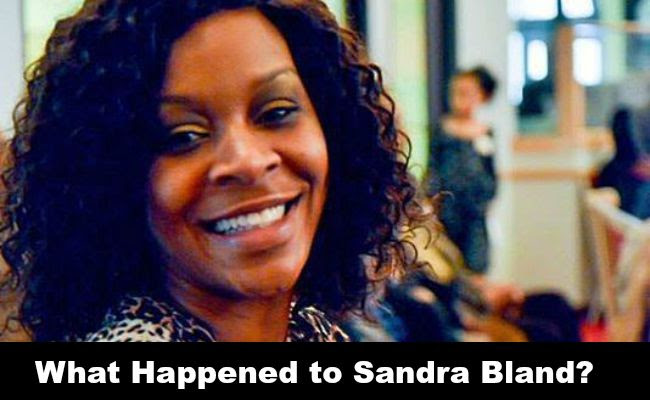
These were some of the last words of 28-year-old Sandra Bland.On Friday, Texas State troopers pulled Sandra over as she was driving to her new job for allegedly not using the turn signals during a lane change.1 What happened next was all too familiar and terrifying.
An eye-witness says police ripped Sandra out of the car, violently slammed her on the ground, and arrested her as she screamed for help. Just 72 two hours later, she was dead.2 Police are claiming Sandra took her own life, but her family and friends don’t believe it. Local District Attorney Elton Mathis has already said he has no reason to expect foul play and handed over the investigation to the same police agency that arrested Sandra.
DA Mathis said there was no reason for concern, despite the fact that an allegedly routine traffic stopped turned into a violent arrest is itself a cause for concern.3Sandra’s family says that Sandra would never kill herself and that police seem to be covering up her death.4We must demand that local officials release all video, information and photographs relating to Sandra’s unjust arrest, imprisonment and death.
The local police department and prosecutor’s office have a long history of racism and corruption. Last year, DA Mathis threatened a local Reverend who spoke out about racist prosecutions, saying he would release his “hounds” on the Reverend.5 Waller County Sheriff Glenn Smith was fired from the police department in Hempstead, Texas for documented cases of racism.5
According to her loved ones, Sandra Bland was a loving, compassionate woman, with a bright future ahead.6 Today would have been the first day at her new job working student outreach at her alma mater, Prairie View A&M University. Loved ones described her as bright, spirited, and having a thirst for life. She was also a vocal advocate against police brutality and often spoke about ending racism and police violence. Our hearts and minds are with her friends and family as they move through this unimaginably hard time.
But in a world where Black people are stereotyped as “violent” and police exist to enforce the boundaries of a deeply divided and racist society, who Sandy was or the life she was creating, did not matter. What mattered was that she was Black, and therefore, in the eyes of the law, didn’t deserve respect, didn’t deserve her civil rights, her freedom or her life. To be Black in America, is to be safe nowhere. Black women are 3 to 4 times more likely to be targeted by police and incarcerated than white women.7
The Department of Justice and Attorney General Lynch have the power and responsibility to address the systemic police violence targeting Black communities. The reality is, racism, corruption and a deep-seated culture of secrecy prevents local and state police from holding themselves accountable. Without independent oversight, police will continue to kill and prosecutors will continue to do nothing. We should not have to demand justice, every time a Black person is murdered, but we will continue to do so until the justice system respects Black lives.
1. The Declaration of Independence wasn’t signed on July 4, 1776.
On July 1, 1776, the Second Continental Congress met in Philadelphia, and on the following day 12 of the 13 colonies voted in favor of Richard Henry Lee’s motion for independence. The delegates then spent the next two days debating and revising the language of a statement drafted by Thomas Jefferson.
On July 4, Congress officially adopted the Declaration of Independence, and as a result the date is celebrated as Independence Day. Nearly a month would go by, however, before the actual signing of the document took place.
First, New York’s delegates didn’t officially give their support until July 9 because their home assembly hadn’t yet authorized them to vote in favor of independence. Next, it took two weeks for the Declaration to be “engrossed”—written on parchment in a clear hand.
Most of the delegates signed on August 2, but several—Elbridge Gerry, Oliver Wolcott, Lewis Morris, Thomas McKean and Matthew Thornton—signed on a later date. (Two others, John Dickinson and Robert R. Livingston, never signed at all.) The signed parchment copy now resides at the National Archives in the Rotunda for the Charters of Freedom, alongside the Constitution and the Bill of Rights.
2. More than one copy exists.
After the adoption of the Declaration of Independence, the “Committee of Five”—Thomas Jefferson, John Adams, Benjamin Franklin, Roger Sherman and Robert R. Livingston—was charged with overseeing the reproduction of the approved text. This was completed at the shop of Philadelphia printer John Dunlap. On July 5, Dunlap’s copies were dispatched across the 13 colonies to newspapers, local officials and the commanders of the Continental troops. These rare documents, known as “Dunlap broadsides,” predate the engrossed version signed by the delegates. Of the hundreds thought to have been printed on the night of July 4, only 26 copies survive. Most are held in museum and library collections, but three are privately owned.
3. When news of the Declaration of Independence reached New York City, it started a riot.
By July 9, 1776, a copy of the Declaration of Independence had reached New York City. With hundreds of British naval ships occupying New York Harbor, revolutionary spirit and military tensions were running high. George Washington, commander of the Continental forces in New York, read the document aloud in front of City Hall. A raucous crowd cheered the inspiring words, and later that day tore down a nearby statue of George III. The statue was subsequently melted down and shaped into more than 42,000 musket balls for the fledgling American army.
4. Eight of the 56 signers of the Declaration of Independence were born in Britain.
While the majority of the members of the Second Continental Congress were native-born Americans, eight of the men voting for independence from Britain were born there. Gwinnett Button and Robert Morris were born in England, Francis Lewis was born in Wales, James Wilson and John Witherspoon were born in Scotland, George Taylor and Matthew Thornton were born in Ireland and James Smith hailed from Northern Ireland.
5. One signer later recanted.
Richard Stockton, a lawyer from Princeton, New Jersey, became the only signer of the Declaration of Independence to recant his support of the revolution. On November 30, 1776, the hapless delegate was captured by the British and thrown in jail. After months of harsh treatment and meager rations, Stockton repudiated his signature on the Declaration of Independence and swore his allegiance to King George III. A broken man when he regained his freedom, he took a new oath of loyalty to the state of New Jersey in December 1777.
6. There was a 44-year age difference between the youngest and oldest signers.
The oldest signer was Benjamin Franklin, 70 years old when he scrawled his name on the parchment. The youngest was Edward Rutledge, a lawyer from South Carolina who was only 26 at the time. Rutledge narrowly beat out fellow South Carolinian Thomas Lynch Jr., just four months his senior, for the title.
7. Two additional copies have been found in the last 25 years.
In 1989, a Philadelphia man found an original Dunlap Broadside hidden in the back of a picture frame he bought at a flea market for $4. One of the few surviving copies from the official first printing of the Declaration, it was in excellent condition and sold for $8.1 million in 2000. A 26th known Dunlap broadside emerged at the British National Archives in 2009, hidden for centuries in a box of papers captured from American colonists during the Revolutionary War. One of three Dunlap broadsides at the National Archives, the copy remains there to this day.
8. The Declaration of Independence spent World War II in Fort Knox.
On December 23, 1941, just over two weeks after the Japanese attack on Pearl Harbor, the signed Declaration, together with the Constitution, was removed from public display and prepared for evacuation out of Washington, D.C. Under the supervision of armed guards, the founding document was packed in a specially designed container, latched with padlocks, sealed with lead and placed in a larger box. All told, 150 pounds of protective gear surrounded the parchment. On December 26 and 27, accompanied by Secret Service agents, it traveled by train to Louisville, Kentucky, where a cavalry troop of the 13th Armored Division escorted it to Fort Knox. The Declaration was returned to Washington, D.C., in 1944.
9. There is something written on the back of the Declaration of Independence.
In the movie “National Treasure,” Nicholas Cage’s character claims that the back of the Declaration contains a treasure map with encrypted instructions from the founding fathers, written in invisible ink. Unfortunately, this is not the case. There is, however, a simpler message, written upside-down across the bottom of the signed document: “Original Declaration of Independence dated 4th July 1776.” No one knows who exactly wrote this or when, but during the Revolutionary War years the parchment was frequently rolled up for transport. It’s thought that the text was added as a label.
(1) Did you know: It was actually on July 2, 1776, that America gained its independence. So why do we celebrate on July 4?
Keep clicking to find out from Kenneth C. Davis, author of the “Don’t Know Much About” book series.
( 2) “The fact is, John Adams wrote home to Abigail on the 3rd that this day, July 2nd will go down in history,” Davis explained on “CBS This Morning,” “We’ll celebrate it with parades and pomp and bells ringing and fireworks. And it was because Congress actually ruled it in favor of independence on July 2. But it was two days later, of course, that Congress then accepted Jefferson’s declaration, explaining the vote two days before that really got fixed in America’s imagination as our birthday. July 2nd should be Independence Day.”
(3)Thomas Jefferson drafted the Declaration of Independence on a “laptop,” a kind of writing desk that could fit on one’s lap.
(4) Did you know Thomas Jefferson changed the wording of the Declaration of Independence from “the pursuit of property” to “the pursuit of happiness”?
“Jefferson did not come up with these words out of thin air,” Davis said on “CBS This Morning.” “These were words and ideas that had been floating around for a very long time. Other people had written about things like ‘the pursuit of property.’ Jefferson, I think can say we say happily changed that to the ‘pursuit of happiness’.”
(5) John Adams and Thomas Jefferson both died on July 4, 1826. Davis explained, “That may be the most extraordinary coincidence in all of history. On the 50th anniversary of the adoption of the declaration…the two giants of the declaration both died. … Jefferson died first. Adams was alive, of course, in Massachusetts. He didn’t know that Jefferson had died but said, famously, perhaps apocryphally, that ‘Jefferson still lives.’ And people took that to mean his words will live forever.”
(6) The Liberty had nothing to do with July 4th. It wasn’t called the “Liberty Bell” until the 1830s and that’s also when it got its famous crack.
(7) Only two men signed the Declaration of Independence on July 4th, 1776 — John Hancock (not the big signature!) and Charles Thompson, secretary of the Congress.
(8) Jefferson’s original draft was lost and the one eventually signed is the “engrossed” document and is kept at the National Archives.
(9) The printed version of the Declaration was called the Dunlap Broadside – 200 were made but only 27 are accounted for. One of these was found on the back of the picture frame at a tag sale and sold at auction for $8.14 million to television producer Norman Lear. It now travels the country to be displayed to the public.








 Be a Seed for Change
You must be logged in to post a comment.