April 1, 2020 — Many emergency room workers remove their clothes as soon as they get home — some before they even enter. Does that mean you should worry about COVID-19 transmission from your own clothing, towels, and other textiles?
While researchers found that the virus can remain on some surfaces for up to 72 hours, the study didn’t include fabric. “So far, evidence suggests that it’s harder to catch the virus from a soft surface (such as fabric) than it is from frequently touched hard surfaces like elevator buttons or door handles,” wrote Lisa Maragakis, MD, senior director of infection prevention at the Johns Hopkins Health System.
for the complete article: webmd.com/lung/news/20200401
1973 – Abortion became legal in the U.S. as the Supreme Court announced its decision in the case of Roe vs. Wade striking down local state laws restricting abortions in the first six months of pregnancy. In more recent rulings (1989 and 1992) the Court upheld the power of individual states to impose some restrictions.
By Patricia Yuu Pan
Roe versus Wade, better known as Roe v. Wade, is the 1973 U.S. Supreme Court decision that legalized abortion within the first two months of pregnancy. Up until then, individual state laws regulated abortions thereby forcing women to illegal clinics or untrained practitioners. The lack of proper medical supervision in these situations was dangerous for the women.
The case was appealed and landed in the U.S. Supreme Court. On January 22, 1973, the Court handed down its decision in favor of Roe, declaring: [The] right to privacy, whether it be founded in the Fourteenth Amendment’s concept of personal liberty and restrictions upon state action, as we feel it is, or, as the district court determined, in the Ninth Amendment’s reservation of rights to the people, is broad enough to encompass a woman’s decision whether or not to terminate her pregnancy.”
As the anniversary of Roe v. Wade approaches on Jan. 22—and with the Supreme Court set to revisit women’s fundamental right to access abortion in the Whole Woman’s Health v. Cole case, the most serious threat to abortion since 1992—the Ms. Blog decided to look back at the realities of illegal abortion pre-Roe, and for women today who lack access to proper care.
As part of our #WeWontGoBack campaign, Ms. Blog readers are sharing their own stories, or the stories of friends and family members who have resorted to illegal abortions because they had no choice. Use the hashtag to share your story on social media.
Below, read pre-Roe abortion stories collected from theMs. Facebook page.
“In 9th grade a good friend became pregnant by our AAU coach. He threatened to kill her if she told how she became pregnant. Her parents were divorced and her mother had committed suicide a few weeks prior. She borrowed money from everyone and wrote a check on [her] dad’s account to go to [the] local abortionist. She died in [the] girls bathroom a week later. … She was a very talented artist and composed music. I had known her since third grade and even now, at 62, can hear her laughter and have a caricature of myself she drew. She had to be buried in a different cementary as was Catholic raised, as did her mom. After her death a group told the coach to quit or we would tell. We were 14-year-old kids doing the best we could for our friend. … She was just a baby herself.” — Evelyn H.
“When I was in a Midwest high school, we pooled our babysitting money to help our 16-year-old friend fly to Mexico, alone, for an abortion. Her parents thought she was staying at a friend’s home overnight. Imagine. I am 64. Never again—not going back.” — Bonnie B.
“My mom had one in Tijuana in the late 1960s. She told me she remembers watching the doctor use fire to sterilize the tools. She was OK, but terrified. She had given up a child for adoption a few years prior and couldn’t face that loss again. … I need to get the full story from her soon. I was afraid to ask for more details. It seemed like something she had kept hidden for so long. She only shared this with me when I was in my late 20s. Abortion must remain a safe and legal option.” — Jena G.
“I had a roommate in Madison, Wisconsin who became pregnant and, because in 1969 you couldn’t get an abortion in Wisconsin, the four roommates chipped in to buy her a plane ticket to NYC to have the abortion. She came home in fine shape but it was traumatic for her not to have a regional option and not having the funds as a college student to pay for it. So when I read about the closing of Planned Parenthood clinics so that underserved women don’t have regional options even for breast exams or Pap smears it is infuriating!” — Susan A.K.
“My submission is very short. It is about my Mother, b. 1924, d. 1971.
She was found in a pool of blood on her cold white tile bathroom floor. Her mother found her. She was discovered, [she] did not die. Later, she had my sister and me. After her suicide at age 46, her mother told [me] about finding her daughter unconscious in a pool of blood.” — Carol F.
“In 1932 at the height of the Great Depression, my grandmother had one little boy and was five months pregnant with her second child. She was a lifelong, devout Catholic. My grandfather just came home to their tiny-two room apartment and informed her that he was leaving her for another woman. She had no job and was about to be evicted from her apartment. She was desperate, terrified and alone. A week after my grandfather left, she found a back-alley abortionist who performed [the] abortion and she very nearly bled to death. … [Then] she returned home and delivered a ‘stillborn’ (or so her parents thought) baby boy. She developed peritonitis and lapsed into a weeklong coma. When she regained consciousness and realized what she had done, she cried non-stop for two months. I was the only person she ever told; she told me that her grief and sorrow was so intense that she feared dying as she was terrified of having to face the child she aborted. She lived to be 102 and never once allowed herself forgiveness.” — Patricia H.
“My mom spoke of aunts and other beloved female family members who could not afford and/or could not handle another pregnancy and child. All that was available to them was ‘kitchen table’ abortions done in secret with a coat hanger. The pregnancy was aborted, but these women died horrible deaths from peritonitis due to internal punctures and infections. They felt as though they had no choice and were desperate not to have more children. My mom was haunted by their stories and the fact they felt so trapped. It was such a loss for her and the family to lose these lively, strong women. This was in the 1930s and ’40s.” — Jayne B.
“I’m a 62-year-old man but I know that my single mother had an illegal abortion in her teens, before I was born, that almost killed her. She couldn’t stop bleeding and couldn’t go to the hospital without facing criminal charges. All she could do was wait it out in a hotel room. Apparently, her boyfriend collected newspapers for her to sit on to collect the blood.” — Wm P.
Wilma (born June 23, 1940, St. Bethlehem, near Clarksville, Tennessee, U.S.—died November 12, 1994, Brentwood, Tennessee) was an American sprinter, the first American woman to win three track-and-field gold medals in a single Olympics. Rudolph was sickly as a child and could not walk without an orthopedic shoe until she was 11 years old. Her determination to compete, however, made her a star basketball player and sprinter during high school in Clarksville, Tennessee. She attendedTennessee State University from 1957 to 1961. At age 16 she competed in the 1956 Olympic Games at Melbourne, Australia, winning a bronze medal in the 4 × 100-metre relay race. In 1960, before the Olympic Games at Rome, she set a world record of 22.9 seconds for the 200-metre race. In the Games themselves she won gold medals in the 100-metre dash (tying the world record: 11.3 seconds), in the 200-metre dash, and as a member of the 4 × 100-metre relay team, which had set a world record of 44.4 seconds in a semifinal race. She was Amateur Athletic Union (AAU) 100-yard-dash champion (1959–62).
** This current recall was initiated after Tri-Union Seafoods discovered that quarantined cases, associated with the initial recall, were inadvertently shipped by a third-party distributor. The impacted products were distributed to limited retail stores as follows:
Safeway, Albertsons, Vons, and Pavilions – California Consumers can contact Tri-Union Seafoods at support@thaiunionhelp.zendesk.com or 833-374-0171, if they have any questions or to request replacement product. The toll-free number hours are Monday through Friday from 9:00 a.m. to 5:00 p.m. EST.
Meijer – Illinois, Indiana, Kentucky, Michigan, Ohio, and Wisconsin
Giant Foods – Maryland and Virginia
Genova Yellowfin Tuna in Olive Oil 5.0 oz 4 Pack
4800073265
S84N D2L
1/21/2028
S84N D3L
1/24/2028
Genova Yellowfin Tuna in in Extra Virgin Olive Oil with Sea Salt 5.0 oz
Diva Fam Inc. is recalling all lots and flavors of its Sea Moss Gel Superfood because of the lack of required regulatory authorization and temperature monitoring records for pH-controlled food
Suzanna’s Kitchen of Norcross, GA, is recalling 13,720 pounds of ready- to-eat grilled chicken breast fillet products that may be contaminated with Listeria monocytogenes, the USDA’s Food
** Jan. 16, 2026 – Suzanna’s Kitchen, a Norcross, Ga., establishment, is recalling approximately 13,720 pounds of ready- to-eat grilled chicken breast fillet products that may be adulterated with Listeria monocytogenes ( Lm), the U.S. Department of Agriculture’s Food Safety and Inspection Service (FSIS) announced…
Impacted Products
• 10-lb. cases containing two 5 lb. bags of fully cooked grilled chicken breast fillets with rib meat, with lot code 60104 P1382 287 5 J14 on the side of the case and on the package.
** The U.S. Food & Drug Administration (FDA) has announced a cheese recall impacting more than 1.5 million bags of shredded cheese. The recalled cheese was produced by Great Lakes Cheese Co. Inc. and may be contaminated with metal fragments.
Great Lakes Cheese Co. Inc. initially announced the recall in October, but the FDA classified it as “Class II,” meaning that eating the cheese “may cause temporary or medically reversible adverse health consequences,” on Dec. 1.
Si Ji Mei brand Wuhan Egg Sheets with Glutinous Rice are under recall in Canada because of potential contamination with Salmonella. The recall was triggered by the company, according to
The California Department of Public Health (CDPH) is issuing an urgent advisory following a recent outbreak of amatoxin poisoning linked to the consumption of wild, foraged mushrooms. Confirmed cases have
** A recall on Ore-ida and Sysco Imperial Tater-Tots for plastic contamination. To date, there have been no reported injuries or illnesses associated with this recall, and it is currently unclear how the products became contaminated. Clear hard plastic fragments:McCain Foods USA Inc. Ore-Ida Tater Tots potatoes with the UPC code 1 00 72714 00215 8
Sysco Imperial Potato Tater Barrel with the UPC code 1 07 34730 62740 0
The tater tots were distributed: CA, WA, AR,AZ,CO,FL,HI, IA, ID,IL,KS,KY,LA,MI,MN,MO,MS,MT,NE,NM,ND,NV,OR,TX,UT,WI
** The recalled product was directly distributed to the two retailers listed below, located IA and NJ , between April 2023 to December 2023 There were no online sales.
1.Golden Land (Des Moines) 2740 Douglas Ave Des Moines IA 50310 Tel: 515-468-8224
The recalled [Klong Kone] Shimp Paste (Klong Kone) “454 G. (1 LBS)” and “910 G. (2 LBS),” is packaged in a white plastic jar with a red cap. The product is a dark-colored paste with a salty flavor. The product was Packed and Distributed By: P. Prateepthong 2000, Product of Thailand.
The recalled product was sold in two sizes:
[Klong Kone] Shrimp Paste (Klong Kone) ‘454 G. (1 LBS)’ , with UPC: 8853142000313, Product Code: DPA159
[Klong Kone] Shrimp Paste (Klong Kone) ‘910 G. (2 LBS)’ , with UPC: 8853142000320, Product Code: DPA161
To date, there has been one report of four children becoming ill, which involved diarrhea and elevated blood levels.
** Sonoma, CA —Primavera Nueva Inc. is voluntarily recalling certain lots of its 4-count tamales because the products have the potential to be contaminated with Listeria monocytogenes, an organism which can cause serious and sometimes fatal infections in young children, frail or elderly people, and others with weakened immune systems. Although healthy individuals may suffer only short-term symptoms such as high fever, severe headache, stiffness, nausea, abdominal pain and diarrhea, listeria infection can cause miscarriages and stillbirths among pregnant women.
Product was distributed by Primavera Nueva Inc. in California and Nevada to retail stores.
The following 4-count tamales, produced between October 10, 2024 and October 10, 2025 are included:
Roasted Green Chile & Jack Cheese
Black Bean Bonanza & Jack Cheese
Butternut Squash w/ Roasted Green Chiles & Cheese
BBQ Chipotle Bean & White Cheddar
Mushroom Spinach & Salsa with Two Cheeses
Roasted Green Chile
Black Bean Bonanza
Butternut Squash w/ Roasted Green Chiles
Mushroom Spinach & Salsa
Roasted Pumpkin & White Cheddar.
No other Primavera Nueva products are affected.
No illnesses have been reported to date. Primavera Nueva has fully corrected the issue—enhanced cooking-temperature monitoring and verification have been in place since October 11, 2025.
Consumer Guidance Consumers who have tamales with date codes 10/22 (year 2024) – 10/22 (year 2025) should not consume the product and should discard it.
For questions, contact: Araceli Santoyo — primaveranueva@aol.com 707 939 9350, Monday through Friday 9am to 3pm pacific
** Distilled Water Meijer Steam Distilled Water one-gallon jugs have been recalled by the FDA for containing a “floating black foreign substance.”
The affected product was sold at Meijer stores in Illinois, Indiana, Kentucky, Michigan, Ohio, and Wisconsin.
** Mountain West Food Group, LLC, a Heyburn, Idaho establishment, is recalling approximately 2,855 pounds of raw ground beef products that may be contaminated with E. coli O26, the U.S. Department of Agriculture’s Food Safety and Inspection Service (FSIS) announced today…
Impacted Products
• 16-oz. (1-lb.) vacuum-sealed packages containing “FORWARD FARMS GRASS-FED GROUND BEEF” with “USE OF FREEZE BY 01/13/26 EST 2083” printed on the side of the packaging.

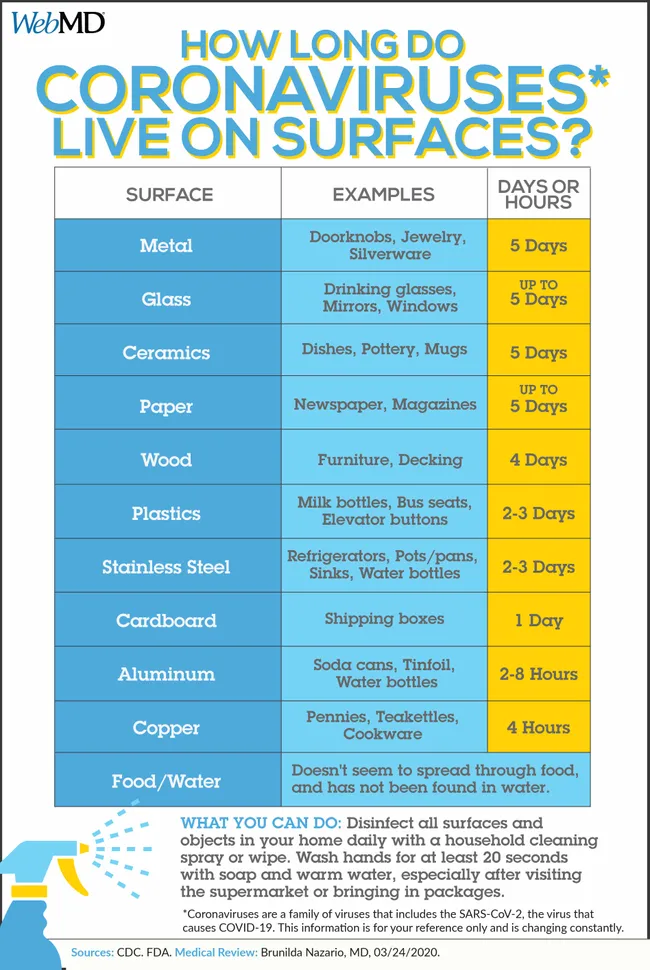 ce suggests that it’s harder to catch the virus from a soft surface (such as fabric) than it is from frequently touched hard surfaces like elevator buttons or door handles,” wrote Lisa Maragakis, MD, senior director of infection prevention at the Johns Hopkins Health System.



 Be a Seed for Change
You must be logged in to post a comment.