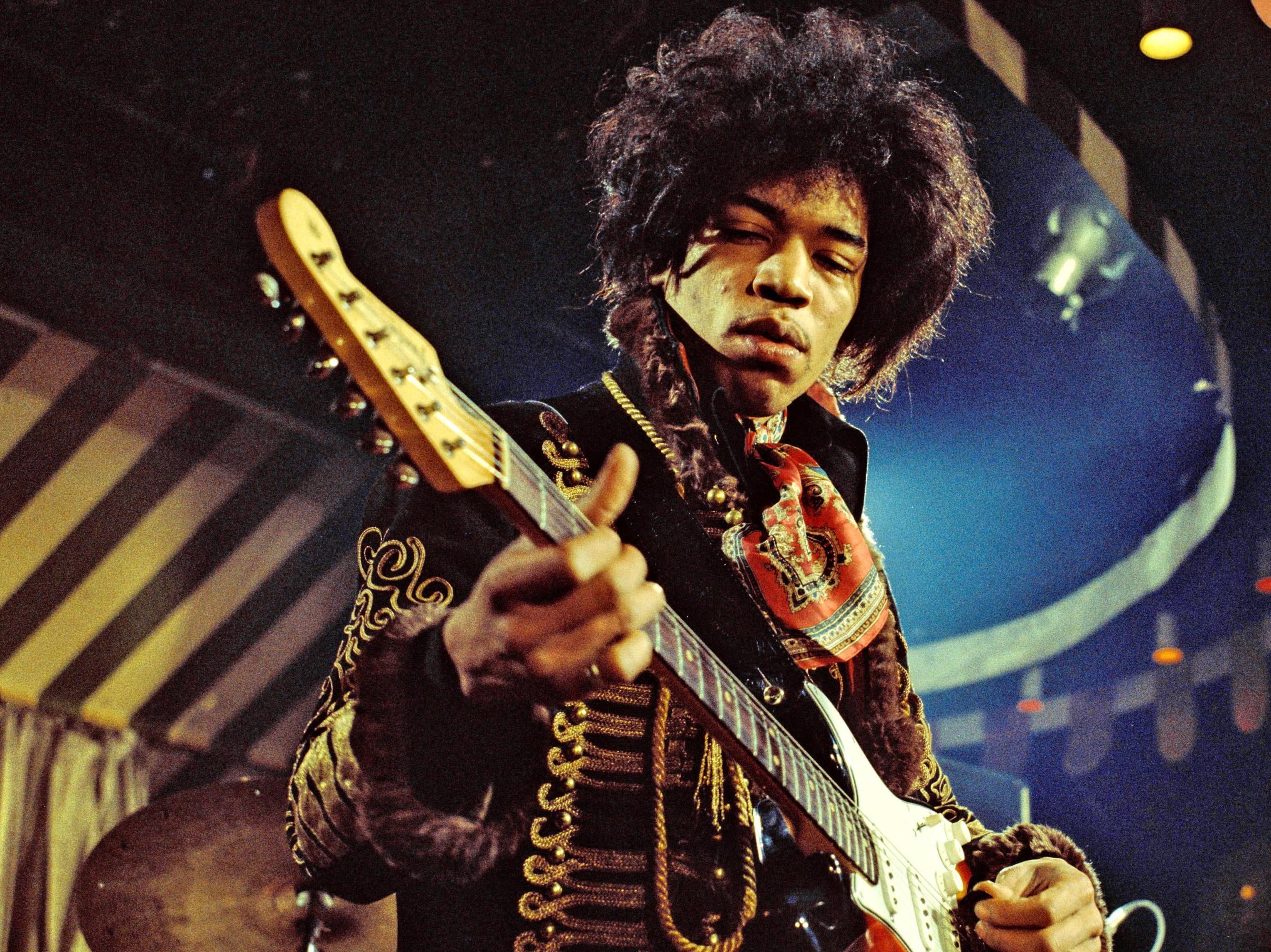
music legend Jimi Hendrix is still widely considered the greatest guitarist in the history of rock ‘n’ roll.
Born on November 27, 1942, in Seattle, Washington, Jimi Hendrix learned to play guitar as a teenager, and grew up to become a rock guitar legend who excited audiences in the 1960s with his innovative electric guitar playing.
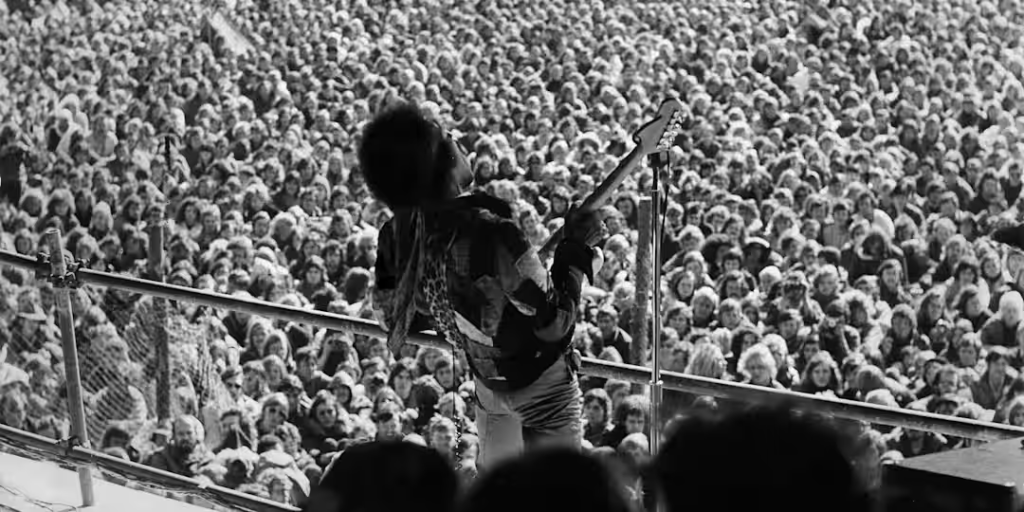
On September 18, 1970, 27-year-old rock superstar Jimi Hendrix is found unresponsive by a girlfriend inside London’s Samarkand Hotel in London, England. The guitarist is declared dead on arrival at a local hospital, and a post-mortem finds that he asphyxiated on his own vomit after overdosing on sleeping pills and alcohol.
On 1/29/1850 – Henry Clay introduced in the Senate a * Compromise of 1850 Bill* on slavery that included the admission of California into the Union as a free state.1850 Senator Henry Clay drafted the Compromise of 1850 to defuse tensions between slave states and free states over territories won during the Mexican–American War
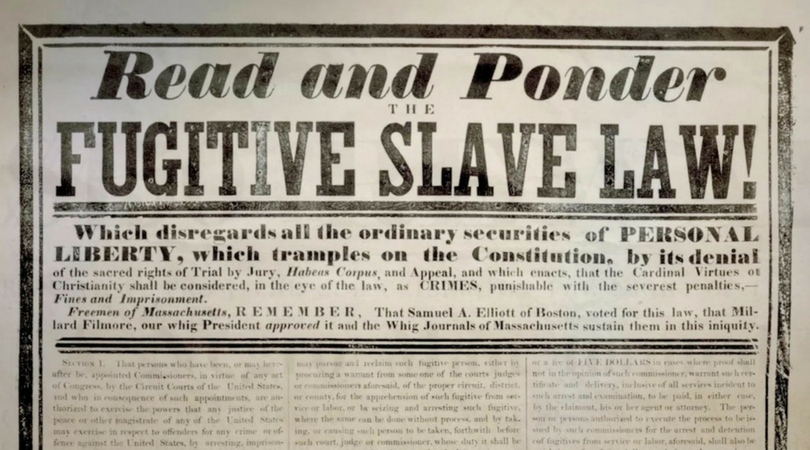
Passed on September 18, 1850 by Congress, The Fugitive Slave Act of 1850 was part of the Compromise of 1850. The act required that slaves be returned to their owners, even if they were in a free state. The act also made the federal government responsible for finding, returning, and trying escaped slaves.
Sources: battlefields.org , on-this-day.com
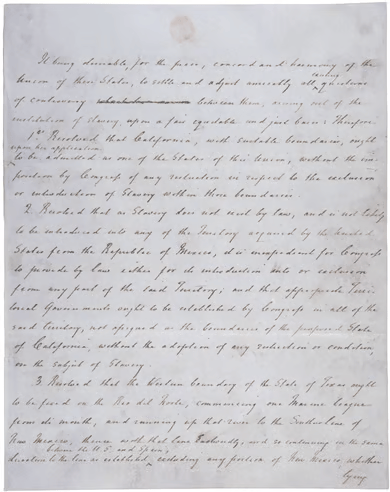
Henry Clay’s handwritten draft of one of the bills that formed the Compromise of 1850
The American Civil War devastated much of the country between 1861 and 1865, but the conflict could have actually happened much sooner. In 1850, a major dispute between slave states and free states arose regarding the status of lands acquired after the Mexican-American War (1846-48).
Many Southern states wanted to expand slavery into these new territories, which was opposed by the Northerners. These disputes, and others relating to the territorial expansion of the state of Texas. In early 1850, senator Henry Clay drafted a compromise that included the admission of California as a free state, the cession by Texas of some of its northern and western territorial claims in return for debt relief, the establishment of New Mexico and Utah territories, a ban on the importation of slaves into the District of Columbia for sale, and a more stringent fugitive slave law.
The compromise initially failed to gain wide support, but after President Zachary Taylor died, his successor Millard Fillmore and Democratic senator Stephen Douglas took the lead in passing Clay’s compromise through Congress as a series of five bills. The tensions were diffused, and the risk of conflict in the immediate term ended, but the debate over slavery did not end. Many years of controversy and debate eventually led to the secession of the Southern states and the Civil War in 1861.
1850-01-29 Senator Henry Clay drafts the Compromise of 1850 to defuse tensions between slave states and free states over territories won during the Mexican–American War
As the major Allied offensive masterminded by Robert Nivelle was failing miserably on the Western Front, British forces in Palestine make their second attempt to capture the city of Gaza from the Ottoman army on April 17, 1917.
In the wake of the failed British assault on Gaza of March 26, 1917, Sir Archibald Murray, commander of British forces in the region, misrepresented the battle as a clear Allied victory, claiming Turkish losses to be triple what they actually were; in truth, at 2,400 they were significantly lower than the British total of 4,000. This led London’s War Office to believe their troops were on the verge of a significant breakthrough in Palestine and to order Murray to renew the attack immediately.
Though the previous assault had caught the Turks by surprise, the second one did not: the German general in charge of the troops at Gaza, Friedrich Kress von Kressenstein, was by now well aware of British intentions. By the time the British launched their second round of attacks on April 17, the Turks had accordingly strengthened their defenses and extended their forces along the road from Gaza to the nearby town of Beersheba.
Still, as in the First Battle of Gaza, British soldiers outnumbered Turkish troops by a ratio of two to one. Moreover, the British employed eight heavy Mark-1 tanks and 4,000 gas shells (used for the first time on the Palestine front) to ensure victory. The tanks proved unsuitable for the hot, dry desert conditions; however, three of them were captured by Turkish forces, which again put up a blisteringly effective defense despite their inferior numbers. After three days and heavy losses—the British casualty figure, of 6,444 men, was three times that of the Turks—Murray’s subordinate commander, Sir Charles Dobell, was forced to call off the British attacks, ending the Second Battle of Gaza with the city still firmly in Turkish control.
As a result of this second failure to capture Gaza, the Allies called in reinforcements, including Italian and French troops, which arrived from Europe in time to join the third and final Battle of Gaza that fall. Under the new regional command of Sir Edmund Allenby, the Allies finally broke through and gained control of Gaza in November 1917, leaving them free to move ahead toward Palestine’s capital city, Jerusalem, which fell into Allied hands on December 9.






 Be a Seed for Change
You must be logged in to post a comment.