
May 9 – 10th
Daily Archives: 05/10/2026

1994 – Nelson Mandela, South Africa’s first Black president, is inaugurated
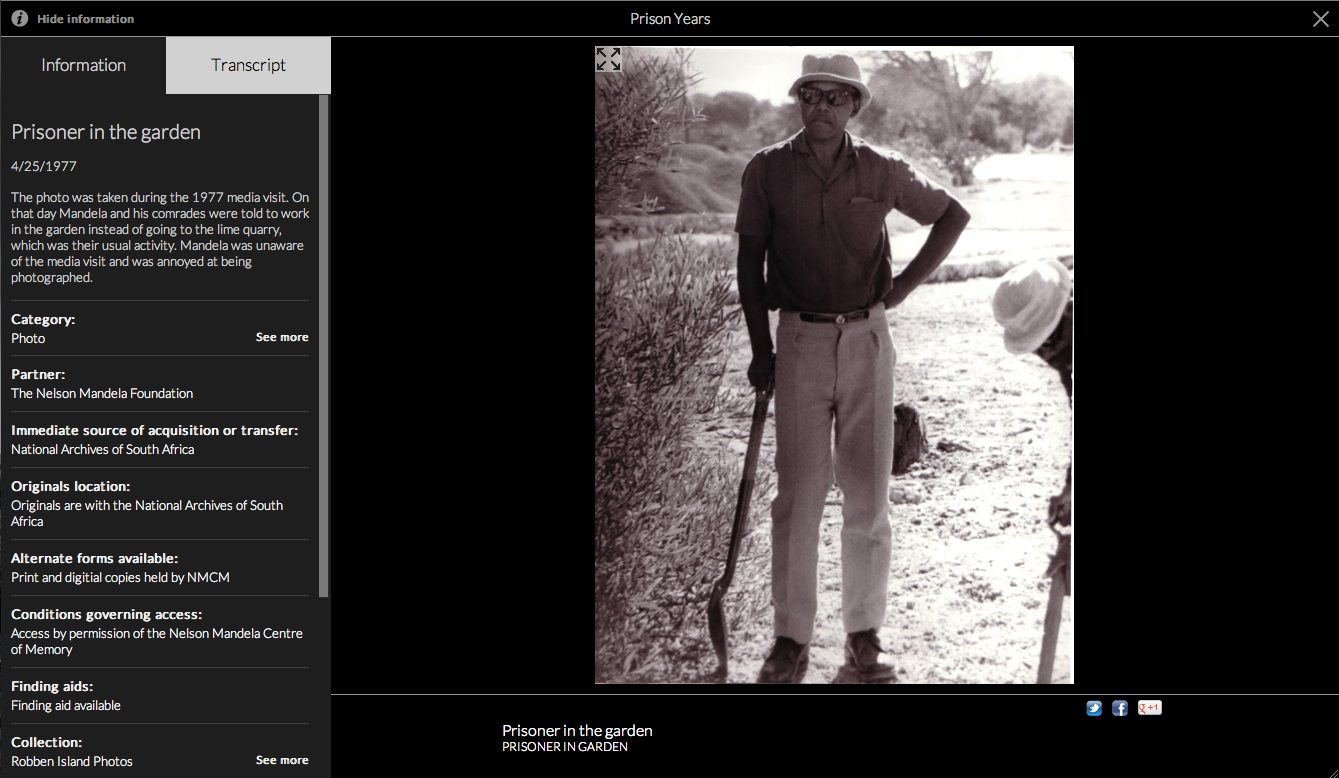
In South Africa, Nelson Rolihlahla Mandela is sworn in as the first Black president of South Africa. In his inaugural address, Mandela, who spent 27 years of his life as a political prisoner of the South African government, declared that “the time for the healing of the wounds …read more
Share this:

on this day 5/10

1503 – Christopher Columbus discovered the Cayman Islands.
1676 – Bacon’s Rebellion, which pits frontiersmen against the government, began.
1768 – The imprisonment of the journalist John Wilkes as an outlaw provoked violence in London. Wilkes was returned to parliament as a member for Middlesex.
1773 – The English Parliament passed the Tea Act, which taxed all tea in the U.S. colonies.
1774 – Louis XVI ascended the throne of France.
1775 – Ethan Allen and Colonel Benedict Arnold led an attack on the British Fort Ticonderoga and captured it from the British.
1796 – Napoleon Bonaparte won a brilliant victory against the Austrians at Lodi bridge in Italy.
1840 – Mormon leader Joseph Smith moved his band of followers to Illinois to escape the hostilities they had experienced in Missouri.
1857 – The Seepoys of India revolted against the British Army.
1865 – Confederate President Jefferson Davis was captured by Union troops near Irvinville, GA.
1869 – Central Pacific and Union Pacific Rail Roads meet in Promontory, UT. A golden spike was driven in at the celebration of the first transcontinental railroad in the U.S.
1872 – Victoria Woodhull became the first woman nominated for the U.S. presidency.
1876 – Richard Wagner’s “Centennial Inaugural March” was heard for the first time at the Centennial Exposition in Philadelphia, PA.
1898 – A vending machine law was enacted in Omaha, NE. It cost $5,000 for a permit.
1908 – The first Mother’s Day observance took place during a church service in Grafton, West Virginia.
1924 – J. Edgar Hoover was appointed head of the Federal Bureau of Investigation.
1927 – The Hotel Statler in Boston, MA. became the first hotel to install radio headsets in each of its 1,300 rooms.
1928 – WGY-TV in Schenectady, NY, began regular television programming.
1930 – The Adler Planetarium opened to the public in Chicago, IL.
1933 – The Nazis staged massive public book burnings in Germany.
1940 – Germany invaded Belgium, France, the Netherlands, and Luxembourg.
1941 – England’s House of Commons was destroyed by a German air raid.
1941 – Rudolf Hess, Adolf Hitler’s deputy, parachuted into Scotland on what he claimed was a peace mission.
1942 – U.S. forces in the Philippines began to surrender to the Japanese.
1943 – U.S. troops invaded Attu in the Aleutian Islands to expel the Japanese.
1960 – The U.S.S. Triton completed the first circumnavigation of the globe under water. The trip started on February 16.
1962 – Marvel Comics published the first issue of “The Incredible Hulk.”
1968 – Preliminary Vietnam peace talks began in Paris.
1969 – The National and American Football Leagues announced their plans to merge for the 1970-71 season.
1978 – Britain’s Princess Margaret and the Earl of Snowdon announced they were divorcing after 18 years of marriage.
1982 – Elliott Gould made his dramatic television debut after 30 movies in 17 years. He starred in “The Rules of Marriage” on CBS-TV.
1986 – Navy Lt. Commander Donnie Cochran became the first black pilot to fly with the Blue Angels team.
1994 – Nelson Mandela was sworn in as South Africa’s first black president.
1997 – An earthquake in northeastern Iran killed at least 2,400 people.
1999 – China broke off talks on human rights with the U.S. in response to NATO’s accidental bombing of the Chinese Embassy in Yugoslavia.
1999 – The Cezanne painting “Still Life With Curtain, Pitcher and Bowl of Fruit” sold for 60.5 million.
2000 – 11,000 residents were evacuated in Los Alamos, NM, due to a fire that was blown into a canyon. The fire had been deliberately set to clear brush.
2001 – Boeing Co. announced that it would be moving its headquarters to Chicago, IL.
2001 – In Ghana, 121 people were killed in a stampede at a soccer game.
2002 – Robert Hanssen was sentenced to life in prison with no chance for parole. Hanssen, an FBI agent, had sold U.S. secrets to Moscow for $1.4 million in cash and diamonds.
2002 – Taiwan test fired a locally made Sky Bow II surface-to-air missile for the first time. They also fired three U.S.-made Hawk missiles.
2002 – Dr. Pepper announced that it would be introducing a new flavor, Red Fusion, for the first time in 117 years.
2011 – It was announced that Microsoft had closed a deal to purchase the internet phone service Skype for $8.5 billion.
2013 – In New York, NY, crane operators hoisted the final pieces of the spire atop One World Trade Center (formerly called the Freedom Tower).
Share this:

History… May 10
- 1497 Italian navigator Amerigo Vespucci leaves for his first voyage to the New World (disputed)
- 1775 Second Continental Congress convenes in Philadelphia, Pennsylvania and issues paper currency for 1st time
- 1801 First Barbary War: The Barbary pirates of Tripoli declare war on the United States of America (1st US foreign war)
- 1857 Indian mutiny against rule by the British East India Company begins with the revolt of the Sepoy soldiers in Meerut
- 1940 Winston Churchill succeeds Neville Chamberlain as British Prime Minister
- 1960 US atomic submarine USS Triton completes 1st submerged circumnavigation of the globe
- 1994 Nelson Mandela sworn in as South Africa’s 1st black president


You must be logged in to post a comment.