
Monthly Archives: April 2022

5 Foods Americans Eat that Are Banned Around the World- a repost from 2016-
by The Daily Meal |
The United States government has set several rules and guidelines in place to protect us from eating potentially harmful foods. Several dishes considered real delicacies in other parts of the world, like haggis in Scotland or fugu (puffer fish) in Japan, are banned from the U.S. food market because of potential health risks. But looking at the issue from a reversed angle, there are actually several common foods eaten in America that are banned in other parts of the world.
RELATED: 11 Banned Ingredients We Eat In the U.S.
The shocking truth is that many of our favorite foods, like boxed mac and cheese and yogurt, include ingredients that other countries have established as potentially harmful for health, and therefore are banned. Clearly, mac and cheese on its own isn’t poisonous in any way, but the yellow food colorings #5 and #6 have been shown to cause hypersensitivity in children, and are therefore banned in countries including Norway, Finland, and Australia. For yogurt and other milk products, it is the rBGH and rBST that some countries are concerned with – these growth hormones are banned in several regions including the European Union, Canada, and Japan because of their potentially dangerous impacts on the health of both humans and cows.
RELATED: 10 Foods and Drinks Banned in America
Though the studies and investigations showing the possible dangers of these ingredients are not to be taken lightly, food manufactures in America surely are not trying to poison the American people. Different countries have different policies and politics when it comes to food, and the U.S. Food and Drug Administration (USFDA) assures that it is monitoring the safety of all ingredients available for American consumers. The varying food-safety laws around the world are good reminders for all of us to be aware of what ingredients are in our foods, and not to panic, but to use common sense and mild precaution when choosing what foods we eat.
RELATED: 150 Foods Worth Traveling For
1. Olestra (aka Olean)
Olestra is a zero-calorie fat substitute created to make healthier snacks such as fat-free potato chips. But olestra has been shown to cause side effects in the form of gastrointestinal problems, as well as weight gain – instead of weight loss – on lab rats. The U.K. and Canada are two places that have banned this fat substitute from their food markets.
Brominated vegetable oil (BVO), is vegetable oil, derived from corn or soy, bonded with the element bromine. It’s added to many sodas and sports drinks prevent the flavoring from separating and floating to the surface. But bromine has also been shown to alter the central nervous and endocrine systems, causing skin rashes, acne, loss of appetite, fatigue, and cardiac arrhythmia. The chemical is banned both in Europe and Japan.
RELATED: 101 Best Hotel Restaurants Around the World 2013
3. Synthetic Hormones rBGH & rBST
These two growth hormones can be found in dairy products such as yogurt and milk. The controversy with cows injected with these hormones is that several studies cite rBGH as a cause of cancer. Due to these reports, many consumers in the U.S. choose to buy organic milk and dairy products, as well as those labeled “rBGH free,” and the hormone is totally banned at milk and dairy farms and in dairy products in the European Union, Australia, Canada, Israel, and New Zeeland.
RELATED: 13 Breakfast Plates Around the World
4. Azodicarbonamide
This chemical azodicarbonamide can be found in boxed pasta mixes, breads, frozen dinners, and packaged baked goods, and is added as an instant bleaching agent for flour. In Singapore, Australia, and most European countries, this chemical is banned due to reports of it causing asthma. Azodicarbonamide is also a chemical used in foamed plastics, like yoga mats.
5. BHA and BHT
Found in cereals, nut mixes, chewing gum, butter spreads, and many other foods in need of preservation, BHA (butylated hydroxyanisole) and BHT (butylated hydroxytoluene) are commonly used preservatives. The National Toxicology Program’s 2011 report on carcinogens states that BHA can trigger allergic reactions and hyperactivity and “is reasonably anticipated to be a human hazard.” The preservatives are both banned in parts of the European Union and Japan, and the U.K. doesn’t allow BHA in infant foods.
Click here to see more Foods Americans Eat That Are Banned Around the World
This article is from 2016. I am not sure if things have changed or the list updated… please let me know
Share this:

Our beautiful PNW, our fish and the world of hatcheries, farmed fish … aquaculture
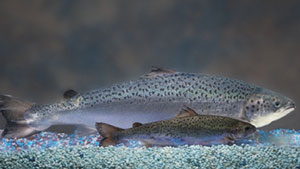 So, in the summer of 2017, I read something about an Eclipse creating high tides possibly being the cause of farmed fish nets breaking.
My question is, How often are aquaculture and fisheries being inspected and or held accountable, monitored, and or fined when they ignore warnings in this 21st Century let alone the era of trump!
Of course, I rolled my eyes without having finished the article, but a couple of weeks later I find out that everything my dad feared and spoke of when I was a kid was now a reality on a whole new level. The idea that not only had some fish pens fallen apart, hundreds of thousands of what some call frankenfish escaped due to the tide? When photographers posted pics… it was obvious the equipment was beyond disrepair, least we talk about sanitation. In fact, the public finally found out that this was not the first time, but was possibly withheld from the public; this seems to have been the worst incident! Reports are that a company, this one from Canada, was told by officials that repairs were needed having been warned over and over again with apparently no or a very slow response by the owners of this fish farm of Atlantic salmon which then obviously resulted in an emergency. I call these fish frankenfish; the scientific name – aquaculture fish – about 305K of them were or are still loose in the San Juan’s right this very moment, and while the incident had happened a few weeks prior the story was not given much airtime so by the time I heard it, sadly it was old news.
Yes, just another rant!
The idea of sustainable living is not new, yet, it means something different depending on what state you live in and how your officials deal with the agencies we are supposed to trust whether the issue is about fracking, farmed fish, housing, groundwater, GMO, salmonella, etc. or bird flu. Most people I know love all kinds of food and are careful about at-home preparation, but I do believe that the way food is inspected, accepted, and processed by our government is still suspect and an update in federal laws regarding food inspection is overdue. I hope we all agree that our food should not be considered a state’s rights issue; it is a keep the American population safe, healthy issue. I come from a fishing based family that believed in staying away from the so-called store freshly caught and to always smell the fish, ask if wild or hatchery, and if it’s wrapped in plastic question it all because it may look like the real deal, but it’s really an imposter … I remember when most if not all seafood caught, was “bought and sold fresh” and or was “wild-caught,” not farmed because my family preferred to buy at the “fish market” at the pier, but mostly because my family fished. When farm fisheries started popping up my family felt it might be a good way to keep wild off the endangered list, but unfortunately, some collateral damage was created when rumors and reports of nasty toxic developments at some, not all hatcheries or farmed raised fish were found.
Well, let us say it again; we all need to worry about the fishing industry as well as civilian fishing in our oceans, lakes, and seas which sadly is on a path toward collapse as overfishing, polluters, plastics and the corporate fishing industry need a refresher on regulatory rules least we ALL remind them to protect our wild and marine life for the next generation
Unfortunately, folks did not know in the early stages the impact influx of farmed fish to grocery stores and restaurants meant insufficient labeling or the profound lack of available information for consumers to make independent and or intelligent decisions by leaving out info whether it’s about fish, beef, chicken, clothes or toys they are selling comes from the most “environmentally friendly” way possible instead of taking risks that could hurt lives
However, it is obvious that as those at the top debate and delay changes in our man-made and natural global warming experiences, they are leaving minorities and the poor out of the conversation of sustainable living, let alone offer up alternatives or commit to viable restorations of communities most impacted by bad urban planning and fracking. We have all heard or know that certain populations are definitely unable to control the negative impact that some big corporations are having on their communities or environments as more and more cases are revealed, aired, and reported. It is disturbing to know that some cases are over twenty-thirty years old or older, the sad truth that there were are too many, middle class, minority, and poor communities built on or near freeways, landfills, gas lines, ex-chemical plants, manufacturer plants or smokestacks with dirty air while providing jobs at those same facilities though the people had no idea that they and the lives of their families could be negatively affected and life in some cases probably cut short.
The abuse of land in rural-urban and mountain settings is not just offensive it is still unchecked, just one more thing the EPA needs to revisit but as are so many things in this era of trump. Unfortunately, when Congress, was under Republican control in both chambers, the House, where legislative purse strings are under tremendous stress, and if you listen closely, they sound like they had different school books and teachers, so, the path toward 21st Century living is going to be a struggle
~ Nativegrl77
Share this:

do as i say … Not as i do Politics ~Think Progress ~ a reminder

| CREDIT: AP Photo/ Jacquelyn Martin |
|
President Donald Trump rolled out a new immigration policy that will crack down on legal immigration — limiting the amount of green cards issued in a year. That’s really bad news for people who sell these “golden visas,” people like Trump son-in-law Jared Kushner. – We all need to be reminded that trumpINC hires and puts in legal requests for #foreignworkers at maralago -Nativegrl77 first posted 8/2017 |


 Be a Seed for Change
You must be logged in to post a comment.