
Monthly Archives: August 2022

1863: The Lawrence Massacre

On August 21, 1863, a Confederate guerilla group led by William Quantrill attacked citizens in the town of Lawrence, Kansas, during the American Civil War. Guerillas killed more than 150 boys and men and burned much of the town. The Lawrence Massacre, also known as Quantrill’s raid, was a culmination of tension between local abolitionists and pro-slavery partisans along the Missouri-Kansas border. These border tensions had been brewing for some time. Beginning in 1855, pro-slavery and anti-slavery settlers engaged in a series of violent confrontations and political killings over whether Kansas would be a free state or a slave state, leading to a border war known as “Bleeding Kansas.” Lawrence was founded along the Oregon Trail on the homelands of the Kaw, Lakota, Osage, and Kikapoo by New Englanders. Considered the anti-slavery capital, Lawrence was well-known as a stronghold for abolitionists and the Free-State movement. Continue reading…
Source: Fold3.com
Share this:

he Atlantic slave trade: What too few textbooks told you – Anthony Hazard

1791 – Benjamin Banneker writes to Thomas Jefferson, urging justice for African Americans
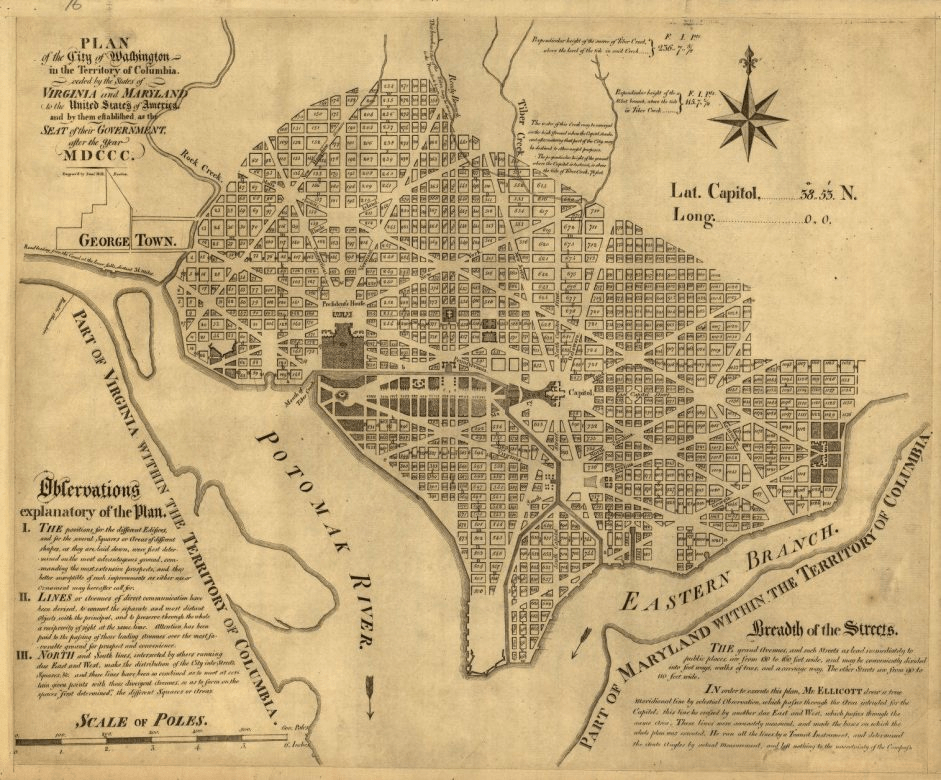
On August 19, 1791, the accomplished American mathematician and astronomer Benjamin Banneker pens a letter to then-Secretary of State Thomas Jefferson. Jefferson corresponds prolifically with luminaries from around the world, but Banneker is unique among them: the son of a free Black American woman and a formerly enslaved African man from Guinea, Banneker criticizes Jefferson’s hypocritical stance on slavery in respectful but unambiguous terms, using Jefferson’s own words to make his case for the abolition of slavery.
Banneker himself was born free in what is now Ellicott City, Maryland, and was encouraged in his studies of astronomy and mathematics by the Ellicotts, a Quaker family who owned a mill and much of the land in the area. Predicting a solar eclipse and constructing a functioning clock that struck on the hour were among his early achievements. His prowess caught the eye of Jefferson after Major Andrew Ellicott chose Banneker to assist him in surveying the original boundaries of what would become the District of Columbia. Banneker also compiled several ephemerides (a type of astronomical chart) and almanacs.
On August 19, 1791, the accomplished American mathematician and astronomer Benjamin Banneker pens a letter to then-Secretary of State Thomas Jefferson. Jefferson corresponds prolifically with luminaries from around the world, but Banneker is unique among them: the son of a free Black American woman and a formerly enslaved African man from Guinea, Banneker criticizes Jefferson’s hypocritical stance on slavery in respectful but unambiguous terms, using Jefferson’s own words to make his case for the abolition of slavery.
Banneker himself was born free in what is now Ellicott City, Maryland, and was encouraged in his studies of astronomy and mathematics by the Ellicotts, a Quaker family who owned a mill and much of the land in the area. Predicting a solar eclipse and constructing a functioning clock that struck on the hour were among his early achievements. His prowess caught the eye of Jefferson after Major Andrew Ellicott chose Banneker to assist him in surveying the original boundaries of what would become the District of Columbia. Banneker also compiled several ephemerides (a type of astronomical chart) and almanacs.
For the complete article: history.com
READ MORE: Why Thomas Jefferson’s Anti-Slavery Passage Was Removed from the Declaration of Independence
Citation Information
Article Title
Benjamin Banneker writes to Thomas Jefferson, urging justice for African Americans
AuthorHistory.com Editors
Website Name
HISTORY
URL
Access Date
August 19, 2022
Publisher
A&E Television Networks
Last Updated
August 17, 2022
Original Published Date
July 20, 2021
Share this:

Heat Advisory – AND some Rain and possible Lightening Strikes
from Thu, Aug 18, 3:12 PM PDT to Fri, Aug 19, 12:00 AM PDT
What
Hot conditions with temperatures in the mid 80s to mid 90s expected. This will pose a moderate to high risk of heat- related illness.
Where
Portions of northwest and west central Washington.
When
Until midnight PDT tonight.
Impacts
Heat will increase the risk of heat-related illnesses for those who are sensitive to heat, especially those without effective cooling or adequate hydration.
Tips
Drink plenty of fluids, stay in an air-conditioned room, stay out of the sun, and check up on relatives and neighbors. Young children and pets should never be left unattended in vehicles under any circumstances. Take extra precautions if you work or spend time outside. When possible reschedule strenuous activities to early morning or evening. Know the signs and symptoms of heat exhaustion and heat stroke. Wear lightweight and loose fitting clothing when possible. To reduce risk during outdoor work, the Occupational Safety and Health Administration recommends scheduling frequent rest breaks in shaded or air conditioned environments. Anyone overcome by heat should be moved to a cool and shaded location. Heat stroke is an emergency! Call 9 1 1. For sheltering information and other human services in your area, dial 2 1 1 during business hours or visit wa211.org anytime.
Issued By
NWS Seattle

 Be a Seed for Change
You must be logged in to post a comment.