
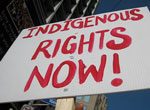
On September 13, 2007, the United Nations adopts the Declaration on the Rights of Indigenous Peoples. The declaration, which defines the rights of the planet’s Indigenous peoples to their respective ways of life and prohibits discrimination against them, is a watershed moment for groups that often struggle for representation at the international level.
The fight for Indigenous recognition within international institutions is older than the UN itself. In 1920, the Haudenosaunee Confederacy (also known as the Iroquois Six Nations) applied for membership in the UN’s predecessor, the League of Nations, but the bid went nowhere. Progress came in 1974, when representatives from 98 nations across the Western Hemisphere gathered in South Dakota to form the International Indian Treaty Council, which was recognized by the UN as a non-governmental organization with consultative status.
In 1982, the UN Economic and Social Council’s Working Group on Indigenous Populations began working to set a standard of protection for Indigenous populations. Throughout the 1990s and early 2000s, various drafts of a declaration of Indigenous rights were circulated, with movement finally coalescing behind a document that proclaims Indigenous peoples’ rights to cultural practices, to maintain and strengthen their own institutions, to full participation in all matters concerning how they are governed and to remain distinct from the people around them without being discriminated against or forced to assimilate.
Source: history.com For the complete article

 Be a Seed for Change
You must be logged in to post a comment.