2007 – UN’s watershed Declaration on the Rights of Indigenous Peoples is adopted


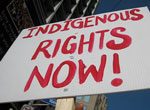
On September 13, 2007, the United Nations adopts the Declaration on the Rights of Indigenous Peoples. The declaration, which defines the rights of the planet’s Indigenous peoples to their respective ways of life and prohibits discrimination against them, is a watershed moment for groups that often struggle for representation at the international level.

The fight for Indigenous recognition within international institutions is older than the UN itself. In 1920, the Haudenosaunee Confederacy (also known as the Iroquois Six Nations) applied for membership in the UN’s predecessor, the League of Nations, but the bid went nowhere. Progress came in 1974, when representatives from 98 nations across the Western Hemisphere gathered in South Dakota to form the International Indian Treaty Council, which was recognized by the UN as a non-governmental organization with consultative status. 

In 1982, the UN Economic and Social Council’s Working Group on Indigenous Populations began working to set a standard of protection for Indigenous populations. Throughout the 1990s and early 2000s, various drafts of a declaration of Indigenous rights were circulated, with movement finally coalescing behind a document that proclaims Indigenous peoples’ rights to cultural practices, to maintain and strengthen their own institutions, to full participation in all matters concerning how they are governed and to remain distinct from the people around them without being discriminated against or forced to assimilate.

Source: history.com For the complete article

2001 – Attack on the United States


September 11

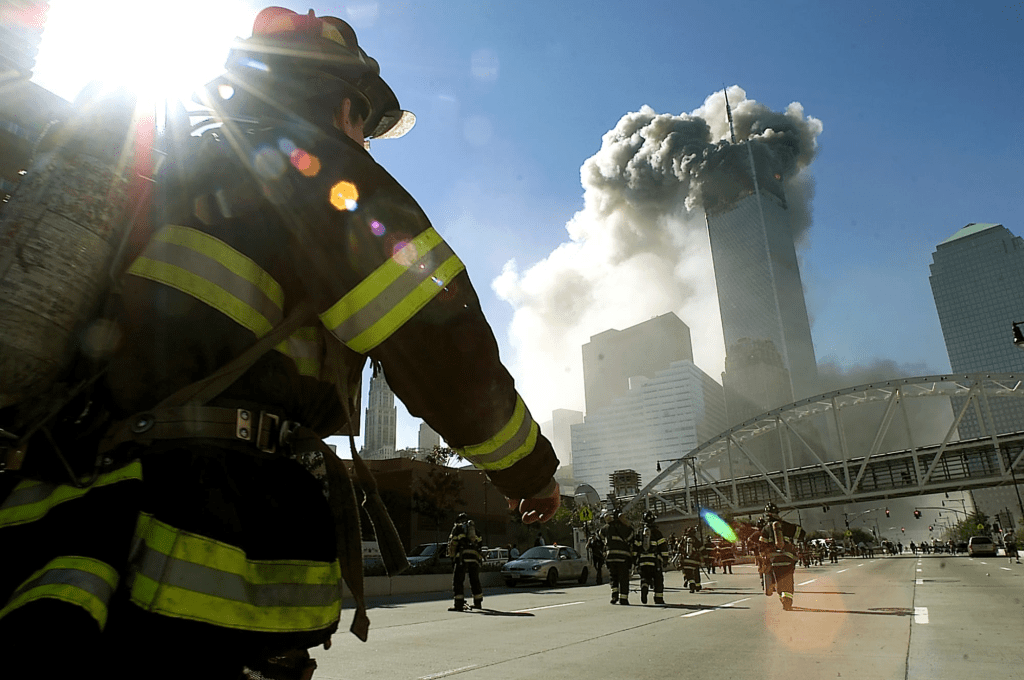
At approximately 8:46 a.m. on a clear Tuesday morning, an American Airlines Boeing 767 loaded with 20,000 gallons of jet fuel crashes into the north tower of the World Trade Center in New York City. The impact left a gaping, burning hole near the 80th floor of the 110-story skyscraper, instantly killing hundreds of people and trapping hundreds more in higher floors. As the evacuation of the tower and its twin got underway, television cameras broadcasted live images of what initially appeared to be a freak accident. Then, 17 minutes after the first plane hit, a second Boeing 767—United Airlines Flight 175—appeared out of the sky, turned sharply toward the World Trade Center, and sliced into the south tower at about the 60th floor. The collision caused a massive explosion that showered burning debris over surrounding buildings and the streets below. America was under attack.

For the complete article: history.com

READ MORE: After 9/11: 5 Cultural Moments That Helped Americans Move Forward

Citation Information

Article Title

Attack on the United States

AuthorHistory.com Editors

Website Name

HISTORY

URL

https://www.history.com/this-day-in-history/attack-on-america

Access Date

September 10, 2022

Publisher

A&E Television Networks

Last Updated

September 27, 2021

Original Published Date

November 24, 2009

9/11


2001 – In the U.S., four airliners were hijacked and were intentionally crashed.

Two airliners hit the World Trade Center, which collapsed shortly after, in New York City, NY.

One airliner hit the Pentagon in Arlington, VA.

Another airliner crashed into a field in Pennsylvania.

About 3,000 people were killed.