
TO: Miguel Cardona, U.S. Secretary of Education
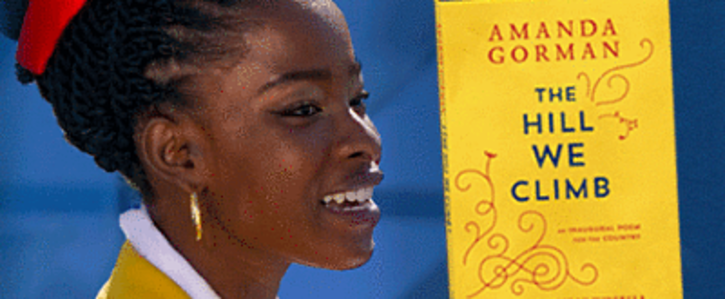
Books are being challenged, restricted, removed, or outright banned from schools across the country—including the first-ever National Youth Poet Laureate Amanda Gorman’s “The Hill We Climb.” Students should be encouraged to read books that accurately reflect the diversity and history of our country. Celebrate this history-making piece of literature and make sure students everywhere have the freedom and encouragement to read it.
Why is this important?
It only took one complaint and one week for a school in Miami-Dade County to restrict Amanda Gorman’s book—“The Hill We Climb”—and limit access for younger students. It was one book of several that an individual parent reported, citing that it was “not educational” and contained indirect hate speech. [1]
Schools should not so swiftly censor literature based on the whims of individual parents. This is part of a sweeping trend across the country to ban and restrict books, often targeting authors and content from historically marginalized and underrepresented groups. And because of conservative laws being passed on the local and state level, it’s even easier in many places for a small but loud minority to challenge books—and win.
In response to the incident, Amanda Gorman wrote: “The Hill We Climb is an inaugural poem for the world. Relocating it to older age group library shelves by its nature bars younger and equally deserving generations from accessing said moment in history.” [2]
Amanda Gorman made history when she read “The Hill We Climb” at President Joe Biden’s inauguration—the youngest inaugural poet to date. People of all ages deserve to have access to her work and see themselves not only in the context of that moment, but also in the possibilities of the future. They, too, can make history.
We refuse to allow one parent’s opinion to limit our children’s freedom to read, learn, and imagine. Join us in calling on the Department of Education and State Education Departments to add “The Hill We Climb” to every associated recommended reading list in the country and to reaffirm the values of equality and access espoused in the mission of the DOE. [3]
1. “1 complaint led a Florida school to restrict access to Amanda Gorman’s famous poem,” NPR, May 25, 2023
https://www.npr.org/2023/05/24/1177877340/amanda-gorman-poem-restricted-miami-school
2. Amanda Gorman [@TheAmandaGorman], Tweet, May 24, 2023 https://twitter.com/TheAmandaGorman/status/1661590069982142465
3. “Overview and Mission Statement,” U.S. Department of Education, Accessed June 20, 2023 https://www2.ed.gov/about/landing.jhtml
Photo Source: Penguin Random House


 Be a Seed for Change