On June 11, in 1776, the Continental Congress, meeting in Philadelphia, named a five-member committee to draft a declaration of independence from Britain. Its members were Thomas Jefferson of Virginia, John Adams of Massachusetts, Benjamin Franklin of Pennsylvania, Roger Sherman of Connecticut and Robert Livingston of New York
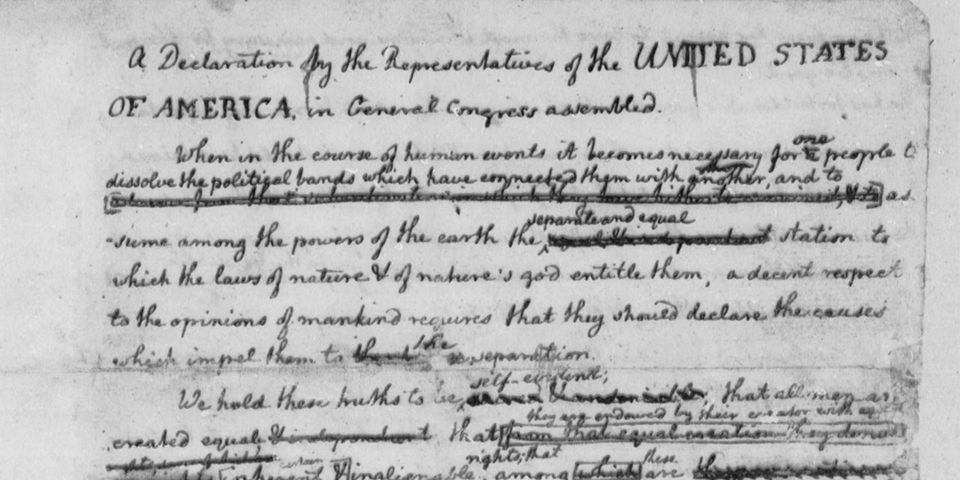
Adams suggested that Jefferson write the first draft. Adams and Franklin edited it and then gave their work to Congress on June 28 for review. It began:
“When, in the Course of human Events, it becomes necessary for one People to dissolve the Political Bands which have connected them with another, and to assume, among the Powers of the Earth, the separate and equal Station to which the Laws of Nature and of Nature’s God entitle them, a decent Respect to the Opinions of Mankind requires that they should declare the Causes which impel them to the Separation.”
Congress set the draft aside to debate a resolution that Richard Henry Lee had introduced on June 7. His motion called on Congress to declare independence, form foreign alliances and prepare a plan of colonial confederation.
Lee’s proposal read: “Resolved that these United Colonies are, and of right ought to be, free and independent States, that they are absolved from all allegiance to the British Crown, and that all political connection between them and the State of Great Britain is, and ought to be, totally dissolved.”
Quackery persisted through the centuries in Europe and found its way to the American colonies, where the earliest steps to regulate the profession were taken.
On this day, June 10, in 1760 New York City passed the first law regulating medical practice, mandating examining and licensing of prospective doctors, and penalizing unlicensed physicians.
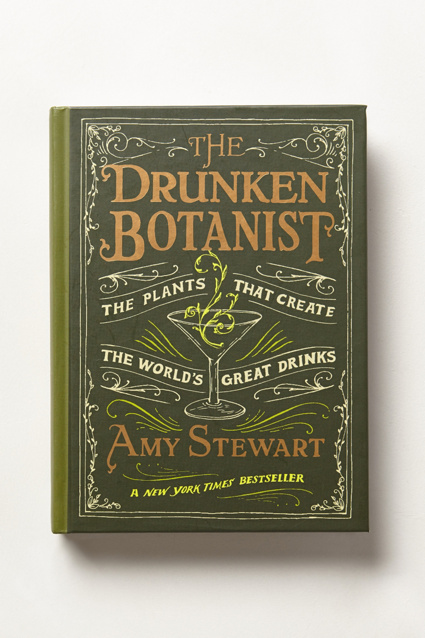
In this fascinating read, best-selling author Amy Stewart delves into the process of fermenting plants into some of the greatest time-honored drinks. With over fifty spirited recipes and growing hints for gardeners, this work is sure to take your bartending skills to the next level.
On June 9, 1915, United States Secretary of State William Jennings Bryanresigns due to his concerns over President Woodrow Wilson’s handling of the crisis generated by a German submarine’s sinking of the British passenger liner Lusitania the previous month, in which 1,201 people—including 128 Americans—died.
Germany’s announcement in early 1915 that its navy was adopting a policy of unrestricted submarine warfare concerned many within the government and civilian population of the United States—which maintained a policy of strict neutrality during the first two years of World War I.
The sinking of the Lusitania on May 7, 1915, caused an immediate uproar, as many believed Germany had sunk the British cruiser deliberately as a provocation to Wilson and the U.S. Bryan, as secretary of state, sent a note to the German government from the Wilson administration, lauding the ties of friendship and diplomacy between the two nations and expressing the desire that they come to a clear and full understanding as to the grave situation which has resulted from the sinking of the Lusitania.
When the German government responded by justifying their navy’s action on the basis that the Lusitania was carrying munitions (which it was, a small amount), Wilson himself penned a strongly worded note, insisting that the sinking had been an illegal action and demanding that Germany cease unrestricted submarine warfare against unarmed merchantmen.
“The Government of the United States is contending for something much greater than mere rights of property or privileges of commerce,” Wilson wrote. “It is contending for nothing less high and sacred than the rights of humanity, which every Government honours itself in respecting, and which no Government is justified in resigning on behalf of those under its care and authority.”
After the 2020 census, Alabama created a redistricting plan for its seven seats in the U.S. House of Representatives. One of the districts in the plan is a majority-Black district. Registered voters and several organizations challenged the map, arguing that the state had illegally packed Black voters into a single district while dividing other clusters of Black voters across multiple districts. The challengers alleged that the map effectively minimizes the number of districts in which Black voters can elect their chosen candidates, in violation of Section 2 of the Voting Rights Act, which bans racial discrimination in voting policies.
A three-judge district court agreed with the challengers that the map likely violated Section 2 of the VRA, granting a preliminary injunction that ordered the state to draw a new map. Alabama asked the U.S. Supreme Court to freeze the district court’s injunction, which the Court did by a 5-4 decision pending a merits decision.
Question
Does Alabama’s 2021 redistricting plan for its seven U.S. House seats violate Section 2 of the Voting Rights Act?
5–4 DECISION FOR MILLIGAN MAJORITY OPINION BY JOHN G. ROBERTS, JR. Alabama’s 2021 redistricting plan for its seven seats in the U.S. House of Representatives likely violates Section 2 of the Voting Rights Act.
The district court correctly applied binding Supreme Court precedent to conclude that Alabama’s redistricting map likely violates Section 2 of the Voting Rights Act. Chief Justice John Roberts authored the majority opinion of the Court.
The Court’s decision in Thornburg v. Gingles, 478 U.S. 30 (1986) sets out a three-part framework for evaluating claims brought under Section 2 of the Voting Rights Act. First, the plaintiffs must prove that the minority group is sufficiently large and geographically compact to constitute a majority in a reasonably configured district (measured by criteria such as contiguity and compactness). Second, the plaintiffs must show that the minority group is politically cohesive. Third, the plaintiffs must show that under the totality of the circumstances, the political process is not “equally open” to minority voters.
The majority applied that three-part framework to the facts in the record and agreed with the district court that the plaintiffs were likely to succeed on their challenge. The plaintiffs submitted maps demonstrating the traditional districting criteria, and the district court found “no serious dispute” that Black voters are politically cohesive or that the challenged districts’ white majority consistently defeated Black voters’ preferred candidates.
Justice Brett Kavanaugh joined the majority opinion except for a discussion of the difference between race-consciousness and race-predominance. He concurred separately to emphasize and clarify four additional points.
Justice Clarence Thomas authored a dissenting opinion, in which Justice Neil Gorsuch joined in full, and Justices Amy Coney Barrett and Samuel Alito joined in part. Justice Thomas argued that Section 2 of the VRA does not require Alabama to redraw its congressional districts so that Black voters can control a number of seats proportional to Black voters in its population.
Justice Alito authored a dissenting opinion in which Justice Gorsuch joined arguing that the majority’s understanding of Gingles—specifically its understanding of the phrase “reasonably configured” within the context of the first precondition—is flawed, and that a correct understanding would lead to a different result in this case.

 Its members were Thomas Jefferson of Virginia, John Adams of Massachusetts, Benjamin Franklin of Pennsylvania, Roger Sherman of Connecticut and Robert Livingston of New York


 Online Exclusive …


 Be a Seed for Change
You must be logged in to post a comment.