
did you know … instant noodles


image

 Instant noodles

Instant noodles have become quite popular in many countries around the world, including the United States.  Apart from being relatively cheap and widely available, they are also easily prepared.

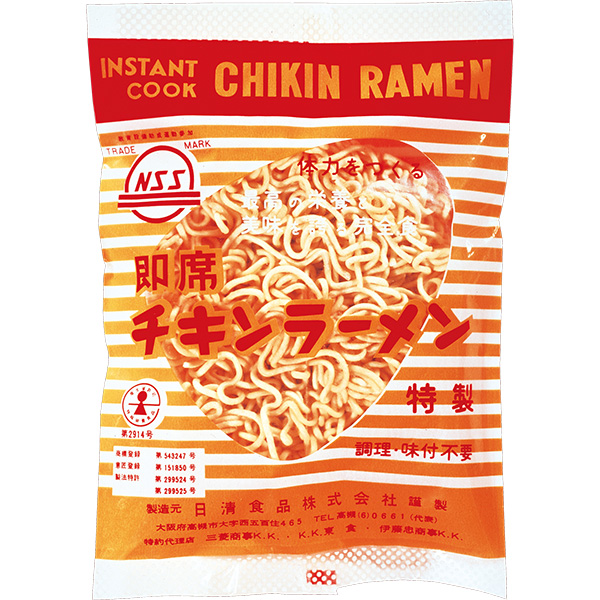
The instant noodle was invented by Momofuku Ando of Nissin Foods in Japan and was launched in 1958 under the brand name Chikin Ramen. The product proved to be quite profitable, but in 1971 Nissin introduced Cup Noodles, a dried noodle block in a polystyrene cup – this was a new beginning.  image

  • A single serving of instant noodles is high in carbohydrates and fat, but low in fiber, vitamins and minerals.
  • Instant noodles contain substances that reduce the body’s ability to absorb nutrients from healthy foods – affects the digestion process.
  • Typical cup-type instant noodles contain 2,700 mg of sodium and the maximum sodium intake per day should be 2,400 mg.
  • They are high in MSG (monosodium glutamate) which can trigger cancer.
  • Instant noodles contain anti-freeze such as propylene glycol – affects the liver, heart and kidneys.
  • Long term consumption can affect the body’s metabolism.
  • Instant noodles are a major cause of obesity.

Apart from these health risks, instant noodles are also low in nutritional value – certainly not the best food to prepare for yourself or your family.

Source: Nissin.com

1958 – Momofuku Ando creates the first mass-market instant ramen


 On August 25, 1958 Chicken Ramen, the world’s first instant noodles, was launched. Since Chicken Ramen, a food ready to eat in just two minutes after adding hot water, was a product inconceivable under the conventional wisdom of the times, it was dubbed “magic ramen.” Chicken Ramen when it was first introduced

To help address the food shortage crisis in Japan after World War II, inventor and businessman Momofuku Ando develops Chicken Ramen, the first-ever instant noodles, on August 25, 1958. The shelf-stable noodles are readily available, take two minutes to cook and fill hungry bellies. Today, instant noodles are a ubiquitous global fast food—and not just in college dorms. More than 100 billion servings of the just-add-water meals are consumed annually, the World Instant Noodles Association reports.

The work shed erected in the back yard of Ando’s home (reproduction)

While ramen is considered quintessentially Japanese, it actually originated in China. In 1858, when Japan ended its nearly 200 years of self-imposed isolation, cultural exchange and trade began to flourish. An influx of Chinese migrants brought their culinary skills to Japan, introducing the wheat-based noodles to Japanese tastebuds. After decades of adaptation, the restaurant-quality ramen we know today—a savory broth typically combined with shredded meat, vegetables and fresh aromatics—was developed in 1926 by a chef named Wang Wen-chai at a Chinese restaurant in Sapporo, Hokkaido. His challenge: to make noodles that appealed to the palates of both Chinese and Japanese students studying locally.

In the years after World War II, widespread food shortages in Japan led to the introduction of black-market food vendors selling ramen. According the Nissin, the company Momofuku Ando founded, Ando noticed long lines forming at the black-market ramen stalls. It was then he set his goal: to create noodles that can be “quickly prepared and eaten at home with only hot water.”

Source: history.com

Althea Gibson, Born 8/25, is the first African American to win Wimbledon


Image result for althea gibson

On July 6, 1957, Althea Gibson claims the women’s singles tennis title at Wimbledon and becomes the first African American to win a championship at London’s All England Lawn Tennis and Croquet Club.

Gibson was born on August 25, 1927, in Silver, South Carolina, and raised in the Harlem section of New York City. She began playing tennis as a teenager and went on to win the national Black women’s championship twice. At a time when tennis was largely segregated, four-time U.S. Nationals winner Alice Marble advocated on Gibson’s behalf and the 5’11” player was invited to make her United States National Championships (now known as the U.S. Open) debut in 1950. In 1956, Gibson’s tennis career took off and she won the singles title at the French Championships (now known as the French Open)—the first African American to do so—as well as the doubles’ title there. In July 1957, Gibson won Wimbledon, defeating Darlene Hard, 6-3, 6-2. (In 1975, Arthur Ashe became the first African American man to win the men’s singles title at Wimbledon, when he defeated Jimmy Connors.) In September 1957, she won the U.S. Open, and the Associated Press named her Female Athlete of the Year in 1957 and 1958. During the 1950s, Gibson won 56 singles and doubles titles, including 11 major titles.

Source:

history.com

1950 – Truman ordered Army to seize control of Railroads


On August 25, 1950, in anticipation of a crippling strike by railroad workers, President Harry S. Truman issues an executive order putting America’s railroads under the control of the U.S. Army, as of August 27, at 4:00 pm.

Truman had already intervened in another railway dispute when union employees of the Chicago, North Shore and Milwaukee Railway Company threatened to strike in 1948. This time, however, Truman’s intervention was critical, as he had just ordered American troops into a war against North Korean communist forces in June. Since much of America’s economic and defense infrastructure was dependent upon the smooth functioning of the railroads, the 1950 strike proposed by two enormous labor organizations, the Brotherhood of Railroad Trainmen and the Order of Railway Conductors, posed an even greater threat. In July, Truman ordered the formation of an emergency board to negotiate a settlement between the railroad unions and owners. The unions ultimately rejected the board’s recommendations and, by August 25, seemed determined to carry out the strike.

For the complete article – history.com

imo, Unions matter