2006 – California Senate passes Global Warming Solutions Act


On August 30, 2006, the California State Senate passes Assembly Bill (AB) 32—otherwise known as the Global Warming Solutions Act. The law made California the first state in America to place caps on carbon dioxide and other greenhouse gases, including those found in automobile emissions.

The Global Warming Solutions Act became law thanks to an alliance between the state’s Republican governor, Arnold Schwarzenegger, and its Democratic-controlled legislature. The bill’s passage solidified California’s role as a leader in enacting legislation aimed at combating global warming, or the increase in the overall temperature of the earth’s atmosphere due to the “greenhouse effect” caused by increased levels of carbon dioxide and other greenhouse gases. California—which represents 10 percent of the nation’s automobile market and is known for its struggles with air pollution—took the lead early in setting stricter fuel emissions standards than the federal government’s.

Despite his professed enthusiasm for the Hummer, a sport utility vehicle (SUV) known for its prodigious size (and prodigious emission of greenhouse gases), Schwarzenegger sought to uphold his state’s pioneering legislation regarding automobile emissions, passed during the tenure of his predecessor, Gray Davis. That law, AB 1493, required the California Air Resources Board (CARB) to regulate greenhouse gases under the state’s motor vehicle program.

The Global Warming Solutions Act went even further, calling for an overall 25 percent reduction in carbon dioxide emissions (or to 1990 levels) by 2025, a timetable that would bring California close to full compliance with the Kyoto Protocol, an international climate-change treaty signed in that Japanese city in 1997. Even after Schwarzenegger signed AB 32 into law in September 2006, California faced an uphill battle to enact these new standards against the resistance of the automotive industry, backed by the administration of former President George W. Bush

California continues to be a national leader in climate a

Source: history.com for the complete article

Katrina remembered … CNN


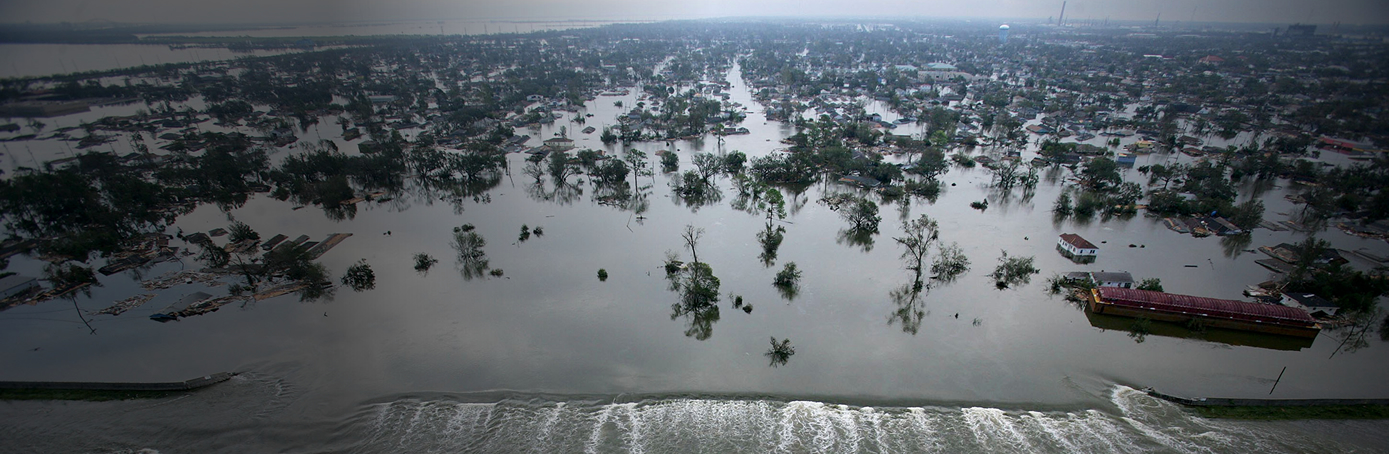
Hurricane KatrinaA decade after Hurricane Katrina devastated the Gulf Coast, we caught up with several of the survivors featured in our exclusive video series, “I Was There: Hurricane Katrina,” and asked them to reflect on the changes they’ve seen in the past 10 years, and the importance of rebuilding New Orleans and the Gulf Coast in the aftermath of Katrina’s destruction.

KatrinaBiloxiBeach

on this day August 29 2005 Hurricane Katrina slams into Gulf Coast


1828 – A patent was issued to Robert Turner for the self-regulating wagon brake.

1833 – The “Factory Act” was passed in England to settle child labor laws.

1842 – The Treaty of Nanking was signed by the British and the Chinese. The treaty ended the first Opium War and gave the island of Hong Kong to Britain.

1885 – The first prizefight under the Marquis of Queensberry Rules was held in Cincinnati, OH. John L. Sullivan defeated Dominick McCaffery in six rounds.

1886 – In New York City, Chinese Ambassador Li Hung-chang’s chef invented chop suey.

1892 – Pop (Billy) Shriver (Chicago Cubs) caught a ball that was dropped from the top of the Washington Monument in Washington, DC.

1944 – During the continuing celebration of the liberation of France from the Nazis, 15,000 American troops marched down the Champs Elysees in Paris.

1945 – U.S. General Douglas MacArthur left for Japan to officially accept the surrender of the Japanese.

1949 – At the University of Illinois, a nuclear device was used for the first time to treat cancer patients.

1957 – Senator Strom Thurmond of South Carolina set a filibuster record in the U.S. when he spoke for 24 hours and 18 minutes.

1962 – The lower level of the George Washington Bridge opened.

1965 – Gemini 5, carrying astronauts Gordon Cooper and Charles (“Pete”) Conrad, splashed down in the Atlantic Ocean after eight days in space.

1971 – Hank Aaron became the first baseball player in the National League to hit 100 or more runs in each of 11 seasons.

1977 – Lou Brock brought his total of stolen bases to 893. The record he beat was held by Ty Cobb for 49 years.

1983 – Two U.S. marines were killed in Lebanon by the militia group Amal when they fired mortar shells at the Beirut airport.

1983 – The anchor of the USS Monitor, from the U.S. Civil War, was retrieved by divers.

1990 – Iraqi President Saddam Hussein, in a television interview, declared that America could not defeat Iraq.

1991 – The Communist Party in the Soviet Union had its bank accounts frozen and activities were suspended because of the Party’s role in the failed coup attempt against Mikhail Gorbachev.

1991 – The republics of Russia and Ukraine signed an agreement to stay in the Soviet Union.

1992 – The U.N. Security Council agreed to send troops to Somalia to guard the shipments of food.

1994 – Mario Lemieux announced that he would be taking a medical leave of absence due to fatigue, an aftereffects of his 1993 radiation treatments. He would sit out the National Hockey Leagues (NHL) 1994-95 season.

1998 – Northwest Airlines pilots went on strike after their union rejected a last-minute company offer.

2004 – India test-launched a nuclear-capable missile able to carry a one-ton warhead. The weapon had a range of 1,560 miles.

29 August 29, 2005 Hurricane Katrina slams into Gulf Coast