1937 ~ The Rape of Nanking begins


During the Sino-Japanese War, Nanking, the capital of China, falls to Japanese forces, and the Chinese government flees to Hankow, further inland along the Yangtze River.

To break the spirit of Chinese resistance, Japanese General Matsui Iwane ordered that the city of Nanking be destroyed. Much of the city was burned, and Japanese troops launched a campaign of atrocities against civilians. In what became known as the “Rape of Nanking,” the Japanese butchered an estimated 150,000 male “war prisoners,” massacred an additional 50,000 male civilians, and raped at least 20,000 women and girls of all ages, many of whom were mutilated or killed in the process.

Source: history.com for the complete article

on this day …. 12/12


1980
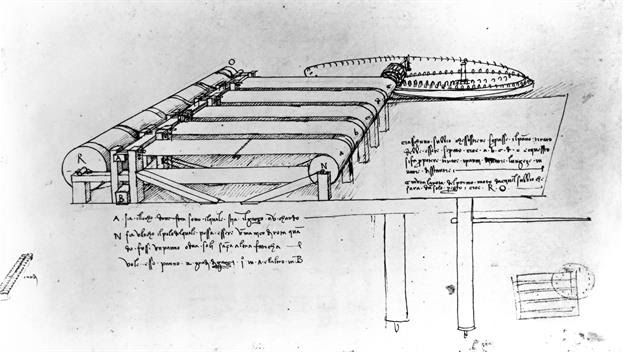
Da Vinci notebook sells for over 5 million
On this day in 1980, American oil tycoon Armand Hammer pays $5,126,000 at auction for a notebook containing writings by the legendary artist Leonardo da Vinci. The manuscript, written around 1508, was one of some 30 similar books da Vinci produced during his lifetime on a variety of subjects. It… read more »
1787
Pennsylvania ratifies the Constitution »
2000
GM announces phase-out of Oldsmobile »
1806
Stand Watie born »
1987
Shultz calls on European allies to increase defense spending »
1989
The Queen of Mean is sentenced to the slammer »
1997
A young murderer is indicted »
1917
French soldiers killed in train accident »
1901
Marconi sends first Atlantic wireless transmission »
1913
Mona Lisa recovered in Florence »
1917
Father Flanagan establishes Boys Town »
1937
USS Panay sunk by Japanese »
1967
Hepburn, Tracy and Poitier star in Guess Who’s Coming to Dinner »
1821
Flaubert is born »
1970
“Tears Of A Clown” gives Smokey Robinson & The Miracles their first #1 pop hit, finally »
1929
Cattle pioneer Charles Goodnight dies »
1963
JFK memorial album sets record for sales »
1965
NFL rookie Gale Sayers ties single-game TD record »
1968
Procedural questions cause difficulty at the peace talks »
1969
Philippine soldiers depart South Vietnam »
1914
Stocks tank as NYSE trading resumes »
1941
United States seizes French liner Normandie »

2001 – The U.S. House of Representatives passed legislation that would implement minimum federal election standards and provide funding to help states modernize their voting systems.


CNN.com/POLITICS

On the one-year anniversary of the Supreme Court decision that effectively settled the 2000 presidential election, the House of Representatives on Wednesday passed legislation that would implement minimum federal election standards and provide funding to help states modernize their voting systems.

The bipartisan legislation would provide $2.65 billion in funding, including $400 million to replace punch card voting systems like the ones used in much of Florida last year. Several of those systems were the source of intense controversy, because of confusion and disagreement over what constituted a vote on the punch cards.

The bill passed by a vote of 362 to 63. It now heads to the Senate, where Democrats and Republicans have been negotiating an election reform measure of their own. Differences between House and Senate versions of the legislation would have to be resolved before a bill can be sent to President Bush for his signature.

White House Spokesman Ari Fleischer said Wednesday that Bush supports the legislation and considers it “a positive step forward.”
House Administration Committee Chairman Bob Ney, R-Ohio, and ranking member Steny Hoyer, D-Maryland, crafted the measure after previous efforts at reform legislation faltered.

for complete article cnn.com/2001/ALLPOLITICS/12/12/scotus.anniversary

Human Rights Day ~ 5 key things to know


The theme for Human Rights Day 2024, “Our Rights, Our Future, Right Now”highlights the continued relevance of human rights in addressing global challenges.

This year, the UN human rights office (OHCHR) aims to inform and change perceptions on human rights while mobilising action.

Here are five essential facts about human rights everyone should know:

1. Human Rights are universal and inalienable

Human rights are not granted by states – they belong to everyone, everywhere, simply by virtue of being human. They transcend race, gender, nationality, or beliefs, ensuring inherent equality and dignity for all.

These rights include fundamental ones, like the right to life set out by Article 3 of the Universal Declaration of Human Rights (UDHR), and those that enable a fulfilling existence, such as access to education and health.

The UDHR is the most translated document in world history, available in more than 500 languages.

Human rights are also inalienable, meaning they cannot be taken away except in specific legal circumstances, such as imprisonment following due process.

2. Human Rights are equal, indivisible, and interdependent

Human rights are indivisible and interdependent, which means that the fulfilment of one right often relies on others.

For example, the right to education is crucial for exercising political rights, such as voting in elections. Similarly, the right to health and access to clean water are vital for the right to life and dignity.

Understanding this interconnection is essential in addressing complex global issues.

Tackling one area can lead to progress in others – such as gender equality or poverty reduction – while ignoring even one right can create a ripple effect, harming individuals and communities in multiple ways.

3. The Universal Declaration of Human Rights was a global turning point

Human rights are not just abstract ideas, through different declarations, covenants and bills, they have become actionable standards.

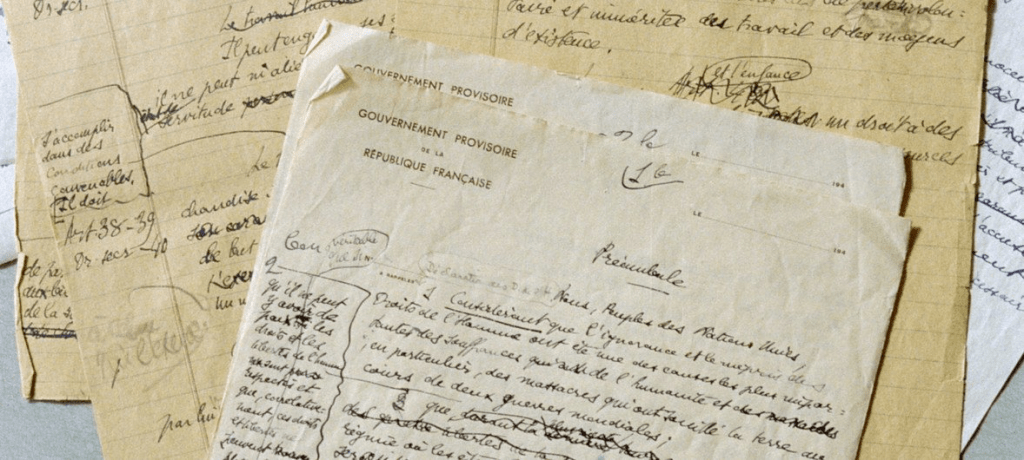
Born from the atrocities of World War Two and adopted in 1948, the Universal Declaration of Human Rights (UDHR) was the world’s first comprehensive statement of universal human rights.

As the foundation of international human rights law, the 30 articles of the UDHR outline key freedoms, from equality and liberty to protection from torture; and has inspired more than 80 international treaties.

Together with the International Covenant on Civil and Political Rights and the International Covenant on Economic, Social, and Cultural Rights, it forms the International Bill of Human Rights.

4. States have obligations and individuals have support

All States have ratified at least one of the nine core human rights treaties, as well as one of the nine optional protocols. This means that states have obligations and duties under international law to respect, protect and fulfil human rights.

At the same time, human rights treaties offer a framework for individuals and communities to demand the fulfilment of their rights and advocate for change.

Grassroots movements, such as the youth-led Fridays for the Future, showcase how human rights can fortify the call for climate justice.

5. Human Rights Day: a platform for action

Observed annually, Human Rights Day commemorates the adoption of the UDHR and serves as a platform to reflect on both achievements and ongoing struggles in the realm of human rights.

“Human rights are about people. They are about you and your life: your needs and wants and fears; your hopes for the present and the future, “said Mr. Türk, in his video message for the day.

This year, the 76th anniversary of the UDHR emphasises the power of human rights as a preventative, protective, and transformative force, especially in times of crisis.

As Human Rights Day ~ 10 December, it serves as a reminder of the ongoing importance of equality, justice, and dignity for all people worldwide. 

Source: news.un.org

1974 ~ Sex scandal leads to political fallout for Arkansas congressman


Representative Wilbur D. Mills, a Democrat from Arkansas, resigns as chairman of the Ways and Means Committee in the aftermath of the first truly public sex scandal in American politics.

On October 7, 1974, at 2 a.m., Mills was stopped by park police while driving at night with his lights off. The 65-year-old representative, an influential congressman and married man, was visibly intoxicated, his face was scratched, and his companion, 38-year-old Annabell Battistella, had bruised eyes. Battistella then proceeded to jump into the Tidal Basin near the Jefferson Memorial and had to be pulled out by the police. She was later identified as a popular stripper who went by the names “Fanne Foxe” and the “Argentine Firecracker.”

Congressmen had been involved in these types of improprieties before but the details were generally kept quiet, saving the politicians from public disgrace. However, on this occasion, the story of Representative Mills’ sordid affair with the stripper was heavily publicized. At first, Mills denied all the allegations but later admitted he had joined a party Battistella was present at after “a few refreshments.” Mills was subsequently reelected to Congress, but because of the escalating scandal, he was forced to retire his chairmanship and later announced that he would not run for reelection. He died in 1992.

Source: for the complete article, history.com

When will MAGAR be held responsible for their continuous misconduct – Nativegrl77