Zora Neale b. 1891 – d. 1960 – Black History


Zora Neale Hurston (January 7, 1891 – January 28, 1960) was an American author, anthropologist, and filmmaker. 

She portrayed racial struggles in the early 1900s American South and published research on hoodoo.

The most popular of her four novels is Their Eyes Were Watching God, published in 1937. She … See more

1955 – Marian Anderson becomes first African American to perform at the Met Opera


On the evening of January 7, 1955, the curtain at the Metropolitan Opera in New York rises to reveal Marian Anderson, the first African American to perform with the Met. By then, Anderson was in the twilight of a career that was equal parts acclaimed and hamstrung by racism. …read more

Source: history.com

1864 – Full Film: The Sand Creek Massacre and the Civil War


Source: Sand Creek Massacre Foundation

On January 7, 1865, a battle took place near Julesburg, Colorado, between 1,000 Cheyenne, Arapaho, and Lakota Indians and about 60 soldiers of the U.S. Army and 40 to 50 civilians. 

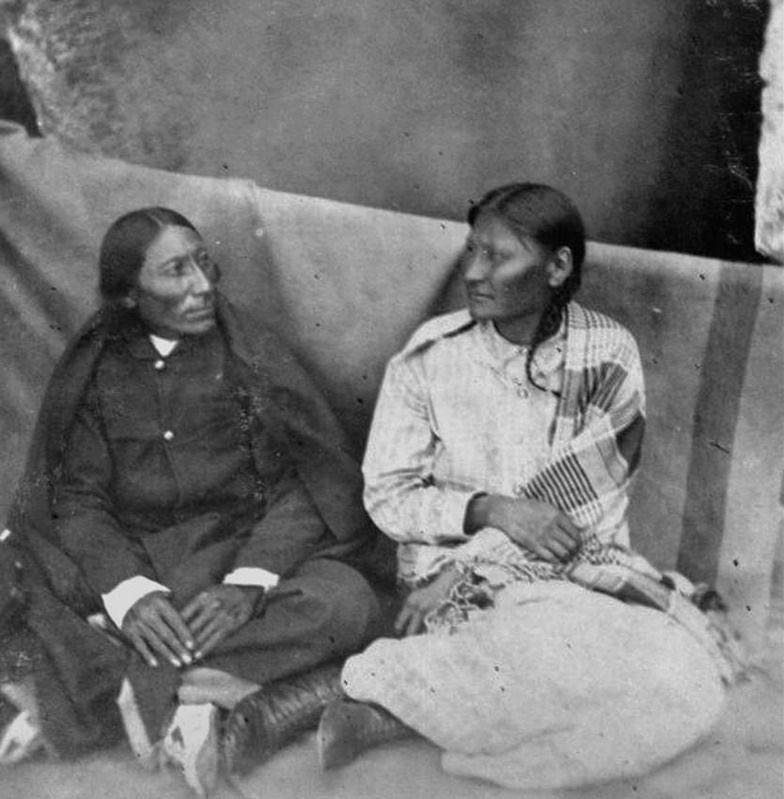
Mochi (Buffalo Calf Woman, right side), Southern Cheyenne photographed while imprisoned at Fort Marion in St. Augustine, Florida. The Sand Creek massacre unleashed the anger of the Plains natives: many tribes united to fight against white people who had not respected the peace treaties, and not even the white flag waved by a little girl of just six. In addition to revenge, the Indians also sought food and blankets, to survive the long winter. On January 7, 1865, 1,000 warriors (Cheyenne, Sioux and Arapaho) attacked Camp Ranking, followed by many women who steered the escort horses. Among them was Mo-chi, who organized the load of everything they managed to take from the warehouses of the fort abandoned by the soldiers, lured out by a vanguard of warriors. During that raid, Mo-chi met Medicine Water, the man to whom she remained tied for the rest of her life, united by the same spirit of resistance.

The Indians defeated the soldiers and over the next few weeks plundered ranches and stagecoach stations up and down the South Platte River valley 2.

The U.S. Army’s Sand Creek Massacre of Cheyenne and Arapaho on November 29, 1864, was one of the reasons that caused the Indians to intensify hostilities against the U.S. Army and white settlers 21.

Source: BingAI, Wikipedia

on this day … 1/7


USflag1327   King Edward II of England is deposed.
1558   The French, under the Duke of Guise, finally take the port of Calais from the English.
1785   Frenchman Jean-Pierre Blanchard and American Dr. John Jeffries make the first crossing of the English Channel in a hydrogen balloon.
1807   Responding to Napoleon Bonaparte‘s attempted blockade of the British Isles, the British blockade Continental Europe.
1865   Cheyenne and Sioux warriors attack Julesburg, Colo., in retaliation for the Sand Creek Massacre.
1901   New York stock exchange trading exceeds two million shares for the first time in history.
1902   Imperial Court of China returns to Peking. The Empress Dowager resumes her reign.
1918   The Germans move 75,000 troops from the Eastern Front to the Western Front.
1934   Six thousand pastors in Berlin defy the Nazis insisting that they will not be silenced.
1944   The U.S. Air Force announces the production of the first jet-fighter, Bell P-59 Airacomet.
1945   U.S. air ace Major Thomas B. McGuire, Jr. is killed in the Pacific.
1952   French forces in Indochina launch Operation Violette in an effort to push Viet Minh forces away from the town of Ba Vi.
1955   Marian Anderson becomes the first African American to sing at the Metropolitan Opera House.
1975   Vietnamese troops take Phuoc Binh in new full-scale offensive.
1979   Pol Pot and his Khmer Rouge are overthrown when Vietnamese troops seize the Cambodian capital of Phnom Penh.
1980   US President Jimmy Carter signs legislation providing $1.5 billion in loans to salvage Chrysler Corporation.
1985   Vietnam seizes the Khmer National Liberation Front headquarters near the Thai border.
1985   Japan launches its first interplanetary spacecraft, Sakigake, the first deep space probe launched by any nation other than the US or the USSR.
1989   Prince Akihito is sworn in as Emperor of Japan, following the death of his father, Hirohito.
1990   Safety concerns over structural problems force the Leaning Tower of Pisa to be closed to the public.
1993   The Bosnian Army carries out a surprise attack on the village of Kravica in Srebrenica during the Bosnian War.
1999   The impeachment trial of US President Bill Clinton opens in the US Senate.

Source: history.net

1789 – Americans voted for the electors that would choose George Washington to be the first U.S. president.


United States Electoral College

Congress sets January 7, 1789 as the date by which states are required to choose electors for the country’s first-ever presidential election. A month later, on February 4, George Washington was elected president by state electors and sworn into office on April 30, 1789.
As it did in 1789, the United States still uses the Electoral College system, established by the U.S. Constitution, which today gives all American citizens over the age of 18 the right to vote for electors, who in turn vote for the president. The president and vice president are the only elected federal officials chosen by the Electoral College instead of by direct popular vote.
Today political parties usually nominate their slate of electors at their state conventions or by a vote of the party’s central state committee, with party loyalists often being picked for the job. Members of the U.S. Congress, though, can’t be electors. Each state is allowed to choose as many electors as it has senators and representatives in Congress. During a presidential election year, on Election Day (the first Tuesday after the first Monday in November), the electors from the party that gets the most popular votes are elected in a winner-take-all-system, with the exception of Maine and Nebraska, which allocate electors proportionally. In order to win the presidency, a candidate needs a majority of 270 electoral votes out of a possible 538.

READ MORE: Why Was the Electoral College Created?

Citation Information
Article Title
First U.S. presidential election
Author
History.com Editors
Website Name
HISTORY
URL
https://www.history.com/this-day-in-history/first-u-s-presidential-election
Access Date
January 6, 2020
Publisher
A&E Television Networks
Last Updated
January 6, 2020
Original Published Date
November 24, 2009

history.com