On January 7, 1865, a battle took place near Julesburg, Colorado, between 1,000 Cheyenne, Arapaho, and Lakota Indians and about 60 soldiers of the U.S. Army and 40 to 50 civilians.
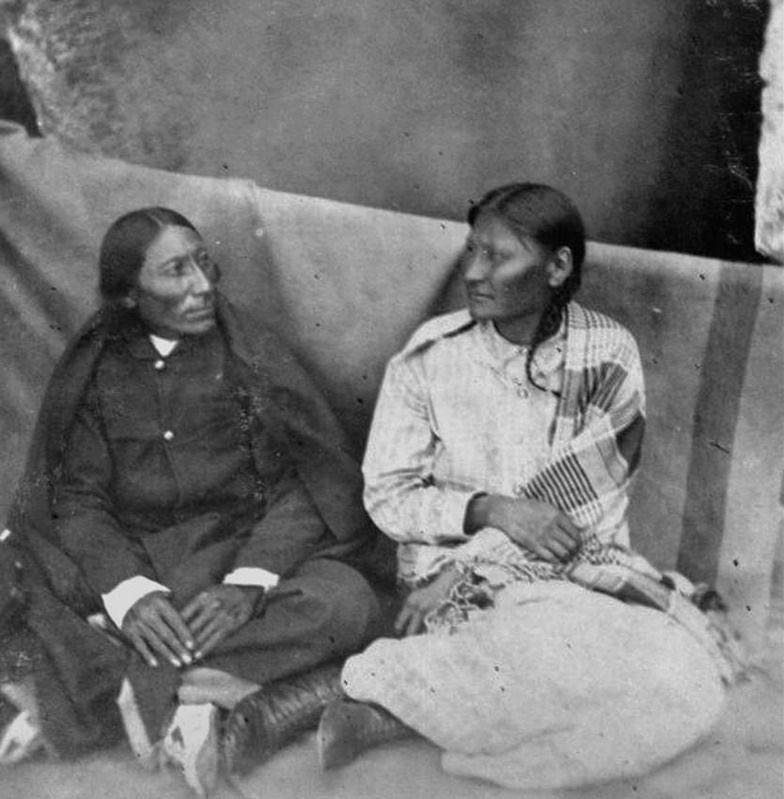
Mochi (Buffalo Calf Woman, right side), Southern Cheyenne photographed while imprisoned at Fort Marion in St. Augustine, Florida. The Sand Creek massacre unleashed the anger of the Plains natives: many tribes united to fight against white people who had not respected the peace treaties, and not even the white flag waved by a little girl of just six. In addition to revenge, the Indians also sought food and blankets, to survive the long winter. On January 7, 1865, 1,000 warriors (Cheyenne, Sioux and Arapaho) attacked Camp Ranking, followed by many women who steered the escort horses. Among them was Mo-chi, who organized the load of everything they managed to take from the warehouses of the fort abandoned by the soldiers, lured out by a vanguard of warriors. During that raid, Mo-chi met Medicine Water, the man to whom she remained tied for the rest of her life, united by the same spirit of resistance.
The U.S. Army’s Sand Creek Massacre of Cheyenne and Arapaho on November 29, 1864, was one of the reasons that caused the Indians to intensify hostilities against the U.S. Army and white settlers 21.


 Be a Seed for Change
You must be logged in to post a comment.