1666 – Shah Jahan, a descendant of Genghis Khan and Timur, died at the age of 74. He was the Mongul emperor of India that built the Taj Mahal as a mausoleum for his wife Mumtaz-i-Mahal.
1771 – The Falkland Islands were ceded to Britain by Spain.
1824 – The Asante army crushed British troops in the Gold Coast.
1879 – James Shields began a term as a U.S. Senator from Missouri. He had previously served Illinois and Minnesota. He was the first Senator to serve three states.
1879 – British troops were massacred by the Zulus at Isandhlwana.
1889 – The Columbia Phonograph Company was formed in Washington, DC.
1895 – The National Association of Manufacturers was organized in Cincinnati, OH.
1900 – Off of South Africa, the British released the German steamer Herzog, which had been seized on January 6.
1901 – Queen Victoria of England died after reigning for nearly 64 years. Edward VII, her son, succeeded her.
1903 – The Hay-Herrán Treaty was signed by United States Secretary of State John M. Hay and Colombian Chargé Dr. Tomás Herrán. The treaty granted the United States rights to the land proposed for the Panama Canal.
1905 – Insurgent workers were fired on in St Petersburg, Russia, resulting in “Bloody Sunday.” 500 people were killed.
1917 – U.S. President Wilson pleaded for an end to war in Europe, calling for “peace without victory.” America entered the war the following April.
1924 – Ramsay MacDonald became Britain’s first Labour Prime Minister.
1930 – In New York, excavation began for the Empire State Building.
1936 – In Paris, Premier Pierre Laval resigned over diplomatic failure in the Ethiopian crisis.
1938 – “Our Town,” by Thornton Wilder, was performed publicly for the first time, in Princeton, NJ.
1941 – Britain captured Tobruk from German forces.
1944 – Allied forces began landing at Anzio, Italy, during World War II.
1947 – KTLA, Channel 5, in Hollywood, CA, began operation as the first commercial television station west of the Mississippi River.
1950 – Alger Hiss, a former adviser to U.S. President Franklin Roosevelt, was convicted of perjury for denying contacts with a Soviet agent. He was sentenced to five years in prison.
1951 – Fidel Castro was ejected from a Winter League baseball game after hitting a batter. He later gave up baseball for politics.
1953 – The Arthur Miller drama “The Crucible” opened on Broadway.
1956 – Raymond Burr starred as Captain Lee Quince in the “Fort Laramie” debut on CBS radio.
1957 – Suspected “Mad Bomber” was arrested in Waterbury, CT. George P. Metesky was accused of planting more than 30 explosive devices in the New York City area.
1957 – The Israeli army withdrew from the Sinai. They had invaded Egypt on October 29, 1956.
1959 – British world racing champion Mike Hawthorn was killed while driving on the Guildford bypass.
1961 – Wilma Rudolph, set a world indoor record in the women’s 60-yard dash. She ran the race in 6.9 seconds.
1962 – Cuba’s membership in the Organization of American States (OAS) was suspended.
1964 – Kenneth Kaunda was sworn in as the first Prime Minister of Northern Rhodesia.
1968 – “Rowan & Martin’s Laugh-In”, debuted on NBC TV.
1970 – The first regularly scheduled commercial flight of the Boeing 747 began in New York City and ended in London about 6 1/2 hours later.
1972 – The United Kingdom, the Irish Republic, and Denmark joined the EEC.
1973 – Joe Frazier lost the first fight of his professional career to George Foreman. He had been the undefeated heavyweight world champion since February 16, 1970 when he knocked out Jimmy Ellis.
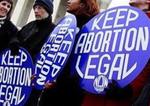
1973 – The U.S. Supreme Court struck down state laws that had been restricting abortions during the first six months of pregnancy. The case (Roe vs. Wade) legalized abortion.
1983 – Bjorn Borg retired from tennis. He had set a record by winning 5 consecutive Wimbledon championships.
1984 – Apple introduced the Macintosh during the third quarter of Super Bowl XVIII.
1987 – Phil Donahue became the first talk show host to tape a show from inside the Soviet Union. The shows were shown later in the year.
1992 – Rebel soldiers seized the national radio station in Kinshasa, Zaire’s capital, and broadcast a demand for the government’s resignation.
1995 – Two Palestinian suicide bombers from the Gaza Strip detonated powerful explosives at a military transit point in central Israel, killing 19 Israelis.
1997 – The U.S. Senate confirmed Madeleine Albright as the first female secretary of state.
1998 – Theodore Kaczynski pled guilty to federal charges for his role as the Unabomber. He agreed to life in prison without parole.
2000 – Elian Gonzalez’s grandmothers met privately with U.S. Attorney General Janet Reno as they appealed for help in removing the boy from his Florida relatives and reuniting him with his father in Cuba.
2001 – Former National Football League (NFL) player Rae Carruth was sentenced to a minimum 18 years and 11 months in prison for his role in the 1999 shooting death of his pregnant girlfriend, Cherica Adams. Adams died a month later from her wounds. The baby survived and lives with the victim’s mother.
2001 – Acting on a tip, authorities captured four of the “Texas 7” in Woodland Park, CO, at a convenience store. A fifth convict killed himself inside a motor home.
2002 – In Calcutta, India, Heavily armed gunmen attacked the U.S. government cultural center. Five police officers were killed and twenty others, including one pedestrian and one private security guard, were wounded.
2002 – Lawyers suing Enron Corp. asked a court to prevent further shredding of documents due to the pending federal investigation.
2002 – Amazon.com announced that it had posted its first net profit in the fourth quarter (quarter ending December 31, 2001).
2002 – AOL Time Warner filed suit against Microsoft in federal court seeking damages for harm done to AOL’s Netscape Internet Browser when Microsoft began giving away its competing browser.
2002 – Marc Chagall’s work “Study for ‘Over Vitebsk” was found at a postal installation in Topeka, KS. The 8×10 oil painting is valued at about $1 million. The work was stolen a year before from the Jewish Museum in New York City.
2002 – Kmart Corp. filed for Chapter 11 bankruptcy making it the largest retailer in history to seek legal protection from its creditors.
2003 – In New York, the “Leonardo da Vinci, Master Draftsmen” exhibit opened at the Metropolitan Museum of Art.
2003 – It was reported that scientists in China had found fossilized remains of a dinosaur with four feathered wings.
on-this-day.com






 Be a Seed for Change
You must be logged in to post a comment.