
 1504 – The English Parliament passed statutes against retainers and liveries to curb private warfare.1533 – England’s King Henry VIII secretly married his second wife Anne Boleyn. Boleyn later gave birth to Elizabeth I. 1504 – The English Parliament passed statutes against retainers and liveries to curb private warfare.1533 – England’s King Henry VIII secretly married his second wife Anne Boleyn. Boleyn later gave birth to Elizabeth I.
1579 – The Treaty of Utrecht was signed marking the beginning of the Dutch Republic. 1799 – Eliakim Spooner patented the seeding machine. 1858 – Mendelssohn’s “Wedding March” was presented for the first time at the wedding of the daughter of Queen Victoria and the Crown Prince of Prussia. 1870 – G.D. Dows patented the ornamental soda fountain. 1881 – Thomas Edison, Alexander Graham Bell and others signed an agreement to organize the Oriental Telephone Company. 1890 – The United Mine Workers of America was founded. 1915 – In New York, Alexander Graham Bell spoke to his assistant in San Francisco, inaugurating the first transcontinental telephone service. 1924 – The 1st Winter Olympic Games were inaugurated in Chamonix in the French Alps. 1937 – NBC radio presented the first broadcast of “The Guiding Light.” The show remained on radio until 1956 and began on CBS-TV in 1952. 1945 – Richard Tucker debuted at the Metropolitan Opera House in New York City in the production of “La Gioconda”. 1946 – The United Mine Workers rejoined the American Federation of Labor. 1949 – The first Emmys were presented at the Hollywood Athletic Club. 1950 – A federal jury in New York City found former State Department official Alger Hiss, soviet spy …guilty of perjury. 1959 – In the U.S., American Airlines had the first scheduled transcontinental flight of a Boeing 707. 1961 – John F. Kennedy presented the first live presidential news conference from Washington, DC. The event was carried on radio and television. 1971 – Maj. Gen. Idi Amin led a coup that deposed Milton Obote and became president of Uganda. 1981 – The 52 Americans held hostage by Iran for 444 days arrived in the United States and were reunited with their families. 1987 – The New York Giants defeated the Denver Broncos, 39-20, in Super Bowl XXI on NBC. The game featured TV commercials cost $550,000 for 30 seconds. 1998 – The Denver Broncos beat the Green Bay Packers 31-24 in Super Bowl XXXII. The Broncos had lost 3 previous Super Bowl appearances with quarterback John Elway. 1999 – In Louisville, KY, man received the first hand transplant in the United States. 2010 – In Arlington, TX, the International Bowling Museum and Hall of Fame had its grand opening. 2011 – A revolution began in Egypt with the demonstrations that demanded the end of President Hosni Mubarak’s rule. onthisday.com |
Daily Archives: 01/25/2025

The Slaves of the White House Finally Get to Have Their Stories Told
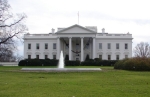
Long ignored by historians, the enslaved people of the White House are coming into focus through a new book by Jesse J. Holland
Please click on green links for more information
smithsonian.com
January 25, 2016
January 25, 2016
President Barack Obama might be the first black president to serve in the White House, but he certainly was not the first black person to live there. Yet the history of the original black residents of 1600 Pennsylvania Avenue has been sparsely reported on, as Associated Press reporter Jesse J. Holland discovered when he began researching his latest book, The Invisibles: The Untold Story of African American Slaves in the White House. The Invisibles—a smart sketch on the lives of these men and women in bondage—is intended to serve as a historical first take. Holland’s goal writing about the slaves who resided alongside 10 of the first 12 presidents who lived in the White House is to start a conversation on who these enslaved people were, what they were like, and what happened to them if they were able to escape from bondage.
Your first book, Black Men Built the Capitol: Discovering African-American History In and Around Washington, D.C., touches on similar themes to The Invisibles. How did you get the idea for writing about this specific lost chapter of black history in the United States?
I was covering politics for the AP back when Obama was doing his first presidential campaign around the country. He decided that weekend to go back home to Chicago. I was on the press bus, sitting in Chicago outside of Obama’s townhouse, trying to think about what book to write next. I wanted to do a follow-up book to my first—which was published in 2007—but I was struggling to come up with a coherent idea. As I was sitting there in Chicago, covering Obama, it hit me: We had always talked about the history of Obama possibly becoming the first black president of the United States, but I knew Obama couldn’t have been the first black man to live in the White House. Washington, D.C. is a southern city and almost all mansions in the South were constructed and run by African Americans. So I said to myself, I want to know who these African American slaves were who lived in the White House.

How did you begin researching the story?
Only one or two of the slaves who worked for the president ever had anything written—Paul Jennings wrote a memoir—but there’s very little written about these men and women enslaved by the presidents. Most of my research was done by reading between lines of presidential memoirs and piecing all of it into one coherent narrative. Presidential historians that work at Monticello and Hermitage in Tennessee, for example, want this research done; they were thrilled when someone wanted to look at these records and were able to send me a lot of materials.
What were some of the more unexpected details you can across during your research?
One of the things that surprised me is how much information was written about these slaves without calling them slaves. They were called servants, they were staff— but they were slaves. Andrew Jackson’s horse racing operation included slave jockeys. There have been things written about Andrew Jackson and horses and jockeys, but not one mentioned the word “slaves.” They were called employees in all the records. So, it’s there, once you know the words to look for. I was also surprised with how much time the presidents spent talking about their slaves in those same code words. When you start reading memoirs, ledgers, these people show up again and again and again, but they are never actually called slaves.
Which president’s relationship with his slaves surprised you the most?
With Thomas Jefferson, there’s been so much said about him and his family, I don’t know if I discovered anything new, but everything is about context. We mostly talk about Thomas Jefferson and Sally Hemings, but James Hemings would have been the first White House chef, if not for the spat between him and Thomas Jefferson.
Or you look at [Joseph] Fossett being caught on White House grounds trying to see his wife. It surprised me because you would think things like that would be more well known. The Thomas Jefferson story is overwhelmed about him and Sally Hemmings, but there are so many stories there.
Definitely.
Also, with everything we know about George Washington, I was shocked to find he advertised in the newspaper for a recapture of an escaped slave. I hadn’t thought any had escaped until I started working on this and then to find he’d advertised for the return, that’s not subtle. He wanted him back and he took whatever route he could take, including taking out an advertisement.
How does reading about these slaves help us better understand the early presidents?
In the past, we’ve talked about their attitudes in general toward slaves and now we can talk in specifics, and include the names of the slaves they were dealing with. That’s one thing I hope not just historians, but people in general pick out of the abstract. Begin talking about the specifics: this is how the relationships between George Washington and William Lee or Thomas Jefferson with James Hemings or Andrew Jackson with Monkey Simon. This helps us understand presidents’ policies when it came to slavery and race relations at this time. If they said something publicly but did something else privately, it gives us insight into who they are.
Was it frustrating writing around the limited information available?
One of the things I talk about in the book is that this is just a first step. There is no telling how many stories have been lost because, as a country, we didn’t value these stories. We’re always learning more about the presidents as we go forward and we’ll also learn more about the people who cooked their meals and dressed them.
There are people doing great work on slave dwellings in the South, great work on the history of African American cooking, slave cooking in the past. It’s not the information wasn’t always here, we’re just interested in it now. As we go forward and learn more information and find these old hidden ledgers and photographs, we’ll have a clearer picture of where we came from as a country and that will help us decide where we are going in the future.
Black History
Share this:

“The New Colossus” by Emma Lazarus
The Truth Behind “Give me your tired, your poor, your huddled masses …”

By
“Give me your tired, your poor, your huddled masses …” is on a plaque of the Statue of Liberty pedestal. It’s used to promote unfettered and unrestricted immigration. You should know the truth.
This oft-quoted phrase is actually a small part of a poem. American poet Emma Lazarus (1849-1887) wrote the poem “The New Colossus” in 1883. She donated the poem to raise money for the construction of the pedestal for the Statue of Liberty. The poem title was a reference to the Greek Colossus of Rhodes, one of the Seven Wonders of the World.
France gave the statue to America in 1885. After the parts were reassembled and the pedestal was constructed, the statue was dedicated on October 28, 1886. President Grover Cleveland presided over the event.
But as with every aspect of American history, there’s a lot more to the story. People don’t know what prompted France to design, build, and donate the statue to America. Even less well known is that these familiar words are from a largely unknown poem. Most obscure is what prompted the writing of the poem.
History
After years of designing, fundraising, building, and with several trips to America, Bartholdi and his extensive team finally completed the statue in 1884. Laboulaye died the year before, having never seen the finished work.
Here’s the poem “The New Colossus” by Emma Lazarus
Not like the brazen giant of Greek fame,
With conquering limbs astride from land to land;
Here at our sea-washed, sunset gates shall stand
A mighty woman with a torch, whose flame
Is the imprisoned lightning, and her name
Mother of Exiles. From her beacon-hand
Glows world-wide welcome; her mild eyes command
The air-bridged harbor that twin cities frame.
“Keep, ancient lands, your storied pomp!” cries she
With silent lips.
“Give me your tired, your poor,
Your huddled masses yearning to breathe free,
The wretched refuse of your teeming shore.
Send these, the homeless, tempest-tost to me,
I lift my lamp beside the golden door!”
FACT OVER FICTION
The poem is now synonymous with the Statue of Liberty. But I doubt if anyone could tell you who wrote it. And when. And why. Or how it came to be associated with the quintessential monument.
Most people erroneously believe the famous phrase came from the U.S. government. Many people mistakenly believe it’s an immigration mandate.
That’s pure fiction. The fact is that the poem was reluctantly written as one of many artistic and literary works to raise money for the construction of the pedestal on which the Statue of Liberty stands. In addition, the poem wasn’t placed on the statue’s pedestal until 20 years after it was dedicated.
Nevertheless, the phrase “Give me your tired, your poor, your huddled masses yearning to breathe free,” is now part of the collective American consciousness.
For the complete article … use the url below
Source: independentsentinel.com

 Be a Seed for Change
You must be logged in to post a comment.