1917~ The Bath Riots


On the morning of January 28, 1917, a Mexican maid named Carmelita Torres refuses to put up with the indignity she has been made to suffer every morning since she started working across the border in the United States. Torres’ objection to the noxious chemical delousing visited upon Mexicans upon crossing the Northern border sparked what became known as the Bath Riots, an oft-overlooked moment in Chicano history.

Scared that a recent outbreak of typhus in Mexico could find its way to the United States, the Public Health Service instituted mandatory disinfecting for all Mexicans entering the country. The process was both humiliating and dangerous—men and women were directed to separate facilities, where they were made to strip off their clothes, which would be steamed. Officials examined the nude border-crossers and frequently doused them in harmful chemicals such as kerosene, a method which had resulted in the deaths of 27 prisoners in an El Paso prison in 1916.

Having heard that workers at the facility would regularly photograph women in the nude as they underwent this process, 17-year-old Torres refused to leave the trolley as it stopped at the Santa Fe Bridge border facility. Torres and her fellow passengers, most of whom were also young, female domestic workers, quickly seized four trolleys, hurling whatever they could find at the American authorities. A number of other Juárez residents joined them, and the ensuing riots lasted through the next day, although no one seems to have been seriously injured and there were only a few arrests.

Source: history.com for the complete article

This was a horrendous, seemingly misogynistic, and dangerous thing to have happened!

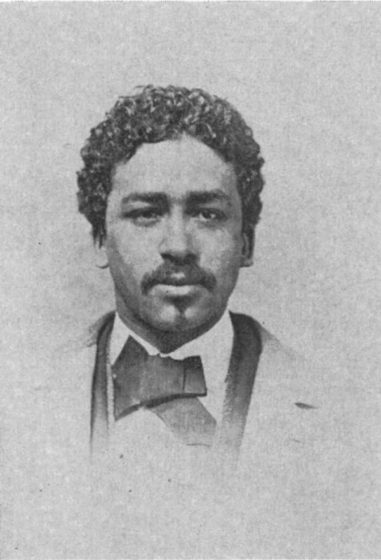
1844 – Richard Theodore Greener became the first African American to graduate from Harvard University.


Richard Theodore Greener (30 January 1844 – 2 May 1922) was the first African-American graduate of Harvard College and dean of the Howard University School of Law.

Richard Greener was born in Philadelphia in 1844 and moved with his mother to Boston when he was about nine years old. He quit school in his mid-teens to earn money for his family, but one of his employers helped him to enroll in preparatory school at Oberlin College. He studied at Phillips Academy and graduated in 1865. After three years at Oberlin, Greener transferred to Harvard College and earned a bachelor’s degree in 1870. After teaching for two years at the Institute for Colored Youth in Philadelphia and then serving as principal at the Preparatory School for Colored Children in Washington, D.C., Greener accepted the professorship of mental and moral philosophy at the University of South Carolina in October 1873

Richard Theodore Greener graduated from Harvard College in 1870, the first African American to do so. Gifted, hardworking, and ambitious, Greener followed this achievement with a lifetime of accomplishment as an educator, scholar, lawyer, politician, and diplomat. He also contended with painful choices about how best to survive and prosper in a country that denied people of color respect and equal rights

for more … worldhistoryproject.org

image from …   backthen.com

1997 – Afrikaner Police admit to killing Steve Biko … anti Apartheid Activist


On January 28, 1997 in South Africa, the Truth and Reconciliation Commission announces the confessions of four apartheid-era police officers to the killing two decades earlier of Stephen Biko, a leader of the South African “Black consciousness” movement. The confessions—that Mr. Biko was ”handled robustly,” but that there was never any intention to kill him—were given in exchange for political amnesty against prosecution.

In 1969, Biko, a medical student, founded an organization for South Africa’s Black students to combat the minority government’s racist apartheid policies and to promote Black identity. In 1972, he helped organize the Black People’s Convention and in the next year was banned from politics by the Afrikaner government. Four years later, in September 1977, he was arrested for subversion. While in police custody in Port Elizabeth, Biko was brutally beaten and then driven 700 miles to Pretoria, where he was thrown into a cell. On September 12, 1977, he died naked and shackled on the filthy floor of a police hospital. News of the political killing, denied by the country’s white minority government, led to international protests and a U.N.-imposed arms embargo.

Source: history.com for the complete article

1918 – Ukraine declares its independence – In Memory


Soon after the Bolsheviks seized control in immense, troubled Russia in November 1917 and moved towards negotiating peace with the Central Powers, the former Russian state of Ukraine declares its total independence.

One of pre-war Russia’s most prosperous areas, the vast, flat Ukraine (the name can be translated as at the border or borderland) was one of the major wheat-producing regions of Europe as well as rich with mineral resources, including vast deposits of iron and coal. The majority of Ukraine was incorporated into the Russian empire after the second partition of Poland in 1793, while the remaining section—the principality of Galicia—remained part of the Austro-Hungarian empire and was a key battleground on World War I’s Eastern Front.

Immediately following the overthrow of the czar in February 1917, Ukraine set up a provisional government and proclaimed itself a republic within the structure of a federated Russia. After Vladimir Lenin and his radical Bolsheviks rose to power in November, Ukraine—like its fellow former Russian property, Finland—took one step further, declaring its complete independence in January 1918.

The complete article … history.com

History… January 28


521 – The Diet of Worms began, at which Protestant reformer Luther was declared an outlaw by the Roman Catholic church.

1547 – England’s King Henry VIII died. He was succeeded by his 9 year-old son, Edward VI.

1788 – The first British penal settlement was founded at Botany Bay.

1807 – London’s Pall Mall became the first street lit by gaslight.

1871 – France surrendered in the Franco-Prussian War.

1878 – The first telephone switchboard was installed in New Haven, CT.

1878 – “The Yale News” was published for the first time. It was the first, daily, collegiate newspaper in the U.S.

1902 – The Carnegie Institution was established in Washington, DC. It began with a gift of $10 million from Andrew Carnegie.

1909 – The United States ended direct control over Cuba.

1915 – The Coast Guard was created by an act of the U.S. Congress to fight contraband trade and aid distressed vessels at sea.

1916 – Louis D. Brandeis was appointed by President Wilson to the U.S. Supreme Court, becoming its first Jewish member.

1918 – The Bolsheviks occupied Helsinki, Finland.

1922 – The National Football League (NFL) franchise in Decatur, IL, transferred to Chicago. The team took the name Chicago Bears.

1935 – Iceland became the first country to introduce legalized abortion.

1945 – During World War II, Allied supplies began reaching China over the newly reopened Burma Road.

1957 – The Brooklyn Dodgers announced that circus clown Emmett Kelly had been hired to entertain fans at baseball games.

1958 – Roy Campanella (Brooklyn Dodgers) was seriously injured in an auto accident in New York. He would never return to play again.

1958 – Construction began on first private thorium-uranium nuclear reactor.

1965 – General Motors reported the biggest profit of any U.S. company in history.

1980 – Six Americans who had fled the U.S. embassy in Tehran, Iran, on November 4, 1979, left Iran using false Canadian diplomatic passports. The Americans had been hidden at the Canadian embassy in Tehran.

1982 – Italian anti-terrorism forces rescued U.S. Brigadier General James L. Dozier. 42 days before he had been kidnapped by the Red Brigades.

1986 – The U.S. space shuttle Challenger exploded just after takeoff. All seven of its crew members were killed.

1994 – In Los Angeles, Superior Court Judge Stanley Weisberg declared a mistrial in the case of Lyle Menendez in the murder of his parents. Lyle, and his brother Erik, were both retried later and were found guilty. They were sentenced to life in prison without parole.

1998 – In Manilla, Philippines, gunmen held at least 400 children and teachers for several hours at an elementary school.

1999 – Ford Motor Company announced the purchase of Sweden’s Volvo AB for $6.45 billion.

2002 – Toys R Us Inc. announced that it would be closing 27 Toys R Us stores and 37 Kids R Us stores in order to cut costs and boost operating profits.

on-this-day.com