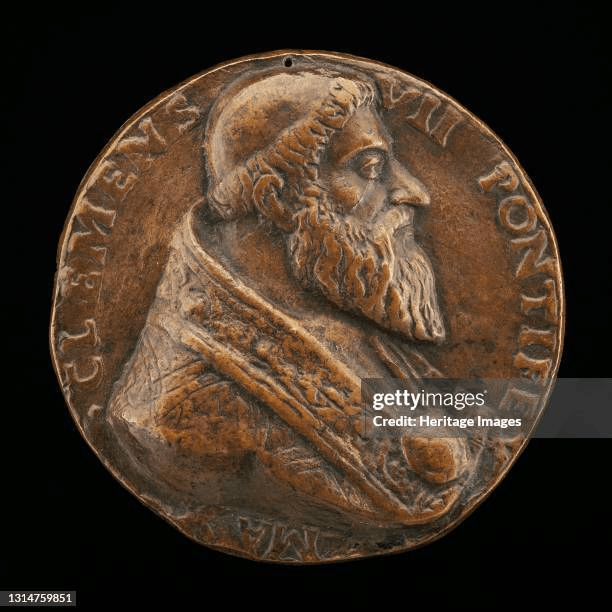
On January 5, 1531, Pope Clement VII sends a letter to King Henry VIII of England forbidding him to remarry under penalty of excommunication. Henry, who was looking for a way out of his marriage to his first wife, Catherine of Aragon, ignored the pope’s warning. He went on to marry Anne Boleyn (and four subsequent wives), leading to his excommunication and one of the most significant schisms in the history of Christianity.
President Richard Nixon refuses to hand over tape recordings and documents that had been subpoenaed by the Senate Watergate Committee. Marking the beginning of the end of his presidency, Nixon would resign from office in disgrace eight months later. READ MORE: 7 Revealing Nixon …read more
Similar to Adolf Hitler, Italian Fascist leader Benito Mussolini did not become the dictator of a totalitarian regime overnight. For several years, he and his allies worked more or less within the confines of the Italian constitution to accrue power, eroding democratic institutions until the moment came for them to be done away with entirely. It is generally agreed that that moment came in speech Mussolini gave to the Italian parliament on January 3, 1925, in which he asserted his right to supreme power and effectively became the dictator of Italy.
Mussolini had been a schoolteacher and an avowed socialist, but after World War I he became a leader of the nascent Fascist movement. Like much of Europe, Italy was rife with social turmoil in the wake of the war, with paramilitary groups and street gangs frequently clashing over their competing visions for the new political order. A close confidant of Mussolini formed a Fascist paramilitary group, known as the Blackshirts or squadristi, as Mussolini led the political party, and they found that government fears of a communist revolution allowed them to operate without state intervention. By 1921, Mussolini had been elected to parliament as the leader of the growing National Fascist Party.
Martin Luther is excommunicated from the Roman Catholic Church.
1777
General George Washington defeats the British led by British General Lord Charles Cornwallis, at Princeton, New Jersey.
1861
Delaware rejects a proposal that it join the South in seceding from the Union.
1903
The Bulgarian government renounces the Treaty of Commerce tying it to the Austro-Hungarian empire.
1910
The Social Democratic Congress in Germany demands universal suffrage.
1912
Plans are announced for a new $150,000 Brooklyn stadium for the Trolley Dodgers baseball team.
1916
Three armored Japanese cruisers are ordered to guard the Suez Canal.
1920
The last of the U.S. troops depart France.
1921
Italy halts the issuing of passports to those emigrating to the United States.
1924
King Tutankhamen’s sarcophagus is uncovered near Luxor, Egypt.
1930
The second conference on Germany’s war reparations begins at the Hague, in the Netherlands.
1931
Hundreds of farmers storm a small town in depression-plagued Arkansas demanding food.
1933
The Japanese take Shuangyashan, China, killing 500 Chinese.
1946
President Harry S. Truman calls on Americans to spur Congress to act on the on-going labor crisis.
1958
The British create the West Indies Federation with Lord Hailes as governor general.
1959
Alaska is admitted into the Union as the 49th and largest state.
1959
Fidel Castro takes command of the Cuban army.
1961
The United States breaks diplomatic relations with Cuba.
1966
Cambodia warns the United Nations of retaliation unless the United States and South Vietnam end intrusions.
1977
Apple Computers incorporates.
1978
North Vietnamese troops reportedly occupy 400 square miles in Cambodia. North Vietnamese Army (NVA) troops were using Laos and Cambodia as staging areas for attacks against allied forces.
1985
President Ronald Reagan condemns a rash of arson attacks on abortion clinics.
1990
Manuel Noriega, former leader of Panama, surrenders to US forces.
1993
George H. W. Bush and Boris Yeltsin sign the second Strategic Arms Reduction Treaty (START).
1994
More than 7 million people receive South African citizenship that had previously been denied under Apartheid policies.
1996
The first mobile flip phone, the Motorola StarTAC, goes on sale.
1999
Mars Polar Lander launched.
2000
The last original weekday Peanuts comic strip is published after a 50-year run, following the death of the strip’s creator, Charles Schultz.history.net
On September 2, 2020, almost 50 years after she sold her first story, and more than 14 years after her death, Octavia E. Butler finally fulfilled her own prophecy and became a New York Times bestseller: Butler’s post-apocalyptic novel Parable of the Sower, which was originally published in 1993 (but is set in the early 2020s), appeared at #14 on the list.
Octavia was also very good at writing author bios. (Don’t laugh; they’re hard.) More importantly, perhaps, she has inspired countless writers and artists who came after her—from Nnedi Okorafor to Janelle Monáe and even Brit Marling, who cites Parable of the Sower in particular as informing her work on The OA. Butler is becoming one of those writers who gets continually rediscovered and re-evaluated, but for fans old and new, it’s a very verdant period for Butler’s work—both Parable of the Sowerand Kindredwill soon be adapted for the screen, and gorgeous new editions and new nonfiction about the writer abound. It would be the Octaviassance, except for the fact that for many of us, she never went away.



 1521
1521


 Be a Seed for Change
You must be logged in to post a comment.