Vista Fire closes Deep Creek, Mount Baldy for extended period


by McKenna Mobley

Victorville Daily Press

The nearly 3,000-acre Vista Fire has closed various hiking trails in the area due to unsafe conditions, including Mount Baldy, most of the Deep Creek area, and Lytle Creek.

As of July 12, major closures in the Baldy area include Manker Flats, Mt. Baldy Rest Area, Ice House Canyon, Bear Canyon, Mt. Baldy Station, and Mt. Baldy Village. These are closed until Oct. 31, 2024 or until further notice.

Violators of the closure will be faced with a $5,000 fine, $10,000 for organizations, and imprisonment for up to six months, according to authorities.

An in-depth list of the Vista Fire road closures near Mount Baldy, posted at the Manker Flats trailhead.

Additionally, Deep Creek is closed between the confluence of Deep Creek and Hooks Creek, and the intersection of Deep Creek with Devil’s Hole Trailhead until June 8, 2025. This area does not include Deep Creek Hot Springs, which is still open according to Bowen Ranch Campground employees.

Lytle Creek Road is also closed at the I-15 and Sierra Avenue. While the Bonita Ranch Campground is still open to campers with a reservation, all day-use trails and creek access is closed.

Source: vvdailypress.com

Hikers in California are up in arms following the ‘unfair’ closure of a series of popular trails on Mount Baldy. The U.S. Forest Service shut the trails in the wake of the Bridge Fire that ravaged the local area, burning 20 homes and more than 50,000 acres of surrounding hillsides.

Source: Internet

on this day 1/2


WethePeople1492 history.netCatholic forces under King Ferdinand and Queen Isabella take the town of Granada, the last Muslim kingdom in Spain.
1758 The French begin bombardment of Madras, India.
1839 Photography pioneer Louis Daguerre takes the first photograph of the moon.
1861 The USS Brooklyn is readied at Norfolk to aid Fort Sumter.
1863 In the second day of hard fighting at Stone’s River, near Murfreesboro, Tenn., Union troops defeat the Confederates.
1903 President Theodore Roosevelt closes a post office in Indianola, Mississippi, for refusing to hire a Black postmistress.
1904 U.S. Marines are sent to Santo Domingo to aid the government against rebel forces.
1905 After a six-month siege, Russians surrender Port Arthur to the Japanese.
1918 Russian Bolsheviks threaten to re-enter the war unless Germany returns occupied territory.
1932 Japanese forces in Manchuria set up a puppet government known as Manchukuo.
1936 In Berlin, Nazi officials claim that their treatment of Jews is not the business of the League of Nations.
1942 In the Philippines, the city of Manila and the U.S. Naval base at Cavite fall to Japanese forces.
1943 The Allies capture Buna in New Guinea.
1963 In Vietnam, the Viet Cong down five U.S. helicopters in the Mekong Delta. 30 Americans are reported dead.
1966 American G.I.s move into the Mekong Delta for the first time.
1973 The United States admits the accidental bombing of a Hanoi hospital.
1980 President Jimmy Carter asks the U.S. Senate to delay the arms treaty ratification in response to Soviet action in Afghanistan.
1981 British police arrest the “Yorkshire Ripper” serial killer, Peter Sutcliffe.
1999 A severe winter storm hits the Midwestern US; in Chicago, temperatures plunge to -13 ºF and19 inches of snow fell; 68 deaths are blamed on the storm.
2006 A coal mine explosion in Sago, West Virginia, kills 12 miners and critically injures another. This accident and another within weeks lead to the first changes in federal mining laws in decades.

1863 – Abraham Lincoln signs the Emancipation Proclamation


On January 1, 1863, Abraham Lincoln signs the Emancipation Proclamation. Attempting to stitch together a nation mired in a bloody civil war, Abraham Lincoln made a last-ditch, but carefully calculated, decision regarding the institution of slavery in America.

By the end of 1862, things were not looking good for the Union. The Confederate Army had overcome Union troops in significant battles and Britain and France were set to officially recognize the Confederacy as a separate nation. In an August 1862 letter to New York Tribune editor Horace Greeley, Lincoln confessed “my paramount object in this struggle is to save the Union, and it is not either to save or to destroy slavery.” Lincoln hoped that declaring a national policy of emancipation would stimulate a rush of the South’s enslaved people into the ranks of the Union army, thus depleting the Confederacy’s labor force, on which the southern states depended to wage war against the North.

Lincoln waited to unveil the proclamation until he could do so on the heels of a Union military success. On September 22, 1862, after the battle at Antietam, he issued a preliminary Emancipation Proclamation declaring all enslaved people free in the rebellious states as of January 1, 1863. Lincoln and his advisors limited the proclamation’s language to slavery in states outside of federal control as of 1862, failing to address the contentious issue of slavery within the nation’s border states. In his attempt to appease all parties, Lincoln left many loopholes open that civil rights advocates would be forced to tackle in the future.

Republican abolitionists in the North rejoiced that Lincoln had finally thrown his full weight behind the cause for which they had elected him. Though enslaved people in the south failed to rebel en masse with the signing of the proclamation, they slowly began to liberate themselves as Union armies marched into Confederate territory. Toward the end of the war, enslaved people left their former masters in droves. They fought and grew crops for the Union Army, performed other military jobs and worked in the North’s mills. Though the proclamation was not greeted with joy by all northerners, particularly northern white workers and troops fearful of job competition from an influx of formerly enslaved people, it had the distinct benefit of convincing Britain and France to steer clear of official diplomatic relations with the Confederacy.

Though the signing of the Emancipation Proclamation signified Lincoln’s growing resolve to preserve the Union at all costs, he still rejoiced in the ethical correctness of his decision. Lincoln admitted on that New Year’s Day in 1863 that he never “felt more certain that I was doing right, than I do in signing this paper.” Although he waffled on the subject of slavery in the early years of his presidency, he would thereafter be remembered as “The Great Emancipator.” To Confederate sympathizers, however, Lincoln’s signing of the Emancipation Proclamation reinforced their image of him as a hated despot and ultimately inspired his assassination by John Wilkes Booth on April 14, 1865.

Source: history.com

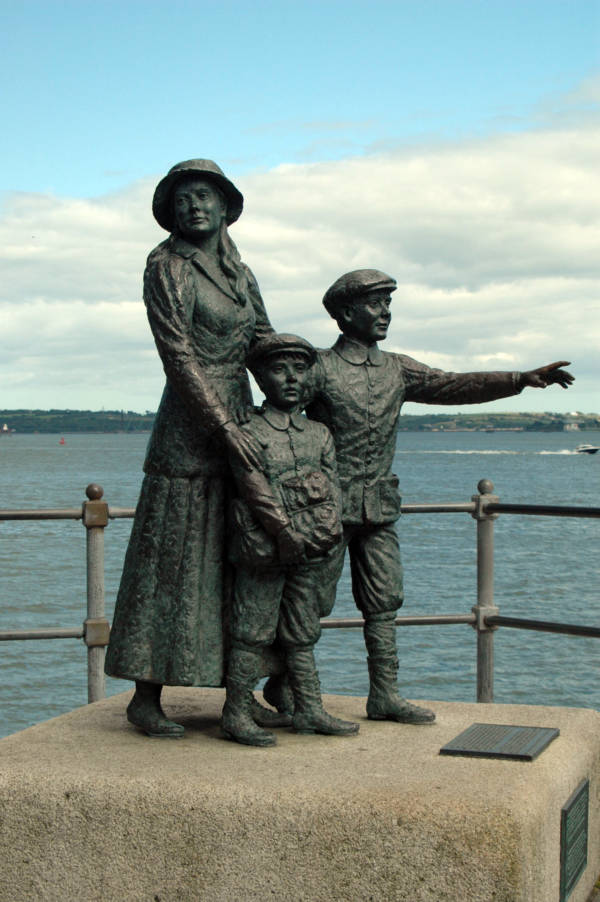
1892 – Ellis Island opened as America’s first federal immigration center. Annie Moore, at age 15, became the first person to pass through.


See the source image

Annie Moore Revisited

When Ellis Island officially opened its doors on January 1, 1892, the first person registered at the immigration station was a young Irish girl named Annie Moore.

READ MORE

“Fourteen-year-old Annie” and her two brothers, Anthony, 11, and Phillip, 7, departed from Cobh, Ireland, formerly Queenstown (County Cork) on December 20, 1891, aboard the S.S. Nevada, three of the 148 steerage passengers. The trip took a total of 12 days including Christmas Day. The Nevada arrived in New York on Thursday evening, December 31st. The Moore children were coming to America to reunite with their parents, Matthew and Julia, who had come first. 

Since that day Annie’s story had become lost to time, and what remained were a mix of truths and myths that would be thought of and taught in our schools as facts.

For the complete article, go to: anniemoore.net