
Monthly Archives: January 2025

Who are Bondi Patel & Hegseth

on this day … 1/24
 1848 – James W. Marshall discovered a gold nugget at Sutter’s Mill in northern California. The discovery led to the gold rush of ’49.
1899 – Humphrey O’Sullivan patented the rubber heel.
1908 – In England, the first Boy Scout troop was organized by Robert Baden-Powell.
1916 – Conscription was introduced in Britain.
1922 – Christian K. Nelson patented the Eskimo Pie.
1924 – The Russian city of St. Petersburg was renamed Leningrad. The name has since been changed back to St. Petersburg.
1930 – Primo Carnera made his American boxing debut by knocking out Big Boy Patterson in one minute, ten seconds of the opening round.
1935 – Krueger Brewing Company placed the first canned beer on sale in Richmond, VA.
1942 – “Abie’s Irish Rose” was first heard on NBC radio.
1943 – U.S. President Roosevelt and British Prime Minister Churchill concluded a wartime conference in Casablanca, Morocco.
1952 – Vincent Massey was the first Canadian to be appointed governor-general of Canada.
1955 – The rules committee of major league baseball announced a plan to strictly enforce the rule that required a pitcher to release the ball within 20 seconds after taking his position on the mound.
1964 – CBS-TV acquired the rights to televise the National Football League’s 1964-1965 regular season. The move cost CBS $14.1 million a year. The NFL stayed on CBS for 30 years.
1965 – Winston Churchill died at the age of 90.
1972 – The U.S. Supreme Court struck down laws that denied welfare benefits to people who had resided in a state for less than a year.
1978 – A nuclear-powered Soviet satellite plunged through Earth’s atmosphere and disintegrated. The radioactive debris was scattered over parts of Canada’s Northwest Territory.
1980 – The United States announced intentions to sell arms to China.
1985 – Penny Harrington became the first woman police chief of a major city. She assumed the duties as head of the Portland, Oregon, force of 940 officers and staff.
1986 – The Voyager 2 space probe flew past Uranus. The probe came within 50,679 miles of the seventh planet of the solar system.
1987 – In Lebanon, gunmen kidnapped educators Alann Steen, Jesse Turner, Robert Polhill and Mitheleshwar Singh. They were all later released.
1989 – Ted Bundy, the confessed serial killer, was put to death in Florida‘s electric chair for the 1978 kidnap-murder of 12-year-old Kimberly Leach.
1990 – Japan launched the first probe to be sent to the Moon since 1976. A small satellite was placed in lunar orbit.
1995 – The prosecution gave its opening statement at the O.J. Simpson murder trial.
1996 – Polish Premier Jozef Oleksy resigned due to allegations that he had spied for Moscow.
2000 – The U.S. Supreme Court upheld a Missouri law that limited the contributions that individuals could donate to a candidate during a single election.
2001 – In Colorado Springs, CO, Patrick Murphy Jr. and Donald Newbury were taken into custody after a 5-minute phone interview was granted with a TV station. They were the remaining fugitives of the “Texas 7.”
2002 – The U.S. Congress began a hearing on the collapse of Enron Corp.
2002 – John Walker Lindh appeared in court for the first time concerning the charges that he conspired to kill Americans abroad and aided terrorist groups. Lindh had been taken into custody by U.S. Marines in Afghanistan.
2003 – The U.S. Department of Homeland Security began operations under Tom Ridge.
Share this:

On 1/23/2017 trump signed an anti-abortion executive order that has far-reaching consequences for women’s reproductive health access worldwide,reminder


1870 – Soldiers Massacre, a camp of sleeping Native Americans
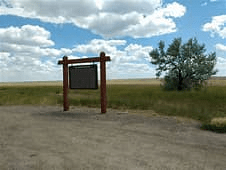
Declaring he did not care whether or not it was the rebellious band of Native Americans he had been searching for, Major Eugene Baker orders his men to attack a sleeping camp of peaceful Blackfeet along the Marias River in northern Montana.
The previous fall, Malcolm Clarke, an influential Montana rancher, had accused a Blackfeet warrior named Owl Child of stealing some of his horses; he punished the man with a brutal whipping. In retribution, Owl Child and several allies murdered Clarke and his son at their home near Helena, and then fled north to join a band of rebellious Blackfeet under the leadership of Mountain Chief. Outraged and frightened, Montanans demanded that Owl Child and his followers be punished, and the government responded by ordering the forces garrisoned under Baker at Fort Ellis (near modern-day Bozeman, Montana) to strike back.
Strengthening his cavalry units with two infantry groups from Fort Shaw near Great Falls, Baker led his troops out into sub-zero winter weather and headed north in search of Mountain Chief’s band. Soldiers later reported that Baker drank a great deal throughout the march. On January 22, Baker discovered a village along the Marias River, and, postponing his attack until the following morning, spent the evening drinking heavily.
At daybreak on the morning of January 23, 1870, Baker ordered his men to surround the camp in preparation for attack. As the darkness faded, Baker’s scout, Joe Kipp, recognized that the painted designs on the buffalo-skin lodges were those of a peaceful band of Blackfeet led by Heavy Runner. Mountain Chief and Owl Child, Kipp quickly realized, must have gotten wind of the approaching soldiers and moved their winter camp elsewhere. Kipp rushed to tell Baker that they had the wrong group, but Baker reportedly replied, “That makes no difference, one band or another of them; they are all Piegans [Blackfeet] and we will attack them.” Baker then ordered a sergeant to shoot Kipp if he tried to warn the sleeping camp of Blackfeet and gave the command to attack.
Baker’s soldiers began blindly firing into the village, catching the peaceful Native Americans utterly unaware and defenseless. By the time the brutal attack was over, Baker and his men had, by the best estimate, murdered 37 men, 90 women, and 50 children. Knocking down lodges with frightened survivors inside, the soldiers set them on fire, burnt some of the Blackfeet alive, and then burned the band’s meager supplies of food for the winter. Baker initially captured about 140 women and children as prisoners to take back to Fort Ellis, but when he discovered many were ill with smallpox, he abandoned them to face the deadly winter without food or shelter.
Source: history.com

 Be a Seed for Change
You must be logged in to post a comment.