1999 – Amadou Diallo killed by police – Black History


Plainclothes officers of the New York Police Department’s Street Crime Unit fire 41 shots at unarmed Amadou Diallo, an immigrant from Guinea, killing him on the steps of his apartment building shortly after midnight on February 4, 1999. Diallo’s killing sparked a public outcry …read more

Citation Information

Article Title

Amadou Diallo killed by police

AuthorHistory.com Editors

Website Name

HISTORY

URL

https://www.history.com/this-day-in-history/amadou-diallo-killed-by-police-new-york-city

Access Date

February 4, 2023

Publisher

A&E Television Networks

Last Updated

January 24, 2022

Original Published Date

January 24, 20

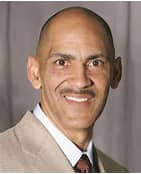
2007 – Tony Dungy becomes the first Black head coach to Win a Super Bowl


Tony Dungy, of the Indianapolis Colts becomes the first Black NFL head coach to win a Super Bowl. The victory marked the first time a Black head coach had reached the National Football League’s championship game—one that featured not just one, but two Black head coaches.

Super Bowl XLI pitted Dungy and his Colts against Lovie Smith, head coach of the Chicago Bears. The Bears shocked the Colts with a 92-yard kick return for a touchdown in the first 14 seconds of the game. Despite this demoralizing start, the Colts and quarterback Peyton Manning came back to defeat the Bears, 29-17. It was the Colts’ first Super Bowl victory since 1971, when they played in Baltimore.

Dungy joined the Colts as head coach in 2003 and led the team to the playoffs three years running before their Super Bowl win in the 2006 season. He began his career in the NFL as a safety with the Pittsburgh Steelers, from 1977-1978. Although his playing career lasted only one more season, he quickly moved into coaching. Dungy worked his way up the coaching ranks as a defensive specialist, progressing from defensive backs coach to defensive coordinator. The Tampa Bay Buccaneers gave Dungy his first head coaching position in 1996. He achieved a cumulative record of 148-79-0 in his years as head coach, earning him a spot in the Pro Football Hall of Fame.

For the complete article …

Source: history.com

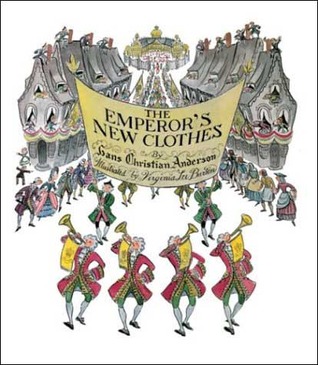
In the library: The Emperor’s New Clothes: a Hans Christian Andersen’s tale – in this era of 2.o trump


343002

Two weavers are approached by a vain, pompous Emperor who desires the finest and most luxurious clothes in all the land for himself – clothes which are befitting of his supreme status. The two weavers promise him just such a set of clothes, so fine and wonderful that they will only be for the eyes of the great and good in society; indeed, they will be quite invisible to anyone who is stupid, incompetent or unworthy of their position in society. What’s more, the clothes will be made of a material so fine (‘as light as a spider web‘) that they will not weigh down the wearer, so fine, the wearer will not even be aware of them draped over his body. Such a set of clothes would be perfect for a great Emperor. They would suit his sense of his own importance, and their magical properties of invisibility to the unworthy would enable him to find out which of his ministers were unfit for their jobs (‘and I could tell the wise men from the fools‘).

Of course, the weavers are nothing more than a pair of con-men – swindlers who have no intention of creating a fine set of clothes. They have heard of the Emperor’s vanity and they believe they can turn his failings to their own advantage. So they decide to go to the pretense of making this set of fine clothes. Of course, when the Emperor goes to visit the weavers at their work and they make a show of enthusing over the cloth and the clothes they are making, he cannot see anything at all. But he is too proud to admit that he cannot see the clothes. To do so, would be to label himself as stupid and unfit to be Emperor. And of course, when his courtiers and ministers visit the weavers, they also cannot see these clothes, but they also pretend that they can – because if they say anything different, they will be admitting their own incompetence and unworthiness. (Can it be that I’m a fool? It would never do to let on that I can’t see the cloth). What’s more, if any of them did have their suspicions about the existence of the clothes, well to voice their doubts would be to imply that the Emperor himself was stupid enough and gullible enough to be taken in by this foolery.

When the Emperor finally walks out among his subjects in his non-existent finery, the crowds watch eagerly. They all want to see which of their friends or neighbours are so stupid that they cannot see the clothes. What actually happens, of course, is that none of them see any clothes. But no one says anything. Perhaps some are embarrassed, to tell the truth, because they think that they themselves must be too stupid to see the cloth. Perhaps others believe that to say anything derogatory would be to draw attention to the truth of the Emperor’s own stupidity. Perhaps others simply do not wish to be the first to speak out with a contrary voice. Only one small child who is far too innocent of all this pretension and social convention shouts out But he hasn’t got anything on!’ At first, the little boy’s father tries to correct the boy, but gradually the news breaks out and so everyone finally realizes they are not alone in their inability to see the clothes. And now everybody begins to find the strength in numbers to admit there is nothing to see, and they begin to laugh.

The Emperor cringes, but continues with the procession because to turn back now would be to admit his own gullibility.  Better by far to carry on in the pretense that he is the only one who has the wisdom to see the clothes. His courtiers likewise feel they have to continue to live the lie, and dutifully follow their leader.

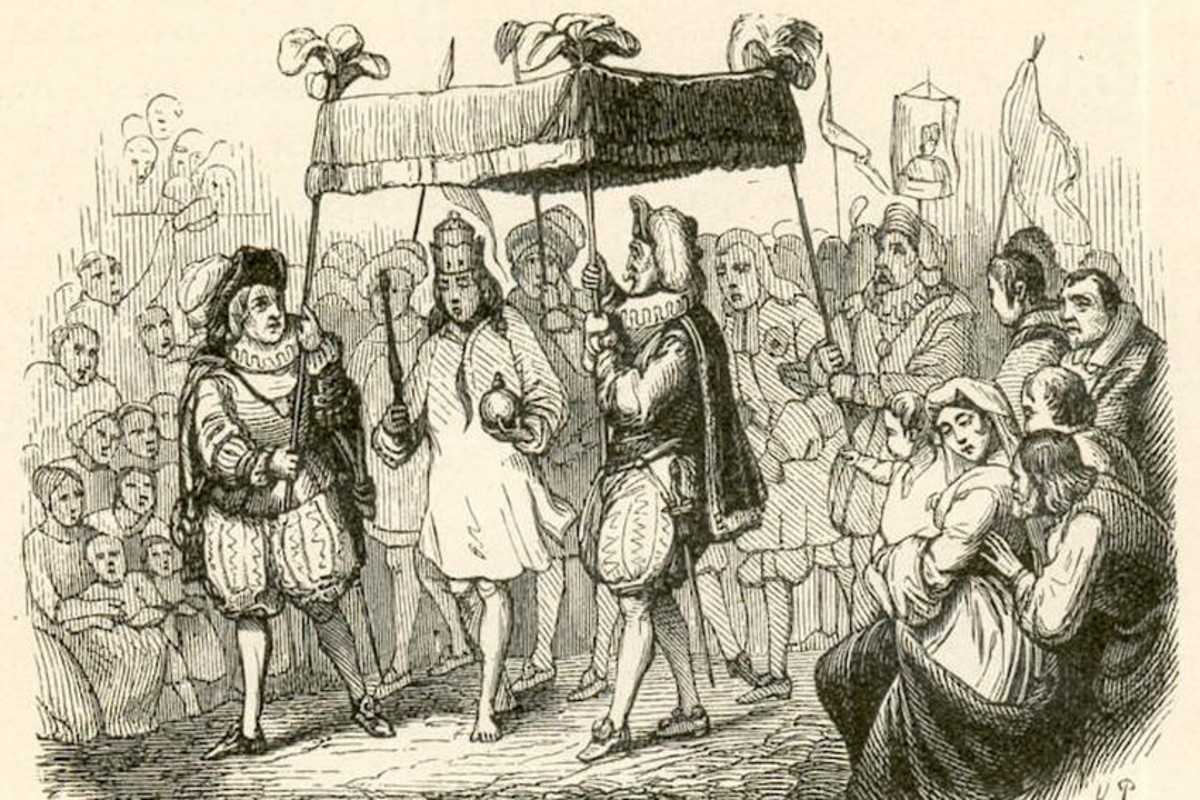
An original drawing of the Emperor's parade by Vilhelm Pedersen, the first illustrator of Hans Christian Andersen's tale
An original drawing of the Emperor’s parade by Vilhelm Pedersen, the first illustrator of Hans Christian Andersen’s tale | Source
in this era of trump … #staywoke – Nativegrl77
why are there so many fools for #teamtrump … the moral of this story is obvious, don’t be a lemming

Civil Rights Activist Rosa Parks


All images

Rosa Parks
Born: February 4, 1913
Died: October 24, 2005
Age: 92 years old
Birthplace: Tuskegee, AL, United States
Occupation: Activist

Early Life & Family

Rosa Parks was born Rosa Louise McCauley on February 4, 1913, in Tuskegee, Alabama. After her parents, James and Leona McCauley, separated when Rosa was two, Rosa’s mother moved the family to Pine Level, Alabama to live with her parents, Rose and Sylvester Edwards. Both were former slaves and strong advocates for racial equality; the family lived on the Edwards’ farm, where Rosa would spend her youth. In one experience, Rosa’s grandfather stood in front of their house with a shotgun while Ku Klux Klan members marched down the street.

Childhood and Education

Rosa Parks’ childhood brought her early experiences with racial discrimination and activism for racial equality. Taught to read by her mother at a young age, Rosa attended a segregated, one-room school in Pine Level, Alabama, that often lacked adequate school supplies such as desks. African-American students were forced to walk to the 1st- through 6th-grade schoolhouse, while the city of Pine Level provided bus transportation as well as a new school building for white students.

Through the rest of Rosa’s education, she attended segregated schools in Montgomery, including the city’s Industrial School for Girls (beginning at age 11). In 1929, while in the 11th grade and attending a laboratory school for secondary education led by the Alabama State Teachers College for Negroes, Rosa left school to attend to both her sick grandmother and mother back in Pine Level. She never returned to her studies; instead, she got a job at a shirt factory in Montgomery.

In 1932, at age 19, Rosa met and married Raymond Parks, a barber and an active member of the National Association for the Advancement of Colored People. With Raymond’s support, Rosa earned her high school degree in 1933. She soon became actively involved in civil rights issues by joining the Montgomery chapter of the NAACP in 1943, serving as the chapter’s youth leader as well as secretary to NAACP President E.D. Nixon — a post she held until 1957.

Life After the Bus Boycott

Although she had become a symbol of the Civil Rights Movement, Rosa Parks suffered hardship in the months following her arrest in Montgomery and the subsequent boycott. She lost her department store job and her husband was fired after his boss forbade him to talk about his wife or their legal case. Unable to find work, they eventually left Montgomery; the couple, along with Rosa’s mother, moved to Detroit, Michigan. There, Rosa made a new life for herself, working as a secretary and receptionist in U.S. Representative John Conyer’s congressional office. She also served on the board of the Planned Parenthood Federation of America.

biography.com

Mary Jackson: wife, mom and NASA Aeronautical Engineer ~ Hidden Figures …


Black and white photo of Mary Jackson in front of computers
Mary Jackson grew up in Hampton, Virginia. After graduating with highest honors from high school, she then continued her education at Hampton Institute, earning her Bachelor of Science Degrees in Mathematics and Physical Science. Following graduation, Mary taught in Maryland prior to joining NASA. Mary retired from the NASA Langley Research Center in 1985 as an Aeronautical Engineer after 34 years.
Credits: NASA

Date of Birth: April 9, 1921
Hometown: Hampton, VA
Education: B.S., Mathematics and Physical Science, Hampton Institute, 1942
Hired by NACA: April 1951
Retired from NASA: 1985
Date of Death: February 11, 2005
Actress Playing Role in Hidden Figures: Janelle Monáe

For Mary Winston Jackson, a love of science and a commitment to improving the lives of the people around her were one and the same. In the 1970s, she helped the youngsters in the science club at Hampton’s King Street Community center build their own wind tunnel and use it to conduct experiments. “We have to do something like this to get them interested in science,” she said in an article for the local newspaper. “Sometimes they are not aware of the number of black scientists, and don’t even know of the career opportunities until it is too late.”

Mary’s own path to an engineering career at the NASA Langley Research Center was far from direct. A native of Hampton, Virginia, she graduated from Hampton Institute in 1942 with a dual degree in Math and Physical Sciences, and accepted a job as a math teacher at a black school in Calvert County, Maryland. Hampton had become one of the nerve centers of the World War II home front effort, and after a year of teaching, Mary returned home, finding a position as the receptionist at the King Street USO Club, which served the city’s black population. It would take three more career changes—a post as a bookkeeper in Hampton Institute’s Health Department, a stint at home following the birth of her son, Levi, and a job as an Army secretary at Fort Monroe—before Mary landed at the Langley Memorial Aeronautical Laboratory’s segregated West Area Computing section in 1951, reporting to the group’s supervisor Dorothy Vaughan.

After two years in the computing pool, Mary Jackson received an offer to work for engineer Kazimierz Czarnecki in the 4-foot by 4-foot Supersonic Pressure Tunnel, a 60,000 horsepower wind tunnel capable of blasting models with winds approaching twice the speed of sound. Czarnecki offered Mary hands-on experience conducting experiments in the facility, and eventually suggested that she enter a training program that would allow her to earn a promotion from mathematician to engineer. Trainees had to take graduate level math and physics in after-work courses managed by the University of Virginia. Because the classes were held at then-segregated Hampton High School, however, Mary needed special permission from the City of Hampton to join her white peers in the classroom. Never one to flinch in the face of a challenge, Mary completed the courses, earned the promotion, and in 1958 became NASA’s first black female engineer. That same year, she co-authored her first report, Effects of Nose Angle and Mach Number on Transition on Cones at Supersonic Speeds.

Mary Jackson began her engineering career in an era in which female engineers of any background were a rarity; in the 1950s, she very well may have been the only black female aeronautical engineer in the field. For nearly two decades she enjoyed a productive engineering career, authoring or co-authoring a dozen or so research reports, most focused on the behavior of the boundary layer of air around airplanes. As the years progressed, the promotions slowed, and she became frustrated at her inability to break into management-level grades. In 1979, seeing that the glass ceiling was the rule rather than the exception for the center’s female professionals, she made a final, dramatic career change, leaving engineering and taking a demotion to fill the open position of Langley’s Federal Women’s Program Manager. There, she worked hard to impact the hiring and promotion of the next generation of all of NASA’s female mathematicians, engineers and scientists.

Mary retired from Langley in 1985. Among her many honors were an Apollo Group Achievement Award, and being named Langley’s Volunteer of the Year in 1976. She served as the chair of one of the center’s annual United Way campaigns, was a Girl Scout troop leader for more than three decades, and a member of the National Technical Association (the oldest African American technical organization in the United States).  She and her husband Levi had an open-door policy for young Langley recruits trying to gain their footing in a new town and a new career. A 1976 Langley Researcher profile might have done the best job capturing Mary Jackson’s spirit and character, calling her a “gentlelady, wife and mother, humanitarian and scientist.” For Mary Jackson, science and service went hand in hand.

Biography by Margot Lee Shetterly