Thu, Feb 6, 10:00 PM PST to Fri, Feb 7, 10:00 AM PST
Alert details
What
Very cold temperatures as low as 15 to 20 degrees for Western Skagit County and the East Puget Sound Lowlands and as low as 20 to 25 degrees for the remaining areas.
Where
Western Skagit County, Bellevue and Vicinity, East Puget Sound Lowlands, Everett and Vicinity, and Seattle and Vicinity.
When
From 10 PM this evening to 10 AM PST Friday.
Impacts
Very cold temperatures can lead to hypothermia with prolonged exposure and will impact vulnerable populations such as the homeless, pets, and those without adequate access to heating.
Summary
Keep pets indoors as much as possible. Make frequent checks on older family, friends, and neighbors. Ensure portable heaters are used correctly. Do not use generators or grills inside.
Photo Credit: Universal History Archive/Universal Images Group/Getty Images
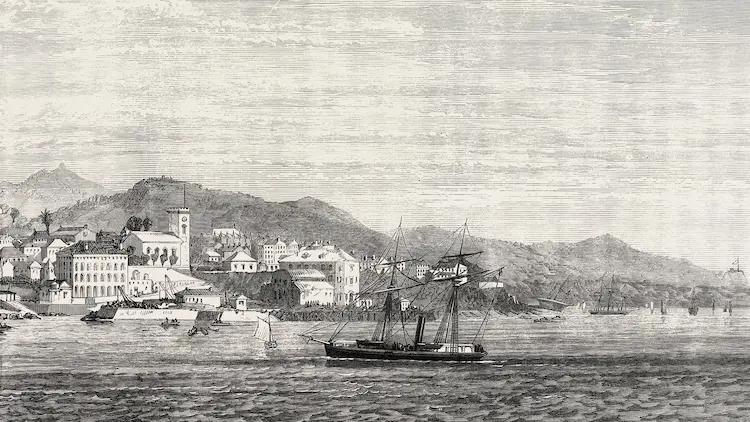
The first organized immigration of freed enslaved people to Africa from the United States departs New York harbor on a journey to Freetown, Sierra Leone, in West Africa. The immigration was largely the work of the American Colonization Society, a U.S. organization founded in 1816 by Robert Finley to return formerly enslaved African people to Africa.
However, the expedition was also partially funded by the U.S. Congress, which in 1819 had appropriated $100,000 to be used in returning displaced Africans, illegally brought to the United States after the abolishment of the slave trade in 1808, to Africa.
The program was modeled after the British’s efforts to resettle formerly enslaved people in Africa following England’s abolishment of the slave trade in 1772. In 1787, the British government settled 300 formerly enslaved people and 70 white prostitutes on the Sierra Leone peninsula in West Africa. Within two years, most members of this settlement had died from disease or warfare with the local Temne people. However, in 1792, a second attempt was made when 1,100 formerly enslaved people, mostly individuals who had supported Britain during the American Revolution and were unhappy with their postwar resettlement in Canada, established Freetown under the leadership of British abolitionist Thomas Clarkson.
Alicia W. Stewart and Tricia Escobedo, CNNPublished 1:53 PM EDT, Thu April 10, 2014
CNN —
The Civil Rights Act of 1964 – hailed by some as the most important legislation in American history – was signed into law years ago Wednesday.
It was known as the “bill of the century.” But many Americans today probably couldn’t say exactly what the legislation accomplished.
“It’s really the law that created modern America,” said Todd S. Purdum, author of “An Idea Whose Time Has Come.” “Its goal was to help finish the work of the Civil War, 100 years after the war had ended, and to make the promise of legal equality for blacks and whites, even though actual equality is elusive to this day.”
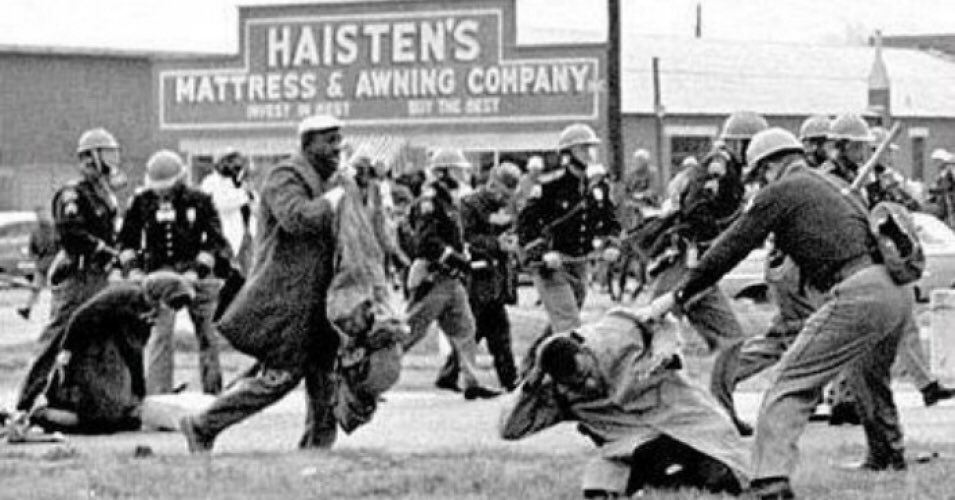
The law revolutionized a country where blacks and whites could not eat together in public restaurants under Jim Crow laws, or stay at the same hotel. It outlawed discrimination in public places and facilities and banned discrimination based on race, gender, religion or national origin by employers and government agencies. It also encouraged the desegregation of public schools.
“This did all of those things. It changed everything about ordinary life for black Americans all over the country,” Purdum said. “I think when you try to explain to people today – I have children 10 and 14 years old, and I don’t think they can really imagine a world like (this) existed before this law.”
The act had the longest filibuster in U.S. Senate history, and after a bloody, long civil rights struggle, the Senate passed the act 73-27 in July 1964. It became law less than a year after President John F. Kennedy’s assassination.
“Most people don’t realize that today at all – in proportional terms, a far higher percentage of Republicans voted for this bill than did Democrats, because of the way the Southerners were divided,” said Purdum.
The division was geographic. The Guardian’s Harry J. Enten broke down the vote, showing that more than 80% of Republicans in both houses voted in favor of the bill, compared with more than 60% of Democrats. When you account for geography, according to Enten’s article, 90% of lawmakers from states that were in the Union during the Civil War supported the bill compared with less than 10% of lawmakers from states that were in the Confederacy.
Enten points out that Democrats still played a key role in getting the law passed.
“It was also Democrats who helped usher the bill through the House, Senate, and ultimately a Democratic president who signed it into law,” Enten writes.
2. A fiscal conservative became an unsung hero in helping the Act pass
Yet he became a critical leader in getting the bill passed.
His ancestors opposed slavery even before the Civil War, and he’d made a deal with Kennedy tosee thebill through to passage.
“The Constitution doesn’t say that whites alone shall have our most basic rights, but that we all shall have them,” McCulloch would say to fellow legislators.
Later, he would play a key role in the 1965 Voting Rights Act and the 1968 Fair Housing Act and become part of the Kerner Commission, appointed by the Johnson administration to investigate the 1967 race riots.
Kennedy’s widow, Jacqueline Kennedy, wrote him an “emotional” letter when he retired from Congress in 1972.
“You made a personal commitment to President Kennedy in October 1963, against all interests of your district,” she wrote. “There were so many opportunities to sabotage the bill, without appearing to do so, but you never took them. On the contrary, you brought everyone else along with you.”
3. Malcolm X and Martin Luther King Jr. met for the first and only time during Senate debate on the act
The two leaders met briefly on March 26, 1964, while they were both on Capitol Hill to hear debate on the 1964 Civil Rights Act. That brief encounter was captured by photographers.
“Well, Malcolm, good to see you,” King greeted Malcolm X.
“Good to see you,” he replied.
Known for his direct rhetoric in denouncing America’s treatment of African-Americans, Malcolm X was a stark contrast to King, who preached tolerance and peace in achieving equal rights.
Some scholars say the two could have formed an alliance, as Malcolm X moved away from the Nation of Islam. But it never happened: Malcolm X was shot and killed less than a year after their first and only encounter. King was assassinated in 1968.
4. The act didn’t help just black Americans
Women, religious minorities, Latinos and whites also benefited from the Civil Rights Act, which would later serve as a model for other anti-discrimination measures passed by Congress, including the Americans with Disabilities Act and the Pregnancy Discrimination Act.
Under the Civil Rights Act, women who had been fired because they became pregnant, or were not hired because they had small children, now had recourse. As a result of Title VII, “male only” job notices became illegal for the first time.
The Equal Employment Opportunity Commission was also created by the law, giving women a workable “hammer” with which to shatter the glass ceiling.
5. A segregationist congressman’s attempt to kill the bill backfired
Virginia’s Democratic Rep. Howard W. Smith was a staunch segregationist and strongly opposed the Civil Rights Act.
Smith, who was chairman of the House Rules Committee, came up with many tactics to discourage the passage of the bill’s Title VII, which would outlaw employment discrimination because of race, color, religion or national origin.
When Smith added the word “sex,” the House reportedly laughed out loud. The ploy was Smith’s attempt to quash support among the chamber’s male chauvinists on the grounds that the bill would protect women’s rights in the workplace, according to Clay Risen in his book “The Bill of the Century.”
Despite resistance, and complex motives, the act eventually passed, laying the groundwork for legal battles to ensure equal employment opportunities for women.
6. The 1964 law didn’t do much to address discrimination at the ballot box
Black men were granted the right to vote in 1870 under the 15th Amendment (women followed 50 years later). Yet many obstacles – including literacy tests and poll taxes – prevented most blacks in the South from casting ballots.
Just a few months before the Voting Rights Act, the 24th Amendment to the U.S. Constitution was ratified to remove poll taxes as a condition for voting in federal elections. All the 1964 Civil Rights Act did was to mandate the same voting rules nationwide.
It wasn’t until the following year that the 1965 Voting Rights Act would suspend the use of literacy tests.
Lonnie Bunch, museum director, historian, lecturer, and author, is proud to present A Page from Our American Story, a regular on-line series for Museum supporters. It will showcase individuals and events in the African American experience, placing these stories in the context of a larger story — our American story.
A Page From Our American Story
Family on Smith’s Plantation, Beaufort, South Carolina, circa 1862. Image courtesy of the Library of Congress.
Slavery: perhaps the last, great unmentionable in public discourse. It is certainly a topic that even today makes people very uncomfortable, regardless of their race.
American society has often expressed its internal problems through its art. Perhaps the most powerful medium for important discussions since the turn of the last century has been the motion picture.
For decades Hollywood has attempted to address the issue of slavery. For the most part, films have represented the period of enslavement in a manner that reflected society’s comfort level with the issue at the time. Director D. W. Griffith’s 1915 silent drama, Birth of a Nation, for instance, depicted African Americans (white actors in black face) better off as slaves. Griffith’s movie showed the institution of slavery “civilizing” blacks. Birth even made it seem like slaves enjoyed their lives and were happy in servitude.
That wasn’t the case, of course, but it was what white society wanted to believe at the time.
More than two decades after Birth of a Nation, the portrayal of African Americans in films had changed only a little. 1939 saw the release of one of Hollywood’s most acclaimed movies, Gone with the Wind. Producer David O. Selznick believed he was serving the black community with respect — he made sure the novel’s positive portrayal of the Ku Klux Klan was eliminated from the film, for example. But Gone with the Wind nevertheless treated the enslaved as relatively happy, loyal servants, a depiction that continued to reflect America’s segregated society. History was made, however, when Hattie McDaniel became the first African American to win an Academy Award for her role as “Mammy.” Still, her part, and the parts of the other black actors drew harsh criticism from major African American newspapers and civil rights groups.
Nearly forty years later, one of Hollywood’s most meaningful attempts to portray the period of enslavement came in 1977 with the television blockbuster mini-series, Roots. Based on Alex Haley’s 1976 best-selling book, Roots: The Saga of an American Family, the mini-series was groundbreaking on many levels. It was a dramatic series with a predominantly African American ensemble that captured a record 37 Emmy nominations — television’s highest artistic award.
Promotional photograph of actor Hattie McDaniel (1939).
And Roots marked the first time America witnessed slavery portrayed in detail. Along with the scenes of transporting, selling, and trading men and women, were scenes showing the brutality African Americans often suffered at the hands of slave owners. The depictions of abuse and cruelty were limited, of course, by the medium and by what American society would accept at the time. In keeping with the series’ marketing campaign, the show focused heavily on the family’s ultimate triumphs. For all of Roots’ firsts, and there were many, it was ultimately a story of resiliency.
Fast forward three-plus decades — American society is undeniably changed. African Americans are regularly featured in movies and television shows. The nation elected, then re-elected, an African American president, Barack Obama.
Drawing critical acclaim today is the movie 12 Years a Slave. 12 Years is a watershed moment in filmmaking. Not only does it feature remarkable performances, excellent cinematography, and powerful direction; it also offers the first realistic depiction of enslavement.
Unlike prior motion pictures and television shows, 12 Years does not retreat from the brutality many blacks endured. The movie is not for the faint hearted, as the violence and cruelty it portrays is not the highly stylized violence found in films like Django Unchained.12 Years is true to the reality that for years many Americans treated fellow human beings with ruthless brutality — and that reality is harder to face.
The film, however, is not only drawing praise from critics — it recently received nine Oscar nominations, including Best Picture — but enjoying audience appreciation, as well. With that appreciation comes an opportunity to bring the discussion of slavery to the mainstream.
This, then, is an exciting time for the Smithsonian’s National Museum of African American History and Culture. Among its many virtues, the Smithsonian is a great legitimizer with a long tradition of providing venues for Americans to examine their shared history. One of the over-arching goals of the National Museum of African American History and Culture is to create a place where issues like enslavement can be viewed through an unvarnished lens.
America today needs this discussion and I believe it is ready for it, a sentiment undergirded by a belief in the public’s ability to deal with and care about the issue. The great strength of history, and African American history, is its ability to draw inspiration from even the worst of times. No doubt people throughout the nation and around the world will find that inspiration when they visit the Museum and view our major exhibition on “Slavery and Freedom” when our doors open in late 2015.
Before I close, I want to recommend four insightful narratives written by African Americans during this period of American history. The first is Solomon Northup’s book, 12 Years a Slave. Next is Incidents in the Life of a Slave Girl, by Harriet Jacobs. One of the first books to describe the sexual abuse and torment that female slaves endured, Incidents became one of the most influential works of its time. Our Nig: Sketches from the Life of a Free Black, by Harriet Wilson, is believed to be the first novel published by an African American in North America. Though fictionalized, Wilson’s book is based on her life growing up in indentured servitude in New Hampshire. Finally, Narrative of the Life of Frederick Douglass, An American Slave, remains today one of the most important autobiographical works ever written by an American.
12 Years a Slave by Solomon Northrup. 1853.
Incidents in the Life of a Slave Girl by Harriet Jacobs. 1861.
Our Nig: Sketches from the Life of a Free Black by Harriet Wilson. 1859.
Narrative of the Life of Frederick Douglas, An American Slave by Frederick Douglass. 1845.
Thu, Feb 6, 10:00 PM PST to Fri, Feb 7, 10:00 AM PST
What
Very cold temperatures as low as 15 to 25 degrees.
Where
Western Skagit County, Bellevue and Vicinity, East Puget Sound Lowlands, Everett and Vicinity, and Seattle and Vicinity.
When
From 10 PM Thursday to 10 AM PST Friday.
Impacts
Frostbite and hypothermia will occur if unprotected skin is exposed to these temperatures.
Summary
Keep pets indoors as much as possible. Make frequent checks on older family, friends, and neighbors. Ensure portable heaters are used correctly. Do not use generators or grills inside.






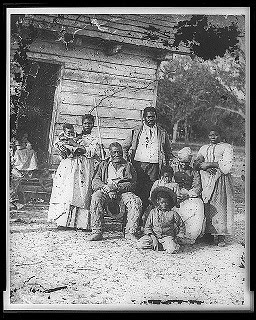 Family on Smith’s Plantation, Beaufort, South Carolina, circa 1862. Image courtesy of the Library of Congress.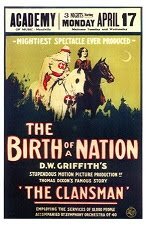
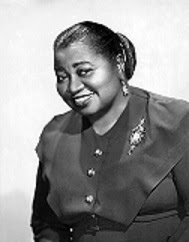 Promotional photograph of actor Hattie McDaniel (1939).
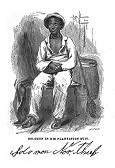 12 Years a Slave by Solomon Northrup. 1853.
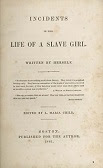 Incidents in the Life of a Slave Girl by Harriet Jacobs. 1861.
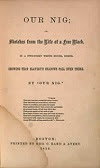 Our Nig: Sketches from the Life of a Free Black by Harriet Wilson. 1859.
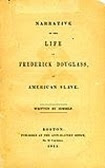 Narrative of the Life of Frederick Douglas, An American Slave by Frederick Douglass. 1845.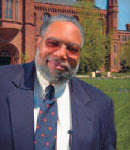
 Lonnie Bunch Director

 Be a Seed for Change
You must be logged in to post a comment.