a sport not many focus on … Golf & Women of Colour – reminder – Black History


Wethepeople

So, I’m flipping through my newest 2015 Essence from back to front because of the horoscope section and as I’m looking I see a section called “trending topics” reporting that the USTA just appointed former tennis player Katrina Adams, President, CEO and chairman of the board and the first African American to fill the role. So, more things have changed in the World of Sports in which women of colour historically have not dominated.  While flipping through my 2014 issue of Essence with various fashions it was became obvious that this is not just about fashion, though the title gave me that impression and had to share given the history. In fact, it is about a Woman named Renee Powell and some young Women who were introduced to her and who have chosen her as their mentor. Now, the surprise to most would be that these brightly fashionable women are people of colour and that the article is about golf or as they say, “One of America’s favourite pastimes.”  In fact my family lived just a few blocks away from a golf course and while golf wasn’t my choice the history of golf was well known in our house, including a couple of good along with the bad and the really ugly stories of racism. It is a sad day to know that the practice is still alive and well, though tiger woods did shatter the glass ceiling some. The art of discrimination is subtle these days, while the stories of’ the good ‘olé boys club were worse, golf is a work in progress. The article tells us about the ups and downs of Powell’s life and daily experiences as a young girl to becoming one of four African-American women qualifying for golf’s top pro-circuit … The LPGA Tour that included Althea Gibson, LaRee Pearl Sugg, Shasta Avery Hardt and Renee Powell. Their legacy on the links is gone into in depth. They list the youngest pro at 17, four others including the niece of tiger woods who also has a great story, but what is even more exciting is that after Powell retired she now owns her own golf club, is the golf pro. She also teaches and mentors a new generation of girls/women of colour who love the game and are willing to take it as far as they can. Golfing is not cheap, so, if you have an opportunity to donate to your area’s youth sports club or make time to teach train and expose kids of colour to golf … do it!

Oh and the article on Golf is in Essence and was written by Connie Aitcheson

and … it’s in  “Trending Topics”  the February issue of Essence

Activist author Amiri Baraka


Amiri Baraka

1934–2014

Image of Amiri Baraka

~ Poet, writer, teacher, and political activist Amiri Baraka was born Everett LeRoi Jones in 1934 in Newark, New Jersey. He attended Rutgers University and Howard University, spent three years in the U.S. Air Force, and returned to New York City to attend Columbia University and the New School for Social Research. Baraka was well known for his strident social criticism, often writing in an incendiary style that made it difficult for some audiences and critics to respond with objectivity to his works. Throughout most of his career his method in poetry, drama, fiction, and essays was confrontational, calculated to shock and awaken audiences to the political concerns of black Americans. For decades, Baraka was one of the most prominent voices in the world of American literature.

Baraka’s own political stance changed several times, thus dividing his oeuvre into periods: as a member of the avant-garde during the 1950s, Baraka—writing as Leroi Jones—was associated with Beat poets like Allen Ginsberg and Jack Kerouac; in the ‘60s, he moved to Harlem and became a Black Nationalist; in the ‘70s, he was involved in third-world liberation movements and identified as a Marxist. More recently, Baraka was accused of anti-Semitism for his poem “Somebody Blew up America,” written in response to the September 11 attacks.

Baraka incited controversy throughout his career. He was praised for speaking out against oppression as well as accused of fostering hate. Critical opinion has been sharply divided between those who agree, with Dissent contributor Stanley Kaufman, that Baraka’s race and political moment have created his celebrity, and those who feel that Baraka stands among the most important writers of the twentieth century. In the American Book Review, Arnold Rampersad counted Baraka with Phyllis Wheatley, Frederick Douglass, Paul Laurence DunbarLangston Hughes, Zora Neale Hurston, Richard Wright, and Ralph Ellison “as one of the eight figures . . . who have significantly affected the course of African-American literary culture.”

Baraka did not always identify with radical politics, nor did his writing always court controversy. During the 1950s Baraka lived in Greenwich Village, befriending Beat poets Allen Ginsberg, Frank O’Hara, and Gilbert Sorrentino. The white avant-garde—primarily Ginsberg, O’Hara, and leader of the Black Mountain poets Charles Olson—and Baraka believed in poetry as a process of discovery rather than an exercise in fulfilling traditional expectations. Baraka, like the projectivist poets, believed that a poem’s form should follow the shape determined by the poet’s own breath and intensity of feeling. In 1958 Baraka founded Yugen magazine and Totem Press, important forums for new verse. He was married to his co-editor, Hettie Cohen, from 1960 to 1965. His first play, A Good Girl Is Hard to Find, was produced at Sterington House in Montclair, New Jersey, that same year. Preface to a Twenty Volume Suicide Note,Baraka’s first published collection of poems appeared in 1961. M.L. Rosenthal wrote in The New Poets: American and British Poetry since World War II that these poems show Baraka’s “natural gift for quick, vivid imagery and spontaneous humor.” Rosenthal also praised the “sardonic or sensuous or slangily knowledgeable passages” that fill the early poems. While the cadence of blues and many allusions to black culture are found in the poems, the subject of blackness does not predominate. Throughout, rather, the poet shows his integrated, Bohemian social roots. The book’s last line is “You are / as any other sad man here / american.”

With the rise of the civil rights movement Baraka’s works took on a more militant tone. His trip to Cuba in 1959 marked an important turning point in his life. His view of his role as a writer, the purpose of art, and the degree to which ethnic awareness deserved to be his subject changed dramatically. In Cuba he met writers and artists from third world countries whose political concerns included the fight against poverty, famine, and oppressive governments. In Home: Social Essays (1966), Baraka explains how he tried to defend himself against their accusations of self-indulgence, and was further challenged by Jaime Shelley, a Mexican poet, who said, “‘In that ugliness you live in, you want to cultivate your soul? Well, we’ve got millions of starving people to feed, and that moves me enough to make poems out of.’” Soon Baraka began to identify with third world writers and to write poems and plays with strong political messages.

Dutchman, a play of entrapment in which a white woman and a middle-class black man both express their murderous hatred on a subway, was first performed Off-Broadway in 1964. While other dramatists of the time were wedded to naturalism, Baraka used symbolism and other experimental techniques to enhance the play’s emotional impact. The play established Baraka’s reputation as a playwright and has been often anthologized and performed. It won the Village Voice Obie Award in 1964 and was later made into a film. The plays and poems following Dutchman expressed Baraka’s increasing disappointment with white America and his growing need to separate from it. Critics observed that as Baraka’s poems became more politically intense, they left behind some of the flawless technique of the earlier poems. Richard Howard wrote of The Dead Lecturer (1964) in the Nation: “These are the agonized poems of a man writing to save his skin, or at least to settle in it, and so urgent is their purpose that not one of them can trouble to be perfect.”

To make a clean break with the Beat influence, Baraka turned to writing fiction in the mid-1960s, penning The System of Dante’s Hell (1965), a novel, and Tales (1967), a collection of short stories. The stories are “‘fugitive narratives’ that describe the harried flight of an intensely self-conscious Afro-American artist/intellectual from neo-slavery of blinding, neutralizing whiteness, where the area of struggle is basically within the mind,” Robert Elliot Fox wrote in Conscientious Sorcerers: The Black Postmodernist Fiction of LeRoi Jones/Baraka, Ishmael Reed, and Samuel R. Delany. The role of violent action in achieving political change is more prominent in these stories, as is the role of music in black life.

In addition to his poems, novels and politically-charged essays, Baraka is a noted writer of music criticism. His classic history Blues People: Negro Music in White America (1963) traces black music from slavery to contemporary jazz. Finding indigenous black art forms was important to Baraka in the ‘60s, as he was searching for a more authentic voice for his own poetry. Baraka became known as an articulate jazz critic and a perceptive observer of social change. As Clyde Taylor stated in Amiri Baraka: The Kaleidoscopic Torch, “The connection he nailed down between the many faces of black music, the sociological sets that nurtured them, and their symbolic evolutions through socio-economic changes, in Blues People, is his most durable conception, as well as probably the one most indispensable thing said about black music.” Baraka also published the important studies Black Music (1968) and The Music: Reflections on Jazz and Blues (1987). Lloyd W. Brown commented in Amiri Baraka that Baraka’s essays on music are flawless: “As historian, musicological analyst, or as a journalist covering a particular performance Baraka always commands attention because of his obvious knowledge of the subject and because of a style that is engaging and persuasive even when the sentiments are questionable and controversial.”

After Black Muslim leader Malcolm X was killed in 1965, Baraka moved to Harlem and founded the Black Arts Repertory Theatre/School. The Black Arts Movement helped develop a new aesthetic for black art and Baraka was its primary theorist. Black American artists should follow “black,” not “white” standards of beauty and value, he maintained, and should stop looking to white culture for validation. The black artist’s role, he wrote in Home: Social Essays (1966), is to “aid in the destruction of America as he knows it.” Foremost in this endeavor was the imperative to portray society and its ills faithfully so that the portrayal would move people to take necessary corrective action. He married his second wife, Amina, in 1967. In that same year, Baraka published the poetry collection Black Magicwhich chronicles his separation from white culture and values while displaying his mastery of poetic technique. There was no doubt that Baraka’s political concerns superseded his just claims to literary excellence, and critics struggled to respond to the political content of the works. Some felt the best art must be apolitical and dismissed Baraka’s newer work as “a loss to literature.” Kenneth Rexroth wrote in With Eye and Ear that Baraka “has succumbed to the temptation to become a professional Race Man of the most irresponsible sort. . . . His loss to literature is more serious than any literary casualty of the Second War.” In 1966 Bakara moved back to Newark, New Jersey, and a year later changed his name to the Bantuized Muslim appellation Imamu (“spiritual leader,” later dropped) Ameer (later Amiri, “prince”) Baraka (“blessing”).

By the early 1970s Baraka was recognized as an influential African-American writer. Randall noted in Black World that younger black poets Nikki Giovanniand Don L. Lee (later Haki R. Madhubuti) were “learning from LeRoi Jones, a man versed in German philosophy, conscious of literary tradition . . . who uses the structure of Dante’s Divine Comedy in his System of Dante’s Hell and the punctuation, spelling and line divisions of sophisticated contemporary poets.” More importantly, Arnold Rampersad wrote in the American Book Review,“More than any other black poet . . . he taught younger black poets of the generation past how to respond poetically to their lived experience, rather than to depend as artists on embalmed reputations and outmoded rhetorical strategies derived from a culture often substantially different from their own.”

After coming to see Black Nationalism as a destructive form of racism, Baraka denounced it in 1974 and became a third world socialist. He produced a number of Marxist poetry collections and plays in the 1970s that reflected his newly adopted political goals. Critics contended that works like the essays collected in Daggers and Javelins (1984) lack the emotional power of the works from his Black Nationalist period. However, Joe Weixlmann, in Amiri Baraka: The Kaleidoscopic Torch, argued against the tendency to categorize the radical Baraka instead of analyze him: “At the very least, dismissing someone with a label does not make for very satisfactory scholarship. Initially, Baraka’s reputation as a writer and thinker derived from a recognition of the talents with which he is so obviously endowed. The subsequent assaults on that reputation have, too frequently, derived from concerns which should be extrinsic to informed criticism.”

In more recent years, recognition of Baraka’s impact on late 20th century American culture has resulted in the publication of several anthologies of his literary oeuvre. The LeRoi Jones/Amiri Baraka Reader (1999) presents a thorough overview of the writer’s development, covering the period from 1957 to 1983. The volume presents Baraka’s work from four different periods and emphasizes lesser-known works rather than the author’s most famous writings. Transbluency: The Selected Poems of Amiri Baraka/LeRoi Jones (1961-1995),published in 1995, was hailed by Daniel L. Guillory in Library Journal as “critically important.” And Donna Seaman, writing in Booklist, commended the “lyric boldness of this passionate collection.” Kamau Brathwaite described Baraka’s 2004 collection, Somebody Blew up America & Other Poems, as “one more mark in modern Black radical and revolutionary cultural reconstruction.” The book contains Baraka’s controversial poem of the same name, which he wrote as New Jersey’s poet laureate. After the poem’s publication, public outcry became so great that the governor of New Jersey took action to abolish the position. Baraka sued, though the United States Court of Appeals eventually ruled that state officials were immune from such charges.

Baraka’s legacy as a major poet of the second half of the 20th century remains matched by his importance as a cultural and political leader. His influence on younger writers has been significant and widespread, and as a leader of the Black Arts movement of the 1960s Baraka did much to define and support black literature’s mission into the next century. His experimental fiction of the 1960s is considered some of the most significant African-American fiction since that of Jean Toomer. Writers from other ethnic groups have credited Baraka with opening “tightly guarded doors” in the white publishing establishment, noted Maurice Kenney in Amiri Baraka: The Kaleidoscopic Torch, who added: “We’d all still be waiting the invitation from the New Yorker without him. He taught us how to claim it and take it.”

Baraka was recognized for his work through a PEN/Faulkner Award, a Rockefeller Foundation Award for Drama, and the Langston Hughes Award from City College of New York. He was awarded fellowships from the Guggenheim Foundation and the National Endowment for the Arts. He died in 2014.

resource: poetryfoundation.org 22

kstreet607's avatarThe Fifth Column

Salon

Formerly LeRoi Jones, the civil rights leader inspired a generation of slam poets, playwrights and musicians

Amiri Baraka, the militant man of letters and tireless agitator whose blues-based, fist-shaking poems, plays and criticism made him a provocative and groundbreaking force in American culture, has died. He was 79.

His booking agent, Celeste Bateman, told The Associated Press that Baraka, who had been hospitalized since last month, died Thursday at Newark Beth Israel Medical Center.

Perhaps no writer of the 1960s and ’70s was more radical or polarizing than the former LeRoi Jones, and no one did more to extend the political debates of the civil rights era to the world of the arts. He inspired at least one generation of poets, playwrights and musicians, and his immersion in spoken word traditions and raw street language anticipated rap, hip-hop and slam poetry. The FBI feared him to the point of…

View original post 276 more words

History …the Month of February — a whole lot happened


February 1

1960 – In Greensboro, North Carolina, four African American students sat down and ordered coffee at a lunch counter inside a Woolworth’s store. They were refused service, but did not leave. Instead, they waited all day. The scene was repeated over the next few days, with protests spreading to other southern states, resulting in the eventual arrest of over 1,600 persons for participating in sit-ins.

 2003 – Sixteen minutes before it was scheduled to land, the Space Shuttle Columbia broke apart in flight over west Texas, killing all seven crew members. The accident may have resulted from damage caused during liftoff when a piece of insulating foam from the external fuel tank broke off, piercing a hole in the shuttle’s left wing that allowed hot gases to penetrate the wing upon re-entry into the Earth’s atmosphere. This was the second space shuttle lost in flight. In January 1986, Challenger exploded during liftoff.

February 2

1848 – The war between the U.S. and Mexico ended with the signing of the Treaty of Guadalupe Hidalgo. In exchange for $15 million, the U.S. acquired the areas encompassing parts or all of present day California, Nevada, Utah, Arizona, New Mexico, Colorado, Wyoming, and Texas. The treaty was ratified on March 10, 1848.

1990 – In South Africa, the 30-year-old ban on the African National Congress was lifted by President F.W. de Klerk, who also promised to free Nelson Mandela and remove restrictions on political opposition groups.

1848 – The first shipload of Chinese emigrants arrived in San Francisco, CA.

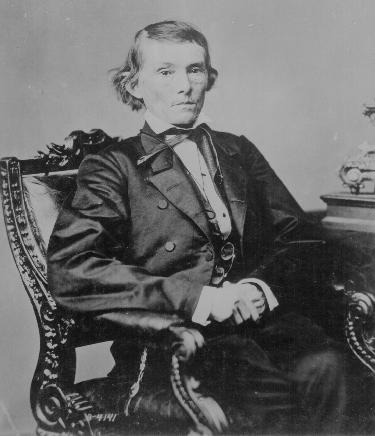
1865 – A four-hour peace conference occurred between President Abraham Lincoln and Confederate Vice President Alexander Stephens at Hampton Roads, Virginia. The meeting was unsuccessful as President Lincoln insisted there could be no armistice until the Confederates acknowledged Federal authority. The Confederates wanted an armistice first. Thus the Civil Warcontinued.

 1870 – The 15th Amendment to the U.S. Constitution was ratified, guaranteeing the right of citizens to vote, regardless of race, color, or previous condition of servitude.

February 3

1783 – Spain recognized the independence of the United States.

 1913 – The 16th Amendment to the U.S. Constitution was ratified, granting Congress the authority to collect income taxes.

1947 – Percival Prattisbecame the first black news correspondent admitted to the House and Senate press gallery in Washington, DC. He worked for “Our World” in New York City.

2009 – Eric Holder was sworn in as attorney general. He was the first African-American to hold the post.

1943 – An extraordinary act of heroism occurred in the icy waters off Greenland after the U.S. Army transport ship Dorchester was hit by a German torpedo and began to sink rapidly. When it became apparent there were not enough life jackets, four U.S. Army chaplains on board removed theirs, handed them to frightened young soldiers, and chose to go down with the ship while praying.

February 4

1861 – Apache Chief Cochise was arrested in Arizona by the U.S. Army for raiding a ranch. Cochise then escaped and declared war, beginning the period known as the Apache Wars, which lasted 25 years.

1985 Twenty countries in the United Nations signed a document entitled “Convention Against Torture and Other Cruel, Inhuman or Degrading Treatment or Punishment.”

February 5 

 1917 – The new constitution of Mexico, allowing for sweeping social changes, was adopted.

February 6

 1788 – Massachusetts became the sixth state to ratify the new U.S. Constitution, by a vote of 187 to 168.

1933 – The 20th Amendment to the U.S. Constitution was adopted. It set the date for the Presidential Inauguration as January 20th, instead of the old date of March 4th. It also sets January 3rd as the official opening date of Congress.

 1952 – King George VI of England died. Upon his death, his daughter Princess Elizabeth became Queen Elizabeth II, Queen of the United Kingdom of Great Britain and Northern Ireland. Her actual coronation took place on June 2, 1953.

February 7

1795 – The 11th Amendment to the U.S. Constitution was ratified, limiting the powers of the Federal Judiciary over the states by prohibiting Federal lawsuits against individual states

February 8

1587 – Mary Stuart, Queen of Scots, was beheaded at Fotheringhay, England, after 19 years as a prisoner of Queen Elizabeth I. She became entangled in the complex political events surrounding the Protestant Reformation in England and was charged with complicity in a plot to assassinate Elizabeth.

February 9 –

On February 9, 1971, pitcher Leroy “Satchel” Paige becomes the first Negro League veteran to be nominated for the Baseball Hall of Fame. In August of that year, Paige, a pitching legend known for his fastball, showmanship and the longevity of his playing career, which spanned five decades, was inducted. Joe DiMaggio once called Paige “the best and fastest pitcher I’ve ever faced.”

1773, future President William Henry Harrison is born on the Berkeley Plantation in Virginia. Harrison went on to serve as the ninth U.S. president for a brief 32 days in 1841, the shortest term ever served. Harrison is also credited with the record for the …read more

1942 – Congress pushes ahead standard time for the United States by one hour in each time zone, imposing daylight saving time—called at the time “war time.” READ MORE: 8 Things You May Not Know About Daylight Saving Time Daylight saving time, suggested by President Roosevelt, was …read more

February 10,

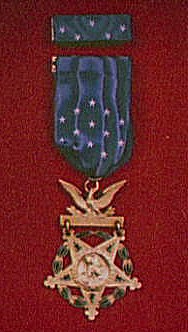
1942 – The first Medal of Honor during World War II was awarded to 2nd Lt. Alexander Nininger (posthumously) for heroism during the Battle of Bataan.

1967 – The 25th Amendment to the U.S. Constitution was ratified, clarifying the procedures for presidential succession in the event of the disability of a sitting president.

February 11

660BC – Celebrated in Japan as the founding date of the Japanese nation, which occurred with the accession to the throne of the first Emperor, Jimmu, in 660 BC.

 1929 – Italian dictator Benito Mussolini granted political independence to Vatican City and recognized the sovereignty of the Pope (Holy See) over the area, measuring about 110 acres.
1958 – Ruth Carol Taylor was the first black woman to become a stewardess by making her initial flight.

1990 – In South Africa, Nelson Mandela, at age 71, was released from prison after serving 27 years of a life sentence on charges of attempting to overthrow the apartheid government. In April 1994, he was elected president in the first all-race elections.

2011 – In Egypt, President Hosni Mubarak resigned amid a massive protest calling for his ouster. Thousands of young Egyptians and others had protested non-stop for 18 days in Cairo, Alexandria and elsewhere. Mubarak had ruled Egypt for nearly 30 years, functioning as a virtual dictator.

February 12

February 13

 1635 – Boston Latin School, the first tax-payer supported (public) school in America was established in Boston, Massachusetts.

 1945 – During World War II in Europe, British and American planes began massive bombing raids on Dresden, Germany. A four-day firestorm erupted that was visible for 200 miles and engulfed the historic old city, killing an estimated 135,000 German civilians.

February 14

14th – Celebrated as (Saint) Valentine’s Day around the world, now one of the most widely observed unofficial holidays in which romantic greeting cards and gifts are exchanged.

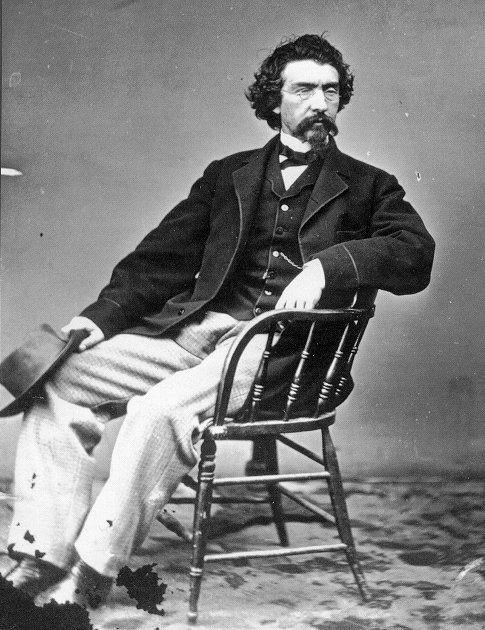
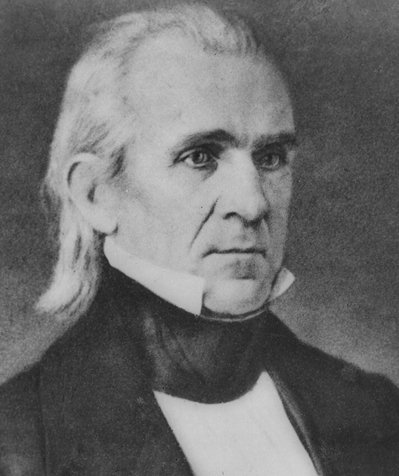
1849 – Photographer Mathew Brady took the first photograph of a U.S. President in office, James Polk.

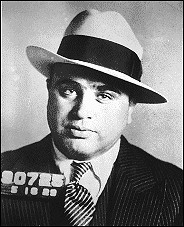
 1929 – The St. Valentine’s Day massacre occurred in Chicago as seven members of the Bugs Moran gang were gunned down by five of Al Capone‘s mobsters posing as police.

February 15 

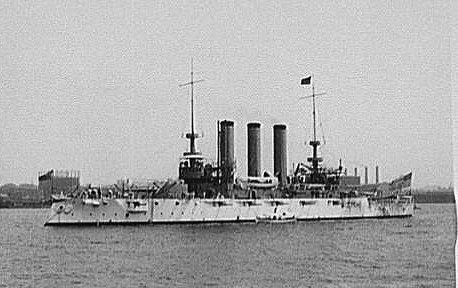
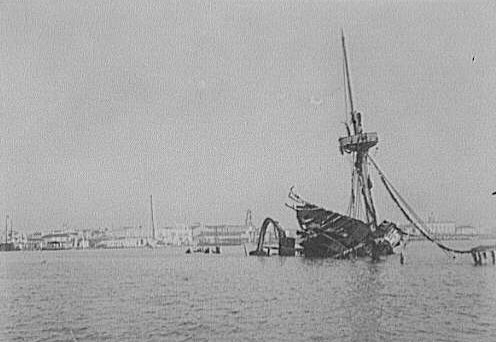
1898 – In Havana, the U.S. Battleship Maine was blown up while at anchor and quickly sank with 260 crew members lost. The incident inflamed public opinion in the U.S., resulting in a declaration of war against Spain on April 25, 1898, amid cries of “Remember the Maine!”

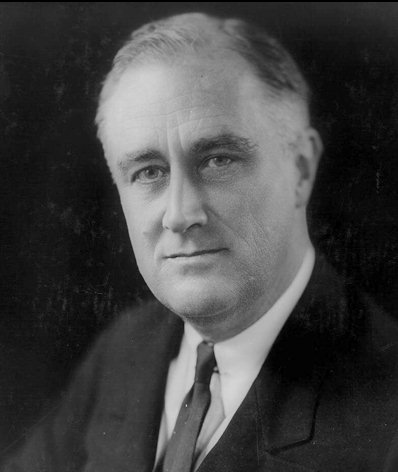
 1933 – An assassination attempt on newly elected U.S. President Franklin D. Roosevelt occurred in Miami, Florida. A spectator deflected the gunman’s aim. As a result, Chicago Mayor Anton Cermak was shot and killed instead. The gunman, an Italian immigrant, was captured and later sentenced to death.

1989 – Soviet Russia completed its military withdrawal from Afghanistan after nine years of unsuccessful involvement in the civil war between Muslim rebel groups and the Russian-backed Afghan government. Over 15,000 Russian soldiers had been killed in the fighting.

February 16

February 17

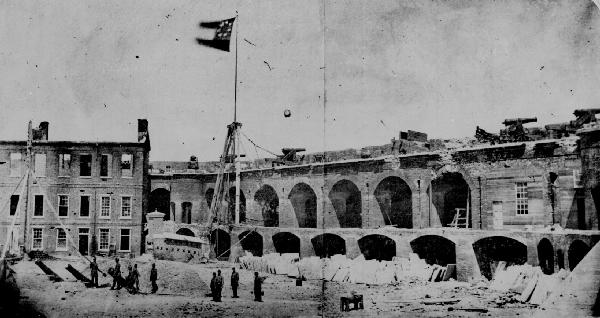
 1865 – During the American Civil War, Fort Sumter in South Carolina was returned to the Union after nearly a year and a half under Confederate control. The fort had been the scene of the first shots of the war.

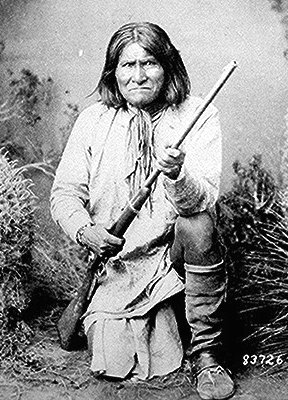
 1909 – Apache Chief Geronimo (1829-1909) died while in captivity at Fort Sill, Oklahoma. He had led a small group of warriors on raids throughout Arizona and New Mexico. Caught once, he escaped. The U.S. Army then sent 5,000 men to recapture him.

February 18

1841 – The first continuous filibuster in the U.S. Senate began. It lasted until March 11th.

1952 – Greece and Turkey became members of NATO

2001 – FBI agent Robert Philip Hanssen was arrested and accused of spying for Russia for more than 15 years. He later pleaded guilty and was sentenced to life in prison without parole.

1998 – In Nevada, two white separatists were arrested and accused of plotting a bacterial attack on subways in New York City.

1970 – The Chicago Seven defendants were found innocent of conspiring to incite riots at the 1968 Democratic national convention.

1998 – In Russia, money shortages resulted in the shutting down of three plants that produced nuclear weapons.

1885 – Mark Twain’s “Adventures of Huckleberry Finn” was published in the U.S. for the first time.

1930 – The planet Pluto was discovered by Clyde Tombaugh. The discovery was made as a result of photographs taken in January 1930.

February 19

Daisy Gatson Bates Day honors the life of Daisy Gatson Bates, a civil rights activist who played a key role in an integration crisis at Little Rock Central High School in 1957. Daisy Gatson Bates Day is a state holiday in Arkansas, the United States, on the third Monday of February, together with Washington’s Birthday.

1942 – Internment of Japanese Americans began after President Franklin Roosevelt issued an Executive Order requiring those living on the Pacific coast to report for relocation. Over 110,000 persons therefore shut down their businesses, sold off their property, quit school and moved inland to the relocation centers.

Washington’s Birthday, also known as Presidents’ Day, is a federal holiday held on the third Monday of February. The day honors presidents of the United States, including George Washington, the USA’s first president.

1807 – Former U.S. Vice President Aaron Burr was arrested in Alabama. He was later tried and acquitted on charges of treason

1942 – U.S. President Roosevelt signed an executive order giving the military the authority to relocate and intern Japanese-Americans.

1953 – The State of Georgia approved the first literature censorship board in the U.S. Newspapers were excluded from the new legislation.

2004 – Former Enron Corp. chief executive Jeffrey Skilling was charged with fraud, insider trading and other crimes in connection with the energy trader’s collapse. Skilling was later convicted and sentenced to more than 24 years in prison.

February 20

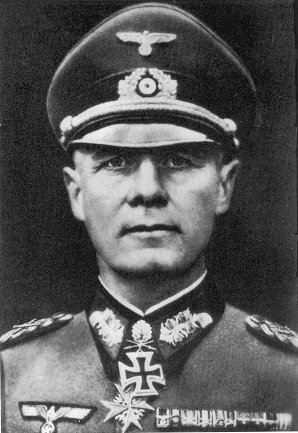
 1943 – German Field Marshal Erwin Rommel broke through American lines at Kasserine Pass in North Africa as inexperienced U.S. Troops lost their first major battle of World War II in Europe, with 1,000 Americans killed.

1962 – Astronaut John Glenn became the first American launched into orbit. Traveling aboard the “Friendship 7” spacecraft, Glenn reached an altitude of 162 miles (260 kilometers) and completed three orbits in a flight lasting just under five hours. Glenn was the third American in space, preceded by Alan Shepard and Virgil “Gus” Grissom who had each completed short sub-orbital flights. All of them had been preceded by Russian cosmonaut Yuri Gagarin who was the first human in space, completing one orbit on April 12, 1961 – a feat that intensified the already ongoing Space Race between the Russians and Americans. Glenn’s successful flight showed the Americans had caught up and was followed in September 1962 by President John F. Kennedy’s open call to land an American on the moon before the decade’s end.

1952 – Emmett L. Ashford became the first black umpire in organized baseball. He was authorized to be a substitute in the Southwestern International League.

1962 – John Glenn made space history when he orbited the world three times in 4 hours, 55 minutes. He was the first American to orbit the Earth. He was aboard the Friendship 7 Mercury capsule. Glenn witnessed the Devil’s Cigarette Lighter while in flight.

1987 – A bomb exploded in a computer store in Salt Lake City, UT. The blast was blamed on the Unabomber.

February 21

1965 – Former Black Muslim leader Malcolm X (1925-1965) was shot and killed while delivering a speech in a ballroom in New York City.

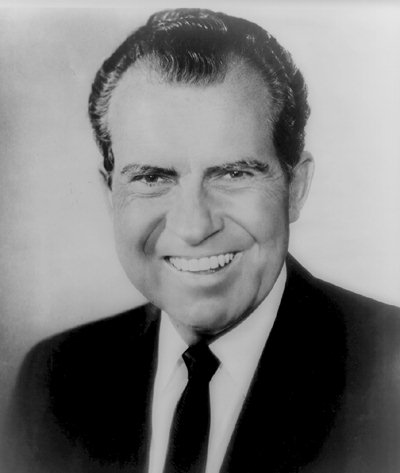
 1972 – President Richard Nixon arrived in China for historic meetings with Chairman Mao Tse-tung and Premier Chou En-lai.

1994 – CIA agent Aldrich Ames was arrested on charges he spied for the Soviet Union from 1985 to 1991.

February 22

 1956 – In Montgomery, Alabama, 80 participants in the three-month-old bus boycott voluntarily gave themselves up for arrest after an ultimatum from white city leaders. Martin Luther King and Rosa Parks were among those arrested. Later in 1956, the U.S. Supreme Court mandated desegregation of the buses.

Birthday – George Washington (1732-1799) was born in Westmoreland County, Virginia. He served as commander of the Continental Army during the American Revolution and became the first U.S. President.

February 23

1942 – During World War II, the first attack on the U.S. mainland occurred as a Japanese submarine shelled an oil refinery near Santa Barbara, California, causing minor damage.

1991 – In Desert Storm, the Allied ground offensive began after a devastating month-long air campaign targeting Iraqi troops in both Iraq and Kuwait.

Birthday – African American educator and leader W.E.B. Du Bois (1868-1963) was born in Great Barrington, Massachusetts.

Birthday – Historian William L. Shirer (1904-1993) was born in Chicago, Illinois. As a news reporter stationed in Europe, he witnessed the rise of Adolf Hitler and reported on the surrender of France. Following the war he wrote the first major history of Nazi Germany, The Rise and Fall of the Third Reich.

February 24

1582 – Pope Gregory XIII corrected mistakes on the Julian calendar by dropping 10 days and directing that the day after October 4, 1582 would be October 15th. The Gregorian, or New Style calendar, was then adopted by Catholic countries, followed gradually by Protestant and other nations.

1867 – The House of Representatives voted to impeach President Andrew Johnson. The vote followed bitter opposition by the Radical Republicans in Congress toward Johnson’s reconstruction policies in the South. However, the effort to remove him failed in the Senate by just one vote.

February 25 

Birthday – Millicent Fenwick (1910-1992) was born in New York City. She championed liberal causes, serving as a member of the U.N. General Assembly and as a U.S. Congresswoman.

February 26

1848 – The Communist Manifesto pamphlet was published by two young socialists, Karl Marx and Friedrich Engels. It advocated the abolition of all private property and a system in which workers own all means of production, land, factories and machinery.

 1994 – Political foes of Russian President Boris Yeltsin were freed by a general amnesty granted by the new Russian Parliament.

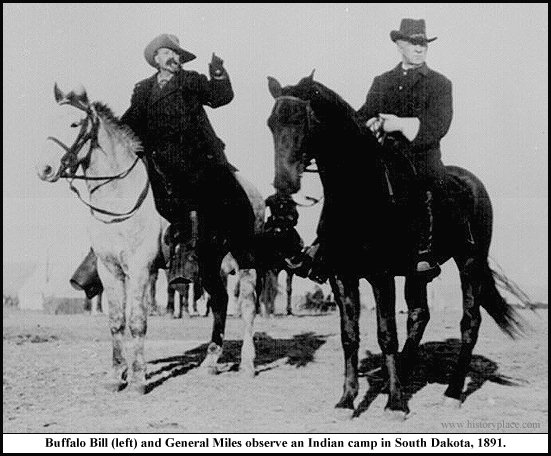
Birthday – American frontiersman “Buffalo Bill” Cody (1846-1917) was born in Scott County, Indiana. He claimed to have killed over 4,000 buffalo within 17 months. He became world famous through his Wild West show which traveled throughout the U.S. and Europe for 30 years.

February 27

 1950-1951  – The 22nd Amendment to the U.S. Constitution was ratified, limiting the president to two terms or a maximum of ten years in office.

1991 – In Desert Storm, the 100-hour ground war ended as Allied troops entered Kuwait just four days after launching their offensive against Saddam Hussein’s Iraqi forces.

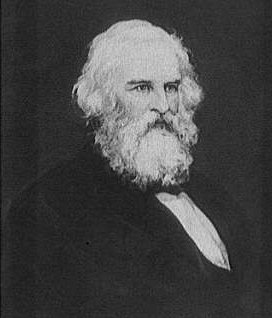
Birthday – American poet Henry Wadsworth Longfellow (1807-1882) was born in Portland, Maine. Best known for Paul Revere’s RideThe Song of Hiawatha, and The Wreck of the Hesperus.

February 28

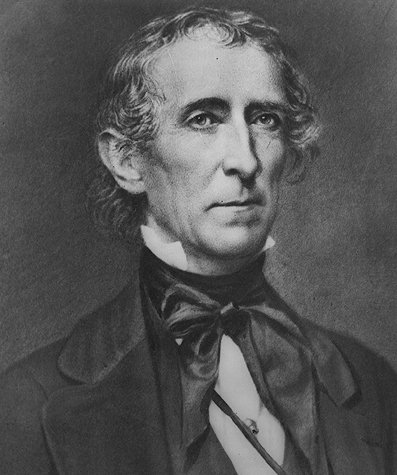
 1844 – During a demonstration of naval fire power, one of the guns aboard the USS Princeton exploded, killing several top U.S. government officials on the steamer ship, and narrowly missed killing President John Tyler.

1986 – Swedish Prime Minister Olof Palme (1927-1986) was assassinated in Stockholm while exiting a movie theater with his wife.

 1994 – NATO conducted its first combat action in its 45 year history as four Bosnian Serb jets were shot down by American fighters in a no-fly zone.

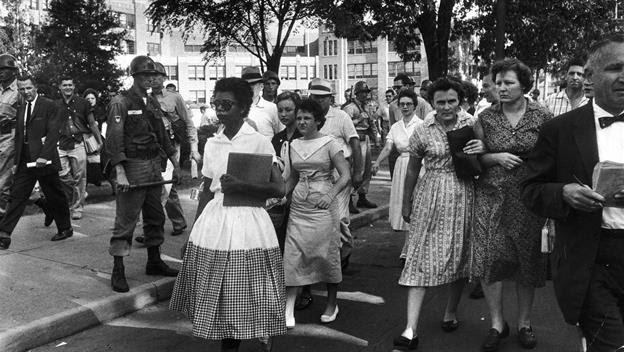
1957 – The Arkansas National Guard was ordered by Governor Orval Faubus to keep nine black students from going into Little Rock’s Central High School – Black History


On September 4, 1957, the first day of classes at Central High, Governor Orval Faubus called in the Arkansas National Guard to block the black students’ entry into the high school. Later that month, President Dwight D. Eisenhower sent in federal troops to escort the Little Rock Nine into the school.

Eisenhower and the Little Rock Crisis
Can you imagine armed troops blocking you from going to school? That’s what happened in Little Rock, Arkansas in the fall of 1957. Governor Orval Faubus ordered the Arkansas National Guard to prevent African American students from enrolling at Central High School. Central High was an all white school.

The 1954 Supreme Court decision Brown v. Topeka made segregation in public schools illegal. Governor Faubus defied this decision. He also defied a 1955 ruling (Brown II). The 1955 decision ordered that public schools be desegregated with all deliberate speed.

President Dwight D. Eisenhower was presented with a difficult problem. He wanted to uphold the Constitution and the laws, but also avoid a possible bloody confrontation in Arkansas, where emotions ran high. What do you think Eisenhower did?
Eisenhower and the Little Rock Crisis
President Eisenhower, who was vacationing in Newport, Rhode Island, arranged to meet Governor Faubus there to discuss the tense situation in Little Rock. In their brief meeting, Eisenhower thought Faubus had agreed to enroll African American students, so he told Faubus that his National Guard troops could stay at Central High and enforce order. Once back in Little Rock, Governor Faubus withdrew the National Guard. A few days later, 9 African American students slipped into the school to enroll and a full scale riot erupted. The situation quickly ran out of control, as Governor Faubus did nothing to stop the violence. Finally, the mayor of Little Rock appealed directly to President Eisenhower for help.
Eisenhower and the Little Rock Crisis
Eisenhower knew he had to act boldly. He placed the Arkansas National Guard under federal control and sent 1,000 U.S. Army paratroopers from the 101st Airborne Division to assist them in restoring order in Little Rock. The daring tactic worked and the African American students were enrolled without further violent disturbances. The law had been upheld, but Eisenhower was criticized both by those who felt he had not done enough to ensure civil rights for African Americans and those who believed he had gone too far in asserting federal power over the states.
Photograph of U.S. Army troops at Central High School, Little Rock, Arkansas.
U.S. Army troops from the 101st Airborne Division disperse a crowd in front of Little Rock’s Central High School.

Source:

americaslibrary.gov

history.com