

Black Segregation Timeline for kids
This article contain brief, fast facts in a history timeline format of Black Segregation History in the United States of America. The Black Segregation Timeline covers important dates and events in the years before the Civil War up to the Civil Rights Movement in the late 1900’s.
The history of the slavery in America lasted for 157 years under the British Colonial rule and a further 89 years under the rule of the United States Government.
Slavery was eventually abolished by the 13th Amendment in 1865 ending a total of 246 years of slavery. But racial discrimination and segregation continued in America for over another hundred years. Learn about the important dates and events of this turbulent era in the History of the United States with the Black Segregation Timeline.
The history of Racial Segregation in America is told in a factual timeline sequence consisting of a series of interesting, short facts and dates providing a simple method of relating the history of the Segregation for kids, schools and homework projects.
Black Segregation Timeline Fact 1: 1857: The Dred Scott Court Decision that stated that slaves were not citizens but the property of their owners
Black Segregation Timeline Fact 2: 1861-1865: Black soldiers were segregated during the Civil War
Black Segregation Timeline Fact 3: 1862: The Homestead Act was passed giving away free farming land.
Black Segregation Timeline Fact 4: 1865: The 13th Amendment ended slavery
Black Segregation Timeline Fact 5: 1865 – 1866: The series of laws called the Black Codes were passed to restrict the ex-slaves new found freedom.
Black Segregation Timeline Fact 6: 1865: The Freedmen’s Bureau Bill was passed establishing a temporary government agency to help and protect emancipated slaves in the South
Black Segregation Timeline Fact 7: 1865: The Sharecropping system resulted in constant debt and poverty.
Black Segregation Timeline Fact 8: 1866: The Southern Homestead Act was passed to establish the freed slaves as landowners in the South. It completely failed due to segregation and discrimination and was repealed in 1879
Black Segregation Timeline Fact 9: 1866: The Civil Rights Act of 1866 was passed to protect ex-slaves from legislation such as the Black Codes
Black Segregation Timeline Fact 10: 1866: The Ku Klux Klan (KKK) was founded by White Supremacists who used terror tactics and acts of violence to maintain racial segregation in the South.

Black Segregation Timeline Fact 11: 1868: The 14th Amendment dealt with Civil Rights and asserted that there were equal protection rights nullifying part of the Dred Scott decision and prohibiting state laws that denied citizens equal protection under the law
Black Segregation Timeline Fact 12: 1870: The Enforcement Acts (including the Ku Klux Klan Act) were passed.
Black Segregation Timeline Fact 13: 1870: The 15th Amendment prohibiting racial discrimination in voting
Black Segregation Timeline Fact 14: 1874: The White League white paramilitary group was established in Louisiana to prevent freedmen from voting
Black Segregation Timeline Fact 15: 1875: The Red Shirts, a white paramilitary group was established in Mississippi
Black Segregation Timeline Fact 16: 1875: The Civil Rights Act of 1875 was a law to protect all citizens in their civil and legal rights but it was not enforced, and the Supreme Court declared it unconstitutional in 1883
Black Segregation Timeline Fact 17: 1879: The Exodusters. A mass migration of thousands of African Americans to Kansas was organized by Benjamin “Pap” Singleton.
Black Segregation Timeline Fact 18: 1880: The Jim Crow Laws of the South legalized segregation. The number of Lynchings began to escalate. Black Americans were deprived of the right to vote by imposing a poll tax of $2 and a literacy test in order to be eligible to vote
Black Segregation Timeline Fact 19: 1886: Black farmers formed the Colored Farmers’ National Alliance and Cooperative Union which strongly supported Black Populism.
Black Segregation Timeline Fact 20: 1896: The Federal government Sanctions Racial Segregation as a result of the Plessy vs. Ferguson Case
Black Segregation Timeline Fact 21: 1900’s: The years surrounding WW1 saw the emergence of race riots against black communities and the Resurgence of the 1920’s Ku Klux Klan.
Black Segregation Timeline Fact 22: 1913: The federal government imposed racial segregation in government offices in Washington, D.C. It was eventually reversed in the administration of Franklin D. Roosevelt in the 1930s.
Black Segregation Timeline Fact 23: 1939 – 1945: During World War II Black Americans were initially assigned to non-combat units
Black Segregation Timeline Fact 24: 1948: President Harry S. Truman issued an executive order de-segregating the armed forces.
Civil Rights
Civil Rights Timeline Fact 25: 1954: The African-American Civil Rights Movement began
Civil Rights Timeline Fact 26: 1954: The Brown vs. Board of Education case – the Supreme Court banned the practice of school segregation
Civil Rights Timeline Fact 27: 1955: Rosa Parks refuses to give up her seat is ejected from a racially segregated bus
Civil Rights Timeline Fact 28: 1955: Dr. Martin Luther King become the president of the Montgomery Improvement Association and the Montgomery Bus Boycott begins
Civil Rights Timeline Fact 29: 1957: The Civil Rights Act of 1957 was passed to ensure that all African Americans could exercise their right to vote. Dr. Martin Luther King becomes president of the Southern Christian Leadership Conference (SCLC)
Civil Rights Timeline Fact 30: 1957: President Eisenhower sent in the National Guard to enforce integration of Little Rock’s Central High School – refer to the Little Rock Nine
Civil Rights Timeline Fact 31: 1960: The Student Nonviolent Coordinating Committee (SNCC) was founded and organized ‘Sit-ins’ and Freedom Rides throughout the South
1960 – The U.S. Senate passed the Civil Rights Bill.
Civil Rights Timeline Fact 32: 1963: Dr. Martin Luther King organizes a massive peace protest in the heavily segregated city of Birmingham, Alabama which ends in violence. MLK is arrested and writes the Letter from Birmingham Jail
Civil Rights Timeline Fact 33: 1963: Dr. Martin Luther King meets with President Kennedy who fully endorses the civil rights movement.
Civil Rights Timeline Fact 34: 1963: Dr. King then delivers his famous “I Have a Dream” at the end of the March on Washington
Civil Rights Timeline Fact 35: 1964: The Civil Rights Act of 1964 bans segregation and discrimination based on race, nationality, or gender
Civil Rights Timeline Fact 36: 1964: The 24th Amendment was passed making it illegal to make anyone pay a tax to have the right to vote.
Civil Rights Timeline Fact 37: 1964: The Freedom Summer campaign was organized by SNCC activists
american-historama.org


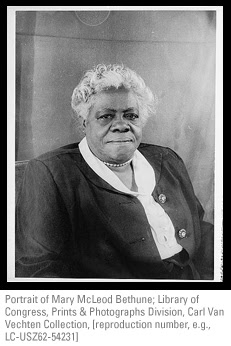 Mary McLeod Bethune was an educator, civil rights activist, stateswoman, and philanthropist. Born in 1875 to parents who had been enslaved, Bethune developed an early belief in the power of education and attended college – a rare achievement for African American women at the time. In 1904, she started a private school for African American girls in Florida that later grew to become Bethune-Cookman College. Bethune went on to become a leading advocate for black Americans, particularly women, and founded the National Council of Negro Women in 1935. A close friend of President Franklin Roosevelt and his wife Eleanor, she served in the “Black Cabinet”, an advisory board to the Roosevelt Administration on issues facing African Americans. Bethune died on May 18, 1955.
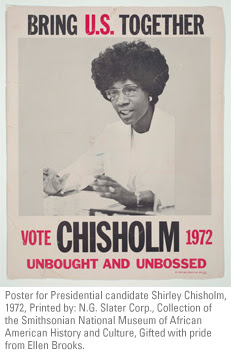 U.S. Rep. Shirley Chisholm, was the first black woman elected to the U.S. Congress and the first major-party African American candidate for president. Born to immigrant parents from Guyana and Barbados on November 30, 1924, she distinguished herself early as a dedicated student and skilled debater. She graduated from Brooklyn College in 1946 and later earned a master’s degree in elementary education from Columbia University. After working as an educator, Chisholm launched her political career, winning a seat in the New York State Assembly in 1965. In 1968, she was elected to Congress, where she served seven terms. In 1972, she waged her historic campaign for the Democratic presidential nomination, a quest chronicled in the award-winning 2005 documentary Shirley Chisholm ’72: Unbought and Unbossed, directed and produced by African-American filmmaker Shola Lynch. Chisholm died on January 1, 2005.


 ose of Japanese descent living in the US.


 Be a Seed for Change
You must be logged in to post a comment.