
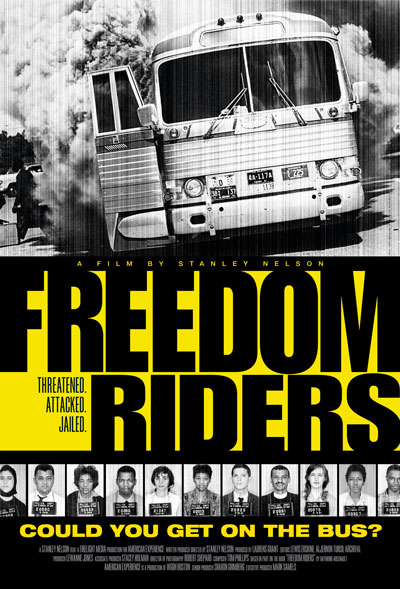
1947 The Journey of Reconciliation—considered the first Freedom Ride—sets out from D.C.


On April 9, 1947, the Congress of Racial Equality (CORE) sends 16 Black and white activists on a bus ride through the American South to test a recent Supreme Court decision striking down segregation on interstate bus travel. The so-called Journey of Reconciliation, which lasted two weeks, was an important precursor to the Freedom Rides of the 1960s.

In Morgan v. Virginia (1946), the Supreme Court ruled it was unconstitutional to enforce segregated seating on interstate busses. Shortly after, activist and WWII veteran Wilson A. Head put the ruling to a test and rode a Greyhound bus from Atlanta to Washington, D.C. relatively unscathed. After the success of his trip, CORE treasurer Bayard Rustin saw an opportunity to hold a larger, more confrontational demonstration to raise awareness of the ruling and challenge Jim Crow laws.

For the complete article, go to:

history.com

Citation Information

Article TitleThe Journey of Reconciliation—considered the first Freedom Ride—sets out from D.C.AuthorHistory.com EditorsWebsite NameHISTORYURLhttps://www.history.com/this-day-in-history/journey-of-reconciliation-freedom-ridesDateApril 9, 2023PublisherA&E Television NetworksLast UpdatedAugust 24, 2021Original Published DateAugust 24, 2021

1959 – NASA introduces America’s first astronauts


Photo Credit: NASA

On April 9, 1959, the National Aeronautics and Space Administration (NASA) introduces America’s first astronauts to the press: Scott Carpenter, L. Gordon Cooper Jr., John H. Glenn Jr., Virgil “Gus” Grissom, Walter Schirra Jr., Alan Shepard Jr. and Donald Slayton. The seven men, all military test pilots, were carefully selected from a group of 32 candidates to take part in Project Mercury, America’s first manned space program. NASA planned to begin manned orbital flights in 1961.

On October 4, 1957, the USSR scored the first victory of the “space race” when it successfully launched the world’s first artificial satellite, Sputnik, into Earth’s orbit. In response, the United States consolidated its various military and civilian space efforts into NASA, which dedicated itself to beating the Soviets to manned space flight. In January 1959, NASA began the astronaut selection procedure, screening the records of 508 military test pilots and choosing 110 candidates. This number was arbitrarily divided into three groups, and the first two groups reported to Washington. Because of the high rate of volunteering, the third group was eliminated. Of the 62 pilots who volunteered, six were found to have grown too tall since their last medical examination. An initial battery of written tests, interviews, and medical history reviews further reduced the number of candidates to 36. After learning of the extreme physical and mental tests planned for them, four of these men dropped out.

For the complete article, go to history.com

1865 – Robert E. Lee surrenders


In Appomattox, Virginia, on April 9, 1865, Robert E. Lee surrenders his 28,000 Confederate troops to Union General Ulysses S. Grant, effectively ending the American Civil War. Forced to abandon the Confederate capital of Richmond, blocked from joining the surviving Confederate force in North Carolina, and harassed constantly by Union cavalry, Lee had no other option.

In retreating from the Union army’s Appomattox Campaign, the Army of Northern Virginia had stumbled through the Virginia countryside stripped of food and supplies. At one point, Union cavalry forces under General Philip Sheridan had actually outrun Lee’s army, blocking their retreat and taking 6,000 prisoners at Sayler’s Creek. Desertions were mounting daily, and by April 8 the Confederates were surrounded with no possibility of escape. On April 9, Lee sent a message to Grant announcing his willingness to surrender. The two generals met in the parlor of the Wilmer McLean home at one o’clock in the afternoon.

For the complete article, go to history.com

Citation Information

Article TitleRobert E. Lee surrendersAuthorHistory.com EditorsWebsite NameHISTORYURLhttps://www.history.com/this-day-in-history/robert-e-lee-surrendersDateApril 9, 2023PublisherA&E Television NetworksLast UpdatedApril 6, 2022Original Published DateNovember 24, 2009

history… April 9


0193 – In the Balkans, the distinguished soldier Septimius Seversus was proclaimed emperor by the army in Illyricum.

0715 – Constantine ended his reign as Catholic Pope.

1241 – In the Battle of Liegnitz, Mongol armies defeated the Poles and the Germans.

1454 – The city states of Venice, Milan and Florence signed a peace agreement at Lodi, Italy.

1667 – In Paris, The first public art exhibition was held at the Palais-Royale.

1682 – Robert La Salle claimed the lower Mississippi River and all lands that touch it for France.

1770 – Captain James Cook discovered Botany Bay on the Australian continent.

1833 – Peterborough, NH, opened the first municipally supported public library in the United States.

1838 – The National Galley opened in London.

1865 – At Appomattox Court House, Virginia, General Robert E. Lee surrendered his Confederate Army to Union General Ulysses S. Grant in the parlor of Wilmer McClean’s home. Grant allowed Rebel officers to keep their sidearms and permitted soldiers to keep their horses and mules. Though there were still Confederate armies in the field, the war was officially over. The four years of fighting had killed 360,000 Union troops and 260,000 Confederate troops.

1866 – The Civil Rights Bill passed over U.S. President Andrew Johnson‘s veto.

1867 – The U.S. Senate ratified the treaty with Russia that purchased the territory of Alaska by one vote.

1869 – The Hudson Bay Company ceded its territory to Canada.

1870 – The American Anti-Slavery Society was dissolved.

1872 – S.R. Percy received a patent for dried milk.

1900 – British forces routed the Boers at Kroonstadt, South Africa.

1905 – The first aerial ferry bridge went into operation in Duluth, MN.

1912 – The first exhibition baseball game was held at Fenway Park in Boston. The game was between Red Sox and Harvard.

1913 – The Brooklyn Dodgers’ Ebbets Field opened.

1914 – In London, the first full-color film, “The World, The Flesh & the Devil,” was shown.

1916 – The German army launched it’s third offensive during the Battle of Verdun.

1917 – The Battle of Arras began as Canadian troops began a massive assault on Vimy Ridge.

1918 – Latvia proclaimed its independence.

1921 – The Russo-Polish conflict ended with signing of Riga Treaty.

1928 – Mae West made her debut on Broadway in the production of “Diamond Lil.”

1940 – Germany invaded Norway and Denmark.

1942 – In the Battle of Bataan, American and Filipino forces were overwhelmed by the Japanese Army.

1945 – National Football League officials decreed that it was mandatory for football players to wear socks in all league games.

1945 – At Bari, Italy, the Liberty exploded and killed 360 people. The ship was carrying aerial bombs.

1947 – 169 people were killed and 1,300 were injured by a series of tornadoes in TexasOklahoma and Kansas.

1950 – Bob Hope made his first television appearance on “Star-Spangled Review” on NBC-TV.

1957 – The Suez Canal was cleared for all shipping.

1959 – NASA announced the selection of America’s first seven astronauts.

1963 – Winston Churchill became the first honorary U.S. citizen.

1965 – “TIME” magazine featured a cover with the entire “Peanuts” comic gang.

1965 – The Houston Astrodome held its first baseball game.

1967 – The first Boeing 737 was rolled out for use.

1968 – Murdered civil rights leader Martin Luther King Jr., was buried.

1976 – The U.S. and Russia agreed on the size of nuclear tests for peaceful use.

1981 – The U.S. Submarine George Washington struck and sunk a small Japanese freighter in the East China Sea. The Nissho Maru’s captain and first mate died.

1983 – The space shuttle Challenger concluded it first flight.

1984 – Nicaragua asked the World Court to declare U.S. support for guerilla raids illegal.

1985 – Japanese Premier Nakasone urged Japanese people to buy foreign products.

1986 – It was announced that Patrick Duffy’s character on the TV show Dallas would be returning after being killed off.

1987 – Dikye Baggett became the first person to undergo corrective surgery for Parkinson’s disease.

1988 – The U.S. imposed economic sanctions on Panama.

1989 – 16 civilians were killed during rioting in Soviet Georgia.

1989 – Hundreds of thousands marched past the White House in support of the right to abortion.

1991 – Georgia voted to secede from the U.S.S.R.

1992 – Former Panamanian ruler Manuel Noriega was convicted in Miami, FL, of eight drug and racketeering charges.

1998 – The National Prisoner of War Museum opened in Andersonville, GA, at the site of an infamous Civil War camp.

1998 – More than 150 Muslims died in stampede in Mecca, Saudi Arabia, on last day of the haj pilgrimage.

1999 – In Djibouti, Ismail Omar Guelleh of the ruling Popular Rally for Progress and the Front for the Restoration of Unity and Democracy was elected president.

1999 – In Niger, President Ibrahim Baré Maïnassara was assassinated. Daouda Malam Wanke was designated president two days later.

2000 – CBS-TV aired “Failsafe.” It was the first live full-length show to by aired by CBS in 39 years.

on-this-day.com