
Martin Luther King Jr. is jailed; writes “Letter from a Birmingham Jail”
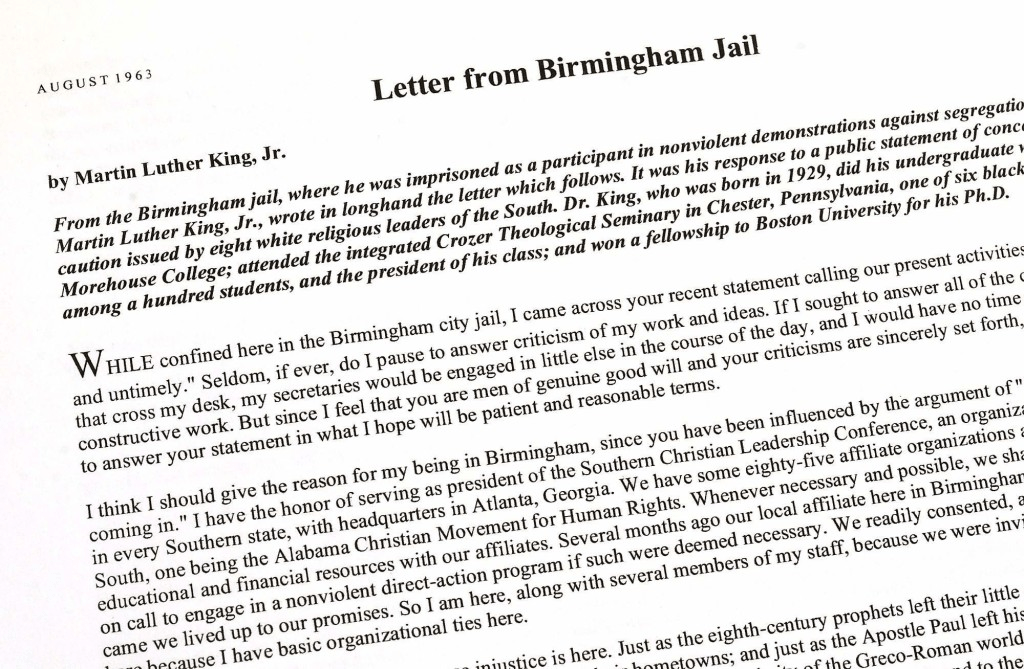
On April 3, 1963, the Rev. Dr. Martin Luther King Jr., his Southern Christian Leadership Conference and their partners in the Alabama Christian Movement for Human Rights led a campaign of protests, marches and sit-ins against segregation in Birmingham, Alabama. By April 12, King was in prison along with many of his fellow activists. While imprisoned, King penned an open letter now known as his “Letter from a Birmingham Jail,” a full-throated defense of the Birmingham protest campaign that is now regarded as one of the greatest texts of the civil rights movement.
On April 12, , King and dozens of his fellow protestors were arrested for continuing to demonstrate in the face of an injunction obtained by Commissioner of Public Safety Theophilus Eugene “Bull” Connor. Connor, who had just lost the mayoral election, remains one of the most notorious pro-segregationists in American history thanks to the brutal methods his forces employed against the Birmingham protestors that summer. The man who had won the election, Albert Boutwell, was also a segregationist, and he was one of many who accused “outsiders”—he clearly meant King—of stirring up trouble in Birmingham. As he sat in a solitary jail cell without even a mattress to sleep on, King began to pen a response to his critics on some scraps of paper. …read more
history.com
Article Title
Martin Luther King Jr. is jailed; writes “Letter from a Birmingham Jail”
AuthorHistory.com Editors
Website Name
HISTORY
URL
Access Date
April 11, 2022
Publisher
A&E Television Networks
Last Updated
January 18, 2022
Original Published Date
January 12, 2021




 Be a Seed for Change
You must be logged in to post a comment.