
Colorado Governor John Love signed the first law legalizing abortion in the U.S. The law was limited to therapeutic abortions when agreed to, unanimously, by a panel of three physicians.
Daily Archives: 04/25/2025

on this day … 4/25
 1590 – The Sultan of Morocco launched his successful attack to capture Timbuktu.
1644 – The Ming Chongzhen emperor committed suicide by hanging himself.
1684 – A patent was granted for the thimble.
1707 – At the Battle of Almansa, Franco-Spanish forces defeated the Anglo-Portugese.
1792 – The guillotine was first used to execute highwayman Nicolas J. Pelletier.
1831 – The New York and Harlem Railway was incorporated in New York City.
1846 – The Mexican-American War ignited as a result of disputes over claims to Texas boundaries. The outcome of the war fixed Texas‘ southern boundary at the Rio Grande River.
1859 – Work began on the Suez Canal in Egypt.
1860 – The first Japanese diplomats to visit a foreign power reached Washington, DC. They remained in the U.S. capital for several weeks while discussing expansion of trade with the United States.
1862 – Union Admiral Farragut occupied New Orleans, LA.
1864 – After facing defeat in the Red River Campaign, Union General Nathaniel Bank returned to Alexandria, LA.
1867 – Tokyo was opened for foreign trade.
1882 – French commander Henri Riviere seized the citadel of Hanoi in Indochina.
1898 – The U.S. declared war on Spain. Spain had declared war on the U.S. the day before.
1901 – New York became the first state to require license plates for cars. The fee was $1.
1915 – During World War I, Australian and New Zealand troops landed at Gallipoli in Turkey in hopes of attacking the Central Powers from below. The attack was unsuccessful.
1925 – General Paul von Hindenburg took office as president of Germany.
1926 – In Iran, Reza Kahn was crowned Shah and choose the name “Pehlevi.”
1928 – A seeing eye dog was used for the first time.
1938 – “Your Family and Mine,” a radio serial, was first broadcast.
1940 – W2XBS (now WCBS-TV) in New York City presented the first circus on TV.
1945 – U.S. and Soviet forces met at Torgau, Germany on Elbe River.
1945 – Delegates from about 50 countries met in San Francisco to organize the United Nations.
1952 – After a three-day fight against Chinese Communist Forces, the Gloucestershire Regiment was annihilated on “Gloucester Hill,” in Korea.
1953 – U.S. Senator Wayne Morse ended the longest speech in U.S. Senate history. The speech on the Offshore Oil Bill lasted 22 hours and 26 minutes.
1953 – Dr. James D. Watson and Dr. Francis H.C. Crick suggested the double helix structure of DNA.
1954 – The prototype manufacture of the first solar battery was announced by the Bell Laboratories in New York City.
1957 – Operations began at the first experimental sodium nuclear reactor.
1959 – St. Lawrence Seaway opened to shipping. The water way connects the Great Lakes and the Atlantic Ocean.
1961 – Robert Noyce was granted a patent for the integrated circuit.
1962 – The U.S. spacecraft, Ranger, crashed on the Moon.
1967 – Colorado Governor John Love signed the first law legalizing abortion in the U.S. The law was limited to therapeutic abortions when agreed to, unanimously, by a panel of three physicians.
1971 – The country of Bangladesh was established.
1974 – Portuguese dictator Antonio Salazar was overthrown in a military coup.
1976 – Portugal ratified a constitution. It was first revised on October 30, 1982.
1980 – In Iran, a commando mission to rescue hostages was aborted after mechanical problems disabled three of the eight helicopters involved. During the evacuation, a helicopter and a transport plan collided and exploded. Eight U.S. servicemen were killed. The mission was aimed at freeing American hostages that had been taken at the U.S. embassy in Tehran on November 4, 1979. The event took place April 24th Washington, DC, time.
1982 – In accordance with Camp David agreements, Israel completed its Sinai withdrawal.
1983 – Soviet leader Yuri V. Andropov invited Samantha Smith to visit his country after receiving a letter in which the U.S. schoolgirl expressed fears about nuclear war.
1983 – The Pioneer 10 spacecraft crossed Pluto’s orbit, speeding on its endless voyage through the Milky Way.
1984 – In France, over one million people demonstrated to show they favored the decentralization of education.
1984 – David Anthony Kennedy, the son of Robert F. Kennedy, was found dead of a drug overdose in a hotel room.
1985 – “Big River (The Adventures of Huckleberry Finn)” opened at the Eugene O’Neill Theatre on Broadway in New York City.
1987 – In Washington, DC, 100,000 people protested the U.S. policy in Central America.
1987 – Peter O’Toole opened in “Pygmalion” on Broadway.
1988 – In Israel, John “Ivan the Terrible” Demjanuk was sentenced to death as a Nazi war criminal.
1990 – Sandinista rule ended in Nicaragua.
1990 – The U.S. Hubble Space Telescope was placed into Earth’s orbit. It was released by the space shuttle Discovery.
1992 – Islamic forces in Afghanistan took control of most of the capital of Kabul following the collapse of the Communist government.
1996 – The main assembly of the Palestine Liberation Organization voted to revoke clauses in its charter that called for an armed struggle to destroy Israel.
2003 – Winnie Madikizela-Mandela, the anti-apartheid leader and ex-wife of former President Nelson Mandela, was sentenced to four years in prison for her conviction on fraud and theft charges. She was convicted of 43 counts of fraud and 25 of theft of money from a women’s political league.
2007 – The Dow Jones industrial average closed above 13,000 for the first time.
Share this:

April 25, 1967: abortion in Colorado
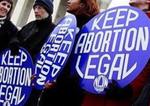
April 25, 1967 – The first law legalizing abortion was signed by Colorado Governor John Love, allowing abortions in cases in which a panel of three doctors unanimously agreed.
By Siena Hoefling
April 25, 2017
Most of us assume that abortion was introduced in Roe v. Wade. But in fact, that Supreme Court opinion was part of a liberal trend to remove protection from the unborn child, nationwide.
Mississippi quietly added a rape exception in 1966. Alabama codified a little-noticed “physical health of the mother” exception in 1954. But it was Colorado on April 25, 1967 – fifty years ago – that shocked the nation with its far-reaching and widely-publicized abortion decriminalization.
Here are the facts:
1. All of the states at one time prohibited doctor-induced abortions, except to save the life of the mother.
2. Colorado, led by population alarmist Richard Lamm, decriminalized abortion for mental health, rape, some potential birth defects, or anything considered “therapeutic” by a three-doctor panel.
3. The Colorado bill was signed fifty years ago, on April 25, 1967 – one of the first governmental acts against unborn children in America.
4. Lamm, the freshman legislator who drafted the radical, pro-abortion legislation in the state house, later admitted that his thinking on abortion was colored by overpopulation theories. “How many children can we as a nation afford?”, he asked.
5. In 1970, Lamm wrote that national parks would be overrun with people by 1985, and that Americans would lose their quality of life. So he claimed that “most demographers are agreed that either the birth rate must go down or the death rate must go up.” Fecundity was treated as a curse: “Society at large may have to discourage the raising of children,” Lamm said. As in China, he was open to governmental coercive measures to lower the birth rate and limit family size.
6. Euthanasia was also attractive to Lamm, who wrote in 1984, a decade after he was elected Colorado governor, that terminal patients and the elderly should “die and get out of the way.”
7. The Supreme Court ignored the apparent eugenics agenda of Lamm and others (such as Alan Guttmacher of Planned Parenthood and the American Eugenics Society) who influenced Colorado and others to decriminalize abortion.
8. Many claim the Supreme Court is the authority over the constitutionality of state laws. Yet, in Roe v. Wade, the Supreme Court relied upon the states’ failure to unequivocally protect life as the indicator of constitutionality.
9. Sarah Weddington, counsel for “Jane Roe” in Roe v. Wade, cited the unfortunate fact that the state of Texas had neglected to criminalize self-induced abortions. Rather than admit that the failure to fully implement a law does not negate the law, Weddington used this lack to prove that the unborn child is a non-person, unworthy of the Constitution’s protection.
10. The Supreme Court agreed with Weddington’s line of thinking. Justice Harry Blackmun pointed to the life-of-the-mother exception in the states as evidence that the unborn child is a pregnancy, not a person.
The Supreme Court had inverted logic. The existence of early anti-abortion laws, though flawed, indicated that the states believed the Constitution does extend its protections to the unborn. Were the child a lower form of life, or a parasitic appendage of the mother, these laws would never have existed. The child would be quite obviously a non-human without any question of rights.
It’s unfortunate that the Court paid no heed to the logic. Nor did they scrutinize the role of eugenics in the pro-abortion agenda.
The rights-denying premises of eugenics are un-American, and should have been rejected by the Court. Quite clearly, that insidious ideology is repudiated by our national assertion that “all men are created equal,” and “endowed by their Creator with certain unalienable rights,” including the right to life. And, with regard to children, our Constitution mentions our duty toward them explicitly, in the unavoidable, governmental purpose to “secure the blessings of liberty to . . . our posterity.”
Once again, we need to rededicate ourselves to “establish[ing] justice” and conforming to the truths that are self-evident. Let’s restore the Constitution’s protections to all children – and finally do it right. And let’s bring back society’s loving care for all of our little ones, and not discard them as a curse.
resources: renewamerica.com
(Photo and picture credits: Library of Congress and U.S. National Archives) on this day in history

 Be a Seed for Change
You must be logged in to post a comment.