The First Official Memorial Day May 1868 Do you celebrate Memorial Day?
In 1868, Commander in Chief John A. Logan of the grand Army of the Republic issued what was called General Order Number 11, designating May 30 as a memorial day. He declared it to be “for the purpose of strewing with flowers or otherwise decorating the graves of comrades who died in defense of their country during the late rebellion, and whose bodies now lie in almost every city, village, and hamlet churchyard in the land.” Where do you suppose that first Memorial Day took place? The first national celebration of Memorial Day (originally Decoration Day) took place May 1868, at Arlington National Cemetery. The national observance of Memorial Day still takes place there today, with the placing of a wreath on the Tomb of the Unknown Soldier and the decoration of each grave with a small American flag. The holiday has changed a bit since it first began, which some argue was even earlier than Logan’s dedication.
Southern women decorated the graves of soldiers even before the end of the Civil War. After the war, a women’s memorial association in Columbus, Mississippi, put flowers on the graves of both Confederate and Union soldiers in 1866, an act of generosity that inspired the poem by Francis Miles Finch, “The Blue and the Grey,” published in the Atlantic Monthly. In 1971, federal law changed the observance of the holiday to the last Monday in May and extended it to honor all those who died in American wars. People pay tribute not only with flowers but also with speeches and parades. Whom do you honor on Memorial Day?
americaslibrary.gov/jb/recon/
So, #DedicationDay seems to have been swept under a rug… the fact is, African Americans created Memorial Day
On May 30, 1942, Fred Korematsu is arrested in San Leandro, California for resisting internment under President Franklin Roosevelt’s controversial Executive Order 9066, which called for the incarceration of nearly all Japanese Americans in the United States in the wake of Japan’s attack on Pearl Harbor.
Following his conviction and incarceration in a Utah camp, Korematsu—then 23—filed suit in federal court. His case eventually wound up before the U.S. Supreme Court, which in 1944 upheld the government’s claim that the incarceration was a matter of “military urgency.”
In 1983, however, a federal judge reversed Korematsu’s conviction for evading internment, ruling a “great wrong” done to him. In 1988, President Ronald Reagan issued a public apology on behalf of the government and authorized reparations for former Japanese American internees or their descendants.
Scholars and judges have denounced the Korematsu Supreme Court ruling as among the worst in the court’s history.
In 2011, an acting U.S. solicitor—the federal government’s top courtroom attorney—ruled a predecessor deliberately hid from the court a report from the Office of Naval Intelligence that concluded the Japanese Americans posed no military threat. In Trump v. Hawaii in 2018, the Supreme Court effectively overturned the Korematsu decision, calling it as “gravely wrong the day it was decided.”
In 1998, President Bill Clinton awarded Korematsu, a staunch civil rights advocate, the Presidential Medal of Freedom, the nation’s highest civilian honor. He died in 2005 at the age of 86.
On January 30, 2011, California celebrated its first “Fred Korematsu Day”—the first day named after an Asian American in the United States.Fred Korematsu challenged the legality of Executive Order 9066 but the Supreme Court ruled the action was justified as a wartime necessity. It was not until 1988 that the U.S. government attempted to apologize to those who had been interned.
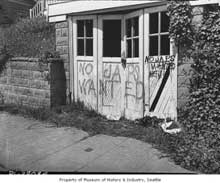
Fred Korematsu decided to test the government relocation action in the courts. He found little sympathy there. In Korematsu vs. the United States, the Supreme Court justified the executive order as a wartime necessity. When the order was repealed, many found they could not return to their hometowns. Hostility against Japanese Americans remained high across the West Coast into the postwar years as many villages displayed signs demanding that the evacuees never return. As a result, the interns scattered across the country.
During the Tulsa Race Massacre, which occurred over 18 hours from May 31 to June 1, 1921, a white mob attacked residents, homes and businesses in the predominantly Black Greenwood neighborhood of Tulsa, Oklahoma. The event remains one of the worst incidents of racial violence in U.S. history, and, for a period, remained one of the least-known: News reports were largely squelched, despite the fact that hundreds of people were killed and thousands left homeless.
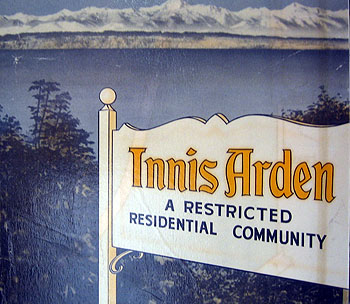
This sign at the entrance of Innis Arden advertised to all entering the Shoreline subdivision that it was a “restricted community.”
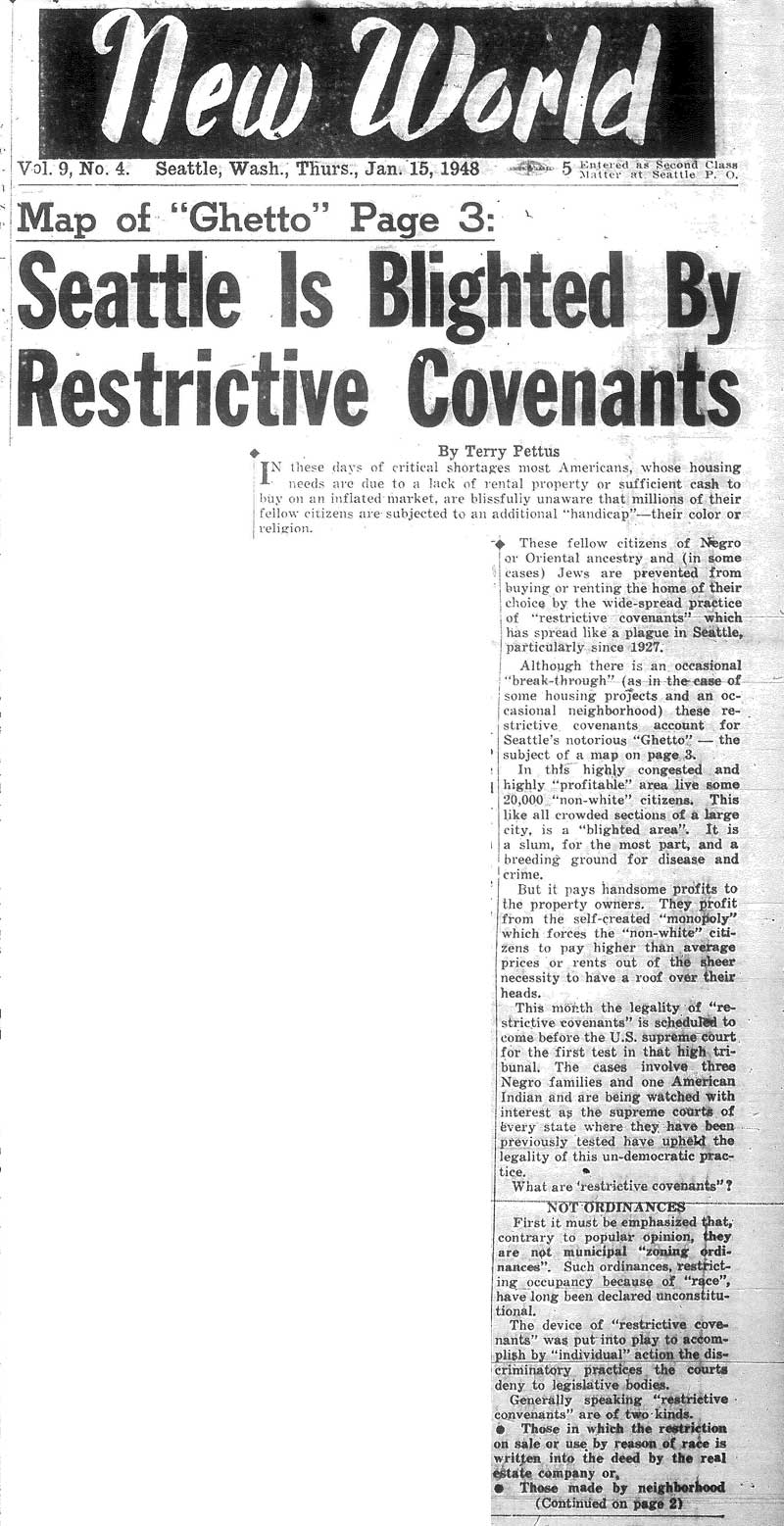
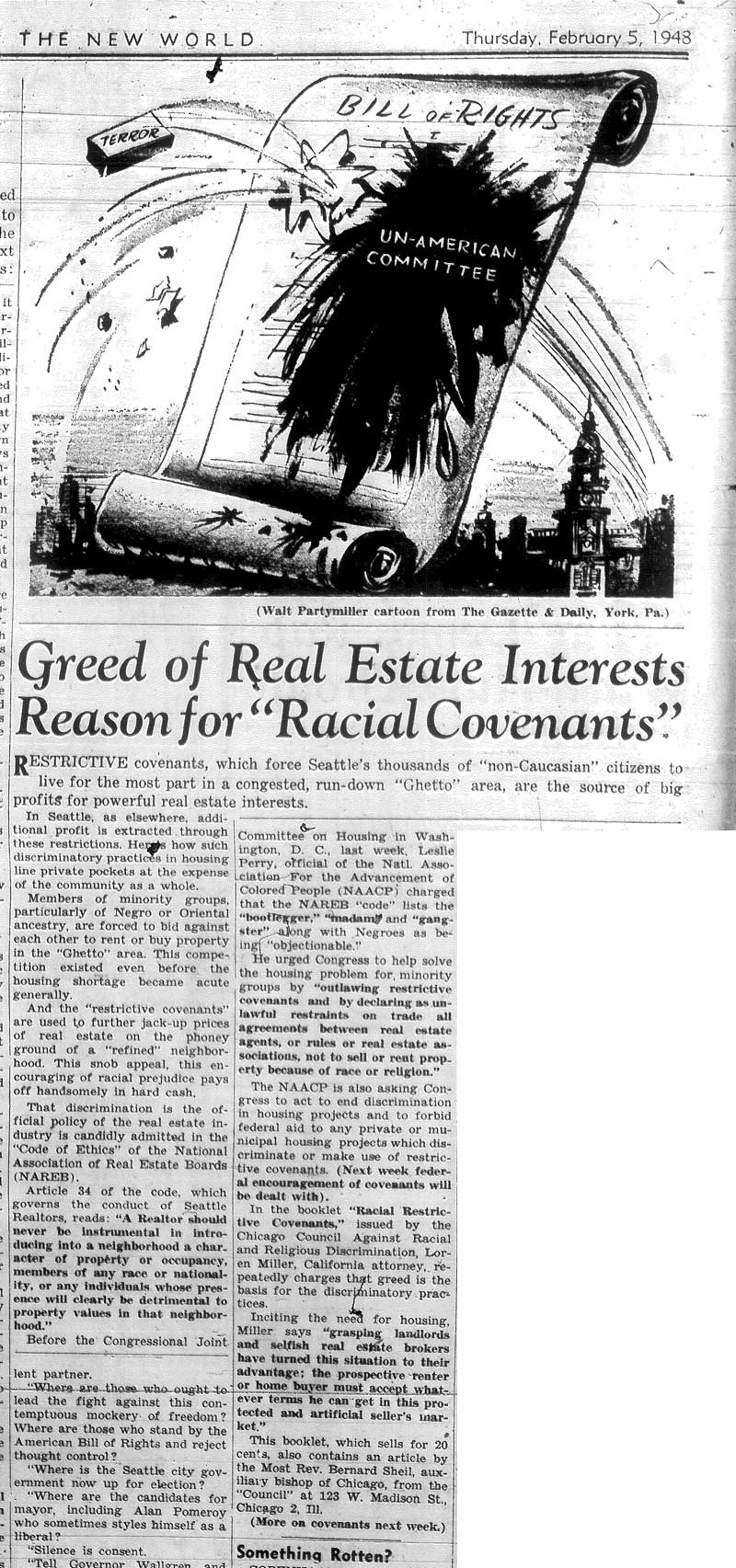
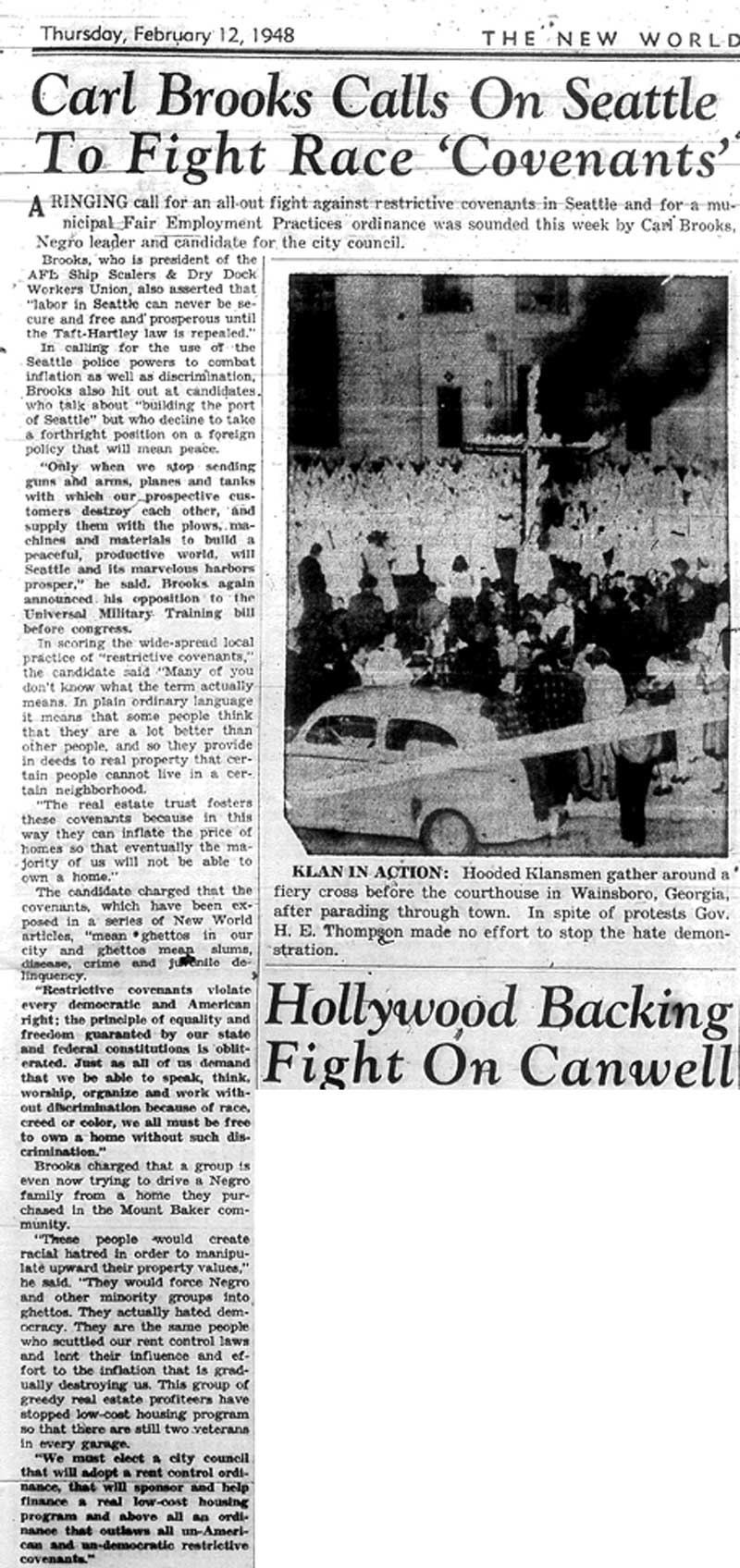
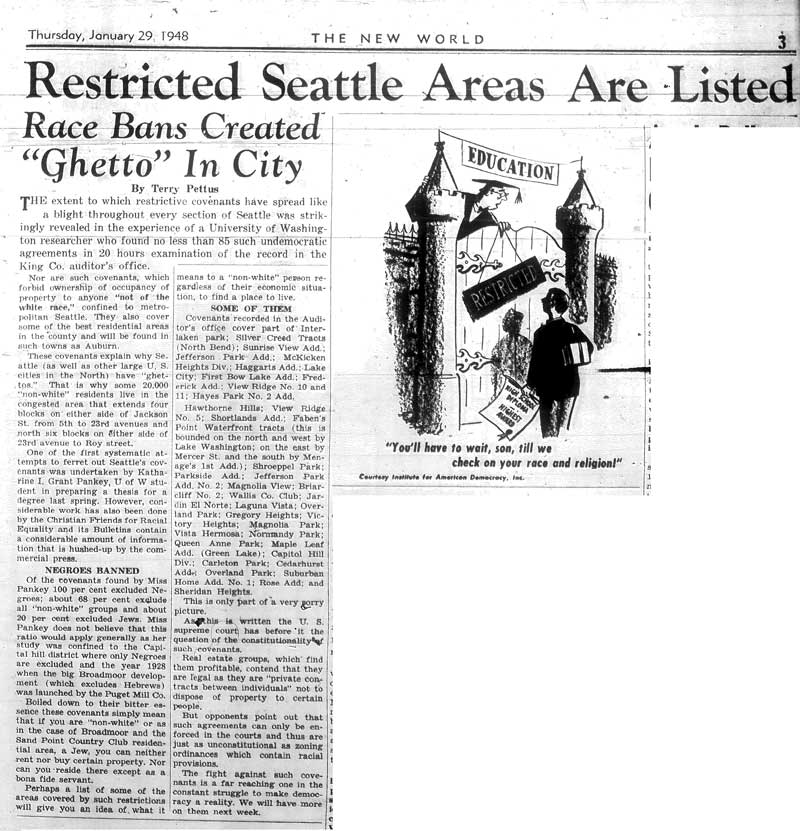
The Communist Party Newspaper, New World, published articles attacking racial restrictive covenants in 1948.
[click to enlarge images]
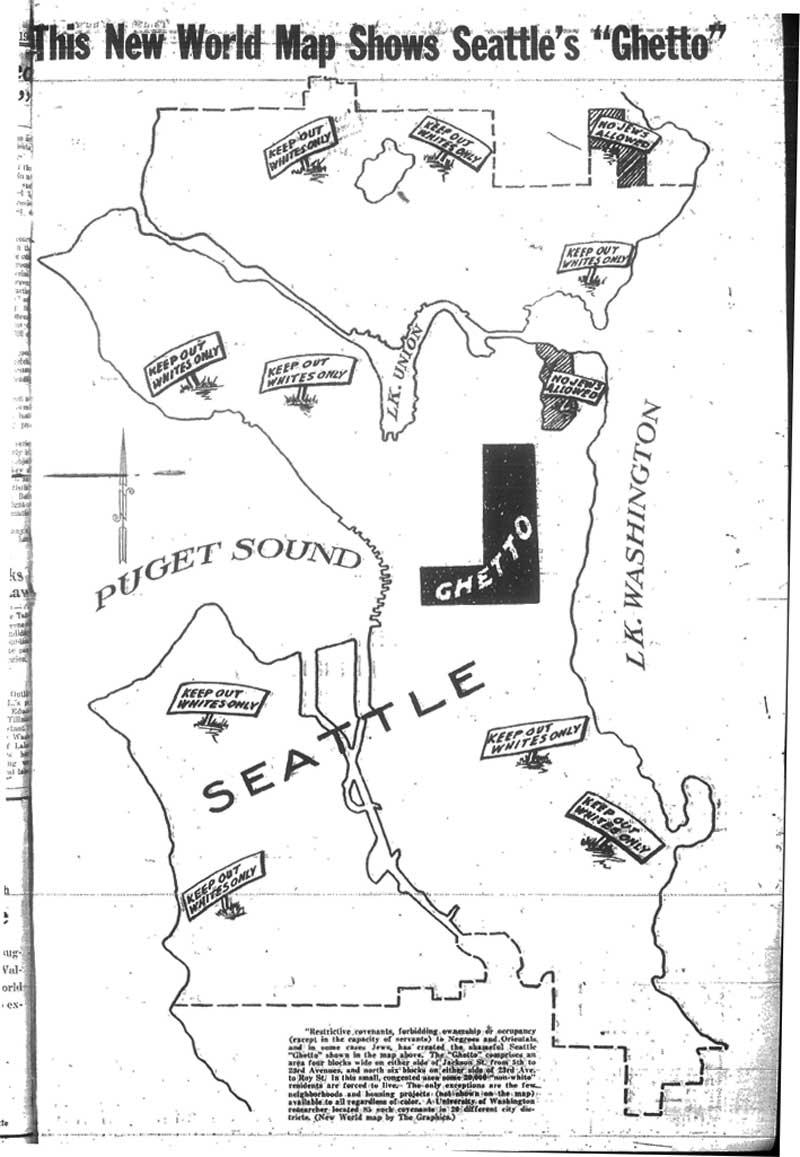
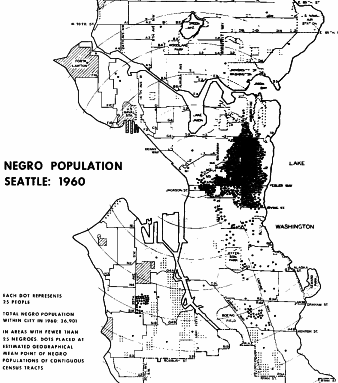
A New World Map Shows Seattle’s “Ghetto,” 1948.
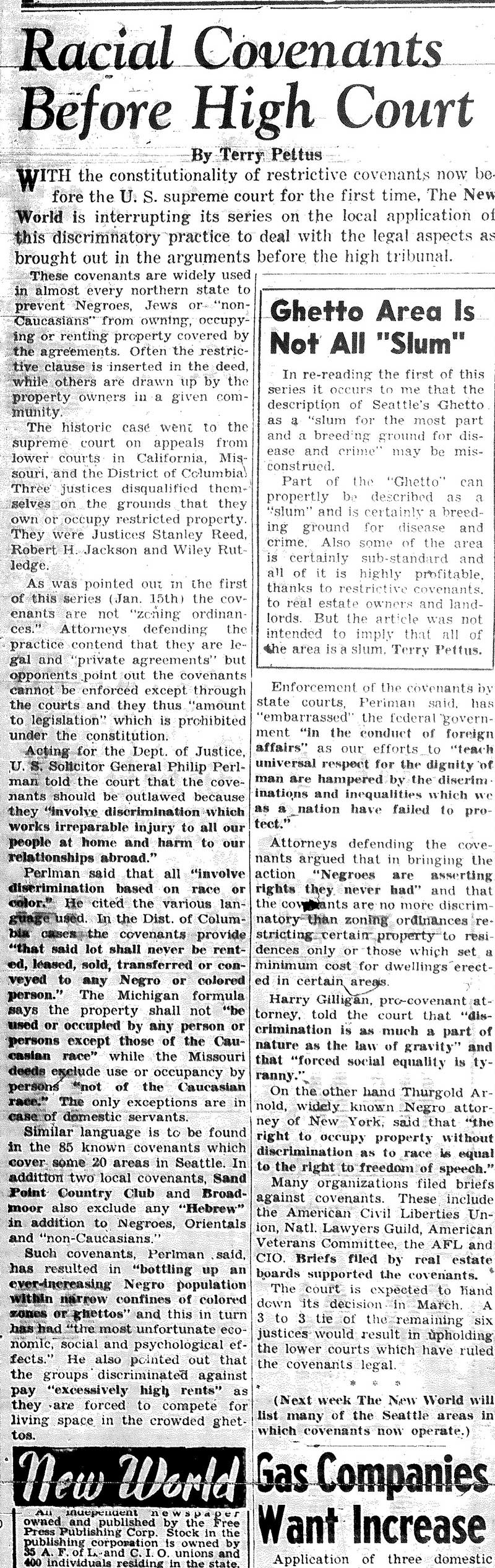
A January 22, 1948 New World column addresses the 1948 court struggles against racial restrictive covenants.
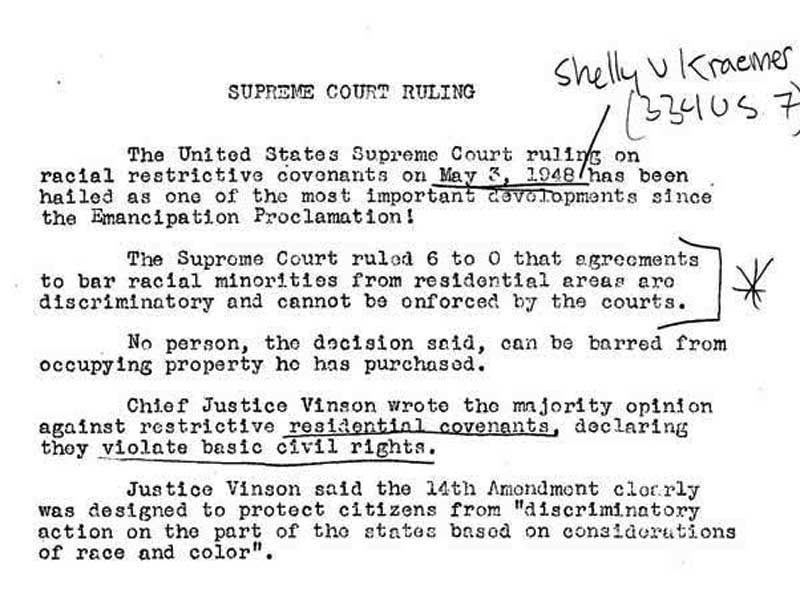
In 1948, the Supreme Court ruled 6 to 0 that agreements to bar racial minorities from residential areas are discriminatory and cannot be enforced by the courts.
The Ornstein Case
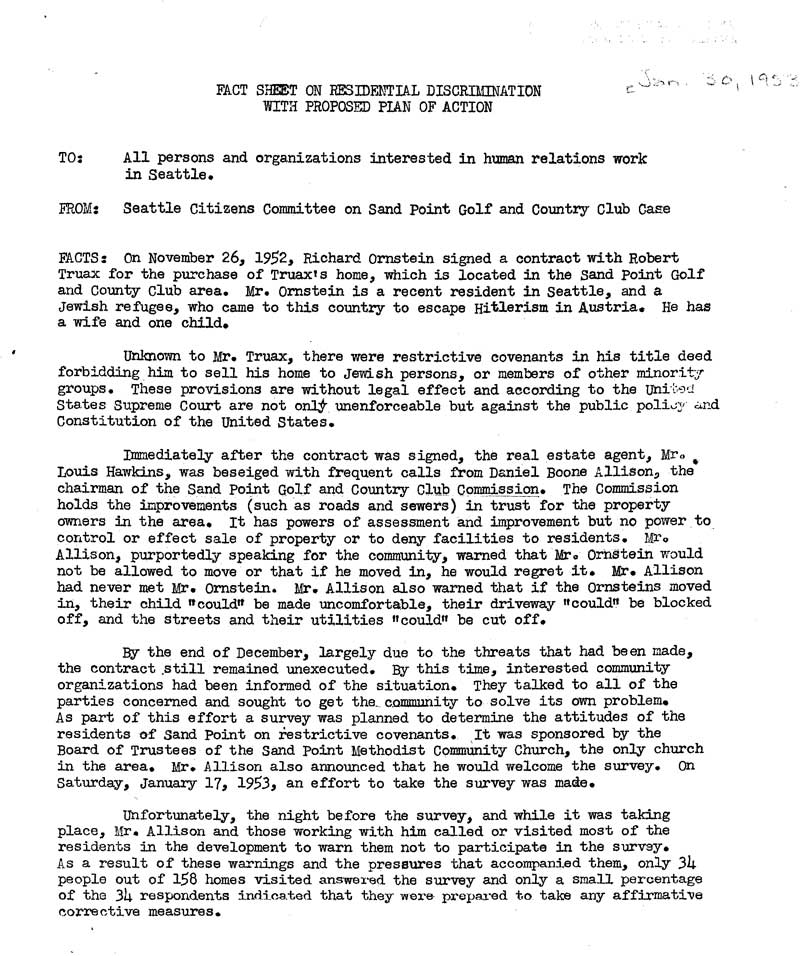
Fact Sheet on Ornstein’s Residential Discrimination and Proposed Plan of action, January 30, 1953.
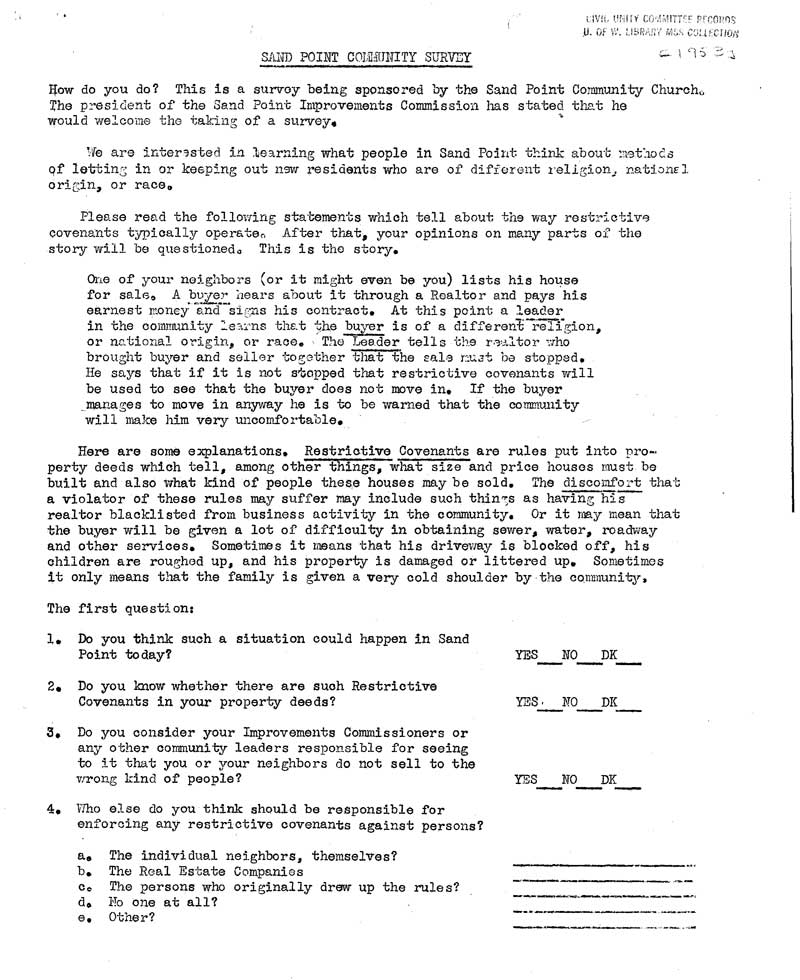
The questionnaire developed by the Sand Point Methodist Community Church, to reveal resident’s attitudes towards racial restrictive covenants.
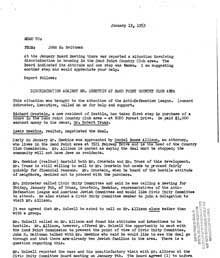
Civic Unity Committee Memo summarizing the Ornstein family’s situation.
Housing restriction was publically condoned and enforced.
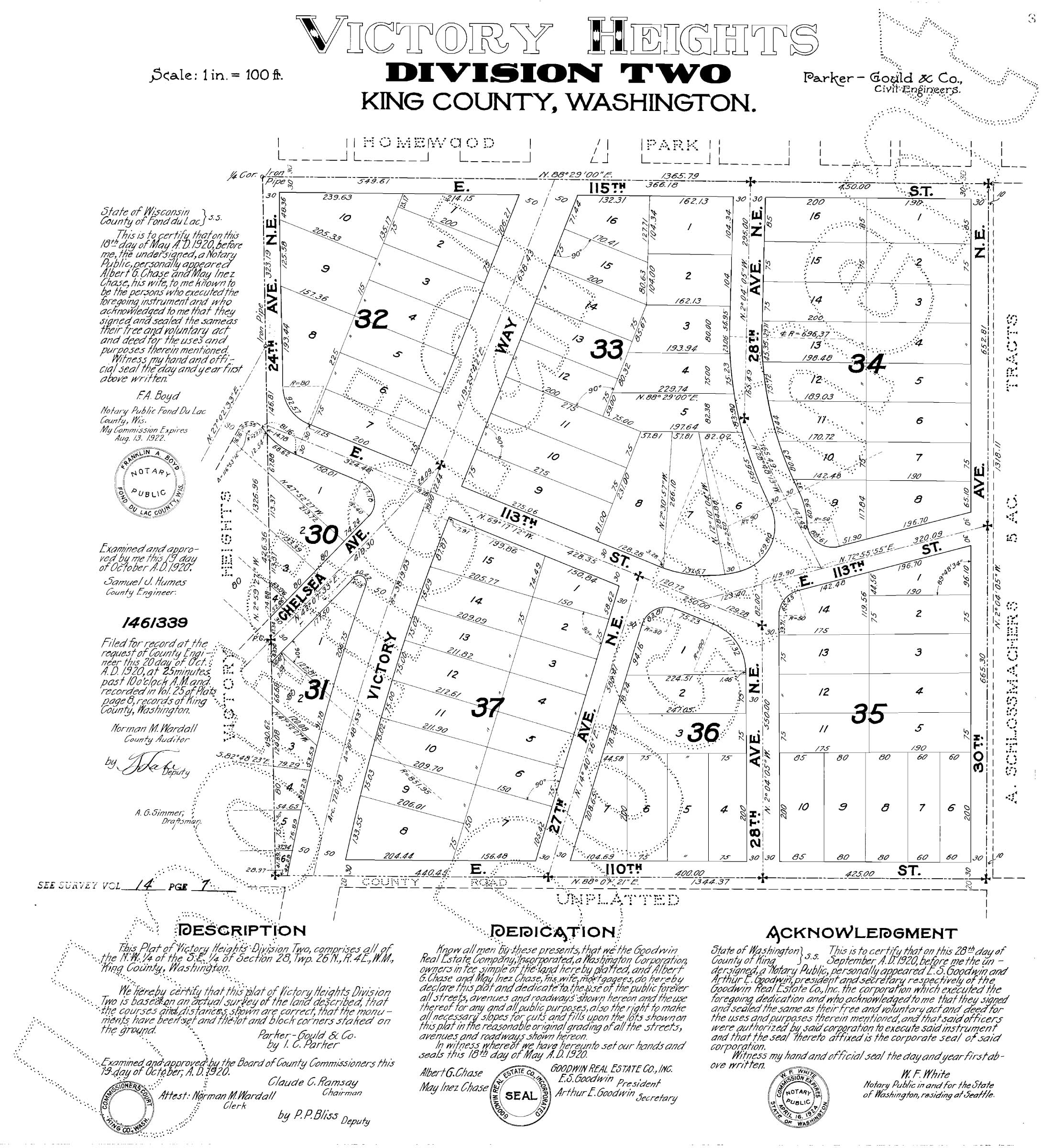
A Victory Heights plat map in the North Seattle area.
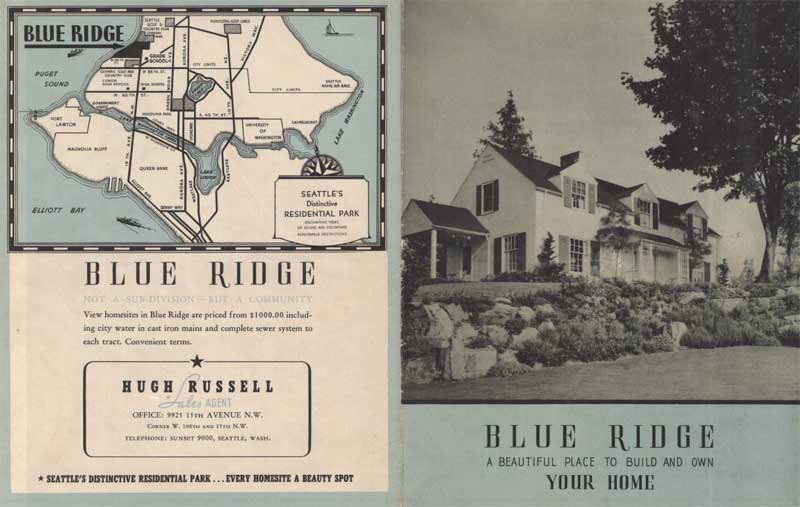
A pamphlet cover advertizing the Blue Ridge “restricted” neighborhood as “a beautiful place to build and own your home.” Blue Ridge was one of several neighborhoods developed by Bill and Bertha Boeing.
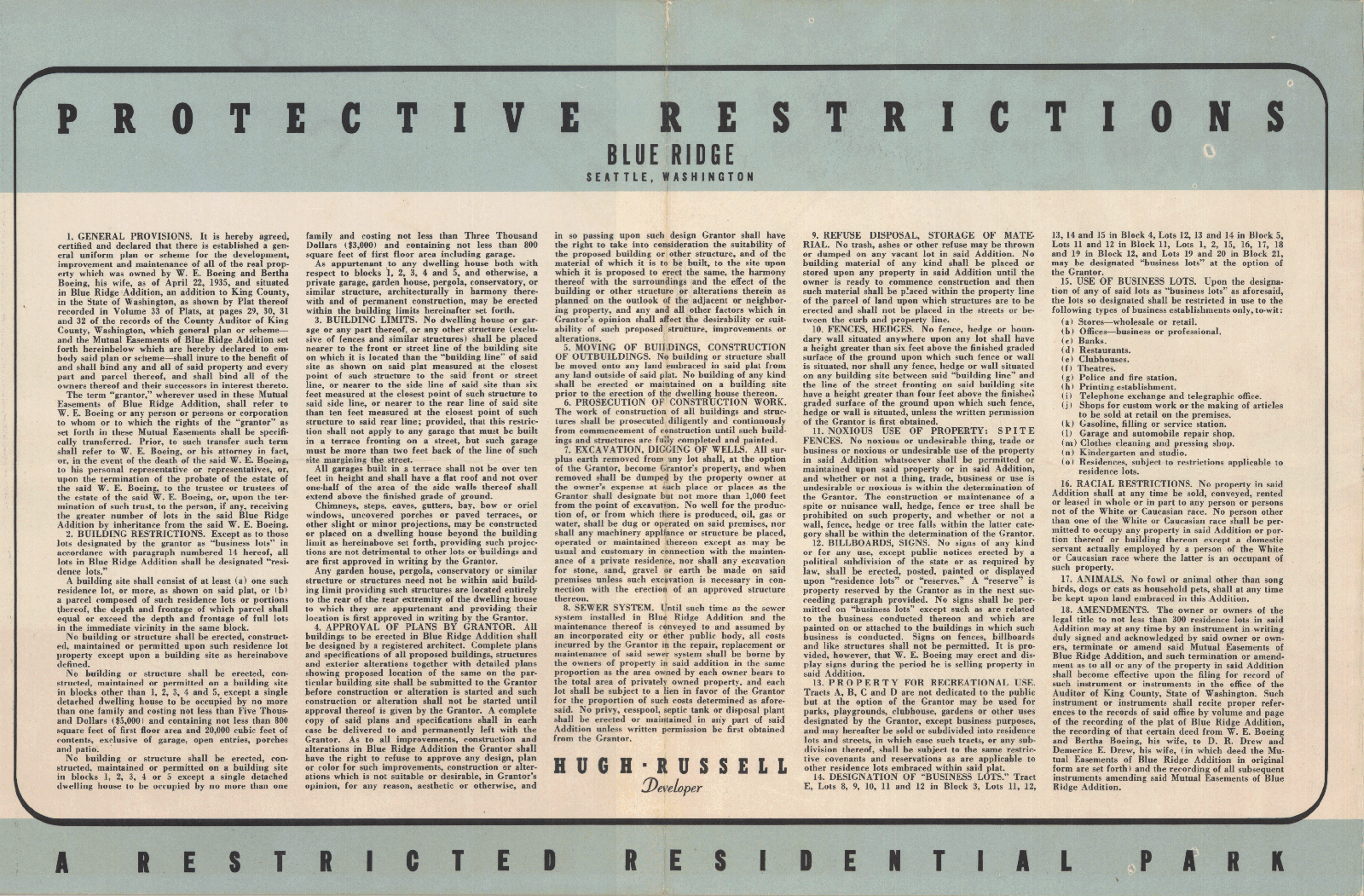
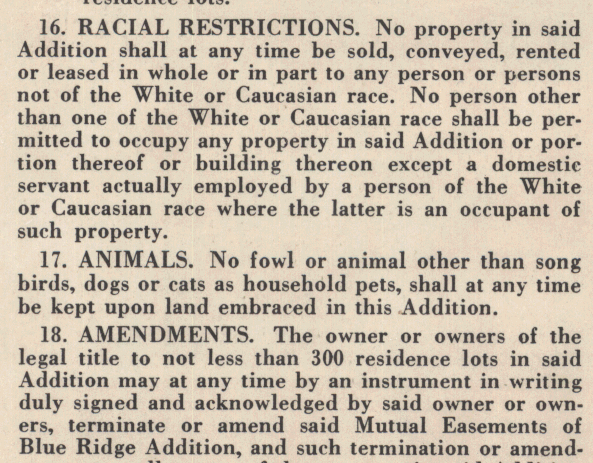
This Blue Ridge list of “protective restrictions” is included in the same pamphlet that described the Blue Ridge area as “a beautiful place to build and own your home.”
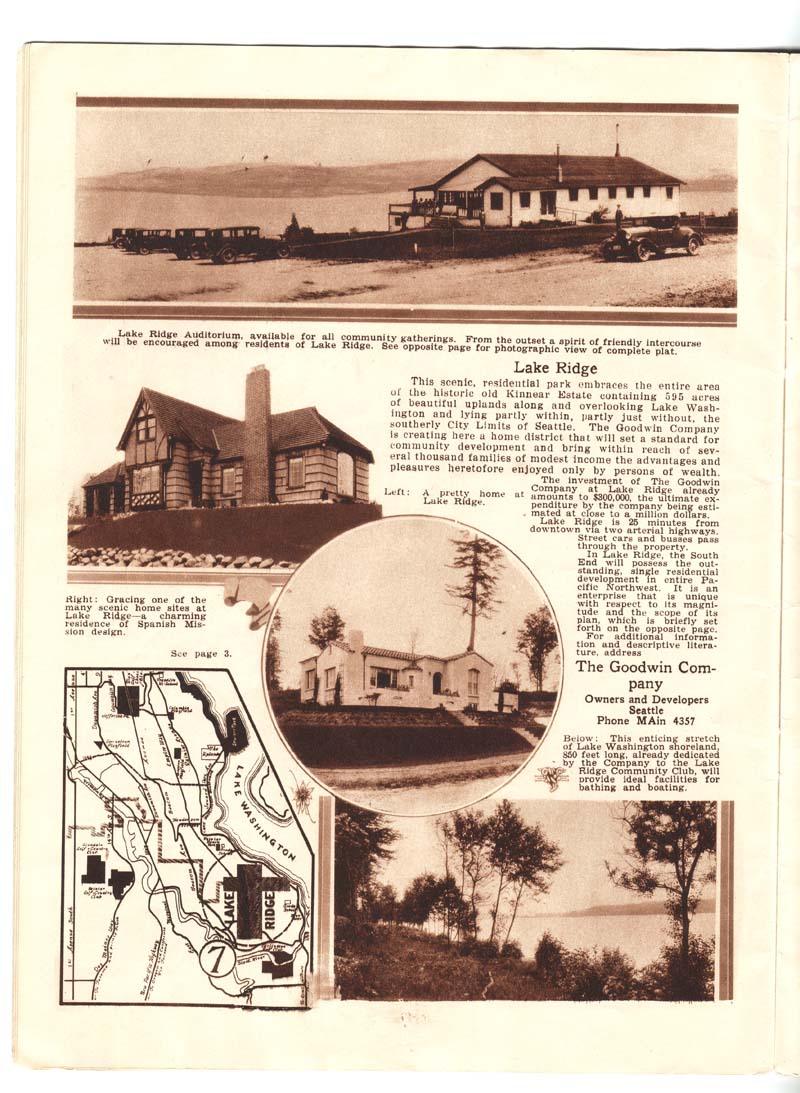
Lake Ridge was developed by the Goodwin Company and sold to the public as a “restricted” community. Click above to see the 1930 promotional brochure for the south Lake Washington neighborhood.
Restrictive covenants were a source of big profits for powerful real estate interests.
Capitol Hill Covenant Campaign
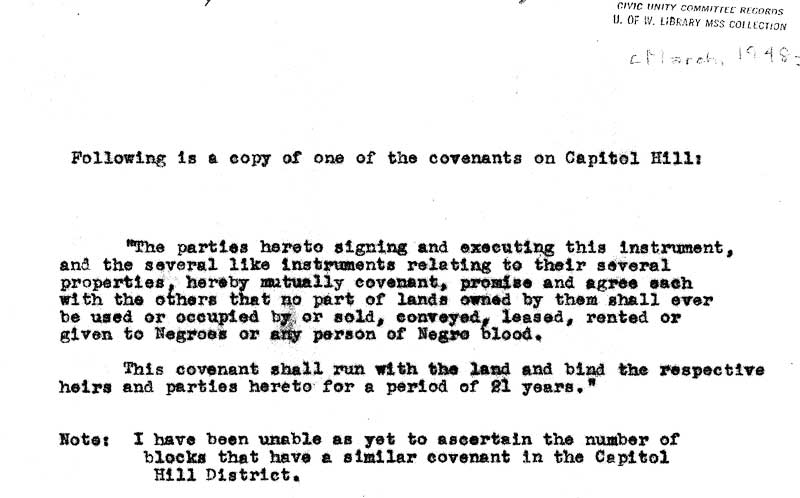
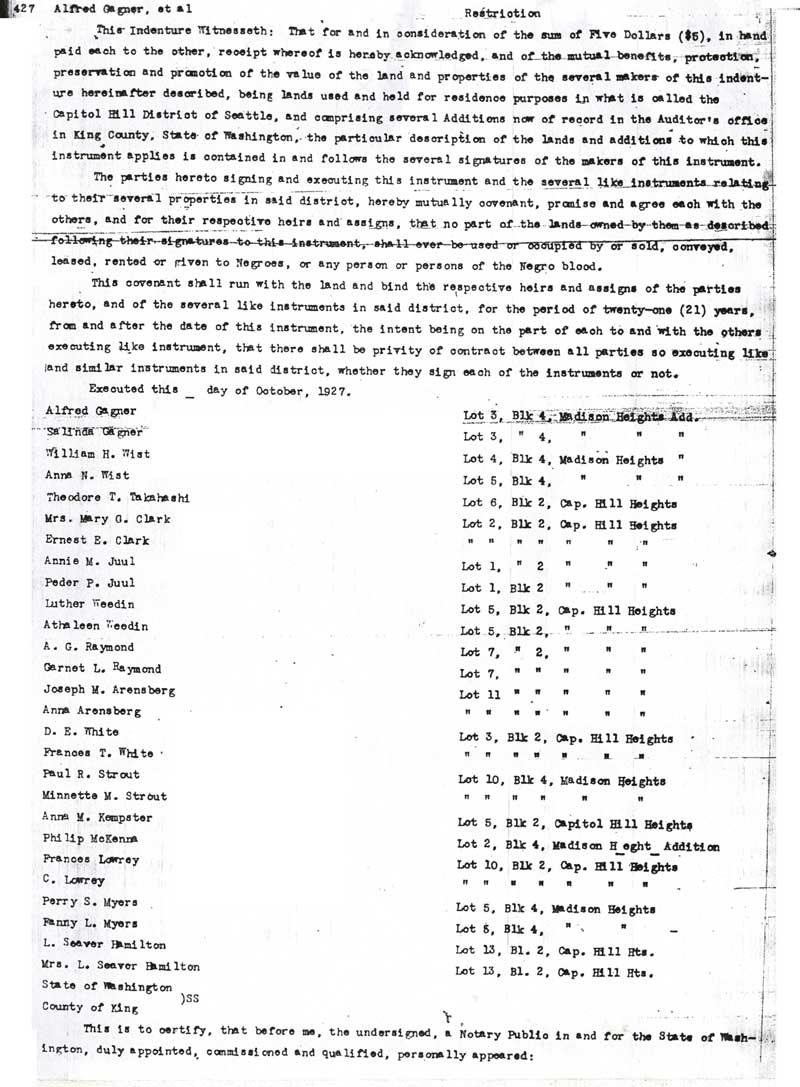
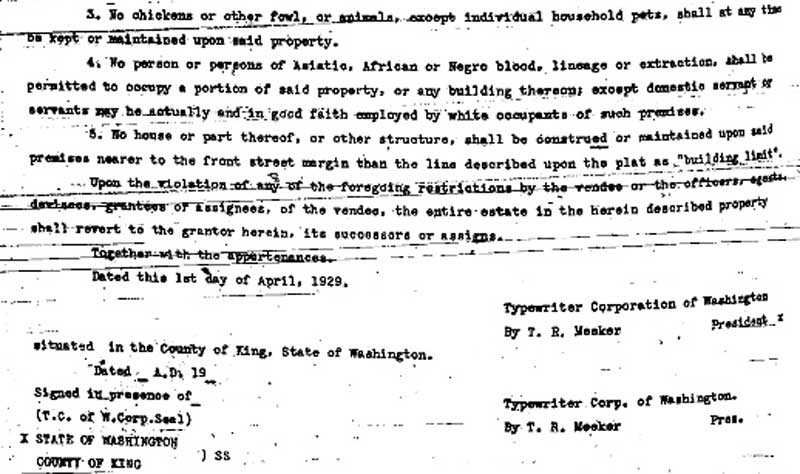
Capitol Hill Racial Restrictive Covenant.
27 property owners signed this 1927 petition to restrict property use on their block.
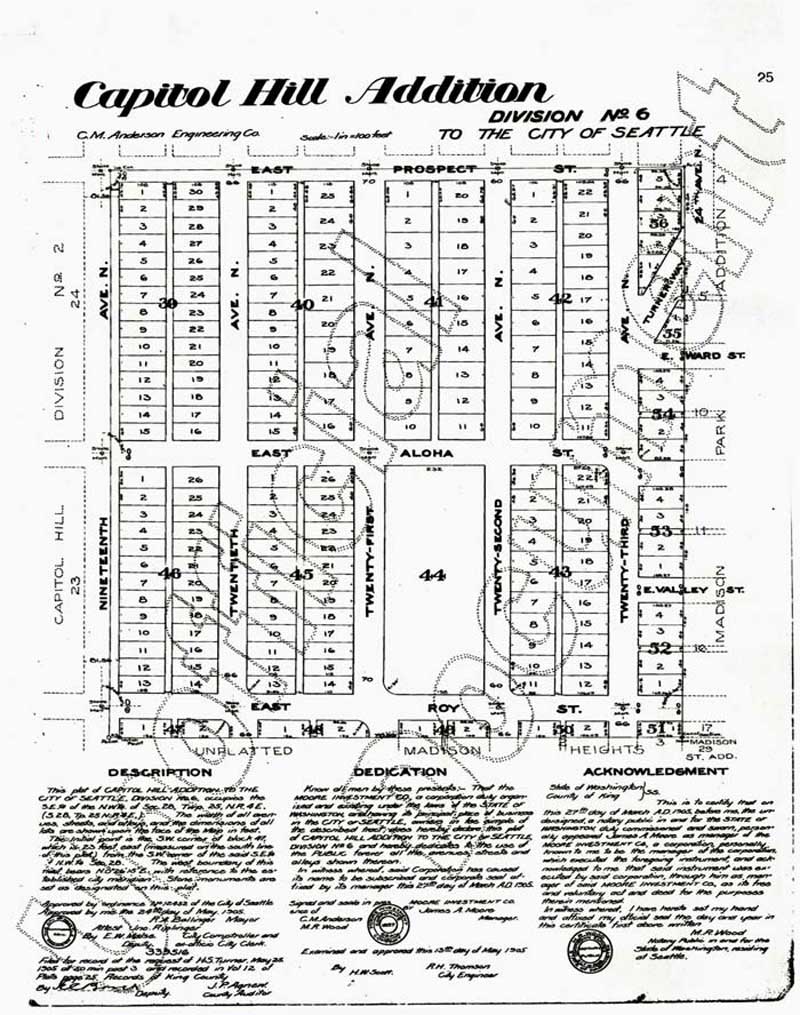
Plat map of Capitol Hill showing some of the blocks covered by the restrictive covenants filed by homeowners after 1927.
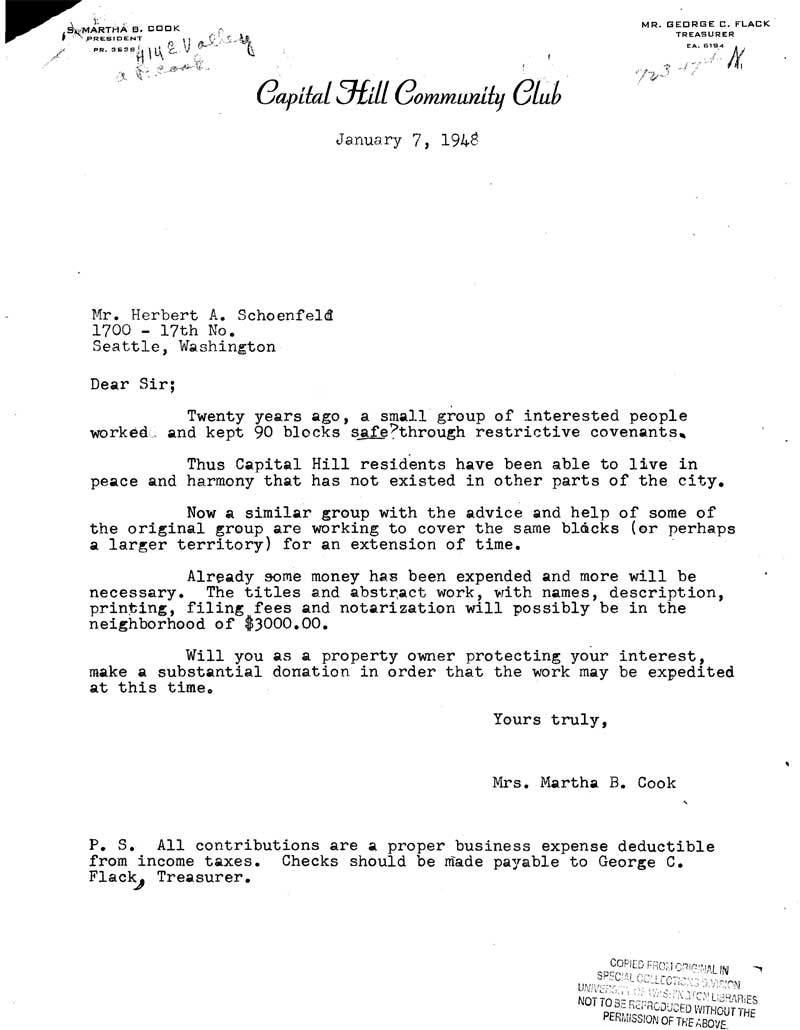
A letter from the Capitol Hill Community Club petitioning Capitol Hill residents to donate the funds necessary to protect Capitol Hill’s racial restrictive covenants.
The Campaign Against Racial Restrictive Covenant
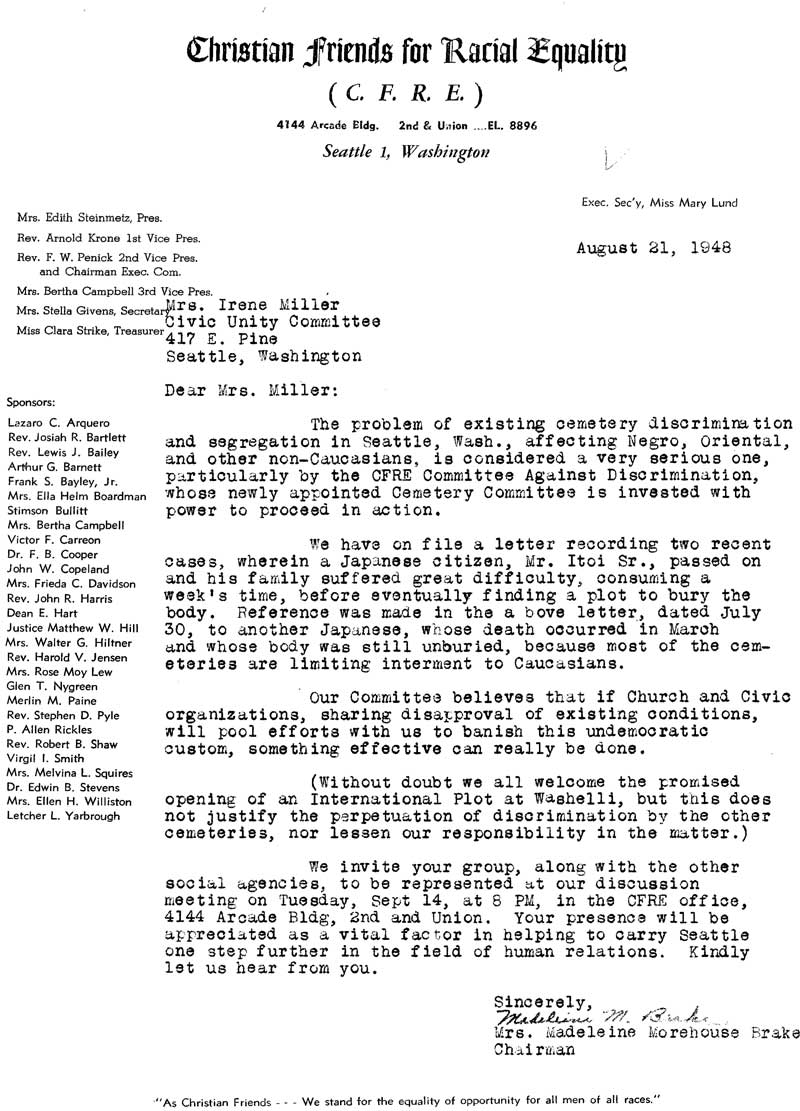
The Christian Friends for Racial Equality (CFRE) Committee Against Discrimination appointed a cemetery committee to combat the problem of cemetery discrimination.
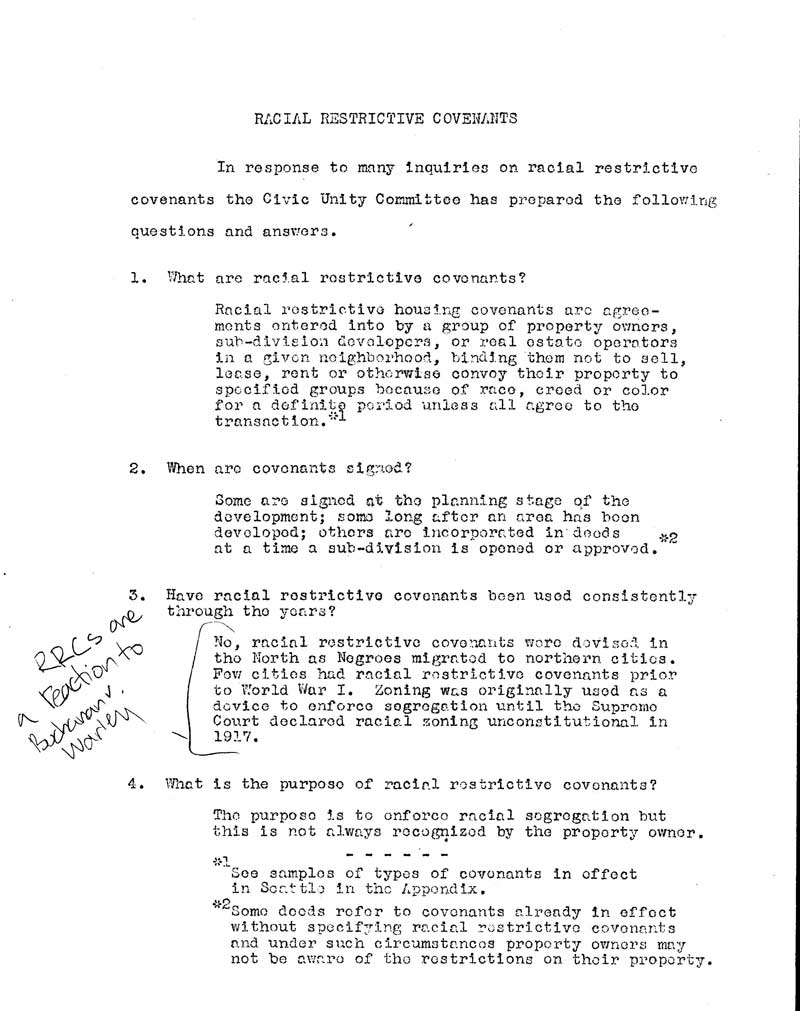
The Civic Unity Committee (CUC) issued this fact sheet on racial restrictive covenants in 1948 to educate others about the abuses of restrictive housing covenants.
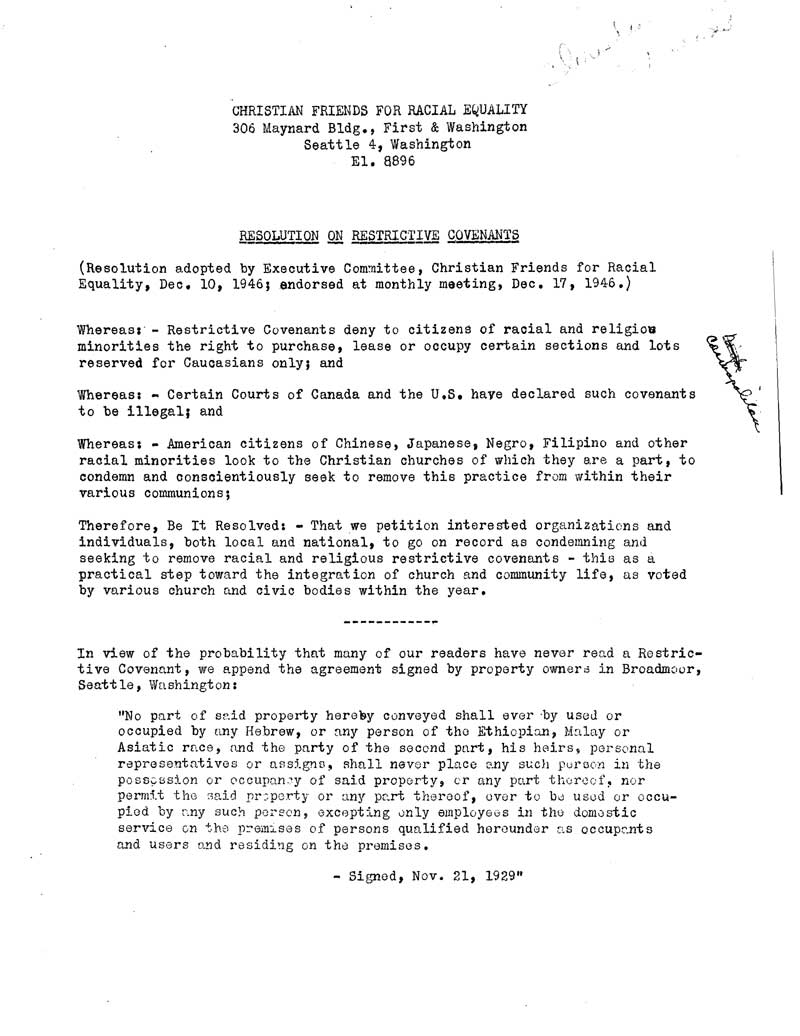
This Christian Friends for Racial Equality (CFRE) Resolution to condemn Restrictive Covenants.
Carl Brooks, an outspoken civil rights activist, labor leader, and member of the Communist Party (CP), speaks out against racial restrictive covenants.
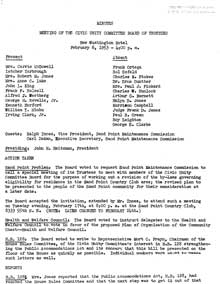
Civic Unity Committee (CUC) Meeting minutes from one of several meetings organized to combat racial restrictive covenants.
This January 1948 article from the New World argues that the race bans in Seattle’s restricted housing areas created the “ghetto” in the city.
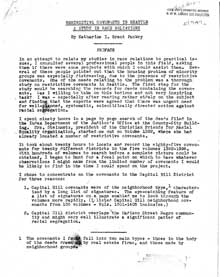
Katharine I. Grant Pankey’s Report, “Restrictive Covenants in Seattle: A study in Race Relations.”
Windermere racial restrictive covenant.
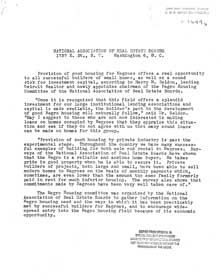
Because restrictive covenants often pushed black people out of restricted communities, the National Association of Real Estate Boards issued this 1944 report about housing options for “Negroes.”
Realtors sometimes advertised housing developments to Black and Japanese families only to reject them when they applied, as revealed in this 1949 Civic Unity Committee letter.
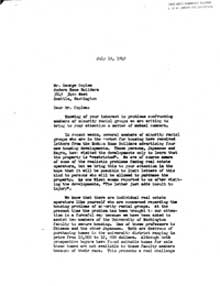
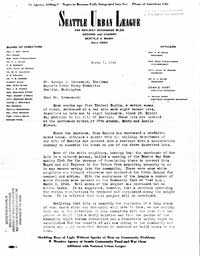
With the help of the Seattle Urban League, one residential community sought to prevent an elderly Black woman from purchasing a home, all in the name of democracy.
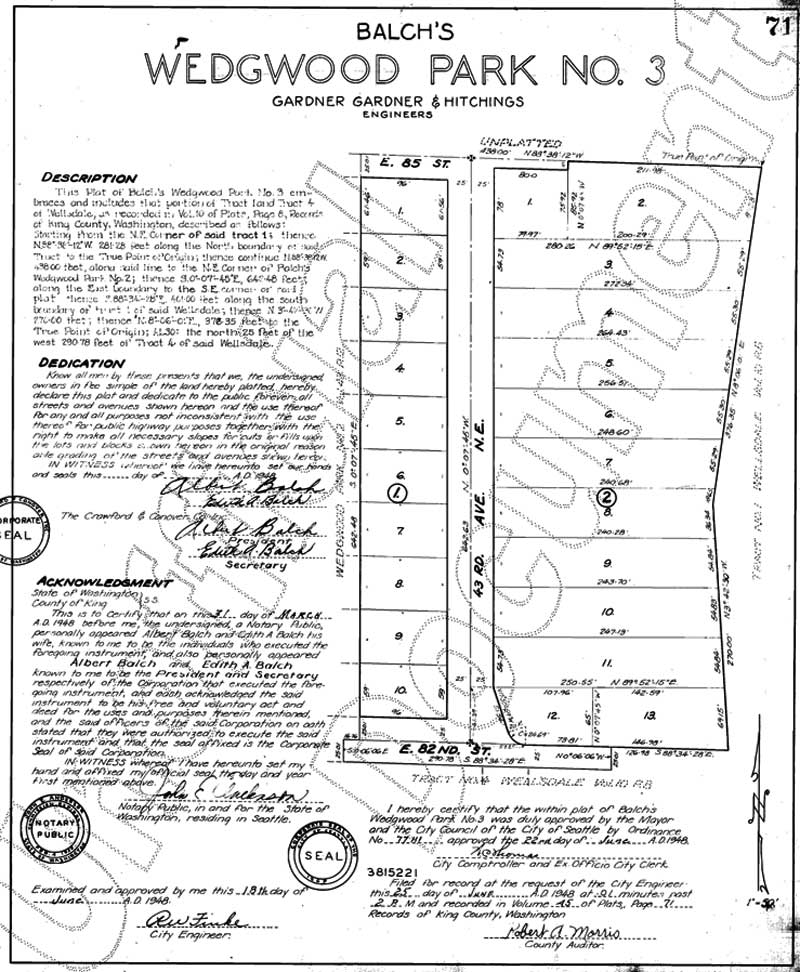
Albert Balch, developer of View Ridge, Wedgwood, and several other areas was notorius for advertising them as “restricted neighborhoods.
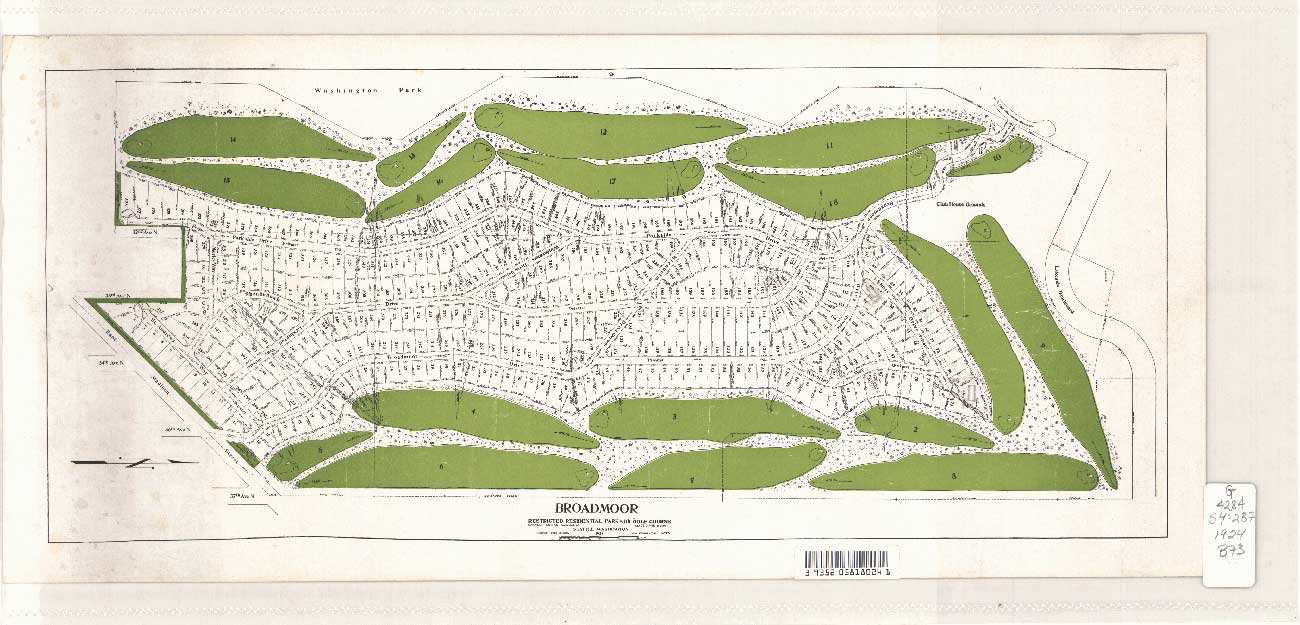
Broadmoor: Developed by the Puget Mill Company, Broadmoor banned Jews along with Blacks and Asians. In this 1934 brochure it is called a “Restricted Residential Park”
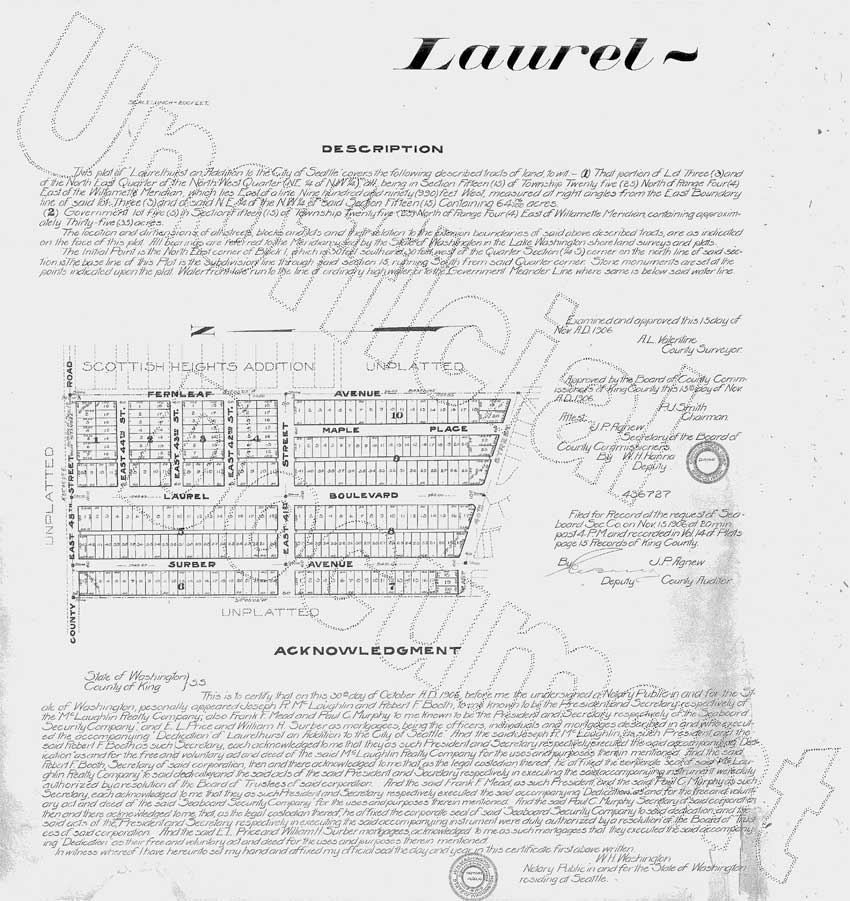
Laurelhurst plat map.
Richard Ornstein, a Jewish refugee from Austria, contracted to purchase a home for his family in the Sand Point Country Club area of Seattle in late 1952. Unknown to both Ornstein and the seller, the property’s deed contained a neighborhood-wide restrictive covenant barring the sale or rental of the home to non-Whites and people of Jewish descent. In spite of the U.S. Supreme Court ruling that deemed racial restrictive covenants unenforceable in 1948, Ornstein’s case reveals that this ruling yielded little power over the application of these restrictions on the individual level. Daniel Boone Allison, Head of the Sand Point Country Club Commission, approached the realtor negotiating the sale and announced: “the community will not have Jews as residents.”1 Over the next several weeks Allison campaigned to stop the sale by both citing the covenant barring the sale of homes to Jews and by threatening Ornstein with a list of ways intolerant area residents “could” respond to the presence of the Ornstein family in the neighborhood. Despite the willingness on the part of the home seller, despite the support of civil rights activists, and despite the 1948 court ruling, Ornstein eventually became a victim of Allison’s threats and “made it clear that he [had] no intention of moving” into an area that did not accept his presence. 2





 Be a Seed for Change
You must be logged in to post a comment.