
Tulsa Massacre… 1921 May 31st – June 1st


Beginning on the night of May 31, 1921, thousands of white citizens in Tulsa, Oklahoma descended on the city’s predominantly Black Greenwood District, burning homes and businesses to the ground and killing hundreds of people. Long mischaracterized as a race riot, rather than mass murder, the Tulsa Race Massacre stands as one of the worst incidents of racial violence in the nation’s history.
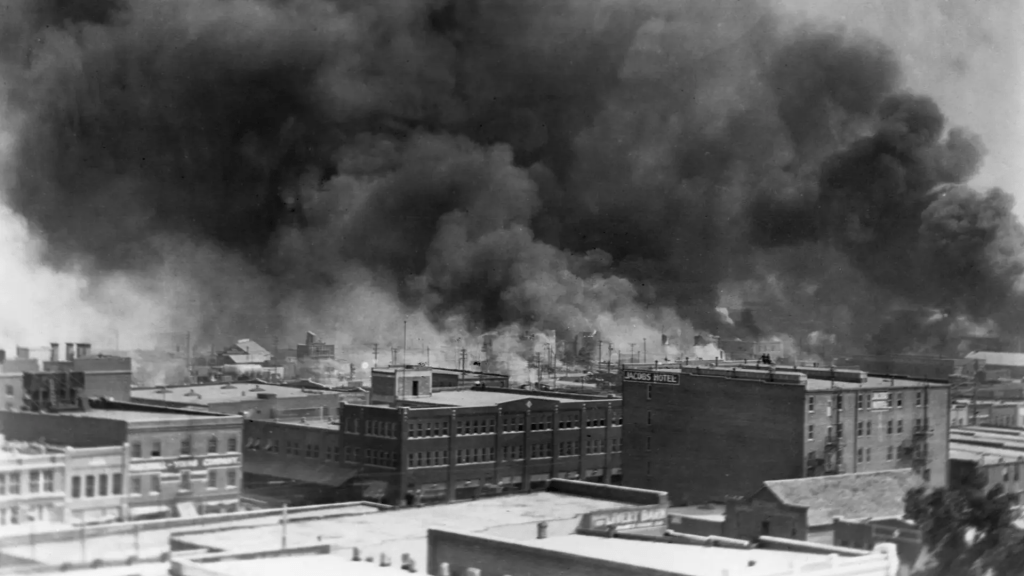
In the years following World War I, segregation was the law of the land, and the Ku Klux Klan was gaining ground—not only in the Jim Crow South, but across the United States. Amid that charged environment, Tulsa’s African American community was nationally recognized for its affluence. The Greenwood District, known as “Black Wall Street,” boasted more than 300 Black-owned businesses, including two movie theaters, doctors’ offices and pharmacies.

On May 30, 1921, a young Black man named Dick Rowland entered an elevator in an office building in downtown Tulsa. At some point, Rowland was alone in the elevator with its white operator, Sarah Page. It’s unclear what happened next (one common version is that Rowland stepped on Page’s foot) but Page screamed, and Rowland fled the scene. The next day, the police arrested him.

Tulsa Race Massacre

Source: history.com

1789 1st US congressional act becomes law (on administering oaths)


 By Christineblackerby, Posted In ExhibitsTeaching Activities & Lesson Plans

When the First Congress met in New York City in March of 1789, they faced an enormous undertaking. The new Constitution had just been ratified, and Congress was the first part of the new federal government to meet and take shape. Ahead of them lay numerous important and urgent tasks: they needed to create the Treasury, War, and Foreign Affairs departments; the federal judiciary; and a system of taxation and collection. They also needed to determine patent and copyright laws, rules for naturalization, the location of a new capital city, administration of the census, amendments to the Constitution, and much more.

But before the members of Congress could get to all of this pressing business, there was something more important they needed to do–so important that it was the first bill introduced in the House of Representatives, and the first act signed into law by President George Washington.

Oath Act, 1789 RG 11, web
An Act to Regulate the Time and Manner of Administering Certain Oaths, June 1, 1789. Records of the General Government, National Archives. National Archives Identifier 596341 Transcript from Library of Congress.

“An Act to Regulate the Time and Manner of Administering Certain Oaths” was signed into law on June 1, 1789. It prescribed the text of and procedure for the administration of the oath of office.

Tulsa race riot of 1921 ~ May 30- June 1st


See the source image

On May 30, 1921, Dick Rowland, a young African American shoe shiner, was accused of assaulting a white elevator operator named Sarah Page in the elevator of a building in downtown Tulsa. The next day the Tulsa Tribune printed a story saying that Rowland had tried to rape Page, with an accompanying editorial stating that a lynching was planned for that night. That evening mobs of both African Americans and whites descended on the courthouse where Rowland was being held. When a confrontation between an armed African American man, there to protect Rowland, and a white protestor resulted in the death of the latter, the white mob was incensed, and the Tulsa riot was thus ignited.

Over the next two days, mobs of white people looted and set fire to African American businesses and homes throughout the city. Many of the mob members were recently returned World War I veterans trained in the use of firearms and are said to have shot African Americans on sight. Some survivors even claimed that people in airplanes dropped incendiary bombs.

When the riot ended on June 1, the official death toll was recorded at 10 whites and 26 African Americans, though many experts now believe at least 300 people were killed. Shortly after the riot there was a brief official inquiry, but documents related to the riot disappeared soon afterward. The event never received widespread attention and was long noticeably absent from the history books used to teach Oklahoma schoolchildren.

Resources:

images:

thechocolatevoice.com    officialblackwallstreet.com