1866 – Chief Seattle dies near the city named for him


Thirteen years after American settlers founded the city named for him, Chief Seattle dies in a nearby village of his people.

Born sometime around 1790, Seattle (Seathl) was a chief of the Duwamish and Suquamish tribes who lived around the Pacific Coast bay that is today called Puget Sound. He was the son of a Suquamish father and a Duwamish mother, a lineage that allowed him to gain influence in both tribes.

By the early 1850s, small bands of Euro-Americans had begun establishing villages along the banks of Puget Sound. Chief Seattle apparently welcomed his new neighbors and seems to have treated them with kindness. In 1853, several settlers moved to a site on Elliott Bay to establish a permanent town—since Chief Seattle had proved so friendly and welcoming, the settlers named their tiny new settlement in his honor.

The Euro-American settlers picked the site because of the luxuriant forest on the bluff behind the new village. The Gold Rush in California had created a booming market for timber, and soon most of the villagers were at work cutting the trees and “skidding” them down a long chute to a newly constructed sawmill. The chute became known as “skid road,” and in time, it became the main street in Seattle, though it kept its original name. When the Seattle business district later moved north, the area became a haven for drunks and derelicts. Consequently, “skid road” or “skid row” became lingo for the dilapidated area of any town.

Not all the Puget Sound Indians, however, were as welcoming toward the white settlers as Chief Seattle. War broke out in 1855, and Indians from the White River Valley south of Seattle attacked the village. Although he believed the white settlers would eventually drive his people to extinction, Chief Seattle argued that resistance would merely anger the settlers and hasten the Indians’ demise. By 1856, many of the local Indians had concluded that Chief Seattle was right and made peace.


1979 – Texas passes a bill becoming the first state in the nation to make Juneteenth an official state holiday


A celebration that has persisted for over a century receives its first official recognition on June 7, 1979, as the Texas Legislature passes a bill declaring Juneteenth a state holiday. The annual June 19 celebration of the Emancipation Proclamation—not the announcement itself, but the arrival of the news of the proclamation in Texas—is now officially observed in almost all 50 states.

President Abraham Lincoln’s Emancipation Proclamation officially freed the enslaved peoples of the rebellious Southern states on New Year’s Day of 1863, but the order only applied to territories currently held by the Confederacy. Southerners did not recognize Lincoln’s authority, and in many cases slaveowners and whites simply withheld the news from enslaved people. The wait was especially long in Texas, where news of slavery’s demise did not arrive until two months after Robert E. Lee’s surrender at Appomattox ended the Civil War. On June 19, 1865, Union General Gordon Granger arrived in Galveston, Texas and proclaimed the news to the enslaved people there.

Black History

African Americans have played a central role in shaping U.S. history. From slavery and its abolition to the Great Migration, the civil rights movement and military, scientific, cultural and political achievements, explore key moments, milestones and figures in Black History.

Source: history.com

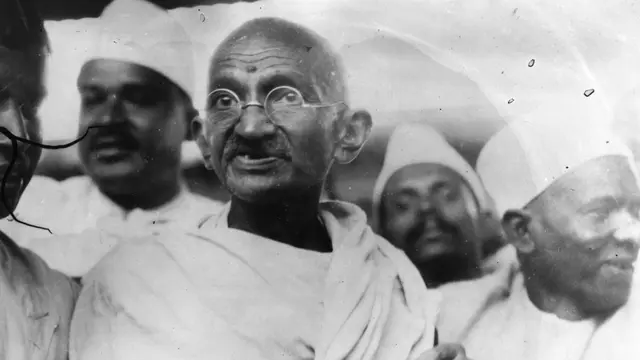
1893 – Gandhi’s first act of Civil Disobedience


https://youtube.com/shorts/rLawJkF9tH4?si=kxBa3Z9kJZBy_iIw

When Gandhi’s Salt March Rattled British Colonial Rule

In an event that would have dramatic repercussions for the people of India, Mohandas K. Gandhi, a young Indian lawyer working in South Africa, refuses to comply with racial segregation rules on a South African train and is forcibly ejected at Pietermaritzburg.

https://youtube.com/shorts/rLawJkF9tH4?si=kxBa3Z9kJZBy_iIw

Born in India and educated in England, Gandhi traveled to South Africa in early 1893 to practice law under a one-year contract. Settling in Natal, he was subjected to racism and South African laws that restricted the rights of Indian laborers. Gandhi later recalled one such incident, where he was removed from a first-class railway compartment and thrown off a train, as his moment of truth. From thereon, he decided to fight injustice and defend his rights as an Indian and a man.

Source: history.com for the complete article