
 0841 – Charles the Bald and Louis the German defeated Lothar at Fontenay.
1080 – At Brixen, a council of bishops declared Pope Gregory to be deposed and Archbishop Guibert as antipope Clement III.
1580 – The Book of Concord was first published. The book is a collection of doctrinal standards of the Lutheran Church.
1658 – Aurangzeb proclaimed himself emperor of the Moghuls in India.
1767 – Mexican Indians rioted as Jesuit priests were ordered home.
1788 – Virginia ratified the U.S. Constitution and became the 10th state of the United States.
1864 – Union troops surrounding Petersburg, VA, began building a mine tunnel underneath the Confederate lines.
1867 – Lucien B. Smith patented the first barbed wire.
1868 – Florida, Alabama, Louisiana, Georgia, North Carolina and South Carolina were readmitted to the Union.
1870 – In Spain, Queen Isabella abdicated in favor of Alfonso XII.
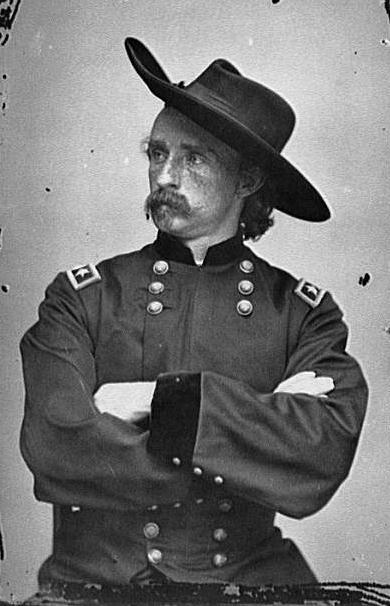
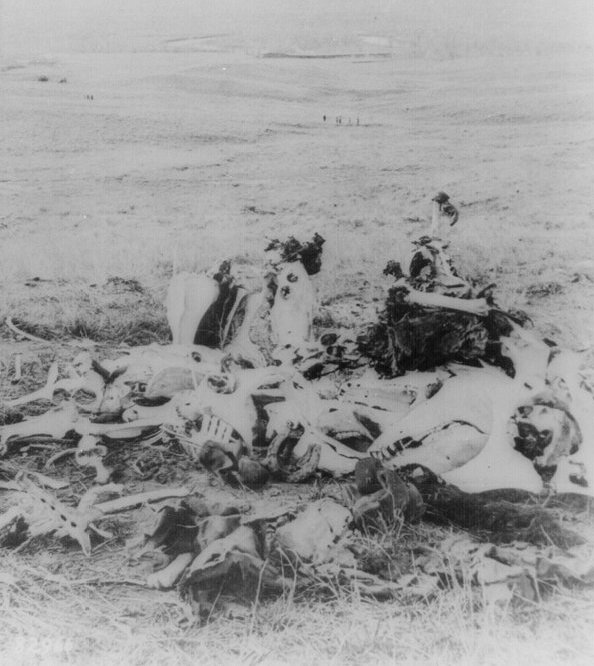
1876 – Lt. Col. Custer and the 210 men of U.S. 7th Cavalry were killed by Sioux and Cheyenne Indians at Little Big Horn in Montana. The event is known as “Custer’s Last Stand.”
1876 – In Philadelphia, PA, Alexander Graham Bell demonstrated the telephone for Sir William Thomson (Baron Kelvin) and Emperor Pedro II of Brazil at the Centennial Exhibition.
1910 – The U.S. Congress authorized the use of postal savings stamps.
1917 – The first American fighting troops landed in France.
1920 – The Greeks took 8,000 Turkish prisoners in Smyrna.
1921 – Samuel Gompers was elected head of the AFL for the 40th time.
1938 – Gaelic scholar Douglas Hyde was inaugurated as the first president of the Irish Republic.
1941 – Finland declared war on the Soviet Union.
1946 – Ho Chi Minh traveled to France for talks on Vietnamese independence.
1948 – The Soviet Union tightened its blockade of Berlin by intercepting river barges heading for the city.
1950 – North Korea invaded South Korea initiating the Korean War.
1951 – In New York, the first regular commercial color TV transmissions were presented on CBS using the FCC-approved CBS Color System. The public did not own color TV’s at the time.
1959 – The Cuban government seized 2.35 million acres under a new agrarian reform law.
1959 – Eamon De Valera became president of Ireland at the age of 76.
1962 – The U.S. Supreme Court ruled that the use of unofficial non-denominational prayer in public schools was unconstitutional.
1964 – U.S. President Lyndon Johnson ordered 200 naval personnel to Mississippi to assist in finding three missing civil rights workers.
1968 – Bobby Bonds (San Francisco Giants) hit a grand-slam home run in his first game with the Giants. He was the first player to debut with a grand-slam.
1970 – The U.S. Federal Communications Commission handed down a ruling (35 FR 7732), making it illegal for radio stations to put telephone calls on the air without the permission of the person being called.
1973 – Erskine Childers Jr. became president of Ireland after the retirement of Eamon De Valera.
1973 – White House Counsel John Dean admitted that U.S. President Nixon took part in the Watergate cover-up.
1975 – Mozambique became independent. Samora Machel was sworn in as president after 477 years of Portuguese rule.
1981 – The U.S. Supreme Court decided that male-only draft registration was constitutional.
1985 – New York Yankees officials enacted the rule that mandated that the team’s bat boys were to wear protective helmets during all games.
1986 – The U.S. Congress approved $100 million in aid to the Contras fighting in Nicaragua.
1987 – Austrian President Kurt Waldheim visited Pope John Paul II at the Vatican. The meeting was controversial due to allegations that Waldheim had hidden his Nazi past.
1990 – The U.S. Supreme Court upheld the right of an individual, whose wishes are clearly made, to refuse life-sustaining medical treatment. “The right to die” decision was made in the Curzan vs. Missouri case.
1991 – The last Soviet troops left Czechoslovakia 23 years after the Warsaw Pact invasion.
1991 – The Yugoslav republics of Slovenia and Croatia declared their independence from Yugoslavia.
1993 – Kim Campbell took office as Canada’s first woman prime minister. She assumed power upon the resignation of Brian Mulroney.
1997 – The Russian space station Mir was hit by an unmanned cargo vessel. Much of the power supply was knocked out and the station’s Spektr module was severely damaged.
1997 – U.S. air pollution standards were significantly tightened by U.S. President Clinton.
1998 – The U.S. Supreme Court rejected the line-item veto thereby striking down presidential power to cancel specific items in tax and spending legislation.
1998 – The U.S. Supreme Court ruled that those infected with HIV are protected by the Americans With Disabilities Act.
1998 – Microsoft’s “Windows 98” was released to the public.
1999 – Germany’s parliament approved a national Holocaust memorial to be built in Berlin.
2000 – U.S. and British researchers announced that they had completed a rough draft of a map of the genetic makeup of human beings. The project was 10 years old at the time of the announcement.
2000 – A Florida judge approved a class-action lawsuit to be filed against American Online (AOL) on behalf of hourly subscribers who were forced to view “pop-up” advertisements.


 1788 – Virginia ratified the U.S. Constitution and became the 10th state of the United States.
 Be a Seed for Change
You must be logged in to post a comment.