1982 – The U.S. Senate approved the renewal of the 1965 Voting Rights Act for an additional twenty-five years.

On June 16, 1858 more than 1,000 delegates met in the Springfield, Illinois, statehouse for the Republican State Convention. At 5:00 p.m. they chose Abraham Lincoln as their candidate for the U.S. Senate, running against Democrat Stephen A. Douglas. At 8:00 p.m. Lincoln delivered this address to his Republican colleagues in the Hall of Representatives. The title reflects part of the speech’s introduction, “A house divided against itself cannot stand,” a concept familiar to Lincoln’s audience as a statement by Jesus recorded in all three synoptic gospels (Matthew, Mark, Luke).
Even Lincoln’s friends regarded the speech as too radical for the occasion. His law partner, William H. Herndon, considered Lincoln as morally courageous but politically incorrect. Lincoln read the speech to him before delivering it, referring to the “house divided” language this way: “The proposition is indisputably true … and I will deliver it as written. I want to use some universally known figure, expressed in simple language as universally known, that it may strike home to the minds of men in order to rouse them to the peril of the times.”
The speech created many repercussions, giving Lincoln’s political opponent fresh ammunition. Herndon remarked, “when I saw Senator Douglas making such headway against Mr. Lincoln’s house divided speech I was nettled & irritable, and said to Mr. Lincoln one day this — ‘Mr. Lincoln — why in the world do you not say to Mr. Douglas, when he is making capitol out of your speech, — ‘Douglas why whine and complain to me because of that speech. I am not the author of it. God is. Go and whine and complain to Him for its revelation, and utterance.’ Mr. Lincoln looked at me one short quizzical moment, and replied ‘I can’t.'”
Reflecting on it several years later, Herndon said the speech did awaken the people, and despite Lincoln’s defeat, he thought the speech made him President. “Through logic inductively seen,” he said, “Lincoln as a statesman, and political philosopher, announced an eternal truth — not only as broad as America, but covers the world.”
Another colleague, Leonard Swett, said the speech defeated Lincoln in the Senate campaign. In 1866 he wrote to Herndon complaining, “Nothing could have been more unfortunate or inappropriate; it was saying first the wrong thing, yet he saw it was an abstract truth, but standing by the speech would ultimately find him in the right place.”
for the full speech and more information … click or go to : abrahamlincolnonline.org

On June 16, 1858, newly nominated senatorial candidate Abraham Lincoln addresses the Illinois Republican Convention in Springfield and warns that the nation faces a crisis that could destroy the Union. Speaking to more than 1,000 delegates in an ominous tone, Lincoln paraphrased …read more
READ MORE: Why Lincoln’s ‘House Divided’ Speech Was So Important
June 15 is Elder Abuse Awareness Day. There are many ways to get involved: visit an older neighbor who lives alone, volunteer for a program that benefits seniors, support abuse prevention efforts, and more! Get more information about elder abuse. |

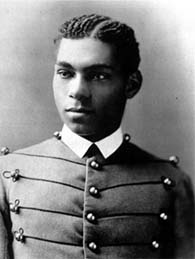
Henry Ossian Flipper was born in Thomasville, Georgia, on March 21, 1856, into slavery and spent his formative years in Georgia. Following the Civil War, he attended the American Missionary Association Schools in his home state. In 1873 Flipper was appointed to the U.S. Military Academy, and in 1877 he became the first African-American to graduate from the institution. He was commissioned a second lieutenant and assigned to the 10th Cavalry. From 1878 until 1880 Lieutenant Flipper served on frontier duty in various installations in the southwest, including Fort Sill, Oklahoma. His duties included scouting, as well as serving as post engineer surveyor and construction supervisor, post adjutant, acting assistant and post quartermaster, and commissary officer.
In 1881 Lieutenant Flipper’s commanding officer accused him of “embezzling funds and of conduct unbecoming an officer and a gentleman.” As a result of these charges, he was court-martialed.

He was acquitted of the embezzlement charge but was found guilty, by general court martial, of conduct unbecoming an officer. On June 30, 1882, he was dismissed from the Army as required by this conviction.
As a civilian, Henry Flipper went on to distinguish himself in a variety of governmental and private engineering positions. These included serving as surveyor, civil and military engineer, author, translator, special agent of the Justice Department, special assistant to the Secretary of the Interior with the Alaskan Engineering Commission, aide to the Senate Committee on Foreign Relations, as well as an authority on Mexican land and mining law.
He wrote and published several works. His first publication was an autobiography, The Colored Cadet at West Point ( New York: Lee, 1878; reprint, New York: Arno, 1898). His memoirs, Black Frontiersman: The Memoirs of Henry O. Flipper, first Black Graduate of West Point (Fort Worth, Texas: Texas Christian University Press, 1997) were compiled and edited with introduction and notes by Theodore D. Harris. His other works included Spanish and Mexican Land Laws: New Spain and Mexico for the Department of Justice in 1895.
Throughout the balance of his life, Henry Flipper maintained that he was innocent of the charges that resulted in his court-martial and dismissal from the Army and made numerous attempts to have his conviction reversed. He died in Georgia in 1940.
In 1976 descendants and supporters applied to the Army Board for the Correction of Military Records on behalf of Lieutenant Flipper. The Board, after stating that it did not have the authority to overturn his court-martial convictions, concluded the conviction and punishment were “unduly harsh and unjust” and recommended that Lieutenant Flipper’s dismissal commuted to a good conduct discharge. The Assistant Secretary of the Army (Manpower and Reserve Affairs) and The Adjutant General approved the Board’s findings, conclusions and recommendations and directed that the Department of the Army issue Lieutenant Flipper a Certificate of Honorable Discharge, dated 30 June 1882, in lieu of his dismissal on the same date.
On October 21, 1997, a private law firm filed an application of pardon with the Secretary of the Army on Lieutenant Flipper’s behalf. Seven months later, the application was forwarded by the Acting Assistant Secretary of the Army (Manpower and Reserve Affairs) to the Office of the Pardon Attorney, Department of Justice, with a recommendation that the pardon be approved. President William Jefferson Clinton pardoned Lieutenant Henry O. Flipper on February 19, 1999. In pardoning this officer, the President recognized an error and acknowledged the lifetime accomplishments of this American soldier.
Remarks by President Clinton at the Ceremony Honoring LT Henry O. Flipper
history.army
This website is provided as a service by the U.S. ARMY CENTER OF MILITARY HISTORY
You must be logged in to post a comment.