1947 – U.S. Secretary of State George C. Marshall gave a speech at Harvard University in which he outlined the Marshall Plan.


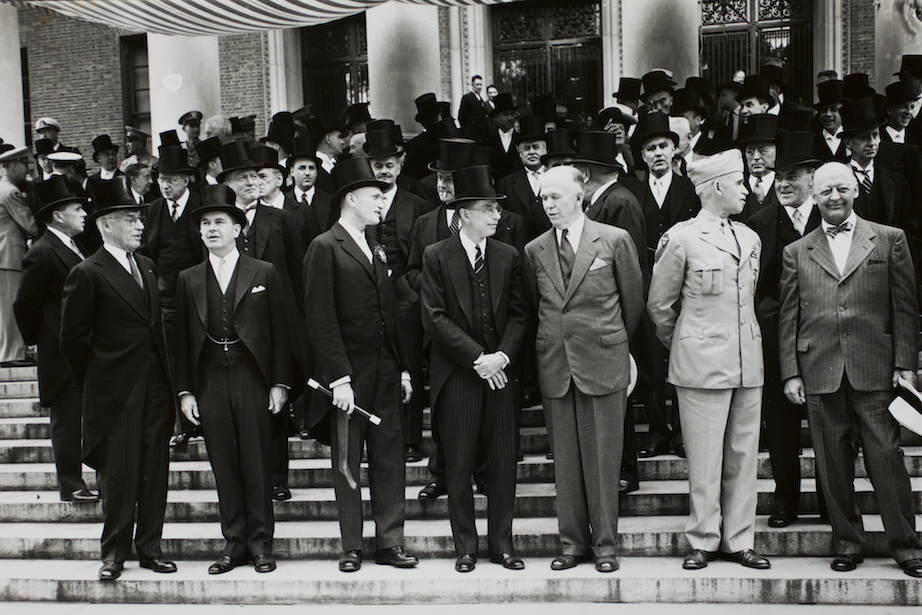
Marshall Plan 1947 Widener Library stepsOn the steps of Widener Library in 1947, front row, from left: Laird Bell, Class of 1904; Massachusetts Gov. Robert F. Bradford ’23; R. Keith Kane ’22; Harvard President James B. Conant; and honorary degree recipients George C. Marshall, Gen. Omar N. Bradley, and Sen. James W. Wadsworth.


When Secretary of State Marshall accepted an invitation from Harvard University to receive an honorary degree during the first week in June 1947, the State Department informed the president of the Alumni Association that Marshall would make a speech for the afternoon meeting of the Harvard Alumni Association but that Marshall did not want it to be a major speech of the occasion. There were no discussions with representatives of other governments; there were no notifications of the American press that an important speech was to be delivered, and even Harvard President James B. Conant did not expect a major address from General Marshall.

The speech was drafted by Chip Bohlen, a Russia specialist and interpreter who used memoranda from the Director of the Policy Planning Staff George F. Kennan and from Under Secretary of State for Economic Affairs William Clayton. Bohlen especially benefited from Clayton’s graphic oral descriptions of Europe’s situation. In the memorandum he wrote, “Millions of people in the cities are slowly starving,” if the standard of living continued to deteriorate, “there will be revolution.”

On the day of the speech the capacity crowd of 15,000 in Harvard Yard did not expect to see history made but simply to see one of the most admired public servants in America. However when Secretary Marshall began to read his speech there was a recognition that the carefully worded remarks on the political and economic crisis in Europe marked an important event. In that speech, Marshall outlined the need for an economic aid plan to help the devastated nations of Europe and their citizens to recover from the ravages of World War II. When Marshall said, “It is logical that the United States should do whatever it is able to do to assist in the return of normal economic health in the world, without which there can be no political stability and no assured peace,” the Secretary of State committed the United States to consider a European recovery plan that would be developed by the Europeans and presented to the United States. Thus was launched The Marshall Plan for which George C. Marshall would be awarded the Nobel Peace Prize

on this day 6/5


1595 – Henry IV’s army defeated the Spanish at the Battle of Fontaine-Francaise.
1752 – Benjamin Franklin flew a kite for the first time to demonstrate that lightning was a form of electricity.

1794 – The U.S. Congress prohibited citizens from serving in any foreign armed forces.

1827 – Athens fell to the Ottomans.

1851 – Harriet Beecher Stow published the first installment of “Uncle Tom’s Cabin” in “The National Era.”

1865 – The first safe deposit vault was opened in New York. The charge was $1.50 a year for every $1,000 that was stored.

1884 – U.S. Civil War General William T. Sherman refused the Republican presidential nomination, saying, “I will not accept if nominated and will not serve if elected.”

1917 – American men began registering for the World War I draft.

1924 – Ernst F. W. Alexanderson transmitted the first facsimile message across the Atlantic Ocean.

1927 – Johnny Weissmuller set two world records in swimming events. Weissmuller set marks in the 100-yard, and 200-yard, free-style swimming competition.

1933 – President Roosevelt signed the bill that took the U.S. off of the gold standard.

1940 – During World War II, the Battle of France began when Germany began an offensive in Southern France.

1942 – In France, Pierre Laval congratulated French volunteers that were fighting in the U.S.S.R. with Germans.

1944 – The first B-29 bombing raid hit the Japanese rail line in Bangkok, Thailand.

1946 – The first medical sponges were first offered for sale in Detroit, MI.

1947 – U.S. Secretary of State George C. Marshall gave a speech at Harvard University in which he outlined the Marshall Plan.

1956 – Premier Nikita Khrushchev denounced Josef Stalin to the Soviet Communist Party Congress.

1967 – The National Hockey League (NHL) awarded three new franchises. The Minnesota North Stars (later the Dallas Stars), the California Golden Seals (no longer in existence) and the Los Angeles Kings.

1967 – The Six Day War between Israel and Egypt, Syria and Jordan began.

1973 – The first hole-in-one in the British Amateur golf championship was made by Jim Crowford.

1975 – Egypt reopened the Suez Canal to international shipping, eight years after it was closed because of the 1967 war with Israel.

1981 – In the U.S., the Center for Disease Control and Prevention reported that five men in Los Angeles were suffering from a rare pneumonia found in patients with weakened immune systems. They were the first recognized cases of what later became known as AIDS.

1986 – A federal jury in Baltimore convicted Ronald W. Pelton of selling secrets to the Soviet Union. Pelton was sentenced to three life prison terms plus 10 years.

1987 – Ted Koppel and guests discussed the topic of AIDS for four hours on ABC-TV’s “Nightline”.

1998 – A strike began at a General Motors Corp. parts factory near Detroit, MI, that closed five assembly plants and idled workers across the U.S. for seven weeks.

1998 – Volkswagen AG won approval to buy Rolls-Royce Motor Cars for $700 million, outbidding BMW’s $554 million offer.

1998 – A strike at a General Motors parts factory began. It lasted for seven weeks.

2001 – Amazon.com announced that it would begin selling personal computers later in the year.

2004 – The U.S.S. Jimmy Carter was christened in the U.S. Navy in Groton, CT.

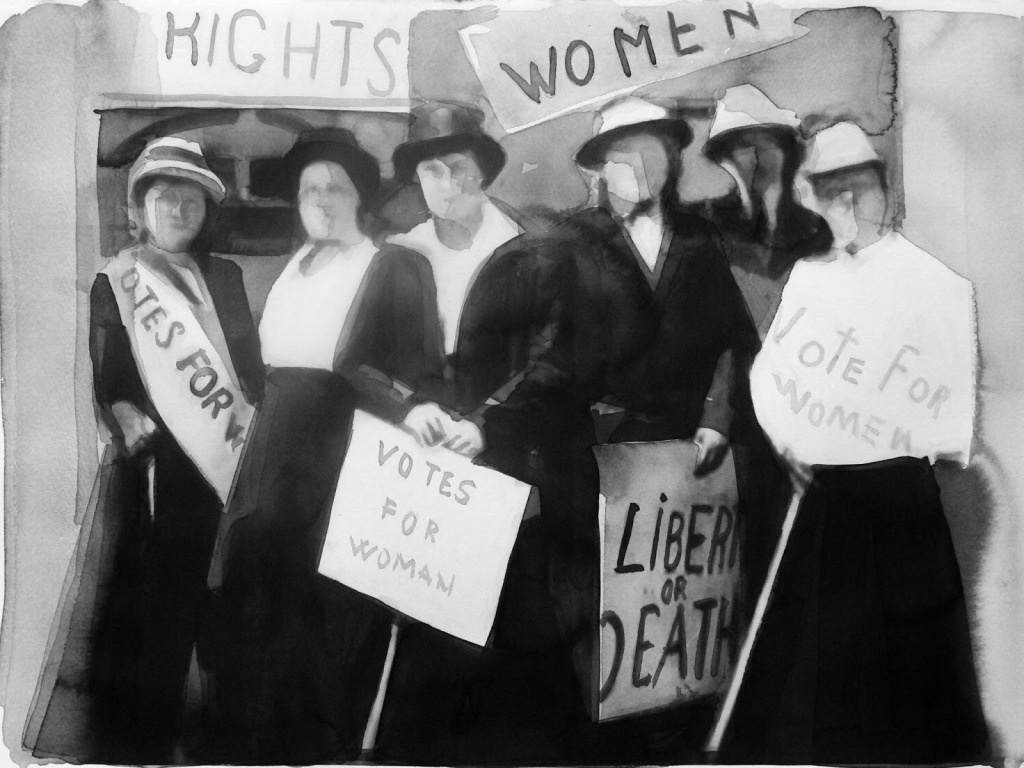
1919 – Congress passes the 19th Amendment, giving Women the right to vote


On May 21, 1919, the House again passes what would become the 19th Amendment, popularly known as the Susan B. Anthony Amendment.

The Senate follows suit on June 4 by a narrow margin (just over the two-thirds requirement), and it goes to the states to be ratified. Ratification requires 36 states, or three-quarters of those in the Union at the time.

The 19th Amendment to the U.S. Constitution, granting women the right to vote, was passed by Congress and sent to the states for ratification.

The women’s suffrage movement was founded in the mid-19th century by women who had become politically active through their work in the abolitionist and temperance movements.

In July 1848, 240 woman suffragists, including Elizabeth Cady Stanton and Lucretia Mott, met in Seneca Falls, New York, to assert the right of women to vote. Female enfranchisement was still largely opposed by most Americans, and the distraction of the North-South conflict and subsequent Civil War precluded further discussion. During the Reconstruction Era, the 15th Amendment was adopted, granting African American men the right to vote, but the Republican-dominated Congress failed to expand its progressive radicalism into the sphere of gender.

Source: history.com

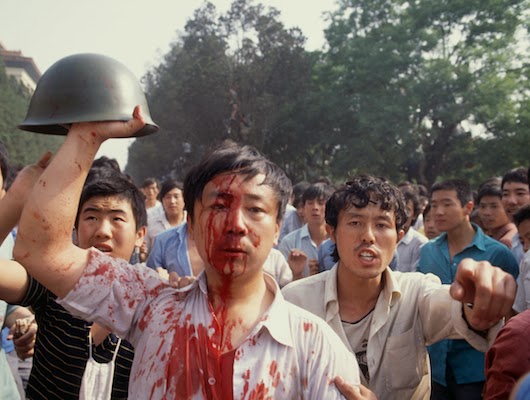
1989 – In memory … Student protestors took over Tiananmen Square in Beijing ~( April – June 4)


See the source image

Six days after the death of Hu Yaobang, the deposed reform-minded leader of the Chinese Communist Party, some 100,000 students gather at Beijing’s Tiananmen Square to commemorate Hu and voice their discontent with China’s authoritative communist government. The next day, an official memorial service for Hu Yaobang was held in Tiananmen’s Great Hall of the People, and student representatives carried a petition to the steps of the Great Hall, demanding to meet with Premier Li Peng. The Chinese government refused such a meeting, leading to a general boycott of Chinese universities across the country and widespread calls for democratic reforms.

Ignoring government warnings of violent suppression of any mass demonstration, students from more than 40 universities began a march to Tiananmen on April 27. The students were joined by workers, intellectuals, and civil servants, and by mid-May more than a million people filled the square, the site of communist leader’s Mao Zedong’s proclamation of the People’s Republic of China in 1949. On May 20, the government formally declared martial law in Beijing, and troops and tanks were called in to disperse the dissidents. However, large numbers of students and citizens blocked the army’s advance, and by May 23 government forces had pulled back to the outskirts of Beijing.

On June 3, with negotiations to end the protests stalled and calls for democratic reforms escalating, the troops received orders from the Chinese government to reclaim Tiananmen at all costs. By the end of the next day, Chinese troops had forcibly cleared Tiananmen Square and Beijing’s streets, killing hundreds of demonstrators and arresting thousands of protesters and other suspected dissidents. In the weeks after the government crackdown, an unknown number of dissidents were executed, and communist hard-liners took firm control of the country.

The international community was outraged at the incident, and economic sanctions imposed by the United States and other countries sent China’s economy into decline. However, by late 1990, international trade had resumed, thanks in part to China’s release of several hundred imprisoned dissidents.

Citation Information
Article Title
Chinese students begin protests at Tiananmen Square
Author
History.com Editors
Website Name
HISTORY

On June 4, 1989, however, Chinese troops and security police stormed through Tiananmen Square, firing indiscriminately into the crowds of protesters. Turmoil ensued, as tens of thousands of the young students tried to escape the rampaging Chinese forces. Other protesters fought back, stoning the attacking troops and overturning and setting fire to military vehicles. Reporters and Western diplomats on the scene estimated that at least 300, and perhaps thousands, of the protesters had been killed and as many as 10,000 were arrested.

The savagery of the Chinese government’s attack shocked both its allies and Cold War enemies. Soviet leader Mikhail Gorbachev declared that he was saddened by the events in China. He said he hoped that the government would adopt his own domestic reform program and begin to democratize the Chinese political system.

history.com