on this day … 6/28


1635 – The French colony of Guadeloupe was established in the Caribbean.

1675 – Frederick William of Brandenburg crushed the Swedes.

1709 – The Russians defeated the Swedes and Cossacks at the Battle of Poltava.

1776 – American Colonists repulsed a British sea attack on Charleston, SC.

1778 – Mary “Molly Pitcher” Hays McCauley, wife of an American artilleryman, carried water to the soldiers during the Battle of Monmouth and, supposedly, took her husband’s place at his gun after he was overcome with heat.

1869 – R. W. Wood was appointed as the first Surgeon General of the U.S. Navy.

1894 – The U.S. Congress made Labor Day a U.S. national holiday.

1902 – The U.S. Congress passed the Spooner bill, it authorized a canal to be built across the isthmus of Panama.

1911 – Samuel J. Battle became the first African-American policeman in New York City.

1914 – Archduke Franz Ferdinand of Austria, the heir to the Austro-Hungarian throne, was assassinated in Sarajevo along with his wife, Duchess Sophie.

1919 – The Treaty of Versailles was signed ending World War I exactly five years after it began. The treaty also established the League of Nations.

1921 – A coal strike in Great Britain was settled after three months.

1930 – More than 1,000 communists were routed during an assault on the British consulate in London.

1939 – Pan American Airways began the first transatlantic passenger service.

1938 – The U.S. Congress created the Federal Housing Administration (FHA) to insure construction loans.

1940 – The “Quiz Kids” was heard on NBC radio for the first time.

1942 – German troops launched an offensive to seize Soviet oil fields in the Caucasus and the city of Stalingrad.

1945 – U.S. General Douglas MacArthur announced the end of Japanese resistance in the Philippines.

1949 – The last U.S. combat troops were called home from Korea, leaving only 500 advisers.

1950 – North Korean forces captured Seoul, South Korea.

1954 – French troops began to pull out of Vietnam’s Tonkin Province.

1960 – In Cuba, Fidel Castro confiscated American-owned oil refineries without compensation.

1964 – Malcolm X founded the Organization for Afro American Unity to seek independence for blacks in the Western Hemisphere.

1965 – The first commercial satellite began communications service. It was Early Bird (Intelsat I).

1967 – Israel formally declared Jerusalem reunified under its sovereignty following its capture of the Arab sector in the June 1967 war.

1971 – The U.S. Supreme Court overturned the draft evasion conviction of Muhammad Ali.

1972 – U.S. President Nixon announced that no new draftees would be sent to Vietnam.

1976 – The first women entered the U.S. Air Force Academy.

1978 – The U.S. Supreme Court ordered the medical school at the University of California at Davis to admit Allan Bakke. Bakke, a white man, argued he had been a victim of reverse racial discrimination.

1996 – The Citadel voted to admit women, ending a 153-year-old men-only policy at the South Carolina military school.

1996 – Charles M. Schulz got a star on the Hollywood Walk of Fame.

1998 – Poland, due to shortage of funds, is allowed to lease, U.S. aircraft to bring military force up to NATO standards.

1998 – The Cincinnati Enquirer apologized to Chiquita banana company and retracted their stories that questioned company’s business practices. They also agreed to pay more than $10 million to settle legal claims.

2000 – The U.S. Supreme Court declared that a Nebraska law that outlawed “partial birth abortions” was unconstitutional. About 30 U.S. states had similar laws at the time of the ruling.

2000 – The European Commission announced that they had blocked the planned merger between the U.S. companies WorldCom Inc. and Sprint due to competition concerns.

2000 – Six-year-old Elián González returned to Cuba from the U.S. with his father. The child had been the center of an international custody dispute.

2001 – Slobodan Milosevic was taken into custody and was handed over to the U.N. war crimes tribunal in The Hague, Netherlands. The indictment charged Milosevic and four other senior officials, with crimes against humanity and violations of the laws and customs of war in Kosovo.

2001 – The U.S. Court of Appeals for the District of Columbia Circuit set aside an order that would break up Microsoft for antitrust violations. However, the judges did agree that the company was in violation of antitrust laws.

2004 – The U.S. turned over official sovereignty to Iraq’s interim leadership. The event took place two days earlier than previously announced to thwart insurgents’ attempts at undermining the transfer.

2004 – The U.S. resumed diplomatic ties with Libya after a 24-year break.

2004 – The U.S. Supreme Court ruled that enemy combatants could challenge their detention in U.S. Courts.

2005 – The final design for the “Freedom Tower” (One World Trade Center) was formally unveiled.

2007 – The American bald eagle was removed from the endangered species list.

2010 – The U.S. Supreme Court ruled 5-4 that Americans have the right to own a gun for self-defense anywhere they live.

1967: Buffalo Uprising – Official Documentary Film (2019)


1967 – Two hundred people were arrested during a race riot in Buffalo, NY.

67: Buffalo Uprising – Official Documentary Film (2019)

********************************

It’s 2025. I don’t know if this documentary is even available. It is or was a little over an hour and should be given some time to watch a time in our History that must never ever happen again, no matter how hard they try to take us back… Stay calm, cool, and woke.

-Nativegrl77

on this day 6/25 1998 – The U.S. Supreme Court rejected the line-item veto thereby striking down presidential power to cancel specific items in tax and spending legislation.


0841 – Charles the Bald and Louis the German defeated Lothar at Fontenay.

1080 – At Brixen, a council of bishops declared Pope Gregory to be deposed and Archbishop Guibert as antipope Clement III.

1580 – The Book of Concord was first published. The book is a collection of doctrinal standards of the Lutheran Church.

1658 – Aurangzeb proclaimed himself emperor of the Moghuls in India.

1767 – Mexican Indians rioted as Jesuit priests were ordered home.

1788 – Virginia ratified the U.S. Constitution and became the 10th state of the United States.

1864 – Union troops surrounding Petersburg, VA, began building a mine tunnel underneath the Confederate lines.

1867 – Lucien B. Smith patented the first barbed wire.


1868 – Florida, Alabama, Louisiana, Georgia, North Carolina and South Carolina were readmitted to the Union.

1870 – In Spain, Queen Isabella abdicated in favor of Alfonso XII.

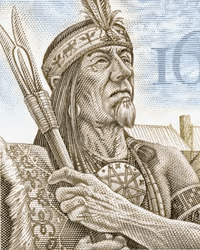
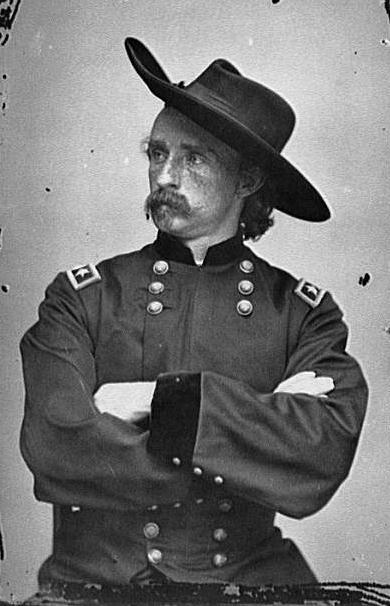
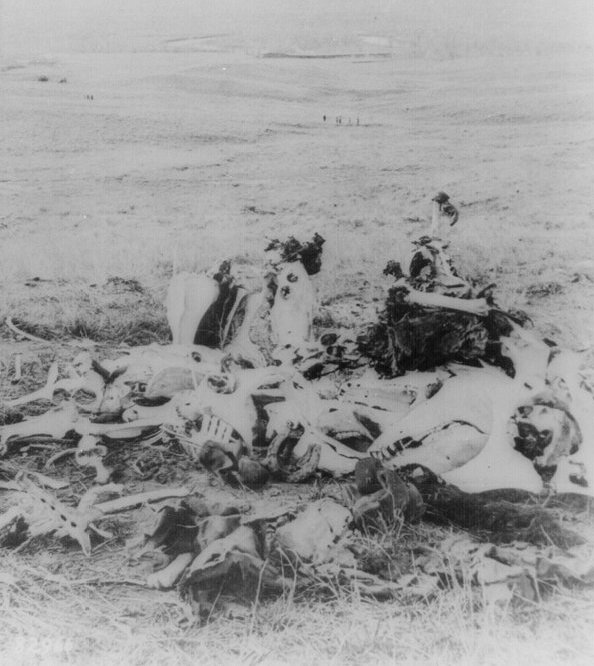
1876 – Lt. Col. Custer and the 210 men of U.S. 7th Cavalry were killed by Sioux and Cheyenne Indians at Little Big Horn in Montana. The event is known as “Custer’s Last Stand.”

1876 – In Philadelphia, PA, Alexander Graham Bell demonstrated the telephone for Sir William Thomson (Baron Kelvin) and Emperor Pedro II of Brazil at the Centennial Exhibition.

1910 – The U.S. Congress authorized the use of postal savings stamps.

1917 – The first American fighting troops landed in France.

1920 – The Greeks took 8,000 Turkish prisoners in Smyrna.

1921 – Samuel Gompers was elected head of the AFL for the 40th time.

1938 – Gaelic scholar Douglas Hyde was inaugurated as the first president of the Irish Republic.

1941 – Finland declared war on the Soviet Union.

1946 – Ho Chi Minh traveled to France for talks on Vietnamese independence.

1948 – The Soviet Union tightened its blockade of Berlin by intercepting river barges heading for the city.

1950 – North Korea invaded South Korea initiating the Korean War.

1951 – In New York, the first regular commercial color TV transmissions were presented on CBS using the FCC-approved CBS Color System. The public did not own color TV’s at the time.

1959 – The Cuban government seized 2.35 million acres under a new agrarian reform law.

1959 – Eamon De Valera became president of Ireland at the age of 76.

1962 – The U.S. Supreme Court ruled that the use of unofficial non-denominational prayer in public schools was unconstitutional.

1964 – U.S. President Lyndon Johnson ordered 200 naval personnel to Mississippi to assist in finding three missing civil rights workers.

1968 – Bobby Bonds (San Francisco Giants) hit a grand-slam home run in his first game with the Giants. He was the first player to debut with a grand-slam.

1970 – The U.S. Federal Communications Commission handed down a ruling (35 FR 7732), making it illegal for radio stations to put telephone calls on the air without the permission of the person being called.

1973 – Erskine Childers Jr. became president of Ireland after the retirement of Eamon De Valera.

1973 – White House Counsel John Dean admitted that U.S. President Nixon took part in the Watergate cover-up.

1975 – Mozambique became independent. Samora Machel was sworn in as president after 477 years of Portuguese rule.

1981 – The U.S. Supreme Court decided that male-only draft registration was constitutional.

1985 – New York Yankees officials enacted the rule that mandated that the team’s bat boys were to wear protective helmets during all games.

1986 – The U.S. Congress approved $100 million in aid to the Contras fighting in Nicaragua.

1987 – Austrian President Kurt Waldheim visited Pope John Paul II at the Vatican. The meeting was controversial due to allegations that Waldheim had hidden his Nazi past.

1990 – The U.S. Supreme Court upheld the right of an individual, whose wishes are clearly made, to refuse life-sustaining medical treatment. “The right to die” decision was made in the Curzan vs. Missouri case.

1991 – The last Soviet troops left Czechoslovakia 23 years after the Warsaw Pact invasion.

1991 – The Yugoslav republics of Slovenia and Croatia declared their independence from Yugoslavia.

1993 – Kim Campbell took office as Canada’s first woman prime minister. She assumed power upon the resignation of Brian Mulroney.

1997 – The Russian space station Mir was hit by an unmanned cargo vessel. Much of the power supply was knocked out and the station’s Spektr module was severely damaged.

1997 – U.S. air pollution standards were significantly tightened by U.S. President Clinton.

1998 – The U.S. Supreme Court rejected the line-item veto thereby striking down presidential power to cancel specific items in tax and spending legislation.

1998 – The U.S. Supreme Court ruled that those infected with HIV are protected by the Americans With Disabilities Act.

1998 – Microsoft’s “Windows 98” was released to the public.

1999 – Germany’s parliament approved a national Holocaust memorial to be built in Berlin.

2000 – U.S. and British researchers announced that they had completed a rough draft of a map of the genetic makeup of human beings. The project was 10 years old at the time of the announcement.

2000 – A Florida judge approved a class-action lawsuit to be filed against American Online (AOL) on behalf of hourly subscribers who were forced to view “pop-up” advertisements.

June 25, 1876 – after fighting to keep their Nation


Battle of the Little Bighorn

June 25, 1876 – General George A. Custer, leading 250 men, attacked an encampment of Sioux Indians near Little Bighorn River in Montana.

Custer and his men were then attacked by 2000-4000 Indian braves. Only one scout and a single horse survived ‘Custer’s Last Stand’ on the Little Bighorn Battlefield.

News of the humiliating defeat infuriated Americans and led to all-out war. Within a year, the Sioux Indians were a broken and defeated nation.

Citation Information

Article Title Battle of the Little Bighorn

Author History.com Editors

Website Name HISTORY

URL https://www.history.com/this-day-in-history/battle-of-little-bighorn

Date Accessed June 24, 2023

Publisher A&E Television Networks

Last Updated July 1, 2022 Original Published Date November 24, 2009

Citation Information

Article Title What Really Happened at the Battle of the Little Bighorn?

Background to the Battle of the Little Bighorn 

The U.S. Army dispatched three columns of soldiers, including Custer and his 7th Cavalry, to round up Indigenous people and return them to their reservations.

The plan was for Custer’s cavalry and Brigadier General Alfred Terry’s infantry to rendezvous with troops under the command of Colonel John Gibbon and Brigadier General George Crook. They’d then find the Native Americans, surround them and force their surrender.

Crook was delayed but Terry, Custer and Gibbon met-up in mid-June and after a scouting party found a trail headed toward Little Big Horn Valley, they decided Custer should move in, surround the tribes and await reinforcements.

Custer forged ahead but things didn’t go as planned. Around midday on June 25, his scouts located Sitting Bull’s camp. Instead of waiting for reinforcements, however, Custer planned a surprise attack for the next day. He moved it up when he thought the Native American forces had discovered his position.

Author Annette McDermottWebsite Name HISTORY

URL https://www.history.com/news/little-bighorn-battle-facts-causes

Date Accessed June 24, 2023

Publisher A&E Television Networks

Last updated June 20, 2023

Original Published Date February 27, 2018