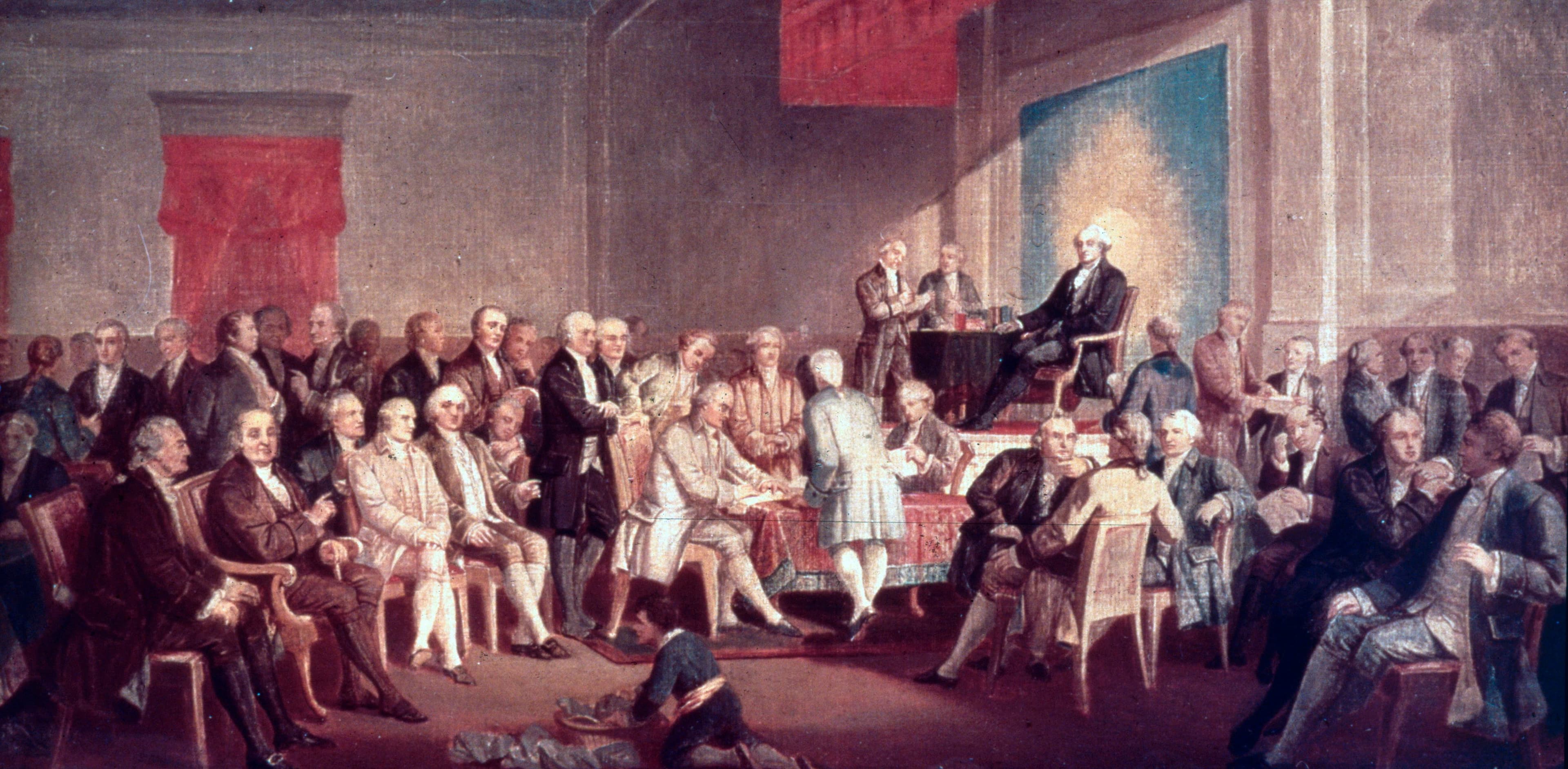
on this day 6/21 1958 – In Arkansas, a federal judge let Little Rock delay school integration.


1404 – Owain Glyndwr established a Welsh Parliament at Machynlleth and was crowned Prince of Wales.

1788 – The U.S. Constitution went into effect when New Hampshire became the ninth state to ratify it.

1834 – Cyrus McCormick patented the first practical mechanical reaper for farming. His invention allowed farmers to more than double their crop size.

1859 – Andrew Lanergan received the first rocket patent.

1893 – The Ferris Wheel was introduced at the World’s Columbian Exposition in Chicago, IL.

1913 – Georgia Broadwick became the first woman to jump from an airplane.

1937 – In Paris, Leon Blum’s Popular Front Cabinet resigned.

1938 – In Washington, U.S. President Roosevelt signed the $3.75 billion Emergency Relief Appropriation Act.

1939 – Lou Gehrig quit baseball due to illness.

1941 – German troops entered Russia on a front from the Arctic to Black Sea.

1942 – Ben Hogan recorded the lowest score (to that time) in a major golf tournament. Hogan shot a 271 for 72 holes in Chicago, IL.

1945 – Pan Am announced an 88-hour round-the-world flight at a cost of $700.

1954 – The American Cancer Society reported significantly higher death rates among cigarette smokers than among non-smokers.

1954 – NBC radio presented the final broadcast of “The Railroad Hour.”

1954 – Australian John Landy ran the mile in 3:58. He was the second person to achieve the feat.

1958 – In Arkansas, a federal judge let Little Rock delay school integration.

1958 – Linus Pauling and Detlev Bronke, both Americans, were elected to the Soviet Academy of Science.

1960 – In Zurich, German, Armin Hary ran 100-meters in a record 10.0 seconds.

1963 – In St. Louis, Bob Hayes set a record when he ran the 100-yard dash in 0:09.1.

1963 – France announced that they were withdrawing from the North Atlantic NATO fleet.  

1964 3 Civil rights workers disappear

1964 The KKK kills three civil rights activists

1973 – The U.S. Supreme Court ruled that states may ban materials found to be obscene according to local standards.

1974 – The U.S. Supreme Court decided that pregnant teachers could no longer be forced to take long leaves of absence.

1985 – Scientists announced that skeletal remains exhumed in Brazil were those of Nazi war criminal Josef Mengele.

1989 – The U.S. Supreme Court ruled that burning the American flag as a form of political protest was protected by the First Amendment.

2001 – Former Haitian Army colonel Carl Dorelien taken into custody in Port St. Lucie. Dorelien had been in exile since 1994 when he was sentenced to life in prison for his role in a 1994 massacre.

2003 – The fifth Harry Potter book, “Harry Potter and the Order of the Phoenix,” was published by J.K. Rowling.Amazon.com shipped out more than one million copies on this day making the day the largest distribution day of a single item in e-commerce history. The book set sales records around the world with an estimated 5 million copies were sold on the first day.

2004 – SpaceShipOne, designed by Burt Rutan and piloted by Mike Melvill, reached 328,491 feet above Earth in a 90 minute flight. The height is about 400 feet above the distance scientists consider to be the boundary of space.

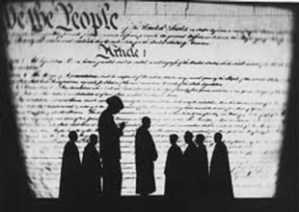
1788 – The U.S. Constitution went into effect when New Hampshire became the ninth state to ratify it.


On June 21, 1788, the Constitution became the official framework of the government of the United States of America when New Hampshire became the ninth of 13 states to ratify it. The journey to ratification, however, was a long and arduous process.

Until the new Constitution was ratified, the country was governed by the Articles of Confederation. That document was tailored to a newly formed nation made of states acting more like independent, sovereign countries, and it quickly became clear to America’s leaders that future stability required a stronger, more centralized government. New York’s Alexander Hamilton thus led the call for a constitutional convention to reevaluate the nation’s governing document. The Confederation Congress endorsed his initiative, and representatives from all 13 states were subsequently invited to convene in Philadelphia on May 25, 1787, to participate in the Convention.

The initial purpose of the Convention was for the delegates to amend the Articles of Confederation; however, the ultimate outcome was the proposal and creation of a completely new form of government. Three months later, on September 17, 1787, the Convention concluded with the signing (by 38 out of 41 delegates present) of the new U.S. Constitution. Under Article VII, it was agreed that the document would not be binding until its ratification by nine of the 13 existing states.

Hamilton and James Madison led the lobbying efforts for votes in favor of ratifying the Constitution. With assistance from John Jay, they produced the 85 essays known as “The Federalist Papers” that explained and defended how the proposed new government would function. The essays were published in newspapers nationwide and were pivotal to securing ratification.

The first state to ratify the Constitution was Delaware on December 7, 1787, followed by Pennsylvania, New Jersey, Georgia, and Connecticut. Some states voiced opposition to the Constitution on the grounds that it did not provide protection for rights such as freedom of speech, religion, and press. However, the terms of the Massachusetts Compromise reached in February 1788 stipulated that amendments to that effect—what became the Bill of Rights—would be immediately proposed. The constitution was subsequently ratified by Massachusetts, Maryland, South Carolina, and, finally, New Hampshire.

After ratification, Congress set dates for the first federal elections and the official implementation of the Constitution. Elections were set to take place from Monday, December 15, 1788, to Saturday, January 10, 1789, and the new government was set to begin on March 4, 1789.

In the nation’s first presidential election, George Washington was elected President and John Adams was elected Vice President. Congress was also restructured to reflect the system of representation created by the Connecticut Compromise at the Constitutional Convention.

The Constitution, however, was still evolving. Madison introduced 19 amendments to the Constitution born from the Massachusetts Compromise, of which Congress adopted twelve on September 25, 1789, to send forth to the states for ratification. Ten of those amendments, known as the Bill of Rights, were ratified on December 15, 1791.

Even after the Constitution’s ratification, the U.S. did not begin to look and function remotely like it does today until several years later. The Constitution was not ratified by all states until May 29, 1790, when Rhode Island finally approved the document, and the Bill of Rights was not ratified to become part of the Constitution until the end of the following year. Moreover, the capital was not set until July 16, 1790, almost a year and half after the general elections took place.

The location of the capital was born, like most decisions in the formation of the budding nation, out of negotiation. Hamilton, now Secretary of the Treasury, sought passage of the Funding Act so that the federal government could assume state Revolutionary War debts and thus endow the government with more economic power. Meanwhile, Secretary of State Thomas Jefferson wanted to pass the Residence Act, which would set the location of the nation’s capital along the Potomac River and give the South increased political power to check the North’s growing economic power by placing the capital in a location friendly to Southern economic interests.

The two men struck a deal: Jefferson would persuade Madison, a man with significant influence in the House, to back Hamilton’s Funding Act, thereby garnering him the votes it would need to pass. In return, Hamilton would help Jefferson and Madison secure the votes needed to pass the Residence Act. The capital’s precise geographic location was left to President Washington, and on January 24, 1791—almost three years after the Constitution was first ratified—land was designated for construction.

Resource: constitutioncenter.org

7 Facts About the June Solstice ~


What You Need to Know About the Longest Day of the Year

By The Editors 2019

This year, the June solstice falls on Sunday, June 20.

Enjoy seven cool (or, is it “hot”?) solstice facts—and see how many you know!

If you ask friends what happens on the summer solstice, they’re likely to get it right. It’s the longest day of the year, meaning this day has the most minutes of sunshine. And the midday Sun is highest up in the sky, or lowest if you live in the Southern Hemisphere.

Let’s learn something new about the longest day of the year.
June Solstice Facts!

Let’s get on with some fun facts about the June solstice:

  • On the solstice, the Sun moves through the sky along its most-curved path. It rises and keeps veering to the right as it passes high overhead—quite different from the laser-straight path the Sun moves along in late March and late September.
  • The solstice Sun stands directly over the Tropic of Cancer. In fact, that’s how the Tropic of Cancer got its name. It’s the northernmost line connecting all places on Earth where the Sun is ever straight up. That’s because a few thousand years ago, the solstice happened when the Sun was in the constellation of Cancer the Crab.
  • The June solstice is when folks in the Northern Hemisphere see the highest Sun of the year. But did you know that the Sun’s highest point is getting lower and lower over time? That’s because Earth’s tilt is slowly decreasing.
  • For those at the equator, the solstice is when the Sun is lowest in the sky.
  • The word “solstice” comes from the Latin words sol “Sun” and stitium “standing.” On the summer solstice, the Sun’s path stops advancing northward each day and “stands” still.
  • In India, the summer solstice ends the six-month period when spiritual growth is supposedly easiest. Better hurry, you only have a few days left!
  • On this day, the Sun rises farthest left on the horizon, and sets at its rightmost possible spot. Sunlight strikes places in your home that get illuminated at no other time.

almanac.com

on this day 6/20


0451 – Roman and Barbarian warriors brought Attila’s army to a halt at the Catalaunian Plains in eastern France.

1397 – The Union of Kalmar united Denmark, Sweden, and Norway under one monarch.

1756 – In India, 150 British soldiers were imprisoned in a cell that became known as the “Black Hole of Calcutta.”

1782 – The U.S. Congress approved the Great Seal of the United States.

1791 – King Louis XVI of France was captured while attempting to flee the country in the so-called Flight to Varennes.

1793 – Eli Whitney applied for a cotton gin patent. He received the patent on March 14. The cotton gin initiated the American mass-production concept.

1837 – Queen Victoria ascended the British throne following the death of her uncle, King William IV.

1863 – West Virginia became the 35th state to join the U.S.

1863 – The National Bank of Philadelphia in Philadelphia, PA, became the first bank to receive a charter from the U.S.Congress.

1898 – The U.S. Navy seized the island of Guam enroute to the Phillipines to fight the Spanish.

1910 – Mexican President Porfirio Diaz proclaimed martial law and arrested hundreds.

1910 – Fanny Brice debuted in the New York production of the “Ziegfeld Follies”.

1923 – France announced it would seize the Rhineland to assist Germany in paying its war debts.

1941 – The U.S. Army Air Forces was established, replacing the Army Air Corps. The Army Air Forces were abolished with the creation of the United States Air Force in 1947.

1943 – Race-related rioting erupted in Detroit. Federal troops were sent in two days later to end the violence that left more than 30 dead.

1947 – Benjamin “Bugsy” Siegel was murdered in Beverly Hills, CA, at the order of mob associates angered over the soaring costs of his project, the Flamingo resort in Las Vegas, NV.

1950 – Willie Mays graduated from high school and immediately signed with the New York Giants.

1955 – The AFL and CIO agreed to combine names and a merge into a single group.

1963 – The United States and Soviet Union signed an agreement to set up a hot line communication link between the two countries.

1966 – The U.S. Open golf tournament was broadcast in color for the first time.

1967 – Muhammad Ali was convicted in Houston of violating Selective Service laws by refusing to be drafted. The U.S.Supreme Court later overturned the conviction.

1977 – The Trans-Alaska Pipeline began operation.

1979 – ABC News correspondent Bill Stewart was shot to death in Managua, Nicaragua, by a member of President Anastasio Somoza’s national guard.

1983 – The U.S. Supreme Court ruled that employers must treat male and female workers equally in providing health benefits for their spouses.

1997 – The tobacco industry agreed to a massive settlement in exchange for major relief from mounting lawsuits and legal bills.

2001 – Barry Bonds (San Francisco Giants) hit his 38th home run of the season. The home run broke the major league baseball record for homers before the midseason All-Star break.

2002 – The U.S. Supreme Court ruled that the execution of mentally retarded murderers was unconstitutionally cruel. The vote was 6 in favor and 3 against.

June 20, 1967: When Muhammad Ali Took the Weight


FILED UNDER: DRAFT RESISTANCEFEATUREDFROM

This article originally appeared at The Rag Blog.

Dave Zirin : When Muhammad Ali Took the Weight

Muhammad Ali, the former Cassius Clay, was convicted by a U.S. federal court in Houston on June 20, 1967. Above, he is shown when refusing induction at the Houston draft board, April 28, 1967. At his right is the Rev. Martin Luther King, Jr.In an era defined by endless war, we should recognize a day in history that won’t be celebrated on Capitol Hill or in the White House. On June 20, 1967, the great Muhammad Ali was convicted in Houston for refusing induction in the U.S. armed forces.

Ali saw the war in Vietnam as an exercise in genocide. He also used his platform as boxing champion to connect the war abroad with the war at home, saying, “Why should they ask me to put on a uniform and go 10,000 miles from home and drop bombs and bullets on Brown people in Vietnam while so-called Negro people in Louisville are treated like dogs?”

For these statements, as much as the act itself, Judge Joe Ingraham handed down the maximum sentence to Cassius Clay” (as they insisted upon calling him in court): five-years in a federal penitentary and a $10,000 fine. The next day, this was the top-flap story for The New York Times with the headline, “Clay Guilty in Draft Case; Gets Five Years in Prison.”

The sentence was unusually harsh and deeply tied to a Beltway, bipartisan consensus to crush Ali and ensure that he not develop into a symbol of anti-war resistance. The day of Ali’s conviction the U.S. Congress voted 337-29 to extend the draft four more years. They also voted 385-19 to make it a federal crime to desecrate the flag. Their fears of a rising movement against the war were well-founded.The summer of 1967 marked a tipping point for public support of the Vietnam “police action.” While the Tet Offensive, which exposed the lie that the United States was winning the war, was still six months away, the news out of Southeast Asia was increasingly grim. At the time of Ali’s conviction, 1,000 Vietnamese noncombatants were being killed each week by U.S. forces. One hundred U.S. soldiers were dying every day, and the war was costing $2 billion a month.Anti-war sentiment was growing and it was thought that a stern rebuke of Ali would help put out the fire. In fact, the opposite took place. Ali’s brave stance fanned the flames.

As Julian Bond said,

[It] reverberated through the whole society… [Y]ou could hear people talking about it on street corners. It was on everyone’s lips. People who had never thought about the war before began to think it through because of Ali. The ripples were enormous.

Ali himself vowed to appeal the conviction, saying,

I strongly object to the fact that so many newspapers have given the American public and the world the impression that I have only two alternatives in this stand — either I go to jail or go to the Army. There is another alternative, and that alternative is justice. If justice prevails, if my constitutional rights are upheld, I will be forced to go neither to the Army nor jail. In the end, I am confident that justice will come my way, for the truth must eventually prevail.

Already, by this point, Ali’s heavyweight title had been stripped, beginning a three-and-a-half-year exile. Already Elijah Muhammad and the Nation of Islam had begun to distance themselves from their most famous member. Already, Ali had become a punching bag for almost every reporter with a working pen.

But with his conviction came a new global constituency. In Guyana, protests against his sentence took place in front of the U.S. embassy. In Karachi, Pakistan, a hunger strike began in front of the U.S. consulate. In Cairo, demonstrators took to the streets. In Ghana, editorials decried his conviction. In London, an Irish boxing fan named Paddy Monaghan began a long and lonely picket of the U.S. Embassy.Over the next three years, he would collect more than 20,000 signatures on a petition calling for the restoration of Muhammad Ali’s heavyweight title.Ali at this point was beginning to see himself as someone who had a greater responsibility to an international groundswell that saw him as more than an athlete.

Boxing is nothing, just satisfying to some bloodthirsty people. I’m no longer a Cassius Clay, a Negro from Kentucky. I belong to the world, the black world. I’ll always have a home in Pakistan, in Algeria, in Ethiopia. This is more than money.

Eventually justice did prevail and the Supreme Court overturned Ali’s conviction in 1971. They did so only after the consensus on the war had changed profoundly. Ali had been proven right by history, although a generation of people in [Southeast] Asia and the United States paid a terrible price along the way.

Years later, upon reflection, Ali said he had no regrets.

Some people thought I was a hero. Some people said that what I did was wrong. But everything I did was according to my conscience. I wasn’t trying to be a leader. I just wanted to be free. And I made a stand all people, not just black people, should have thought about making, because it wasn’t just black people being drafted. The government had a system where the rich man’s son went to college, and the poor man’s son went to war. Then, after the rich man’s son got out of college, he did other things to keep him out of the Army until he was too old to be drafted.

As we remain mired in a period of permanent war, take a moment and consider the risk, sacrifice, and principle necessary to dismantle the war machine. We all can’t be boxing champions, but moving forward, all who oppose war can rightfully claim Ali’s brave history as our own.

[Dave Zirin is the author of Bad Sports: How Owners are Ruining the Games we Love (Scribner) and just made the new documentary Not Just a Game. Receive his column every week by emailingdave@edgeofsports.com. Contact him at edgeofsports@gmail.com. This article was also posted at The Nation blogs. Read more articles by Dave Zirin on