2020 – McGirt V Oklahoma


In a major decision on July 9, 2020, the U.S. Supreme Court rules that an 1833 treaty still applies to the Muscogee Nation, also known as the Creek. In McGirt v. Oklahoma, the court holds 5-4 that, while still falling under federal jurisdiction, nearly half of Oklahoma remains Indian land and is not subject to state jurisdiction in cases involving major crimes

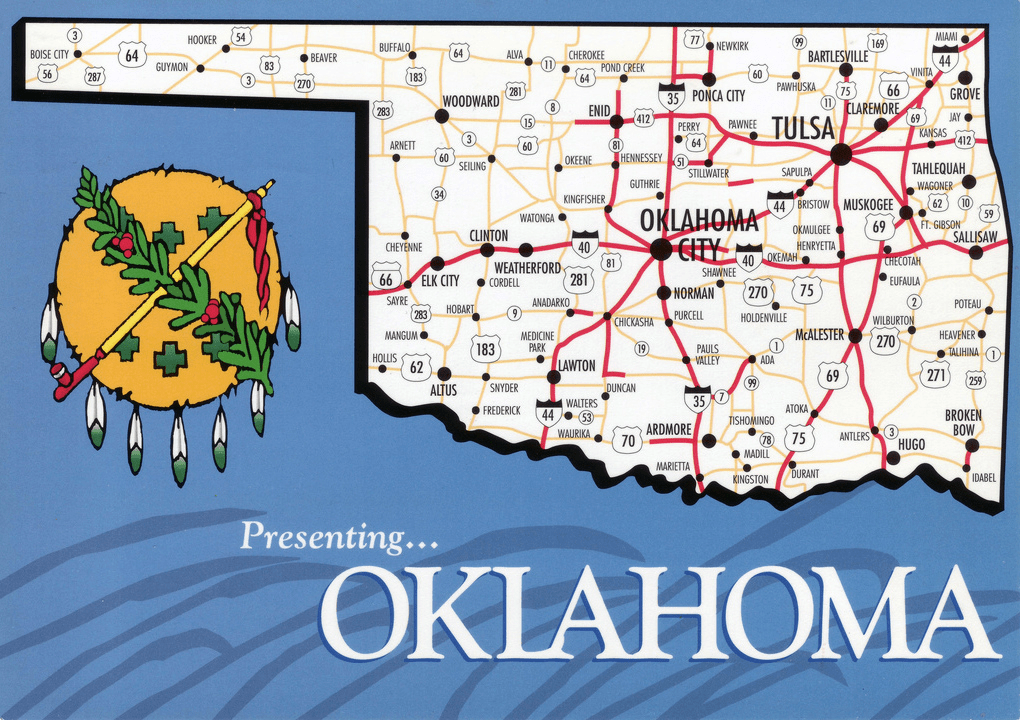
The land in question had been designated “a permanent home to the whole Creek Nation of Indians” by a treaty in 1833. This was not an act of generosity or tolerance on behalf of the United States, but rather a facet of the forced relocation known as the Trail of Tears. Pushed out of their southeastern homes, the Muscogee and other tribes were made to settle in the officially designated Indian Territory. After the former Indian Territory became the state of Oklahoma in 1907, the state commonly dealt with major crimes committed in the nearly 50 percent of its land occupied by various tribes.

In 1997, a Muscogee man named Jimcy McGirt was convicted of sexually abusing a child. After his conviction, McGirt’s attorneys argued that, since his crimes had been committed on tribal lands, Oklahoma did not have jurisdiction over them. In 2020, after hearing oral arguments remotely due to the COVID-19 pandemic, the Supreme Court sided with McGirt, as Justice Neil Gorsuch joined Justices Ruth Bader Ginsburg, Sonia Sotomayor, Elena Kagan and Stephen Breyer.

Rejecting the state’s argument that the 1833 treaty was no longer valid due to having been ignored for over a century, the majority found that the State of Oklahoma did not have jurisdiction over major crimes committed on tribal lands.

Source: history.com

The HEARTH Act: 1955 – 2012 – July30 – 31


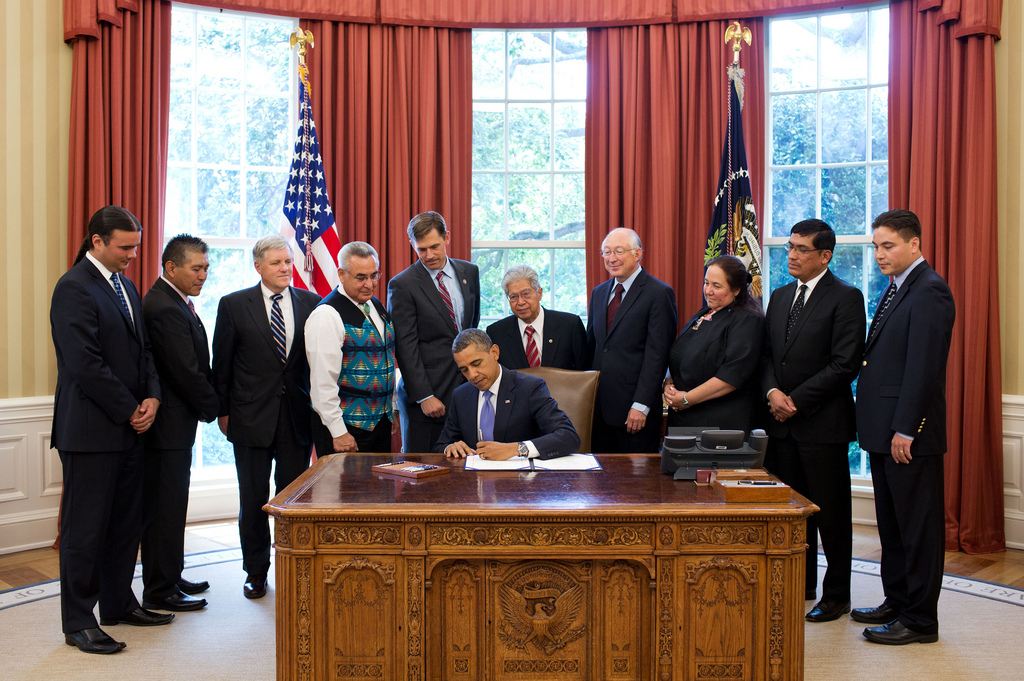
President Barack Obama signs H.R. 205, the HEARTH Act of 2012, in the Oval Office, July 30, 2012. Standing behind the President, from left, are: Bryan Newland, Senior Policy Advisor at the Department of the Interior; Governor Randall Vicente, Pueblo of Acoma in New Mexico; David Hayes, Deputy Secretary of the Department of the Interior; Jefferson Keel, President of the National Congress of American Indians; Rep. Martin Heinrich, D-N.M.; Sen. Daniel Akaka, D-Hawaii; interior Secretary Ken Salazar; Cheryl Causley, Chairperson of the National American Indian Housing Council; Governor Gregory Mendoza, Gila River Indian Community of Arizona; and Del Laverdure, Acting Assistant Secretary of the Department of the Interior. (Official White House Photo by Pete Souza)

The HEARTH Act is a law that allows federally recognized Tribes to opt out of the secretarial approval requirement when leasing their own lands for various purposes. The Act was passed in 2012 and amended the Indian Long-Term Leasing Act of 1955. To take advantage of the HEARTH Act, Tribes must submit and obtain approval for their own leasing regulations that are consistent with the Department of the Interior’s leasing regulations and provide for an environmental review process.

The HEARTH Act gives Tribes more flexibility and self-determination in managing their trust lands. The Act only applies to surface leases, not mineral leases, and only to Tribal lands, not individually owned Indian lands1.

The HEARTH Act promotes greater tribal self-determination and will help create jobs in Indian Country. Under the Act, federally recognized tribes can develop and implement their own regulations governing certain leasing on Indian lands. Upon Secretarial approval of these tribal regulations, tribes will have the authority to process land leases without Bureau of Indian Affairs approval. This new authority has the potential to significantly reduce the time it takes to approve leases for homes and small businesses in Indian Country.

In Memory of the obamawhitehouse

Medicare is STILL here … 7/30 – 31


Happy Birthday, Medicare!

Centers_for_Medicare_and_Medicaid_Services_logo

The anniversary of what became Title XVIII of the Social Security Act: the Medicare program.

(Today is also the 56th anniversary of Title XIV of the Social Security Act: Medicaid).

Medicare has been expanded, cut, reformed, and changed numerous times since President Johnson signed it into law in 1965. The most recent reforms came under Obamacare, which strengthened the Medicare Trust Fund, reformed payments to providers, cut hundreds of billions of dollars in wasteful subsidies to private insurance companies, and provided seniors with an array of new or improved benefits.

In particular, Obamacare is closing the notorious prescription drug donut hole and in the meantime has saved 6.6 MILLION seniors more than $7 BILLION on their prescriptions. In addition, during just the first six months of this year, more than 16.5 MILLION seniors have taken advantage of preventive care services that are now free thanks to Obamacare.

Unfortunately, Republicans opposed the creation of Medicare 48 years ago, and they are doing their best to force Draconian cuts to the program today and for decades to come. Just this week, Senate Minority Leader Mitch McConnell (R-KY) proposed shifting billions in costs to seniors and businesses by raising the Medicare eligibility age and House Republicans are planning their 40th dead-end vote to repeal Obamacare.

BOTTOM LINE: Thanks in part to Obamacare, Medicare is still going strong 48 years later. And that’s definitely something worth celebrating.

Whitney young- civil rights activist


Whitney Moore Young Jr. (July 31, 1921 – March 11, 1971) was an American civil rights leader. Trained as a social worker, he spent most of his career working to end employment discrimination in the United States and turning the National Urban League from a relatively passive civil rights organization into one that aggressively worked for equitable access to socioeconomic opportunity for the historically disenfranchised.


He was responsible for greatly expanding the size of the organization while overseeing the racial integration of corporate workplaces.

Whitney Young Jr. was an American civil rights activist who as the head of the National Urban League helped secure the socio-economic freedom for many blacks in the US.

Young was a social worker who strove during his lifetime to end discrimination in the workplace and provide equal access to economic opportunity for those deprived and socially marginalized.

Sources:

blackthen.org

wiki

1969 – Ranger 7 photographs moon


Ranger 7, an unmanned U.S. lunar probe, takes the first close-up images of the moon—4,308 in total—before it impacts with the lunar surface northwest of the Sea of Clouds. The images were 1,000 times as clear as anything ever seen through earth-bound telescopes.

The National Aeronautics and Space Administration (NASA) had attempted a similar mission earlier in the year—Ranger 6—but the probe’s cameras had failed as it descended to the lunar surface. Ranger 7, launched from Earth on July 28, successfully activated its cameras 17 minutes, or 1,300 miles, before impact and began beaming the images back to NASA’s receiving station in California. The pictures showed that the lunar surface was not excessively dusty or otherwise treacherous to a potential spacecraft landing, thus lending encouragement to the NASA plan to send astronauts to the moon

For the complete article: history.com