Seattle Heat Advisory in Effect as NWS Warns of Potential Heat-Related Illness Amid Soaring Temperatures

Source: NWS and hoodline.com

Seattle Heat Advisory in Effect as NWS Warns of Potential Heat-Related Illness Amid Soaring Temperatures
Source: NWS and hoodline.com
Things that Congress can do but has yet to do while Republicans are in Control
Passed by Congress June 13, 1866, and ratified July 9, 1868, the 14th amendment extended liberties and rights granted by the Bill of Rights to former slaves.
Following the Civil War, Congress submitted to the states three amendments as part of its Reconstruction program to guarantee equal civil and legal rights to black citizens. The major provision of the 14th amendment was to grant citizenship to “All persons born or naturalized in the United States,” thereby granting citizenship to former slaves. Another equally important provision was the statement that “nor shall any state deprive any person of life, liberty, or property, without due process of law; nor deny to any person within its jurisdiction the equal protection of the laws.” The right to due process of law and equal protection of the law now applied to both the Federal and state governments.
On June 16, 1866, the House Joint Resolution proposing the 14th amendment to the Constitution was submitted to the states.
On July 28, 1868, the 14th amendment was declared, in a certificate of the Secretary of State, ratified by the necessary 28 of the 37 States, and became part of the supreme law of the land.
Congressman John A. Bingham of Ohio, the primary author of the first section of the 14th amendment, intended that the amendment also nationalize the Federal Bill of Rights by making it binding upon the states. Senator Jacob Howard of Michigan, introducing the amendment, specifically stated that the privileges and immunities clause would extend to the states “the personal rights guaranteed and secured by the first eight amendments.” Historians disagree on how widely Bingham’s and Howard’s views were shared at the time in the Congress, or across the country in general. No one in Congress explicitly contradicted their view of the Amendment, but only a few members said anything at all about its meaning on this issue. For many years, the Supreme Court ruled that the Amendment did not extend the Bill of Rights to the states.
Not only did the 14th amendment fail to extend the Bill of Rights to the states; it also failed to protect the rights of black citizens. One legacy of Reconstruction was the determined struggle of black and white citizens to make the promise of the 14th amendment a reality. Citizens petitioned and initiated court cases, Congress enacted legislation, and the executive branch attempted to enforce measures that would guard all citizens’ rights. While these citizens did not succeed in empowering the 14th amendment during the Reconstruction, they effectively articulated arguments and offered dissenting opinions that would be the basis for change in the 20th century.
(Information excerpted from Teaching With Documents [Washington, DC: The National Archives and Records Administration and the National Council for the Social Studies, 1998] p. 40.)
resource:
ourdocuments.gov
the journey the 14th A took, the hurdles and struggles continues
~ Nativegrl77
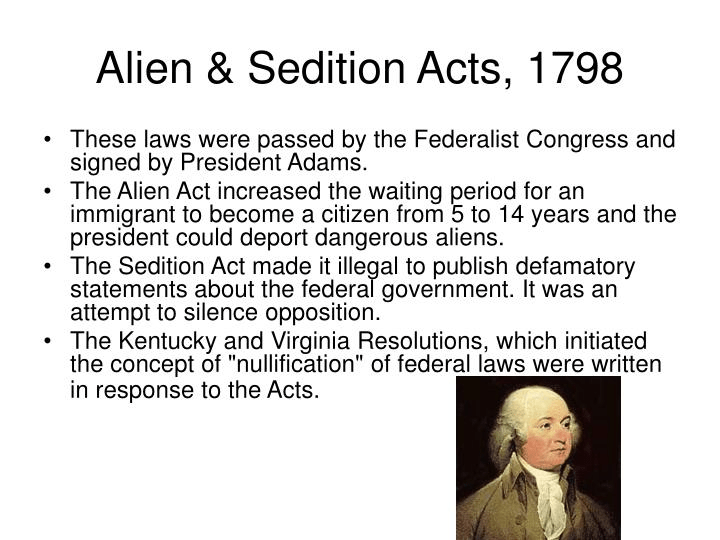
On July 14, 1798, one of the most egregious breaches of the U.S. Constitution in history becomes federal law when Congress passes the Sedition Act, endangering liberty in the fragile new nation. While the United States engaged in naval hostilities with Revolutionary France, known …read more

Baton Rouge African American Museum
“Culture is the glue that holds a people together. Take a step back in time and leap into your future.” 

The official name of the museum is the Odell S. Williams Now & Then Museum of African-American History. Odell S. Williams taught African-American History to elementary school children in Baton Rouge. She passed away in 2009.
Sadie Roberts-Joseph, Louisiana Juneteenth Director

The draft riots enter their fourth day in New York City in response to the Enrollment Act, which was enacted on March 3, 1863. Although avoiding military service became much more difficult, wealthier citizens could still pay a commutation fee of $300 to stay at home. Irritation with the draft dovetailed with opposition to the Emancipation Proclamation of September 1862, which made abolition of slavery the central goal of the war for the Union. Particularly vocal in their opposition were the Democratic Irish, who felt the war was being forced upon them by Protestant Republicans and feared that emancipation of formerly enslaved people would jeopardize their jobs.
Discontent simmered until the draft began among the Irish New Yorkers on July 11. Two days later, a mob burned the draft office, triggering nearly five days of violence. At first, the targets included local newspapers, wealthy homes, well-dressed men, and police officers, but the crowd’s attention soon turned to African Americans. Several Black people were lynched, and businesses employing Black people were burned. A Black orphanage was also burned, but the children escaped.
Not until July 17 was the violence contained by the arrival of Union troops, some fresh from the battlefield at Gettysburg, Pennsylvania. More than 1,000 people died and property damage topped $2 million. The draft was temporarily suspended, and a revised conscription began in August. As a result of the riots and the delicate political balance in the city, relatively few New Yorkers were forced to serve in the Union army.
Draft riots continue to rock New York City
HISTORY
https://www.history.com/this-day-in-history/draft-riots-continue-to-rock-new-york-city
July 15, 2022
A&E Television Networks
July 13, 2020


 Be a Seed for Change
You must be logged in to post a comment.