
Monthly Archives: July 2025

1967 – Detroit Riots of 1967 begin
AFP VIA GETTY IMAGES
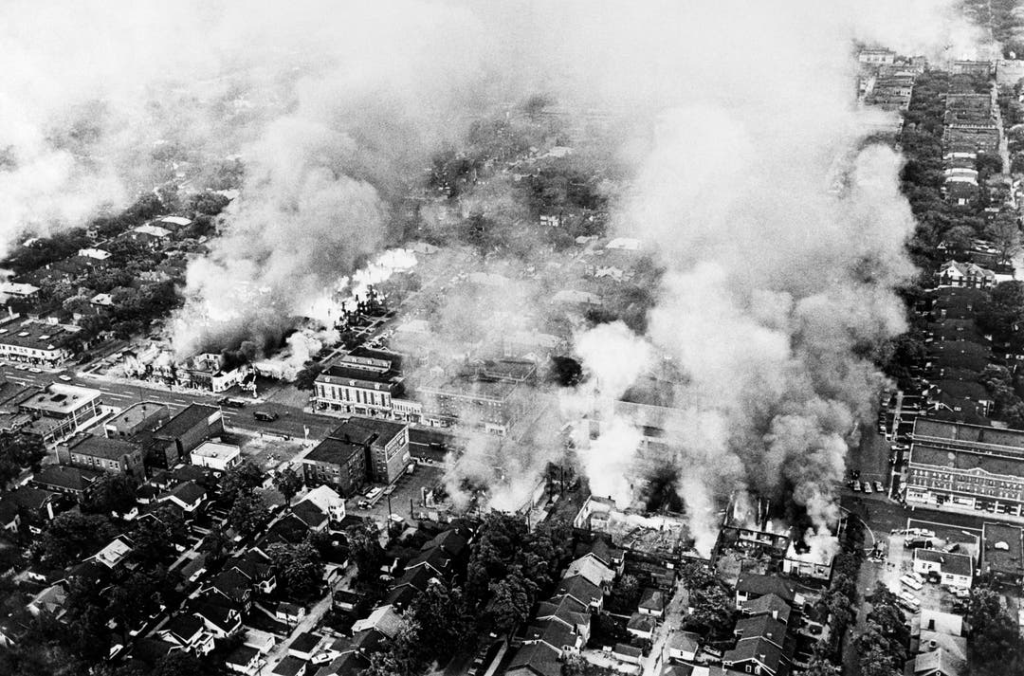
AERIAL VIEW OF BURNING BUILDINGS IN DETROIT ON JULY 25, 1967 DURING RIOTS THAT ERUPTED FOLLOWING A POLICE OPERATION
The 1967 Detroit Riots were among the bloodiest in American history. The strife occurred during a period of Detroit’s history when the once-affluent city was struggling economically, and race relations nationwide were at an all-time low.
The Detroit Police Department’s vice squad often raided illegal drinking establishments in the city’s poorer neighborhoods and at 3:35 a.m.
Sunday morning, July 23, they moved against a club that was hosting a party for returning Vietnam War veterans. The early-morning police activity drew a crowd of onlookers, and the situation rapidly deteriorated.
Soon thousands of people had spilled out onto the street from nearby buildings, throwing rocks and bottles at the police, who quickly fled the scene. Looting began on 12th Street, where the club was located, and shops and businesses were ransacked.
By dawn, the first fire broke out, and soon much of the street was ablaze. By midmorning, every policeman and fireman in Detroit was called to duty. Back on 12th Street, officers struggled to control the crowd.
The rioting continued all week, and the U.S. Army and the National Guard were called in to quell the worst of the violence. By the time the bloodshed, burning and looting ended after five days, some 43 people were dead, many more seriously injured and nearly 1,400 buildings had been burned or ransacked.
READ MORE: The 1967 Riots: When Outrage Over Racial Injustice Boiled Over
Share this:

1967 TUCSON RACE RIOT – a repost
July 23rd to 25th
BY CONTRIBUTED BY: MARITZA FERNANDEZ
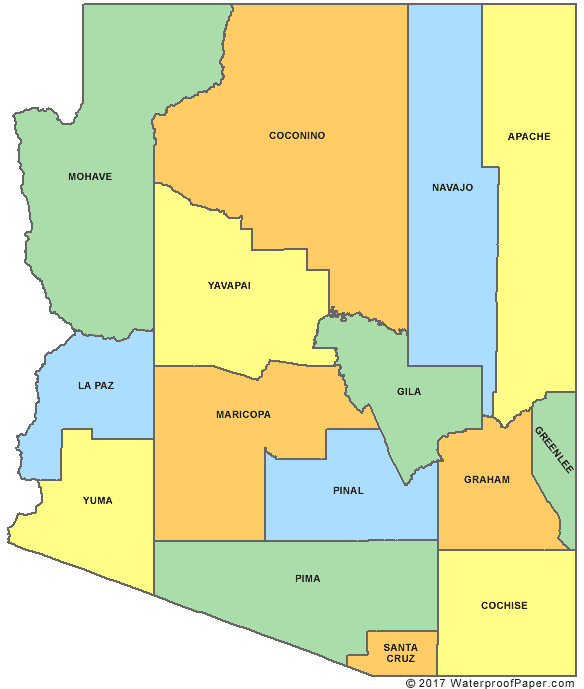
Arizona’s counties Image courtesy WaterproofPaper.com
Few people are aware of the race riot that occurred in Tucson, Arizona in 1967. The riot was caused by the arrest of an unidentified black 14-year-old a few days before.
On July 23rd to 25th in the North side of the city within a four-mile area between 4th Avenue and Seneca Street, 200 young black people gathered to protest against the Tucson police force.
Rocks were thrown at police cars and buildings with the worst damage to a Crown Liquors store by approximately 60 rioters. Nothing was stolen, but 25 Tucson patrol officers, members of the Arizona National Guard, and firefighters were called to the scene. There was, according to the Los Angeles Times, “minor violence” on the 25th of July and at least one fire bomb was thrown at a paint store, but no other major violence or injuries were reported.
Two injured people were reported injured on July 24: Kurt Jackson, a white man who had driven through the area, and an unidentified woman were both struck by unidentified objects, likely rocks, and suffered minor injuries. Two arrests were made: James Brooks and Eugene Jones, two 19-year-old black men were charged with malicious mischief and unlawful assembly. Brooks pled guilty and was sentenced to 150 days in jail. Eugene Jones pled innocent, and was tried and acquitted in September, 1967. Two other juveniles, 13 and 16, were detained by police for throwing rocks at police cars and storefronts.
For the complete article: blackpast.org
Share this:

Conclusion ~ Grok
Is the Republican Party the most fiscally sound

Based on available evidence, the Republican Party cannot be considered the most fiscally sound. While it advocates for lower taxes and reduced government size, its policies—particularly tax cuts like the 2017 TCJA and the 2025 “megabill”—have significantly increased the national debt and deficits, often more than Democratic policies. Democratic administrations have historically reduced deficits relative to GDP and achieved surpluses in some cases, though they also contribute to debt through spending. External factors like wars and recessions complicate the picture, but the Republican Party’s recent track record, especially under Trump, shows a departure from fiscal conservatism, prioritizing tax cuts and selective spending over balanced budgets. Factions within the GOP push for fiscal discipline, but they have struggled to shape party policy.
Thus, the claim of Republican fiscal soundness is not supported by recent
Source: Grok X


 Be a Seed for Change
You must be logged in to post a comment.