On this day …


August 28

1609 – Delaware Bay was discovered by Henry Hudson.
1619 – Ferdinand II was elected Holy Roman Emperor. His policy of “One church, one king” was his way of trying to outlaw Protestantism.

1774 – The first American-born saint was born in New York City. Mother Elizabeth Ann Seton was canonized in 1975.

1811 – Percy Bysshe Shelley and Harriet Westbrook eloped.

1830 – “The Tom Thumb” was demonstrated in Baltimore, MD. It was the first passenger-carrying train of its kind to be built in America.

1833 – Slavery was banned by the British Parliament throughout the British Empire.

1907 – “American Messenger Company” was started by two teenagers, Jim Casey and Claude Ryan. The company’s name was later changedto “United Parcel Service.”

1916 – Italy’s declaration of war against Germany took effect duringWorld War I.

1917 – Ten suffragists were arrested as they picketed the White House.

1922 – The first radio commercial aired on WEAF in New York City. The Queensboro Realty Company bought 10 minutes of time for$100.

1922 – The Walker Cup was held for the first time at Southampton, NY. It is the oldest international team golf match in America.

1939 – The first successful flight of a jet-propelled airplane took place. The plane was a German Heinkel He 178.

1941 – The Football Writers Association of America was organized.


1955 The death of Emmett Till


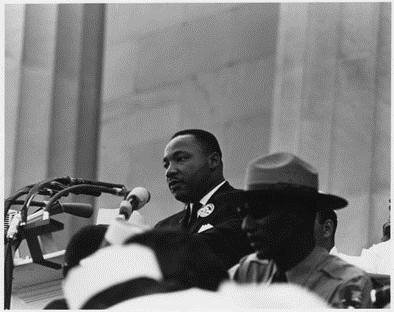
1963 – Dr. Martin Luther King, Jr., gave his “I Have a Dream” speech at a civil rights rally in Washington, DC. More than 200,000 people attended.

1972 – Mark Spitz captured the first of his seven gold medals at the Summer Olympics in Munich, Germany. He set a world record when he completed the 200-meter butterfly in 2 minutes and 7/10ths of a second.

1981 – “The New York Daily News” published its final afternoon edition.

1990 – Iraq declared Kuwait to be its 19th province and renamed Kuwait City al-Kadhima.

1995 – The biggest bank in the U.S. was created when Chase Manhattan and Chemical Bank announced their $10 billion deal.

1996 – A divorce decree was issued for Britain’s Charles and Princess Diana. This was the official end to the 15-year marriage.

1998 – The Pakistani prime minister created new Islamic order and legal system based on the Koran.

2004 – George Brunstad, at age 70, became the oldest person to swim the English Channel. The swim from Dover, England, to Sangatte, France, took 15 hours and 59 minutes.

2008 – In China, the Shanghai World Financial Center officially opened. The observation decks opened on August 30.

2014 – Google announced its Project Wing. The project was aimed at delivering products across a city using unmanned flying vehicles.

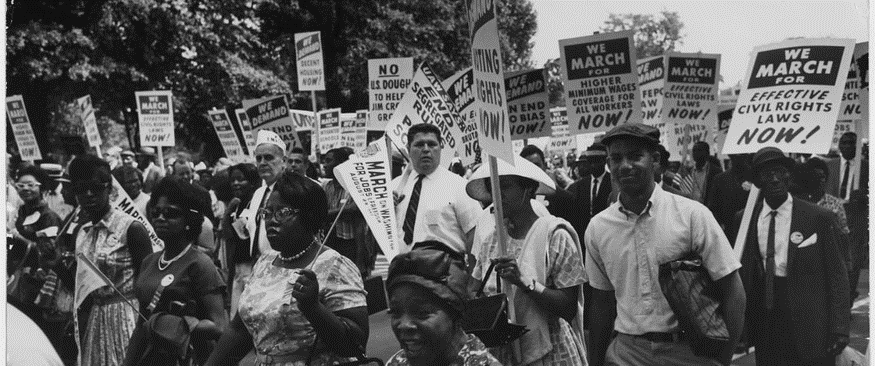
Remembering the March on Washington


Photograph of the Civil Rights March on Washington, [cropped], August 28, 1963, National Archives Identifier 542044

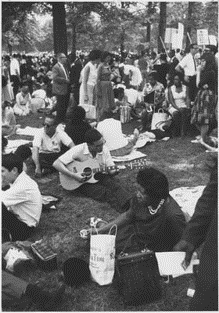
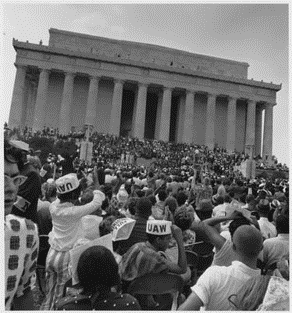
Sixty-two years ago on August 28, 1963, Rev. Dr. Martin Luther King Jr. delivered his speech that is popularly known as the “I Have a Dream” speech to civil rights marchers gathered at the Lincoln Memorial in Washington, DC. The March on Washington for Jobs and Freedom featured civil rights leaders, along with tens of thousands of marchers from around the country who gathered to press the United States government for equality. 

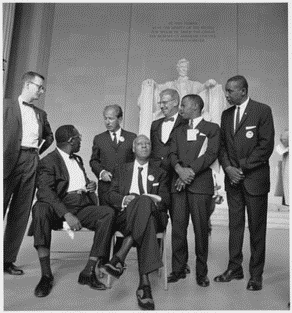
Clockwise from top left: Civil Rights March on Washington, D.C. [Leaders of the march], August 28, 1963, National Archives Identifier 542056Civil Rights March on Washington, D.C. [Dr. Martin Luther King, Jr. speaking.],  August 28, 1963, National Archives Identifier 542068; Civil Rights March on Washington, D.C. [Marchers at the Lincoln Memorial.], August 28, 1963, National Archives Identifier 542054; Civil Rights March on Washington, D.C. [Marchers relaxing.], August 28, 1963, National Archives Identifier 542044

One of the marchers was 12 year old  Edith Lee-Payne who came to Washington, DC with her mother. Photographer Rowland Scherman captured a photograph of young Edith that day, but Ms. Lee-Payne did not learn about the photograph until 2008. With the help of a librarian and an archivist, she was able to locate the photograph of herself at the march in the National Archives.

Photograph of a Young Woman at the Civil Rights March on Washington, DC, with a Banner, August 28, 1963, National Archives Identifier 542030
In 2011, Ms. Lee-Payne wrote about the March and how she learned a photograph was taken of her on this day. With the permission of the author, below is an excerpt from the Pieces of History post Finding the girl in the photograph.
Washington, DC, was home for my mother before settling in Detroit, Michigan. After Dr. King led a march in Detroit on June 23, 1963, my mother scheduled our vacation to attend the March on Washington on August 28, 1963, which also happened to be my twelfth birthday.   I lived the dream Dr. King spoke of. My neighborhood was integrated. We attended the same schools and sometimes shared worship experiences. We dined at restaurants with lunch counters without incident and drank from water fountains without signs distinguishing “color.” My mother never learned to drive, so buses and cabs were our primary mode of transportation, also without incident.   At the age of 12 years, it was inconceivable to know that people who looked like me, separated by a few hundred miles, suffered such horrific experiences and limitations in their daily lives, including death. What I had learned in school about the Constitution, Emancipation Proclamation, freedom, and opportunities caused me to question the validity of these documents and concepts. There were no exceptions in these documents or caveats allowing these dreadful differences to happen, yet they did.   In late October 2008, my cousin Marsha phoned saying she saw a picture of me on the cover of a 2009 Black History Calendar. She said I was holding a banner that read something about a march. I immediately recalled the March on Washington in August 28, 1963. She went on to say the picture was in a museum. From there my search to find the picture’s origin began. […]   It is very humbling and gratifying to have been captured in photos viewed and used around the globe, by an unknown photographer that I have great respect, gratitude, and appreciation for. At that moment, the photographer captured my indescribable and unbelievable feelings as I listened and felt and saw, simultaneously, despair and hope on the faces of people around me, including my mother. It’s also humbling that my image identifies me as a civil rights demonstrator, associated with Dr. Martin Luther King, Jr., and the historic March on Washington that will be seen throughout history.

Source: nara.gov

President Woodrow Wilson picketed by women suffragists


On August 28, 1917, President Woodrow Wilson is picketed by suffragists in front of the White House, who demand that he support an amendment to the Constitution that would guarantee women the right to vote. Wilson had a history of lukewarm support for women’s suffrage, although …read more

Citation Information

Article Title

President Woodrow Wilson picketed by women suffragists

AuthorHistory.com Editors

Website Name

HISTORY

URL

https://www.history.com/this-day-in-history/president-woodrow-wilson-picketed-by-women-suffragists

Access Date

August 27, 2022

Publisher

A&E Television Networks

Last Updated

August 24, 2021

Original Published Date

November 16, 2009

on this day 8/28


1609 – Delaware Bay was discovered by Henry Hudson.

1619 – Ferdinand II was elected Holy Roman Emperor. His policy of “One church, one king” was his way of trying to outlaw Protestantism.

1774 – The first American-born saint was born in New York City. Mother Elizabeth Ann Seton was canonized in 1975.

1830 – “The Tom Thumb” was demonstrated in Baltimore, MD. It was the first passenger-carrying train of its kind to be built in America.

1833 – Slavery was banned by the British Parliament throughout the British Empire. 

1907 – “American Messenger Company” was started by two teenagers, Jim Casey and Claude Ryan. The company’s name was later changedto “United Parcel Service.”

1916 – Italy’s declaration of war against Germany took effect duringWorld War I.

1917 – Ten suffragists were arrested as they picketed the White House. 

1922 – The first radio commercial aired on WEAF in New York City. The Queensboro Realty Company bought 10 minutes of time for$100.

1922 – The Walker Cup was held for the first time at Southampton, NY. It is the oldest international team golf match in America.

1939 – The first successful flight of a jet-propelled airplane took place. The plane was a German Heinkel He 178.

1941 – The Football Writers Association of America was organized.

1963 – Dr. Martin Luther King, Jr., gave his “I Have a Dream” speech at a civil rights rally in Washington, DC. More than 200,000 people attended. 

1972 – Mark Spitz captured the first of his seven gold medals at the Summer Olympics in Munich, Germany. He set a world record when he completed the 200-meter butterfly in 2 minutes and 7/10ths of a second.

1981 – “The New York Daily News” published its final afternoon edition.

1990 – Iraq declared Kuwait to be its 19th province and renamed Kuwait City al-Kadhima.

1995 – The biggest bank in the U.S. was created when Chase Manhattan and Chemical Bank announced their $10 billion deal.

1996 – A divorce decree was issued for Britain’s Charles and Princess Diana. This was the official end to the 15-year marriage.

1998 – The Pakistani prime minister created new Islamic order and legal system based on the Koran.

2004 – George Brunstad, at age 70, became the oldest person to swim the English Channel. The swim from Dover, England, to Sangatte, France, took 15 hours and 59 minutes.

2008 – In China, the Shanghai World Financial Center officially opened. The observation decks opened on August 30.

2014 – Google announced its Project Wing. The project was aimed at delivering products across a city using unmanned flying vehicles.
Emmett Till ~ never forget


mr till was born on


EMMETT TILL

(Photo: AP Photo/Chicago Tribune)

While visiting family in Money, Mississippi, 14-year-old Emmett Till, an African American from Chicago, is brutally murdered for flirting with a white woman four days earlier. His assailants–the white woman’s husband and her brother–made Emmett carry a 75-pound cotton-gin fan to the bank of the Tallahatchie River and ordered him to take off his clothes. The two men then beat him nearly to death, gouged out his eye, shot him in the head, and then threw his body, tied to the cotton-gin fan with barbed wire, into the river.

Till grew up in a working-class neighborhood on the south side of Chicago, and though he had attended a segregated elementary school, he was not prepared for the level of segregation he encountered in Mississippi. His mother warned him to take care because of his race, but Emmett enjoyed pulling pranks. On August 24, while standing with his cousins and some friends outside a country store in Money, Emmett bragged that his girlfriend back home was white. Emmett’s African American companions, disbelieving him, dared Emmett to ask the white woman sitting behind the store counter for a date. He went in, bought some candy, and on the way out was heard saying, “Bye, baby” to the woman. There were no witnesses in the store, but Carolyn Bryant–the woman behind the counter–claimed that he grabbed her, made lewd advances, and then wolf-whistled at her as he sauntered out.

Roy Bryant, the proprietor of the store and the woman’s husband, returned from a business trip a few days later and found out how Emmett had spoken to his wife. Enraged, he went to the home of Till’s great uncle, Mose Wright, with his brother-in-law J.W. Milam in the early morning hours of August 28. The pair demanded to see the boy. Despite pleas from Wright, they forced Emmett into their car. After driving around in the Memphis night, and perhaps beating Till in a toolhouse behind Milam’s residence, they drove him down to the Tallahatchie River.

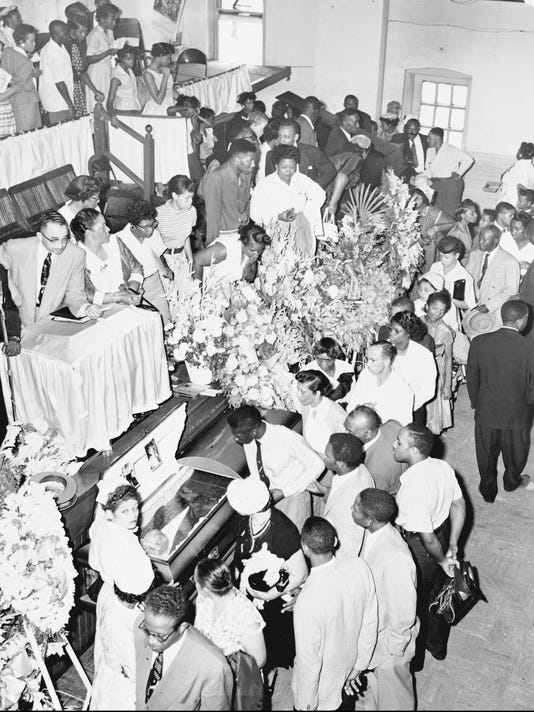
Three days later, his corpse was recovered but was so disfigured that Mose Wright could only identify it by an initialed ring. Authorities wanted to bury the body quickly, but Till’s mother, Mamie Bradley, requested it be sent back to Chicago. After seeing the mutilated remains, she decided to have an open-casket funeral so that all the world could see what racist murderers had done to her only son. Jet, an African American weekly magazine, published a photo of Emmett’s corpse, and soon the mainstream media picked up on the story.

Less than two weeks after Emmett’s body was buried, Milam and Bryant went on trial in a segregated courthouse in Sumner, Mississippi. There were few witnesses besides Mose Wright, who positively identified the defendants as Emmett’s killers.

On September 23, the all-white jury deliberated for less than an hour before issuing a verdict of “not guilty,” explaining that they believed the state had failed to prove the identity of the body. Many people around the country were outraged by the decision and also by the state’s decision not to indict Milam and Bryant on the separate charge of kidnapping.

The Emmett Till murder trial brought to light the brutality of Jim Crow segregation in the South and was an early impetus of the African American civil rights movement.

history.com