
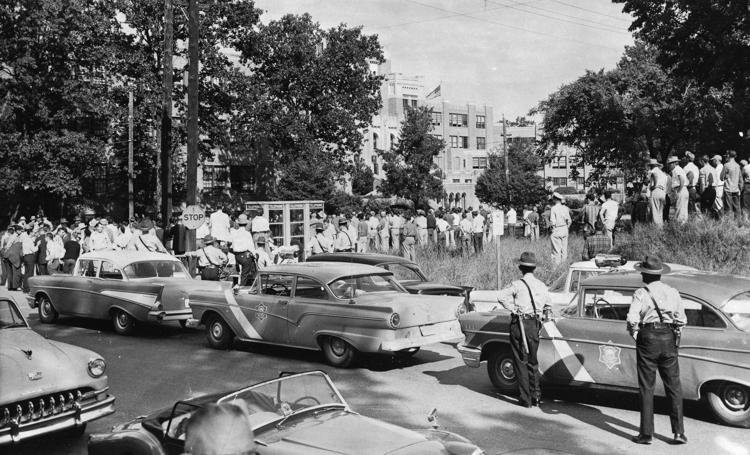
In 1957, nine black students who’d entered Little Rock Central High School in Arkansas were forced to withdraw because of a white mob outside.
Daily Archives: 09/23/2025

Hatch Act

By Kathy Gill
Updated on September 23, 2021
The Hatch Act is a federal law that restricts the political activity of executive branch employees of the federal government, District of Columbia government, and some state and local employees whose salaries are paid for partially or entirely with federal money.
The Hatch Act was passed in 1939 to ensure that federal programs “are administered in a nonpartisan fashion, to protect federal employees from political coercion in the workplace, and to ensure that federal employees are advanced based on merit and not based on political affiliation,” according to the U.S. Office of Special Counsel.
Examples of Violations
In passing the Hatch Act, Congress affirmed that partisan activity government employees must be limited for public institutions to function fairly and effectively.
The courts have held that the Hatch Act is not an unconstitutional infringement on employees’ First Amendment right to freedom of speech because it specifically provides that employees retain the right to speak out on political subjects and candidates.
All civilian employees in the executive branch of the federal government, except the president and the vice president, are covered by the provisions of the Hatch Act.
These employees may not:
- use official authority or influence to interfere with an election
- solicit or discourage political activity of anyone with business before their agency
- solicit or receive political contributions (may be done in certain limited situations by federal labor or other employee organizations)
- be candidates for public office in partisan elections
- engage in political activity while: on duty
- in a government office
- wearing an official uniform
- using a government vehicle
- wear partisan political buttons on duty
While the Hatch Act has been described as an “obscure” law, it is taken seriously and enforced.
Gill, Kathy. “Hatch Act: Definition and Examples of Violations.” ThoughtCo, Sep. 23, 2021, thoughtco.com/the-hatch-act-3368321.
Share this:

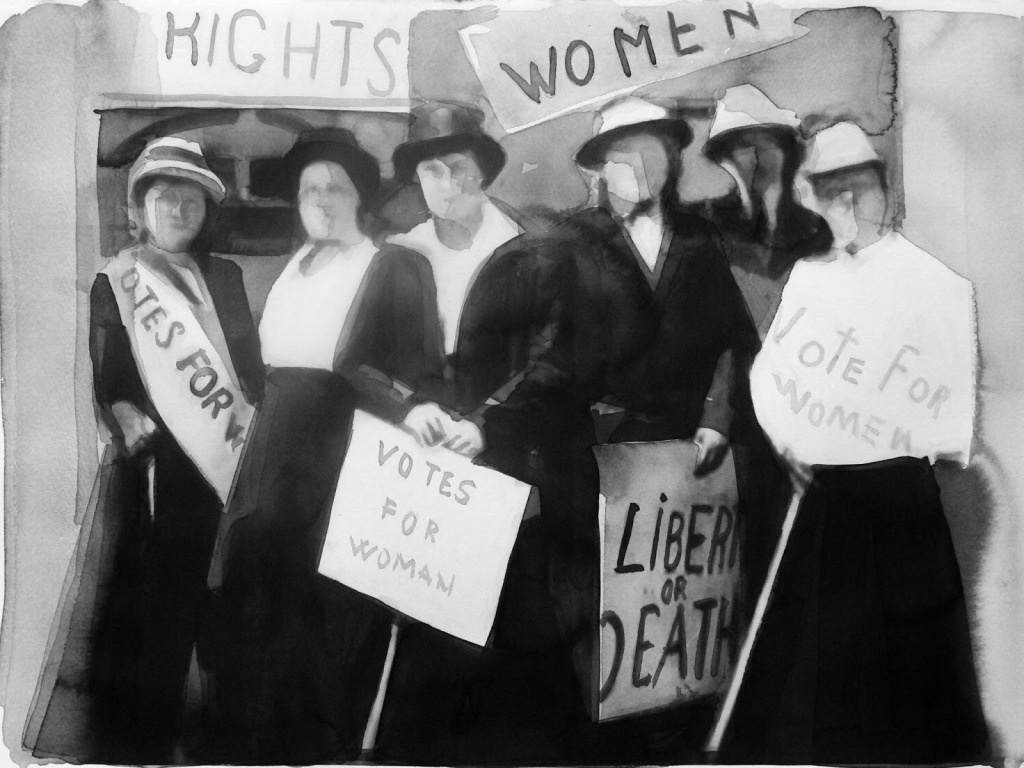
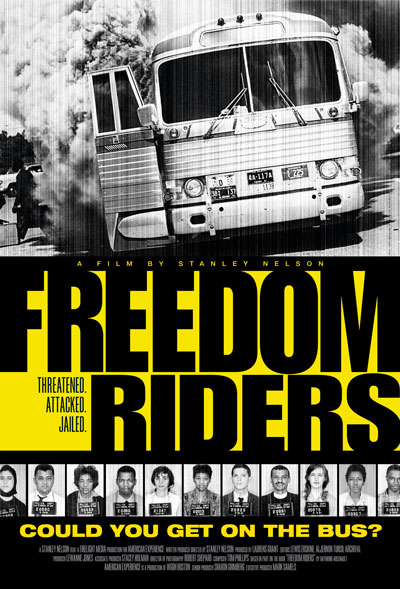
They fought for our right to vote and suffered… We must Vote!
This post had to be reposted as we count down to the 2022 midterms

|
|

 Be a Seed for Change
You must be logged in to post a comment.