Slave trading past still haunts Norway


Norway’s participation in the trans-Atlantic slave trade is back to haunt the country, as an alliance of Caribbean nations seeks slavery reparations. Norway was a territory state under the Danish crown at that time, but Norwegians were strongly represented at all levels in the Danish-Norwegian slave trade from 1660 to 1806, according to a Norwegian doctoral candidate.
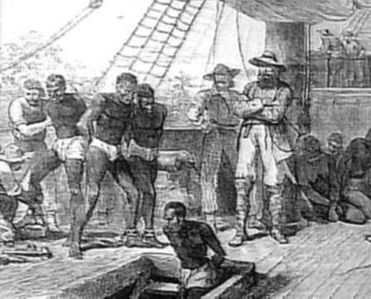
Life on the slave ships, many of them owned and crewed by Danes and Norwegians, was brutal, as was life in the slave ports. PHOTO: Wikipedia

Life on the slave ships, many of them owned and crewed by Danes and Norwegians, was brutal, as was life in the slave ports. PHOTO: Wikipedia

The center of the Danish-Norwegian slave trade, according to Fredrik Hyrum Svensli at the Norwegian University of Science and Technology (NTNU) in Trondheim,  was on the Gold Coast (Ghana) in Africa. Ghana’s relationship with the Caribbean dates back over 400 years and is inexplicably linked with slave trading.

Norwegians made up around 10 percent of the total crew serving on slave ships at any one time, wrote Svensli in newspaper Aftenposten recently. Hyrum Svensli’s PhD project explores the slave trade rivalry between Denmark-Norway, England and the Netherlands in Ghana in the 1600s and 1700s. That’s when Norwegians took part in what’s been called the “triangle of trade” on Norwegian and Danish ships like the Fredensborg, found wrecked off Arendal in 1974. Norwegians staffed slave forts on the African coast, sailed on the slave ships and carried goods produced by slaves back to Norway and the rest of Europe. The “triangle” went mostly from Norway and Denmark to Ghana, then to Caribbean ports such as St Croix and St Thomas and back to Scandinavia.

Those Norwegians who served at the slave posts on the Gold Coast came from various backgrounds such as soldiers, gunsmiths, artisans and even clergymen. They shared one thing in common in that they were for the most part “incompetent and reckless adventurers,” Hyrum Svensli told Aftenposten.
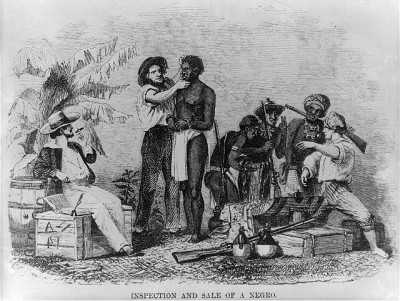
Caribbean nations are seeking reparations for the after-effects of slavery, but are unlikely to prevail. Norway can blame is domination by Denmark at the time. PHOTO: Wikipedia

Caribbean nations are seeking reparations for the after-effects of slavery, but are unlikely to prevail. Norway can blame is domination by Denmark at the time. PHOTO: Wikipedia

Fortress life was marked by chaos and a lack of discipline but some notable individuals stand out from the rest. One such exception was Cornelius Pettersøn from Bergen, a soldier and later a sergeant at the main fort at Christiansborg from 1729 to 1745. He was involved in everything from slave trading to political intrigue and in 1744 took part in a mutiny which led to complete chaos at the fort. Fortunately for Pettersøn, he was able to avoid the death penalty as he was married to an African woman (as were many Norwegians serving on the Gold Coast) and therefore was able to gain crucial support from his wife’s powerful African family and wider network.

Another Norwegian, Andreas Wellemsen, was governor at Christiansborg during the Akwamu war (1727-1730), one of the bloodiest conflicts in the Gold Coast’s history. Using diplomatic prowess he managed to secure Danish-Norwegian trade interests by both keeping them out of the war and in the process was able to secure a high number of slaves as African prisoners of war were transported from the African interior to coastal fortifications.

Søren Schielderup also served as governor at the fort at Christiansborg (1735 -1736) and in the 10 short months he was there, helped to establish one of the largest slave trade developments in Africa at the Fredensborg fort. The fort was important for the expansion of Danish-Norwegian enterprise, which was moving eastwards on the Gold Coast in the second half of the 1700s. Under Schielderup’s administration, trade was so profitable that the competing Dutch slave traders awarded a significant bounty to have him killed.

Doctoral candidate Fredrik Hyrum Svensli has been researching life at the slave forts in Africa at NTNU in Trondheim. PHOTO: NTNU

Doctoral candidate Fredrik Hyrum Svensli has been researching life at the slave forts in Africa at NTNU in Trondheim. PHOTO: NTNU

Schielderup, Wellemsen and Pettersøn were all part of a slave-processing system whereby slaves were moved, aided by African sellers, to the Danish-Norwegian slave forts on the coast where they were examined and branded like cattle with the initials “CB” for Christiansborg. They were then herded into slave barracks and ferried over the Atlantic in cramped slave ships. In total, Denmark-Norway was responsible for the shipment of more than 85,000 African slaves in the period from 1660 to 1806 (over 150 years).

Now, hundreds of years later, the heads of state of 15 Caribbean nations are demanding reparations from several European countries for the enduring suffering inflicted by the trans-Atlantic slave trade. Newspapers including The Guardian have reported that they plan to first seek “dialogue” with former slave-trading nations including the UK, France, Spain, Portugal, the Netherlands, Norway, Sweden and Denmark.  The claim is rooted in an alleged cycle of poverty and degradation from which many descendants of slaves still suffer.

The Caribbean nations claim they’re not just seeking financial reparations, but diplomatic aid to help persuade countries like Ghana and Ethiopia to offer citizenship to the children of people from the Caribbean who “return” to Africa. They want help in improving the lives of poor communities in the Caribbean that they claim are still suffering from the after-effects of slavery, aid for literacy drives and, not least, an apology for their role in shipping millions of men, women and children from Africa to the Caribbean and America in the 17th and 18th centuries. It’s unlikely the European nations will accept the claims, given the time that’s passed and, in the Norwegians’ case, the fact that their participation was carried out through Denmark since Norway was not a sovereign nation at the time.

While the inhumane and exploitative suffering of African slaves is beyond comparison, Norwegian researcher Hyrum Svensli notes that life was hard for those serving at the forts as well. The priest’s son Schielderup described it as a “veritable Sodom” where there was an abject lack of respect for authority.  Disease was also rampant and death rates were extraordinarily high. Those who died ended up in “white man’s graves” after succumbing to diseases such as malaria, pox and dysentery. The few Norwegians who returned to Norway alive were often blighted by their former lives in Africa, according to Hyrum Svensli’s project (external link to NTNU’s research synopsis).

newsinenglish.no/Audrey Andersen

first posted 9/28/2014

1789 – In the U.S., the first Federal Congress passed a resolution that asked President George Washington to recommend to the nation a day of thanksgiving. Several days later Washington issued a proclamation that named Thursday, November 26, 1789 as a “Day of Public Thanksgiving.” The fixed-date for Thanksgiving Day, the fourth Thursday of November, was established on December 26, 1941.


On September 28, 1789, just before leaving for recess, the first Federal Congress passed a resolution asking that the President of the United States recommend to the nation a day of thanksgiving. A few days later, President George Washington issued a proclamation naming Thursday, November 26, 1789 as a “Day of Publick Thanksgiving” – the first time Thanksgiving was celebrated under the new Constitution. Subsequent presidents issued Thanksgiving Proclamations, but the dates and even months of the celebrations varied. It wasn’t until President Abraham Lincoln’s 1863 Proclamation that Thanksgiving was regularly commemorated each year on the last Thursday of November.

In 1939, however, the last Thursday in November fell on the last day of the month. Concerned that the shortened Christmas shopping season might dampen the economic recovery, President Franklin D. Roosevelt issued a Presidential Proclamation moving Thanksgiving to the second to last Thursday of November. As a result of the proclamation, 32 states issued similar proclamations while 16 states refused to accept the change and proclaimed Thanksgiving to be the last Thursday in November. For two years two days were celebrated as Thanksgiving – the President and part of the nation celebrated it on the second to last Thursday in November, while the rest of the country celebrated it the following week.

To end the confusion, Congress decided to set a fixed-date for the holiday. On October 6, 1941, the House passed a joint resolution declaring the last Thursday in November to be the legal Thanksgiving Day. The Senate, however, amended the resolution establishing the holiday as the fourth Thursday, which would take into account those years when November has five Thursdays. The House agreed to the amendment, and President Roosevelt signed the resolution on December 26, 1941, thus establishing the fourth Thursday in November as the Federal Thanksgiving Day holiday.

Bill Barr’s Very Strange Memo on Obstruction of Justice ~ Things to Remember


Attorney General Bill Barr and Vice President Dan Quayle with President George H. W. Bush. (Source: George Bush Presidential Library and Museum)

By Mikhaila Fogel, Benjamin Wittes Thursday, December 20, 2018, 7:04 PM

The memo on obstruction of justice by Bill Barr, the once and future attorney general, is a bizarre document—particularly so for a man who would supervise the investigation it criticizes.

As the Wall Street Journal first reported, Barr, whom the president has nominated to succeed Jeff Sessions as attorney general, sent the unsolicited memo—dated June 8, 2018—to Deputy Attorney General Rod Rosenstein to offer his view of Special Counsel Robert Mueller’s investigation into possible obstruction of justice by the president. The document elicited questions over whether Barr would need to recuse himself from overseeing the investigation as attorney general, along with outrage from congressional Democrats: both Senate Minority Leader Chuck Schumer and Sen. Mark Warner, the ranking member on the Senate intelligence committee, have demanded that Trump withdraw Barr’s nomination. Sen. Dianne Feinstein of the Senate Committee on the Judiciary described the memo as “troubling.”

But the legal quality of the memo itself is a different question. Over at Just Security, Marty Lederman has what he describes as a “first take” on Barr’s memo, which is to say a detailed critique of it on both constitutional and statutory grounds. On National Review’s website, by contrast, Andrew McCarthy declares the memo a “commendable piece of lawyering” and “exactly what we need and should want in an attorney general of the United States.”

Whatever Barr’s memo is, it is not that. Because whether one agrees with his view of the law (as does McCarthy) or recoils at it (as does Lederman), one thing attorneys general of the United States should certainly not do is make up facts. And ironically for a memo laying out the argument that Bob Mueller has made up a crime to investigate, the document is based entirely on made-up facts. Lederman mentions this point at the outset of his analysis:
The first huge and striking problem with Barr’s memo is that he unjustifiably makes countless assumptions about what Mueller is doing; about Mueller’s purported “theory” of presidential criminal culpability; about Mueller’s “sweeping” and “all-encompassing” “interpretation” of the statute and Constitution; about “Mueller’s core premise[s]”; . . . about “unprecedented” steps Mueller is proposing to take; about “Mueller’s proposed regime”; about “Mueller’s immediate target”; about Mueller’s presumed failure to “provide a standard” for what constitutes “corruptly” trying to impede proceedings; about Mueller’s “demands” that the President submit to interrogation; etc.

To read this memo, you’d think Barr were replying to a legal brief that Mueller had submitted in support of a prosecution of the President for obstruction of a federal proceeding. Yet as Barr concedes at the outset, he was “in the dark about many facts.” Indeed, he presumably was “in the dark” about virtually everything he wrote about. From all that appears, Barr was simply conjuring from whole cloth a preposterously long set of assumptions about how Special Counsel Mueller was adopting extreme and unprecedented-within-DOJ views about every pertinent question and investigatory decision—and that Deputy Attorney General Rosenstein was allowing him to do so, despite the fact that Mueller is required to “comply with the rules, regulations, procedures, practices and policies of the Department of Justice” and to “consult with appropriate offices within the Department for guidance with respect to established practices, policies and procedures of the Department.”

Indeed, it is not an exaggeration to say that Barr’s entire memo is predicated on two broad assumptions: first, that he knows Mueller’s legal theory, and second, that he understands the fact pattern Mueller is investigating. “It appears Mueller’s team is investigating a possible case of ‘obstruction’ by the President predicated substantially on his expression of hope that the Comey [sic] could eventually ‘let … go’ of its investigation of Flynn and his action in firing Comey,” Barr writes in his second paragraph.

Neither assumption is, in our judgment, warranted. Unlike Barr, we don’t purport to know what Mueller’s obstruction theory is. It’s a subject about which one of us has been puzzling over a long period of time and in a number of articles. We also don’t purport to know what fact patterns Mueller is focusing on. But here’s a limb onto which we are prepared to venture: the reality is more complicated than the facts Barr has “assumed” for purposes of predicating nearly 20 pages of legal analysis. In fact, it’s a lot more complicated.
Barr assumes for the purpose of his memo that Mueller is only interested in presidential conduct sanctioned by Article II, specifically that his investigation revolves around Trump’s actions toward Comey. “As I understand the theory,” he writes, Mueller’s team has built their case on a novel and, in his view, unsupported interpretation of 18 U.S.C. § 1512(c)(2), the “residual clause” of § 1512, which prohibits witness tampering. § 1512(c)(2) holds that, “Whoever corruptly … otherwise obstructs, influences, or impedes any official proceeding, or attempts to do so [is guilty of the crime of obstruction”—and Barr is concerned that Mueller is interpreting it to sanction an overly broad range of behavior.

Moreover, Barr takes the view that a facially lawful action taken by the president under his Article II authority cannot constitute obstruction as a matter of constitutional law. He expresses concern that allowing this interpretation to proceed could have “disastrous implications” for the executive branch and the presidency, potentially opening the door to criminal investigations of “all exercises of prosecutorial discretion.” He also writes, “if a [Justice Department] investigation is going to take down a democratically-elected president it is imperative… that any claim of wrongdoing is solidly based on a real crime—not a debatable one.” (All emphases in original).

It’s not clear why Barr adopts such a simplistic understanding of Mueller’s operating theory, but the sequence of events leading up to his submitting the memo in early June may offer some insight. At some point, probably in March or April of this year, the president’s legal team received a list of subjects that the special counsel’s office wanted to discuss with Trump in an interview. In late April 2018, the New York Times published a condensed list of those questions.
Several weeks later, on June 2, the Times published a letter from Trump’s then-lawyer, John Dowd, to Mueller, in which Dowd responded to Mueller’s request to question the president regarding 16 areas of interest—which essentially mirrored the reported list of questions. In that letter, Dowd explained to the special counsel why he is advising against the president granting the interview, including that he does not believe there is a cognizable offense for an obstruction investigation under 18 U.S.C. § 1505, which prohibits tampering with evidence and impeding legal “proceedings.” Dowd argued both that the president’s actions were authorized by Article II of the Constitution and that an FBI investigation does not count as a “proceeding.” His letter was mocked by a number of commentators on this latter point; Charlie Savage at the Times pointed out that by citing § 1505, instead of § 1512, Dowd was making things easy for himself. § 1512, unlike the statute Dowd cited, does not require that a proceeding be pending.

The Dowd letter, despite its flaws, sparked a certain amount of speculation in conservative media that Mueller lacked an actual crime to investigate—at least as to the obstruction cone of his investigation. A few days after the Times published the Dowd letter, for example, the National Review stated in an editorial that “The letter implies that these two events [the request to Comey regarding Flynn and his subsequent firing] remain the gravamen of the special counsel’s obstruction probe. If that is so, there is no obstruction case.” The editorial goes on to say that, “a prosecutor may not charge obstruction based on the president’s exercise of his constitutional prerogatives.” And it asserts that, in both instances, the president was acting within his constitutional authority:
In short, unless there is a smoking gun against the president that is lurking unseen even in the private jousting between Trump’s team and Mueller, the special prosecutor should be wrapping up the obstruction aspect of his probe rather than extending it via a court fight over the president’s testimony.

In was against this backdrop, on June 8, that Barr sent his memo to Rosenstein and Assistant Attorney General for the Office of Legal Counsel Steven Engel, a memo that shifts the discussion from § 1505 to § 1512 but also adopts the working understanding of the obstruction theory from Dowd’s letter.
The problem is that the facts are almost certainly more complicated than that.

Looking back at the New York Times list of subjects Mueller sought to discuss with Trump, many of those topics go well beyond core Article II-authorized management of the executive branch. For example, Mueller wanted to ask about what Trump knew “about phone calls that Mr. Flynn made with the Russian ambassador, Sergey I. Kislyak, in late December 2016.” Why Flynn lied about his communications with Kislyak is one of the key questions at issue in the case. And Barr himself makes clear that if a president induces someone to lie, that’s not an act protected by Article II.
Analysis of Trump’s inducing Flynn to lie would, of course, involve facts not in evidence, and it would almost certainly involve a different statute. But that’s precisely the point. How does Barr know what conduct Mueller is focused on or under what law?
There are other such examples—a number of them, in fact. Mueller wants to discuss “efforts . . . made to reach out to Mr. Flynn about seeking immunity or possible pardon.” That sounds more like a witness tampering investigation than a broad theory of obstruction under § 1512(c)(2). Mueller appears to want to discuss Trump’s efforts to get intelligence community leaders to lean on Comey to drop the Flynn matter and his “reaction to the news that [Mueller] was speaking to” those leaders. He’s also interested in the public bullying of Sessions and FBI Deputy Director Andrew McCabe, both fired. Again, why is Barr so sure this is all a broad “residual” § 1512 theory of obstruction?

It may well be that Mueller’s theory of the case involves a narrower conception of what Article II permits the president to do than that which Barr holds. But our suspicion is that Mueller is looking not narrowly at the specific acts on which Dowd and Barr focused, but on a broader pattern of activity, some but not all of which involves facially valid exercises of Article II powers.

At a press conference today, Rosenstein declared that the Mueller investigation “is being handled appropriately.” When asked to weigh in on the memo, Rosenstein said that, “Bill Barr was an excellent attorney general during the approximately 14 months that he served in 1991 to 1993” and he predicted that he “will be an outstanding attorney general when he is confirmed next year.” But he added that the department’s handling of the obstruction matter has been “informed by our knowledge of the actual facts of the case, which Mr. Barr didn’t have.”

We suspect those “actual facts” will complicate the Article II analysis—both the facts under investigative scrutiny and the facts as to the range of statutes against which that evidence is being considered.
Editor’s note: This piece has been edited to clarify the description of Barr’s argument.

on this day … 9/27 1973 – U.S. Vice President Spiro Agnew said he would not resign after he pled “no contest” to a charge of tax evasion. He did resign on October 10th. 


1779 – John Adams was elected to negotiate with the British over the American Revolutionary War peace terms.

1825 – George Stephenson operated the first locomotive that hauled a passenger train.

1894 – The Aqueduct Race Track opened in New York City, NY.

1928 – The U.S. announced that it would recognize the Nationalist Chinese Government. 

1938 – The League of Nations branded the Japanese as aggressors in China.

1939 – After 19 days of resistance, Warsaw, Poland, surrendered to the Germans after being invaded by the Nazis and the Soviet Union during World War II.

1940 – The Berlin-Rome-Tokyo Axis was set up. The military and economic pact was for 10 years between Germany, Italy and Japan.

1954 – The “Tonight!” show made its debut on NBC-TV with Steve Allen as host.

1962 – The U.S. sold Hawk anti-aircraft missiles to Israel. 

1968 – The U.K.’s entry into the European Common Market was barred by France.

1970 – “The Original Amateur Hour” aired for the last time on CBS. It had been on television for 22 years.

1973 – U.S. Vice President Spiro Agnew said he would not resign after he pled “no contest” to a charge of tax evasion. He did resign on October 10th. 

1979 – The Department of Education became the 13th Cabinet in U.S. history after the final approval from Congress.

1982 – Italian and French soldiers entered the Sabra and Chatilla refugee camps in Beirut. The move was made by the members of a multinational force due to hundreds of Palestinians being massacred by Christian militiamen.

1983 – Larry Bird signed a seven-year contract with the Boston Celtics worth $15 million. The contract made him the highest paid Celtic in history.

1986 – The U.S. Senate approved federal tax code changes that were the most sweeping since World War II.

1989 – Columbia Pictures Entertainment agreed to buyout Sony Corporation for $3.4 billion.

1989 – Two men went over the 176-foot-high Niagara Falls in a barrel. Jeffrey Petkovich and Peter Debernardi were the first to ever survive the Horshoe Falls.

1990 – The deposed emir of Kuwait addressed the U.N. General Assembly and denounced the “rape, destruction and terror” that Iraq had inflicted upon his country.

1991 – U.S. President George H.W. Bush eliminated all land-based tactical nuclear arms and removed all short-range nuclear arms from ships and submarines around the world. Bush then called on the Soviet Union to do the same.

1994 – More than 350 Republican congressional candidates signed the Contract with America. It was a 10-point platform they pledged to enact if voters sent a GOP majority to the House.

1995 – The U.S. government unveiled the redesigned $100 bill. The bill featured a larger, off-center portrait of Benjamin Franklin.

1998 – In Germany, Social Democrat Gerhard Schroeder was elected chancellor. The election ended 16 years of conservative rule.

1998 – Mark McGwire (St. Louis Cardinals) set a major league baseball record when he hit his 70th home run of the season.

2004 – North Korean Vice Foreign Minister Choe Su Hon announced that North Korea had turned plutonium from 8,000 spent nuclear fuel rods into nuclear weapons. He also said that the weapons were to serve as a deterrent against increasing U.S. nuclear threats and to prevent nuclear war in northeast Asia. The U.S. State Department noted that the U.S. has repeatedly said that the U.S. has no plans to attack North Korea.

September – National Awareness


nationaldaycalendar.com