

The Civil War began in 1861 as a struggle over whether states had the right to leave the Union. President Abraham Lincoln firmly believed that a state did not have that right. And he declared war on the southern states that tried to leave.
But the fight to preserve the nation was going badly. By summer of 1862, Union troops had not won a decisive victory in Virginia, the heart of the Confederacy. And the war was losing support with politicians and the public in the north. President Lincoln had to do something to guarantee their continued support.
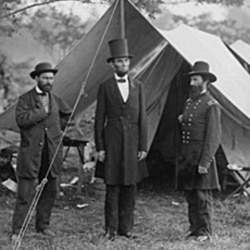
Finally, in September 1862, the Union successfully stopped the Confederate invasion of Maryland. The armies of Union general George McClellan and Confederate general Robert E. Lee battled near Antietam Creek. Almost 100,000 men fought. More than 23,000 were killed, wounded or missing.
Antietam was a violent, savage battle — the bloodiest one-day battle in American history. But the North’s victory there made it easier for Abraham Lincoln to make an important announcement.
Lincoln decided to recognize that slavery was, in fact, a major issue in the war. On September 22, 1862, he announced a new policy on slavery in the rebel southern states. His announcement became known as the Emancipation Proclamation.
learningenglish.voanews.com
Fifty volumes of copies of Letters Sent by the Postmaster General between October 3, 1789, and December 31, 1836, are here reproduced. Each volume is assigned an alphabetical designation and contains an index of names of correspondents. The letters are arranged chronologically. The volumes reproduced on rolls 28, 38, and 46 are letters to members of Congress.
The letters, written by the Postmaster General, deal with activities of the Post Office Department and relate chiefly to post offices, postmasters, mail transportation, mail contracts, departmental organizations, appropriations, legislation, postal laws and regulations, budget, international mail service, international postal conventions, postage stamps, departmental employees, mail fraud, lottery cases, and claims against the Post Office Department and postmasters.
The Postmasters General holding office during the time these letters were written were: Samuel Osgood, beginning September 26, 1789; Timothy Pickering, beginning August 12, 1791; Joseph Habersham, beginning February 25, 1795; Gideon Granger, beginning November 28, 1801; Return J. Meigs, Jr., beginning April 11, 1814; John McLean, beginning December 9, 1823; William T. Barry, beginning March 9, 1829; and Amos Kendall, beginning April 11, 1835.
The Office of the Postmaster-General originated on July 26, 1775, with the selection by the Continental Congress of Benjamin Franklin as Postmaster General for a term of one year. The position of Postmaster General was continued by the Congress of the Confederation.
An act of September 22, 1789 (1 Stat. 70), under the Federal Government provided for the temporary establishment of a general post office and authorized the appointment of a Postmaster General who was subject to the direction of the President. It also provided that the duties, salaries, and regulations of the Department should be the same as those under the Congress of the Confederation. An act of February 20, 1792 (1 Stat. 232), later provided in detail for the Post Office Department and the postal service generally. Subsequent acts made the Post Office a permanent agency and enlarged its duties.
The Post Office operated as a single, undifferentiated unit until the appointment of a chief clerk on April 1, 1818. This officer was assigned supervision of the field operations of the Post Office, including mail contracts, inspections, activities of special agents, disbursements, and measures to deal with mail depredations. As the Post Office came to perform more services, other functions of the Postmaster General were delegated to the Chief Clerk and the Assistant Postmaster General. (The First Assistant Postmaster General was authorized on January 28, 1792; the Second Assistant Postmaster General on April 30, 1810; the Third Assistant Postmasters General on July 2, 1836; and the Fourth Assistant Postmaster General on March 3, 1891.) The salary of the Postmaster General was placed on an equal basis with that of other Department heads on March 2, 1827, and in 1830 the Postmaster General became a regular Member of the Cabinet.
The records reproduced in this microcopy are part of Record Group 28, Records of the Post Office Department. Related records are among Records of the Bureaus of Assistant Postmasters General, the Bureau Accounts, and the Bureau of the Chief Inspector of the Post Office Department also in Record Group 28.

September 21, 1955 Moses Wright, Emmett Till’s great uncle, does the unthinkable — he accuses two white men in open court. While on the witness stand, he stands up and points his finger at Milam and Bryant, and accuses them of coming to his house and kidnapping Emmett
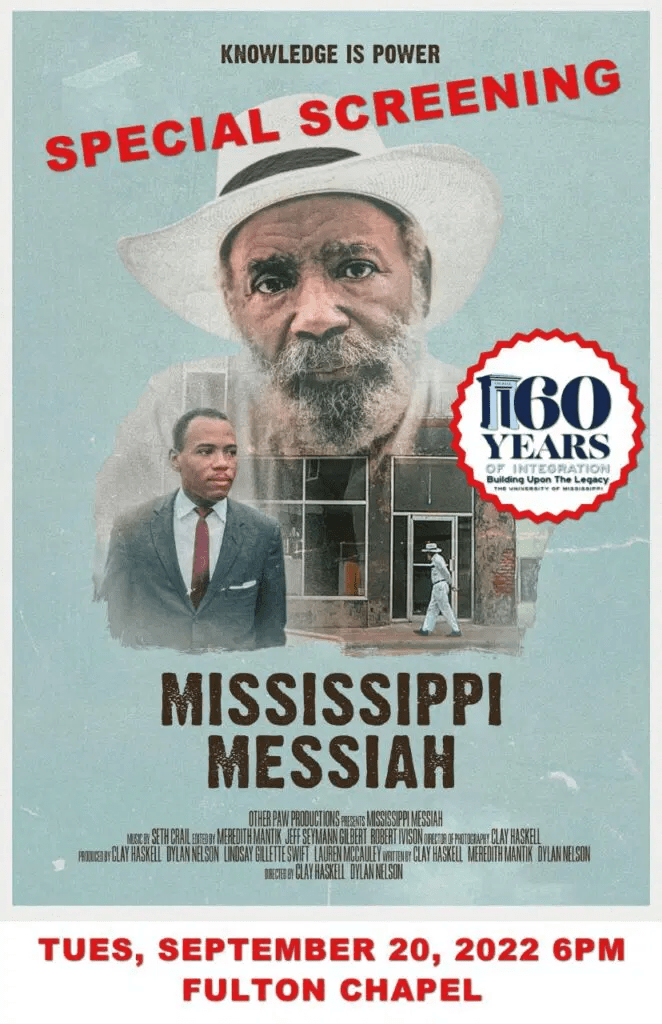
A documentary about the life and sociocultural contributions of James Meredith will be screened next week at the University of Mississippi. “Mississippi Messiah” provides a comprehensive biography of Meredith, who integrated the university in 1962.
The screening, at 6 p.m. Tuesday (Sept. 20) in Fulton Chapel, is among a series of events commemorating the university’s 60th anniversary of integration. The event is free and open to the public.
Kathleen Wickham, professor of journalism, proposed the film’s screening after viewing it at the 2022 Oxford Film Festival.
“When we talk about James Meredith, so much of it is about politics and strategy,” Wickham said. “There is less known about him as a man and his impact on the Black community. That’s one of the threads that I saw in the documentary that made it stand out from other documentaries that I’ve seen about him.
For the complete article: hottytoddy.com


 Be a Seed for Change
You must be logged in to post a comment.