
Role of the Supreme Court
The Founding Fathers initially envisioned a limited role for the Supreme Court, focused on ensuring the executive and legislative branches operated within constitutional bounds. The Constitution established the judicial branch to interpret and apply laws, but gave it no explicit power of judicial review.
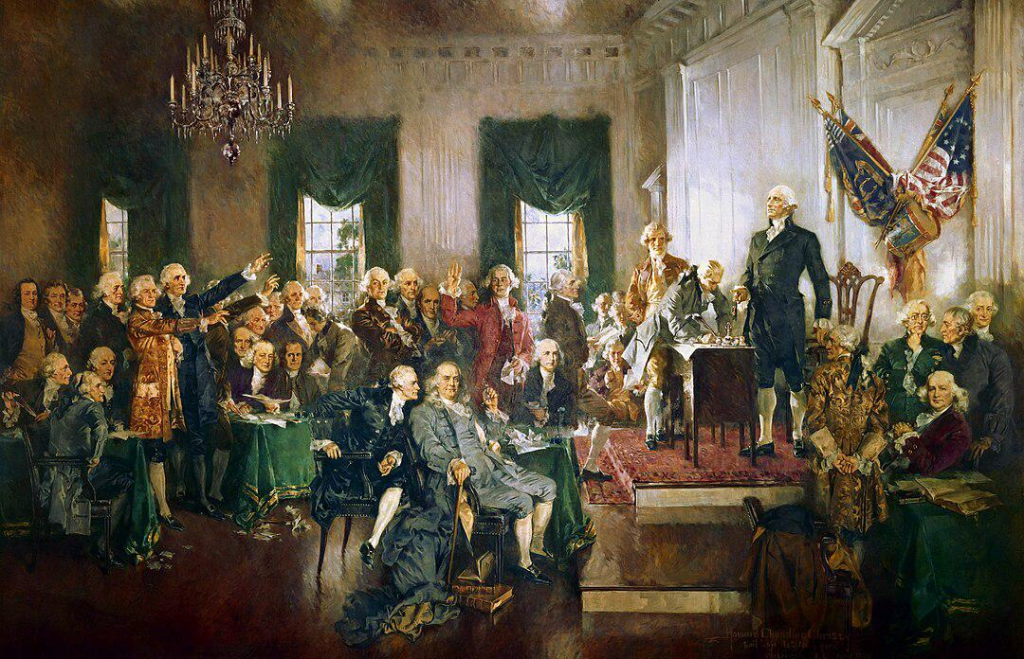
- Division of Power: Balances power between people and government, branches of government, federal and state authorities, and government entities and individual rights.
- Gag Rule: Takes contentious subjects off the table, such as religious freedom, to avoid conflicts.
- Restraint of Momentary Passions: Ensures change is slow and deliberative.
- Private Ordering: Limits rapid government changes to foster a stable environment for planning.
- Intergenerational Lawmaking: Binds generations to a carefully crafted document with a stringent amendment process.
- Rule of Law: Enshrines a system where laws govern, not individuals.
- Promotion of Democracy: Ensures government reflects the will of the people while protecting minority rights.
The Constitution’s written nature eliminates ambiguities and binds government officials to its principles. It provides a clear, enduring reference that guides legal interpretations and governmental actions.
“We the People of the United States, in Order to form a more perfect Union, establish Justice, insure domestic Tranquility, provide for the common defence, promote the general Welfare, and secure the Blessings of Liberty to ourselves and our Posterity, do ordain and establish this Constitution for the United States of America.”
This Preamble embodies the aspirational goals of the Constitution, emphasizing its enduring relevance and the noble aims it encapsulates.
Source: usconstitution.net

 Be a Seed for Change
You must be logged in to post a comment.