
History… 10/18


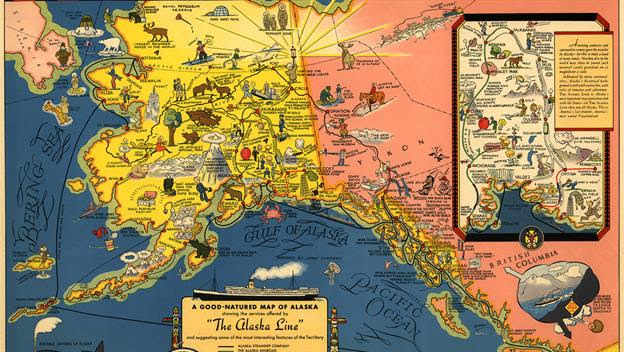
In 1867, the U.S. formally takes possession of Alaska after purchasing the territory from Russia for $7.2 million, or less than two cents an acre. The Alaska purchase comprised 586,412 square miles, about twice the size of Texas, and was championed by William Henry Seward, the enthusiast… read more »

1972 Clean Water Act becomes law,

The Clean Water Act becomes law on October 18, 1972. After centuries of reckless treatment of American rivers, streams, lakes and bays, the landmark act institutes strict regulations on pollution and quality controls for the nation’s waters for the first time in its history.

The ’60s had been marked by some truly horrific revelations regarding water pollution. A 1968 survey revealed that pollution in the Chesapeake Bay resulted in millions of dollars of lost revenue for fisherman, while a 1969 study found that bacteria levels in the Hudson River to be at 170 times the legal limit. The same year, pollution from local food processing plants killed 26 million fish in one lake in Florida, the largest fish kill on record, and an oil slick resulted in an infamous fire on the Cuyahoga River near Cleveland. When President Richard Nixon established the Environmental Protection Agency in 1970, it was clear that water pollution would be one of its top priorities.

1767 Mason and Dixon draw a line, dividing the colonies,
See the source image

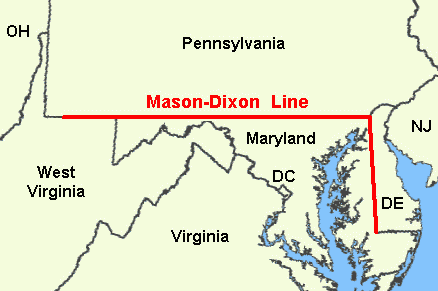
On October 18, 1767, Charles Mason and Jeremiah Dixon complete their survey of the boundary between the colonies of Pennsylvania and Maryland as well as areas that would eventually become the states of Delaware and West Virginia. The Penn and Calvert families had hired Mason and Dixon, English surveyors, to settle their dispute over the boundary between their two proprietary colonies, Pennsylvania and Maryland.

In 1760, tired of border violence between the colonies’ settlers, the British crown demanded that the parties involved hold to an agreement reached in 1732. As part of Maryland and Pennsylvania’s adherence to this royal command, Mason and Dixon were asked to determine the exact whereabouts of the boundary between the two colonies. Though both colonies claimed the area between the 39th and 40th parallel, what is now referred to as the Mason-Dixon line finally settled the boundary at a northern latitude of 39 degrees and 43 minutes. The line was marked using stones, with Pennsylvania’s crest on one side and Maryland’s on the other.

1898 U.S. takes control of Puerto Rico Only one year after Spain granted Puerto Rico self-rule, American troops raised the U.S. flag over the Caribbean nation, formalizing U.S. authority over the island’s one million inhabitants. In July 1898, near the end of the Spanish-American War, U.S. forces launched an invasion …read more

Source: history.com and the internet

1867 – The U.S. takes possession of Alaska from Russia


In this “This Day in History” video clip learn about different events that have occurred on October 18th. The major event that occurred on this day was that Seward bought Alaska from Russia. It was first known as Seward’s Folly. However, they later found gold and the purchase became valuable.

For the complete article, go to the link below

BY: HISTORY.COM EDITORS

on this day 10/18 1983 –


1469 – Ferdinand of Aragon married Isabella of Castile. The marriage united all the dominions of Spain.

1685 – King Louis XIV of France revoked the Edict of Nantes, which had established the legal toleration of the Protestant population.

1767 – The Mason-Dixon line was agreed upon. It was the boundary between Maryland and Pennsylvania.

1842 – Samuel Finley Breese Morse laid his first telegraph cable.

1860 – British troops burned the Yuanmingyuan at the end of the Second Opium War.

1867 – The U.S. took formal possession of Alaska from Russia. The land was purchased of a total of $7 million dollars (2 cents per acre). 

1873 – The first rules for intercollegiate football were drawn up by representatives from Rutgers, Yale, Columbia and Princeton Universities.

1892 – The first long-distance telephone line between Chicago, IL, and New York City, NY, was opened.

1898 – The American flag was raised in Puerto Rico only one year after the Caribbean nation won its independence from Spain. 

1929 – The Judicial Committee of England’s Privy Council ruled that women were to be considered as persons in Canada.

1943 – The first broadcast of “Perry Mason” was presented on CBS Radio. The show went to TV in 1957.

1944 – Czechoslovakia was invaded by the Soviets during World War II.

1944 – “Forever Amber”, written by Kathleen Windsor, was first published.

1961 – Henri Matiss’ “Le Bateau” went on display at New York’s Museum of Modern Art. It was discovered 46 days later that the painting had been hanging upside down.

1967 – The American League granted permission for the A’s to move to Oakland. Also, new franchises were awarded to Kansas City and Seattle.

1968 – Two black athletes, Tommie Smith and John Carlos, were suspended by the U.S. Olympic Committee for giving a “black power” salute during a ceremony in Mexico City.

1969 – The U.S. government banned artificial sweeteners due to evidence that they caused cancer.

1970 – Quebec’s minister of labor was found strangled to death after eight days of being held captive by the Quebec Liberation Front (FLQ).

1971 – After 34 years, the final issue of “Look” magazine was published.

1977 – Reggie Jackson tied Babe Ruth’s record for hitting three homeruns in a single World Series game. Jackson was only the second player to achieve this.

1983 – General Motors agreed to hire more women and minorities for five years as part of a settlement with the Equal Employment Opportunity Commission. 

1989 – Egon Krenz became the leader of East Germany after Erich Honecker was ousted. Honeker had been in power for 18 years.

1989 – The space shuttle Atlantis was launched on a mission that included the deployment of the Galileo space probe. 

1990 – Iraq made an offer to the world that it would sell oil for $21 a barrel. The price level was the same as it had been before the invasion of Kuwait.

1997 – A monument honoring U.S. servicewomen, past and present, was dedicated at Arlington National Cemetery. 

2013 – Saudi Arabia became the first nation to reject a seat on the United Nations Security Council. Jordan took the seat on December 6.