
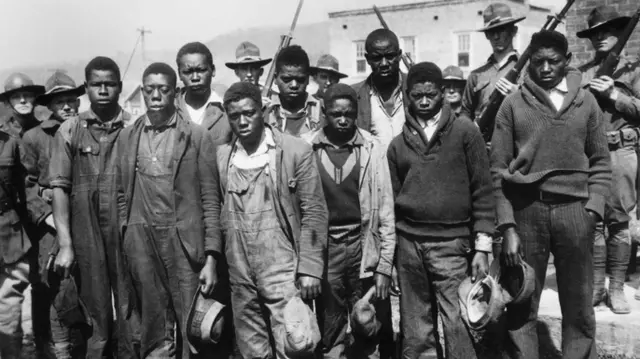
As a group of black teenagers awaited execution, the Communist Party and the NAACP bickered over their legal defense.
On November 7, 1932, the Supreme Court hands down its decision in the matter of Powell v. Alabama. The case arose out of the infamous Scottsboro case. Nine young Black men were arrested and accused of raping two white women on train in Alabama. The boys were fortunate to barely have escaped a lynch mob sent to kill them, but were railroaded into convictions and death sentences. The Supreme Court overturned the convictions on the basis that they did not have effective representation.
Victoria Price and Ruby Bates, the alleged victims, had concocted the charges out of thin air. Bates eventually recanted her testimony. The accused boys were not given lawyers until the morning of the trial and these attorneys made almost no effort to defend their clients. On the same day that the case began, the defendants were convicted and received death sentences.
The blatant unfairness of the case attracted the attention of liberals across the country. The transcript of the trial left the Supreme Court with no other choice but to throw out the convictions. Still, Alabama insisted on retrying the defendants. This time, Samuel Leibowitz, one of the premier defense attorneys of the day, came to represent the Scottsboro nine. It didn’t matter.
The jury, all white men because Black men were systematically excluded, convicted once again. In fact, there would be many more trials of the Scottsboro defendants over the years and each time the jury convicted and was later reversed on appeal. When the saga finally ended, all of the defendants were finally released. But not until after they had served an average of ten years for the phantom crime.
Source: history.com


 Be a Seed for Change
You must be logged in to post a comment.